

.png)
The Proven Framework for Cutting Interchange Fees by 50% Without Losing Control of Your Funds
- [[[Free!!]<<<<]] Watch: 스포르팅 - 토트넘 Live Stream 13 September 2022
- 4 days ago
- 4 min read
![Writer: [[[Free!!]<<<<]] Watch: 스포르팅 - 토트넘 Live Stream 13 September 2022](https://lh3.googleusercontent.com/a/AItbvmktwQc0wCdd3ZEETSYItRQubwwBzOyjD_dcigRf=s96-c)
Interchange fees are bleeding your business dry.
Every swipe. Every tap. Every transaction.
2.5% here. 3.5% there. It adds up fast.
Traditional payment processors promise convenience. They deliver dependency instead.
But here's the thing, there's a better way. A framework that lets you slash those fees while keeping every cent under your control.
No middlemen. No custodial traps. No surrendering your financial sovereignty.
Let's break it down.
The Hidden Cost of "Convenient" Payments
Credit card processors love to tout their ease of use. What they don't advertise? The silent tax eating into your margins every single day.
The numbers are brutal:
Average interchange fees: 1.5% to 3.5% per transaction
Annual losses for small businesses: $5,000 to $50,000+
Settlement delays: 2-7 business days
Chargebacks and disputes: additional 1-2% losses
And that's just the beginning.
Traditional processors also dictate when you access YOUR money. They hold funds. They impose limits. They can freeze accounts without warning.
You built the business. They control the cash flow.
That's backwards.

Why Most "Solutions" Miss the Mark
You've probably heard the standard advice:
Encourage debit card usage
Settle transactions within 24 hours
Implement Level 2 and Level 3 data processing
Switch to interchange-plus pricing
These strategies help. Marginally.
But they don't solve the fundamental problem: you're still playing by their rules.
Even platforms like NOWPayments and CoinPayments, while offering crypto alternatives, often require custody of your funds. They process. They hold. They release when they decide.
That's not freedom. That's trading one gatekeeper for another.
The real framework requires a paradigm shift.
The 50% Fee Reduction Framework
Here's the playbook that actually works.
Step 1: Accept Crypto Payments Directly
Crypto payments bypass the entire interchange ecosystem.
No Visa. No Mastercard. No banks taking their cut.
When a customer pays with cryptocurrency, the transaction happens peer-to-peer. The network fee? Often less than $0.01 on modern chains like Solana.
Compare that to 3% on a $100 purchase ($3.00) versus crypto's fraction of a cent.
The math speaks for itself.
Key benefits:
Near-zero transaction fees
Instant settlement
Global accessibility
No currency conversion fees for international sales
But here's where most merchants get it wrong. They sign up with a processor that converts crypto to fiat automatically, and skims a percentage on top.
Don't fall into that trap.
Step 2: Maintain Self-Custody at All Times
This is non-negotiable.
Self-custody means YOUR keys, YOUR crypto, YOUR control.
When funds hit your wallet, they're yours immediately. No waiting periods. No approval processes. No risk of account freezes.
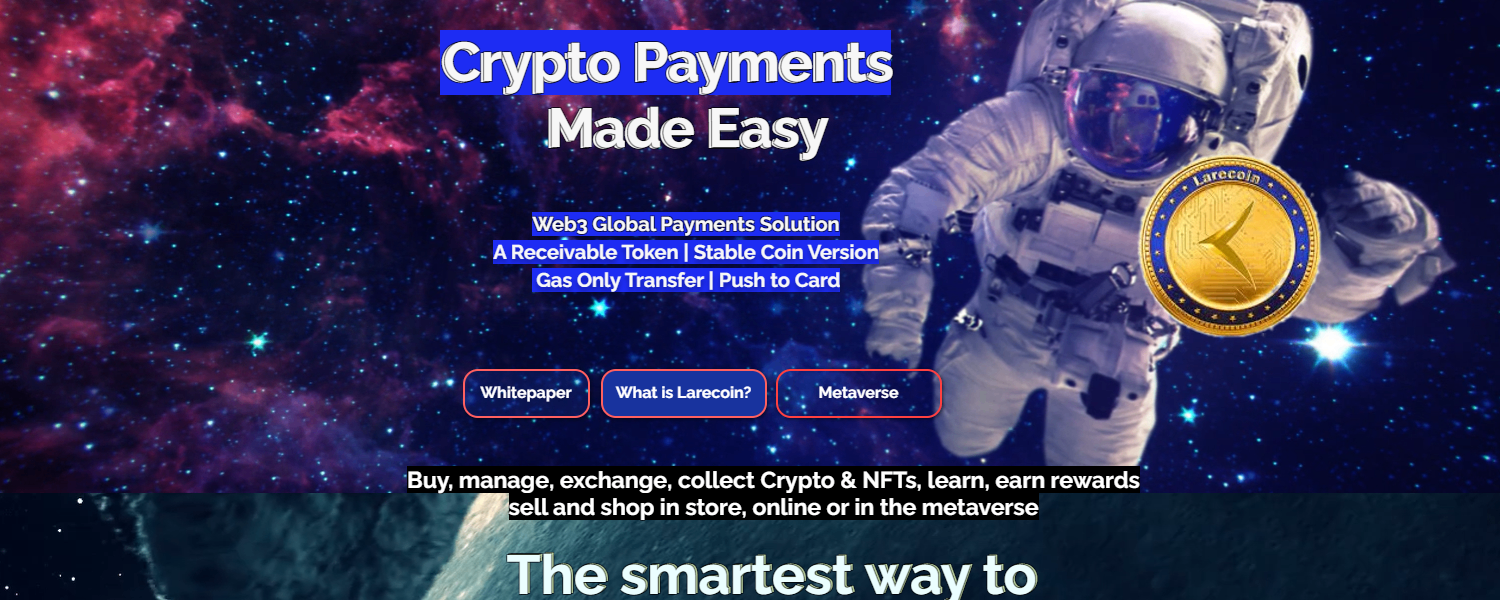
Larecoin's ecosystem is built on this principle. Merchants receive payments directly to their wallets. No intermediary custody. No third-party holding patterns.
It's how crypto was designed to work.
Self-custody advantages:
Immediate access to funds
Zero counterparty risk
Full privacy
Protection from platform shutdowns or policy changes
Platforms like CoinPayments offer merchant services but hold funds during processing windows. NOWPayments follows similar models with custodial elements baked in.
With Larecoin? The funds flow straight to you.

Step 3: Leverage Stablecoins for Volatility Protection
"But crypto is volatile!"
Fair point. Bitcoin swings. Ethereum moves.
That's where LUSD enters the picture.
LUSD is Larecoin's stablecoin solution, pegged for consistency, built for commerce. Accept payment in LUSD and you get the best of both worlds:
Zero interchange fees (it's still crypto)
Price stability (no wild fluctuations)
Instant settlement (blockchain speed)
Self-custody (your wallet, your coins)
Your customers pay with stable value. You receive stable value. The fee savings stay in your pocket.
No volatility stress. No conversion losses.
Traditional card processing: Pay 2.5% + currency conversion fees + settlement delays
LUSD payments: Pay near-zero gas fees + instant finality + keep everything
The framework compounds when you combine stablecoin acceptance with direct self-custody.
Step 4: NFT Receipts for Bulletproof Records
Chargebacks cost merchants billions annually.
The "friendly fraud" problem? Someone buys, receives the product, then disputes the charge. Traditional processors often side with the cardholder. You lose the product AND the money.
NFT receipts change the game entirely.
Every transaction on the Larecoin network can generate an immutable, on-chain receipt. It's timestamped. It's permanent. It's indisputable.
NFT receipt benefits:
Proof of transaction recorded forever
No "he said, she said" disputes
Automated warranty tracking
Customer loyalty integration
This isn't just about saving fees. It's about protecting your revenue from post-sale losses.
Chargebacks typically cost 1-2% of total revenue for e-commerce merchants. Eliminate that alongside interchange fees? Now you're looking at 50%+ savings easily.
How Larecoin Stacks Against the Competition
Let's get specific.
NOWPayments
Processing fees: 0.5% to 1%
Custody: Yes (during processing)
Stablecoin options: Limited
NFT receipts: No
Self-custody: Partial
CoinPayments
Processing fees: 0.5%
Custody: Yes (vault storage)
Stablecoin options: Various
NFT receipts: No
Self-custody: Optional but complex
Larecoin Ecosystem
Processing fees: Network gas only
Custody: Full self-custody
Stablecoin options: LUSD integrated
NFT receipts: Native feature
Self-custody: Default and mandatory
The difference is philosophy.
Other platforms build businesses on holding your money. Larecoin builds infrastructure that puts you in command.
Implementation: Your 30-Day Action Plan
Ready to execute? Here's the roadmap.
Week 1: Setup
Create your self-custody wallet
Connect to the Larecoin ecosystem at larecoin.com
Configure LUSD acceptance settings
Enable NFT receipt generation
Week 2: Integration
Add crypto payment options to checkout
Train staff on wallet basics
Set up monitoring dashboards
Test with small transactions
Week 3: Optimization
Analyze transaction patterns
Adjust gas fee timing for lowest costs
Promote crypto payment discounts to customers
Review NFT receipt data
Week 4: Scale
Expand crypto options across all channels
Reduce traditional payment processor volume
Calculate actual fee savings
Plan full transition timeline
Most merchants see measurable results within the first week.
The Bigger Picture: Financial Independence
This isn't just about saving money.
It's about reclaiming control.
Traditional finance built systems where intermediaries extract value at every step. Crypto: done right: returns that value to creators and merchants.
Every percentage point you save is money reinvested in your business. In your team. In your growth.
And when you maintain self-custody? No one can freeze your account. No one can delay your payroll. No one can decide your money isn't really yours.
That's merchant freedom.
That's the Larecoin vision.

Take the First Step
The framework works. The technology exists. The path is clear.
Stop feeding interchange fees to legacy systems. Stop letting custodial platforms hold your revenue hostage. Stop settling for "good enough" when breakthrough savings are within reach.
Visit larecoin.com to start your integration.
Join the community to connect with merchants already cutting fees by 50% and more.
Your funds. Your control. Your future.
That's not a slogan. That's the standard.
Comments