

.png)
The Ultimate Guide to Web3 Global Payments: How to Reduce Merchant Interchange Fees Without Sacrificing Security in 2026
- [[[Free!!]<<<<]] Watch: 스포르팅 - 토트넘 Live Stream 13 September 2022
- 2 hours ago
- 5 min read
![Writer: [[[Free!!]<<<<]] Watch: 스포르팅 - 토트넘 Live Stream 13 September 2022](https://lh3.googleusercontent.com/a/AItbvmktwQc0wCdd3ZEETSYItRQubwwBzOyjD_dcigRf=s96-c)
Your payment processor is bleeding you dry.
Every swipe. Every transaction. Every single sale.
Traditional payment rails charge merchants 2.5-3.5% interchange fees, plus processing markups of 0.3-0.5%, monthly gateway fees ($25-50), and annual PCI compliance costs ($100-300). Run the math on $500,000 monthly volume. You're paying approximately $174,000 annually just to accept payments.
That's not a cost of doing business. That's highway robbery with a merchant agreement.
The Web3 Solution: Direct Settlement Without Intermediaries
Web3 global payments eliminate the middleman entirely. Blockchain infrastructure enables peer-to-peer settlement where customers send stablecoins directly to addresses you control. No intermediary taking percentage cuts. No gatekeepers deciding whether your business qualifies.
For a $5,000 sale, blockchain charges under $1 compared to $125-175 for credit cards. That's a 99.3% cost reduction on transaction fees.
Organizations integrating blockchain payment rails report 70% cost savings on international transfers while slashing settlement times from 3-5 days to under 10 minutes.

Custodial Platforms vs Self-Custody: Know the Difference
Not all crypto payment processors are created equal.
Custodial platforms like NOWPayments and CoinPayments hold your cryptocurrency. They control withdrawals. They decide when you can access your funds. They add processing delays and withdrawal fees back into the equation.
This defeats the entire purpose of decentralized finance.
Self-custody merchant accounts operate differently. You generate receiving addresses from your own wallet. Customers send payments directly to addresses you control. Zero middleman custody periods. Instant access to received payments without approval gatekeeping.
Triple-A and similar custodial solutions charge 0.5-1% processing fees and require KYB verification that takes weeks. They're just traditional payment processors wearing crypto masks.
Self-custody architecture eliminates these friction points entirely.
Security Architecture That Actually Works
Web3 payments maintain security through mechanisms superior to traditional payment processors.
Multi-signature wallets distribute transaction approval across multiple keys. Single points of failure disappear. Configure 2-of-3 or 3-of-5 signing requirements where team members must jointly approve outgoing transactions.
Hardware wallet integration provides cold storage for received funds. Your daily operations wallet handles incoming payments while your hardware wallet stores accumulated revenue offline.
Complete transaction transparency exists on-chain for auditing. Every payment creates an immutable record visible through blockchain explorers. No chargebacks. No payment disputes. No reversed transactions months after settlement.

LUSD Stablecoin Benefits for Merchant Operations
LUSD represents a game-changer for crypto merchant accounts.
Unlike USDC or USDT controlled by centralized entities, LUSD operates through decentralized collateral. No bank accounts backing the peg. No regulatory chokepoints threatening stability.
LUSD stablecoin benefits include:
Decentralized collateral ensuring peg stability without bank dependencies
Overcollateralization maintaining value through market volatility
No centralized freeze risk unlike USDC blacklist functions
Permissionless access with zero KYC requirements for acceptance
For merchants operating globally, LUSD eliminates cross-border payment friction. Accept payments from customers in 180+ countries without correspondent banking fees or currency conversion markups.
The same $5,000 international payment costing $175 through credit cards costs less than $1 through LUSD settlement.
NFT Receipts for Accounting: The Tax Advantage
NFT receipts for accounting transform how merchants handle bookkeeping and tax compliance.
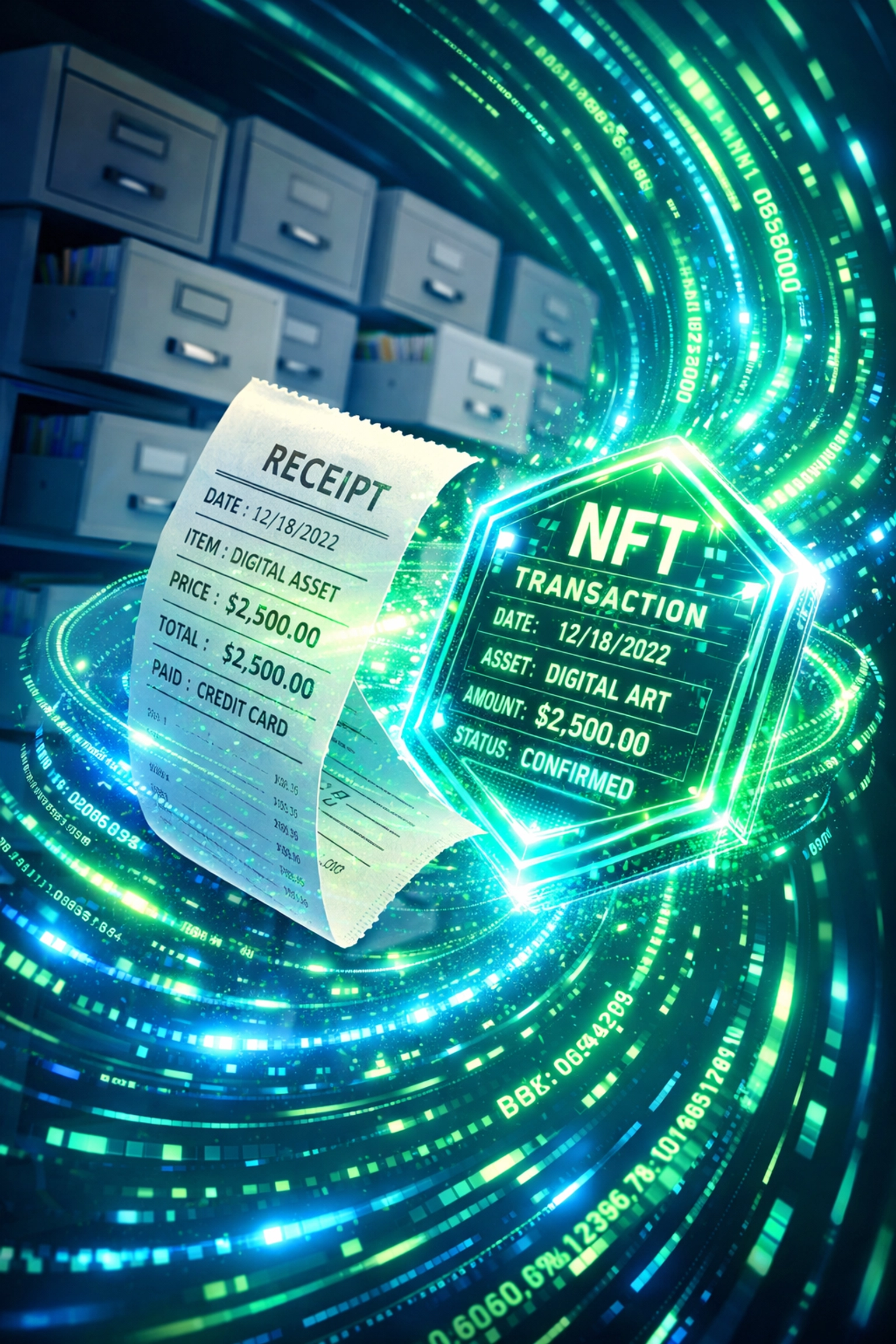
Every transaction generates an NFT receipt containing:
Transaction amount and timestamp
Customer wallet address
Product/service details
Immutable proof of payment
These receipts integrate directly with accounting software. Automated reconciliation replaces manual entry. Tax season becomes export-and-file rather than weeks of documentation gathering.
NFT receipts provide audit-proof transaction records accepted by accounting professionals globally. The blockchain timestamp prevents backdating. The immutable record eliminates disputes about payment timing or amounts.
Implementation: Three Steps to Fee Reduction
Setting up self-custody merchant accounts takes hours instead of months.
Step 1: Generate Your Merchant Wallet
Create a wallet with hardware backup. Configure multi-signature for team access. Set up receiving address rotation for privacy. Use HD wallet architecture generating unique addresses per transaction.
Step 2: Integrate Payment Infrastructure
Add crypto checkout to your existing payment flow. Enable LUSD acceptance alongside traditional options. Implement QR code generation for contactless POS integration.
Step 3: Optimize Settlement & Accounting
Connect accounting software for automatic transaction tracking. Set up automated conversion if needed. Batch transactions to minimize gas costs during network congestion.
The entire process requires no merchant application. No credit checks. No business documentation. No waiting periods.
You're live in hours.
Larecoin: Receivables Token Architecture
Larecoin introduces receivables token functionality that transforms merchant cash flow management.
Traditional payment processing holds your money for 3-5 days. Your capital sits frozen while processors collect float interest. You can't pay suppliers. You can't reinvest revenue. You wait.
Larecoin's receivables token system tokenizes incoming payments immediately. The moment a customer completes payment, you receive a receivables token representing that value. Trade it. Use it as collateral. Transfer it to suppliers for same-day payment settlement.
The Web3 global payments infrastructure eliminates float entirely. Settlement occurs in seconds to minutes rather than days. Your revenue works for you immediately instead of sitting in payment processor accounts earning them interest.
The Permissionless Advantage
Web3 payment systems operate without gatekeepers.
Traditional processors decide which businesses qualify for payment acceptance. High-risk industries get rejected. Startups without processing history get rejected. International businesses get rejected.
Web3 is permissionless. Anyone with a wallet receives payments. No approval process. No gatekeepers. No business model discrimination.
Cannabis retailers, adult content creators, international consultants, digital nomads: all operate freely without payment processor censorship.
Crypto POS System for Small Business Integration
Small businesses need plug-and-play solutions.
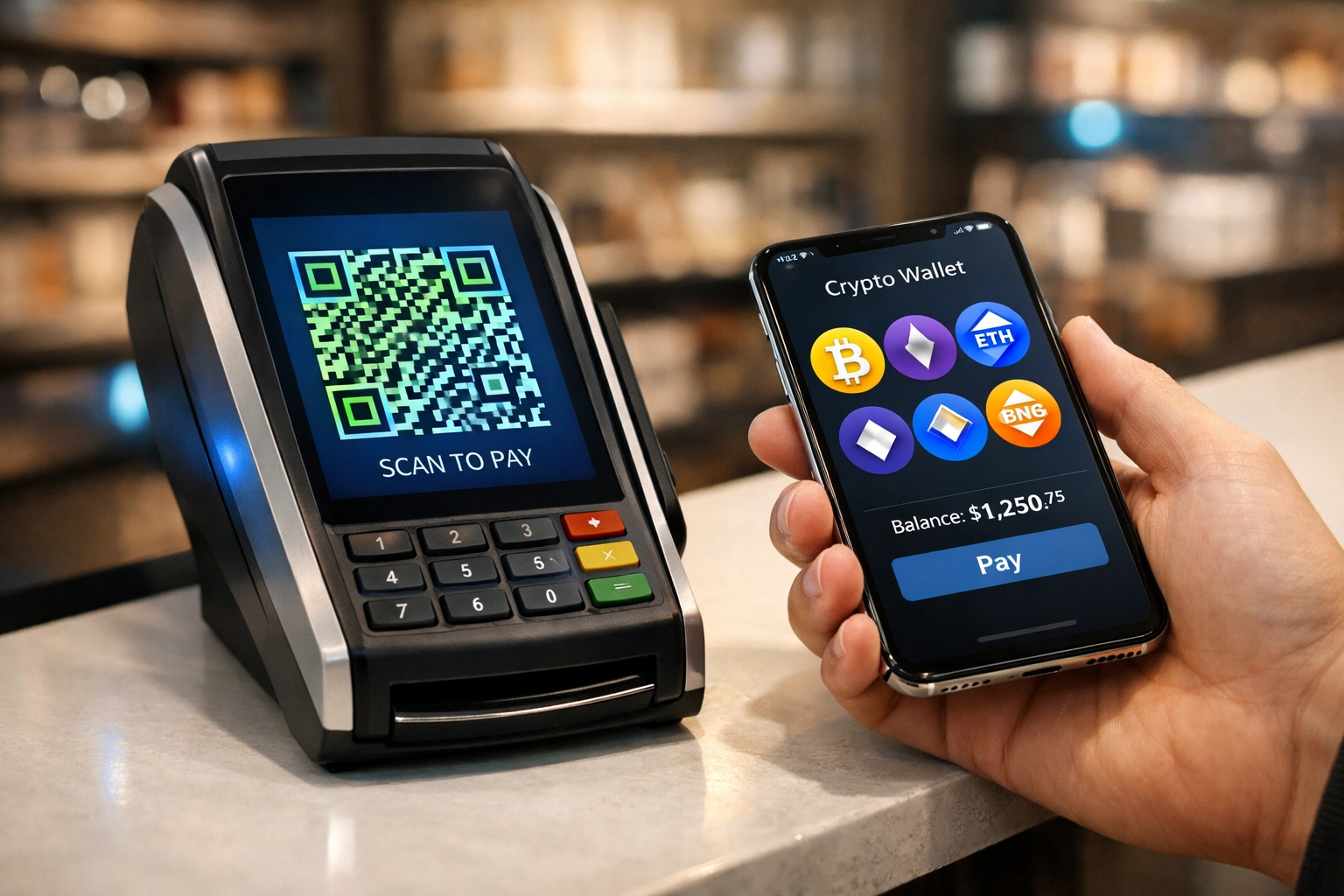
Modern crypto POS systems for small business integrate with existing hardware. Tablets. Smartphones. Traditional point-of-sale terminals. QR code displays at checkout. NFC tap-to-pay through wallet apps.
The customer experience mirrors traditional payments. Scan. Tap. Confirm. Done.
Behind the scenes, blockchain handles settlement directly. Your self-custody wallet receives funds. No intermediary processing delays. No batch settlements at day's end.
Real-time inventory updates. Instant payment confirmation. Automated receipt generation through NFT minting.
The Numbers That Actually Matter
The Web3 payment market reached $3.2 billion in 2023. Projections show $81.5 billion by 2030.
Early adopters capture market position before mainstream migration. Your competitors will eventually switch to blockchain settlement. Fee pressure makes traditional processing unsustainable long-term.
Organizations switching to Web3 global payments report:
70% reduction in international transfer costs
90%+ reduction in settlement times
Zero chargeback fraud losses
Complete elimination of payment processor account freezes
50-99% reduction in total payment processing costs

Financial Sovereignty Without Banks
Bank-free business operations represent true financial independence.
Traditional merchant accounts require business banking relationships. Banks decide whether your business model fits their risk appetite. They freeze accounts during "reviews." They report transactions to government agencies. They control your revenue access.
Self-custody merchant accounts eliminate banking dependencies. Your wallet. Your keys. Your funds. No bank approval required to receive payments. No account freezes during suspicious activity reviews. No transaction reporting to third parties.
You operate sovereignty over your business revenue from payment receipt through deployment.
Making the Switch to Larecoin
Larecoin provides complete infrastructure for reducing merchant interchange fees without security compromise.
The platform combines receivables token functionality with LUSD stablecoin acceptance and NFT receipt generation. Self-custody architecture ensures you control funds immediately upon receipt. Multi-signature security protects against unauthorized access.
Integration takes less than a day. Support for existing POS hardware eliminates equipment replacement costs. Automated accounting integration removes bookkeeping friction.
Visit Larecoin to start reducing payment processing costs today.
The question isn't whether Web3 global payments replace traditional processing. Market economics guarantee that outcome.
The question is whether you capture first-mover advantage or wait until competitors force your hand.
Traditional payment processors had their century. Time to move forward.
Comments