

.png)
Why Metaverse Shopping Will Change the Way You Accept Crypto Payments
- [[[Free!!]<<<<]] Watch: 스포르팅 - 토트넘 Live Stream 13 September 2022
- 2 hours ago
- 4 min read
![Writer: [[[Free!!]<<<<]] Watch: 스포르팅 - 토트넘 Live Stream 13 September 2022](https://lh3.googleusercontent.com/a/AItbvmktwQc0wCdd3ZEETSYItRQubwwBzOyjD_dcigRf=s96-c)
Virtual worlds don't care about national borders. Metaverse shopping operates in a borderless, digital-first environment that traditional payment infrastructure wasn't built to handle.
Your customers in Tokyo, Toronto, and Tel Aviv deserve identical checkout experiences. No conversion fees. No delays. No friction.
That's the metaverse promise: and why crypto payment acceptance is about to get a complete overhaul.
The Old Guard Can't Keep Up
NOWPayments, CoinPayments, and Triple-A built solid platforms for traditional e-commerce. They process crypto transactions. They handle conversions. They settle to fiat.
But they weren't designed for virtual storefronts.

Metaverse commerce introduces asset classes these legacy platforms struggle with:
Virtual fashion items with blockchain provenance
In-game assets requiring instant settlement
Digital collectibles needing immutable receipts
Metaverse real estate transactions
Social shopping experiences with group purchases
Traditional processors retrofit blockchain support onto existing infrastructure. That approach breaks down when customers expect native Web3 experiences.
The metaverse doesn't retrofit. It rebuilds from scratch.
Technical Advantages That Actually Matter
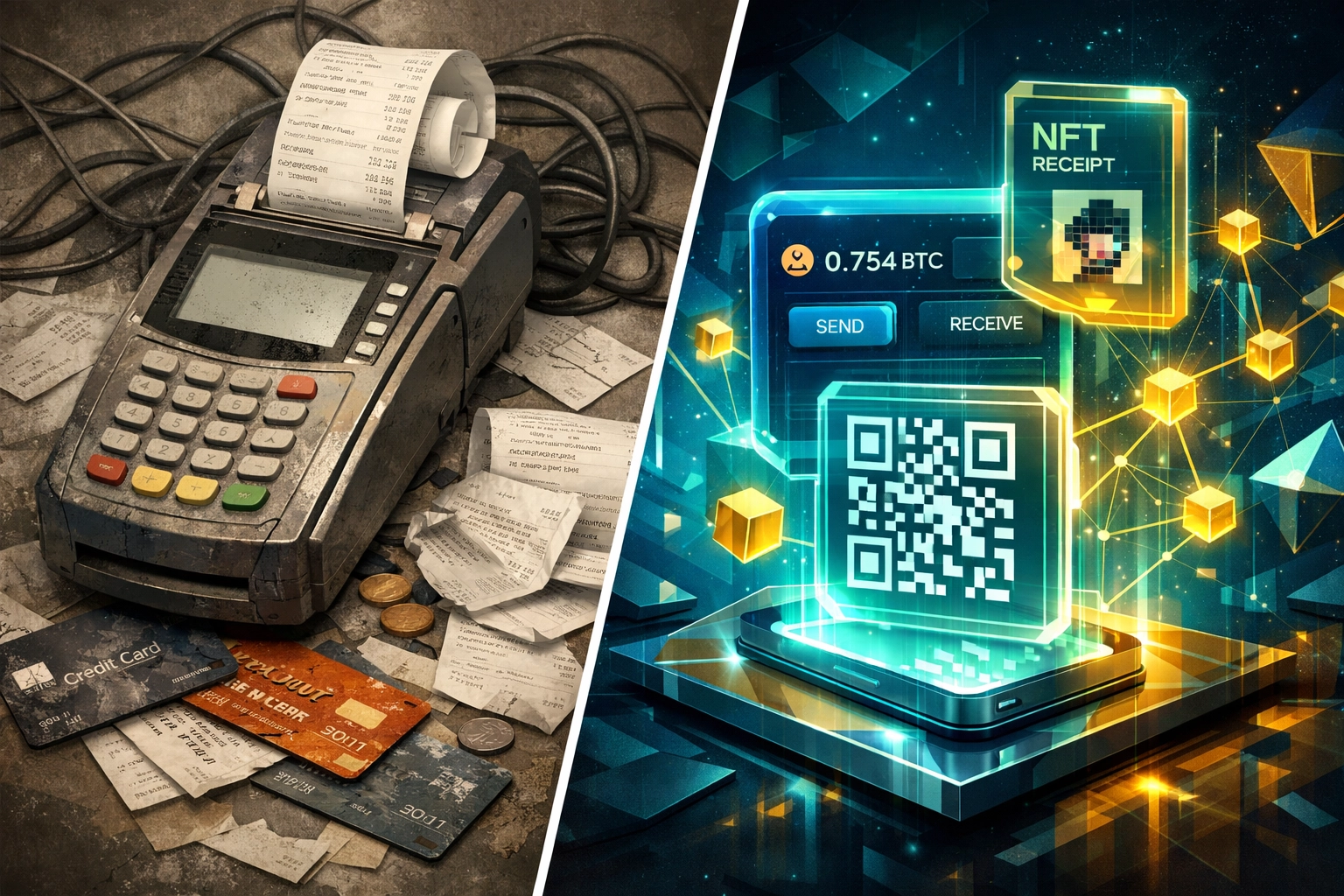
NFT receipts transform proof of purchase from a PDF attachment to a blockchain-verified asset. Every transaction creates an immutable record your customer can display, trade, or verify without contacting support.
No chargebacks. No disputes about what was purchased. Just permanent, cryptographic proof.
LUSD stablecoin eliminates the volatility excuse merchants use to avoid crypto. Price stability meets blockchain speed. Your customer pays in LUSD. You receive LUSD. No conversion drama.
Gas-only transfers destroy the percentage-based fee model. Why pay 2.9% + $0.30 when you can pay a flat network fee regardless of transaction size?
A $10 purchase costs the same in gas as a $10,000 purchase. That's not how Visa works: but it's exactly how blockchain should work.
Self-custody keeps you in control. Your keys. Your funds. Your decisions.
NOWPayments and CoinPayments hold your crypto until you withdraw. Triple-A converts to fiat automatically. You're trusting intermediaries with every transaction.
Larecoin's master/sub-wallet architecture gives merchants granular control without sacrificing custody. Run multiple virtual storefronts from a single master wallet. Track revenue streams separately. Maintain complete ownership.
Merchant Benefits Beyond Fee Savings
Reducing interchange fees by >50% sounds aggressive. It's actually conservative.
Traditional card processing charges 2-3% per transaction. High-risk merchants pay 4-6%. International transactions add another 1-2%.
Crypto POS systems running on gas-only transfers eliminate percentage-based fees entirely. You pay network fees: currently $0.05-$0.50 on most chains: regardless of purchase amount.
A $500 virtual reality headset processed through traditional rails costs $12.50-$15 in fees. Same transaction with Larecoin costs less than a dollar.
That's not marginal improvement. That's infrastructure revolution.
QR-generated POS bridges physical and virtual commerce seamlessly. Generate a payment QR code for in-store purchases. Use the same system for metaverse transactions. One backend. One reporting dashboard. Zero integration headaches.
Master/sub-wallet management solves the multi-location problem merchants face in virtual worlds. You're operating stores in Decentraland, The Sandbox, and your own metaverse space? Create sub-wallets for each location. Track performance individually. Consolidate funds when needed.
CoinPayments offers multi-wallet support but charges per wallet. Triple-A limits active wallets on lower tiers. NOWPayments requires separate accounts for different use cases.
Larecoin treats complex wallet structures as standard features, not premium upgrades.
The Social Shopping Revolution
Traditional e-commerce is solitary. You browse alone. You purchase alone. Maybe you share a link.
Metaverse shopping is fundamentally social.
Your avatar walks into a virtual Nike store with three friends. You browse together. Try on digital sneakers. Get real-time feedback. Complete group purchases with instant settlement.

The Larecoin B2B2C metaverse isn't vaporware. It's infrastructure being built right now for the social commerce wave hitting in 2026-2027.
VR/AR shopping convenience eliminates the "browse online, buy in-store" friction. See products in your physical space through AR. Walk through virtual stores in VR. Purchase instantly without switching devices or payment methods.
Your crypto wallet becomes your universal shopping credential. Same identity across physical stores, online marketplaces, and virtual worlds.
Triple-A focuses on traditional merchant services. NOWPayments optimizes for donation buttons and simple checkouts. CoinPayments targets digital goods sellers.
None of them are building for three-dimensional, socially-integrated, VR-native shopping experiences.
That's where Larecoin operates.
Compliance Isn't Optional
Federal MSB registration and state-level MTL coverage across the U.S. aren't marketing buzzwords. They're competitive moats.
Most crypto payment processors operate in regulatory gray zones. They're "working on licensing" or "compliant where required" or other vague statements that leave merchants exposed.
Larecoin's MTL compliance means you're not betting your business on a platform that might get shut down. Federal Money Services Business registration provides legitimacy traditional financial institutions recognize.
When mainstream merchants ask "Is this legal?" you have concrete answers. Not promises. Not roadmaps. Actual registration numbers.

CoinPayments operates globally but focuses on crypto-to-crypto transactions with limited regulatory oversight. NOWPayments emphasizes privacy and minimal KYC: great for some use cases, problematic for regulated industries. Triple-A targets enterprise clients but lacks comprehensive U.S. state licensing.
If you're building for the long term, compliance infrastructure matters more than feature lists.
Why This Matters Now
The metaverse isn't arriving in five years. It's already here in early form.
Roblox processes billions in virtual goods annually. Fortnite generates $5+ billion yearly from digital items. Decentraland and The Sandbox have active economies with real estate selling for six figures.
These are test environments for mass adoption.
When Apple's Vision Pro reaches mainstream pricing and Meta refines its Quest platform, virtual commerce explodes. The payment infrastructure you choose now determines whether you're ready for that explosion or scrambling to catch up.
Traditional processors will eventually add metaverse features. They'll retrofit NFT support and virtual wallet integration onto legacy systems.
But native blockchain infrastructure will always outperform retrofitted solutions.
The Choice Is Simple
Keep paying percentage-based fees while trusting intermediaries with your funds. Or switch to gas-only transfers with self-custody and NFT receipts.
Keep using separate systems for physical, online, and virtual commerce. Or unify everything under one crypto POS infrastructure.
Keep waiting for established players to catch up with metaverse commerce. Or build on platforms designed for virtual-first shopping from day one.
The metaverse doesn't wait for permission. Neither should your payment stack.
Ready to upgrade your payment infrastructure for virtual commerce?Explore how Larecoin makes crypto payments easy with Web3-native solutions built for the metaverse economy.
Gas-only transfers. NFT receipts. Self-custody. Master/sub-wallets. QR-generated POS. Federal MSB registration. State MTL compliance.
Not coming soon. Available now.
That's how you accept crypto payments when the future of commerce is virtual, social, and borderless.
Comments