

.png)
Why Metaverse Shopping Will Change the Way You Sell to Customers in 2026
- [[[Free!!]<<<<]] Watch: 스포르팅 - 토트넘 Live Stream 13 September 2022
- 4 hours ago
- 5 min read
![Writer: [[[Free!!]<<<<]] Watch: 스포르팅 - 토트넘 Live Stream 13 September 2022](https://lh3.googleusercontent.com/a/AItbvmktwQc0wCdd3ZEETSYItRQubwwBzOyjD_dcigRf=s96-c)
Virtual storefronts. 3D product demos. Customers trying on goods from their couch.
This isn't science fiction. It's happening right now.
Metaverse shopping is reshaping retail. And if you're still stuck on traditional e-commerce, you're already behind. By the end of 2026, 91% of Gen Z shoppers want AR shopping experiences. Retailers using 3D visualization report conversion rate boosts up to 94%.
The question isn't if you should adapt. It's how fast you can move.
The Metaverse Retail Revolution Is Here
The gap between online shopping and in-store experiences? Gone.
Customers now navigate virtual stores. Interact with detailed 3D products. Try before they buy, without leaving home. This solves the biggest frustration of traditional e-commerce: not knowing what you're actually getting.
But here's what nobody's talking about.
The payment infrastructure behind metaverse commerce is broken. Legacy processors weren't built for this. They charge ridiculous fees. They don't understand Web3. And they definitely can't handle NFT receipts or decentralized transactions.
That's where the real opportunity lives.
What Traditional Payment Processors Get Wrong
Let's talk about the competition.
NOWPayments offers crypto payment gateways. Basic stuff. They process transactions. That's about it. No metaverse integration. No NFT receipts. No real innovation for merchants building in virtual spaces.
CoinPayments has been around since 2013. They support multiple cryptocurrencies. Great. But their fee structure still eats into merchant profits. And their tech stack wasn't designed for immersive commerce environments.
Triple-A focuses on enterprise solutions. Solid for traditional businesses. But when it comes to VR/AR shopping experiences? They're playing catch-up.
None of these platforms were built for where retail is heading.
Larecoin's Technical Edge for Metaverse Commerce
Here's what makes the difference.
NFT Receipts
Every transaction generates a verifiable NFT receipt. Not just a PDF in your inbox. An immutable record on the blockchain.
For metaverse shopping, this matters. Virtual goods need provenance. Customers want proof of purchase they can actually trust. NFT receipts solve this instantly.
LUSD Stablecoin
Price volatility kills commerce. Nobody wants to buy a virtual jacket for $50 and have it worth $35 by the time the transaction clears.
LUSD eliminates this problem. A stablecoin designed specifically for commerce. Merchants get predictable revenue. Customers get price certainty. Everyone wins.
Gas-Only Transfers
Traditional crypto payments come with hidden fees. Network congestion. Variable gas prices. It adds up fast.
Larecoin's gas-only transfer system strips out the nonsense. You pay gas. That's it. No surprise charges eating your margins.
True Self-Custody
Your keys. Your crypto. Your business.
Unlike centralized processors that hold your funds hostage, self-custody means you control everything. This isn't just a philosophical position. It's a business advantage. No withdrawal limits. No frozen accounts. No asking permission to access your own money.
The Fee Savings Merchants Actually Care About
Numbers don't lie.
Traditional interchange fees eat 2-3% of every transaction. For high-volume merchants, that's devastating. A business doing $1 million in annual sales loses $20,000-$30,000 to payment processors.
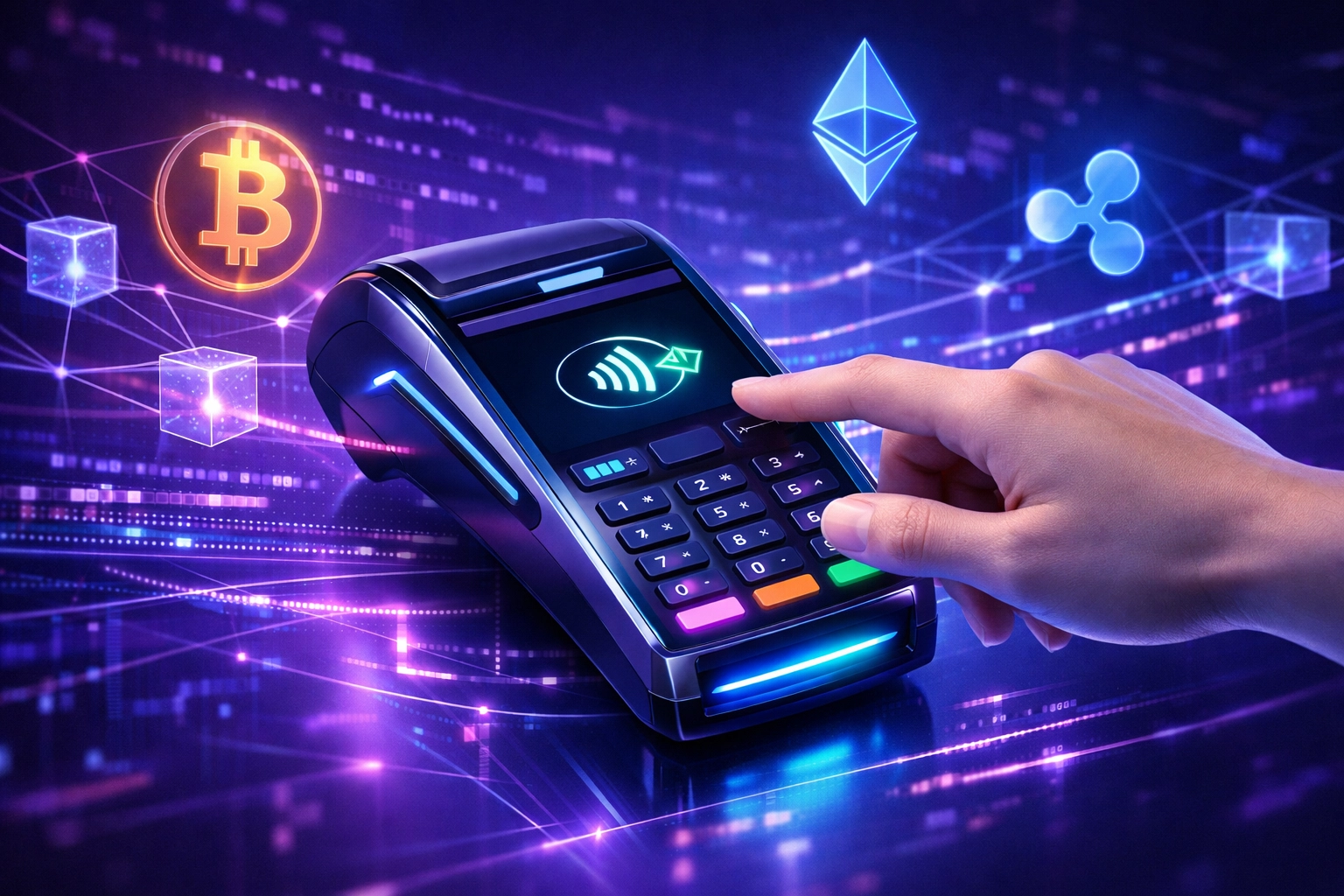
Larecoin's crypto POS slashes those costs by more than 50%.
Do the math. That's $10,000-$15,000 back in your pocket. Every year. Scale that up and you're looking at serious competitive advantage.
Master/Sub-Wallet Architecture
Running multiple locations? Different departments? Various product lines?
Master/sub-wallets let you organize everything cleanly. One central control point. Multiple operational wallets underneath. Perfect for franchise models. Ideal for complex retail operations.
QR-Generated POS
No expensive hardware. No complicated integrations.
Generate a QR code. Customer scans. Payment complete. Works in physical stores. Works in virtual environments. Works everywhere.
This is what crypto POS should look like in 2026.
Building the B2B2C Metaverse Shopping Experience
Here's the vision.
Imagine walking into a virtual mall. Your avatar browses stores. You see something you like. Try it on digitally. Purchase with LUSD. Receive an NFT receipt confirming ownership.
Now imagine you're the merchant.
You've set up shop in the Larecoin metaverse. Customers from Tokyo, Toronto, and Taipei visit simultaneously. No geographical barriers. No currency conversion headaches. No payment friction.
Social shopping becomes real. Friends explore together. Share recommendations in real-time. Make group purchases seamlessly.
This is the future Larecoin is building.
VR/AR Shopping: The Convenience Factor
Gen Z gets it.
They don't want to guess if something fits. They want to see it on their avatar first. They want immersive product demonstrations. They want the store to come to them.
Smart retailers are responding. Luxury brands use VR to create exclusive experiences. Trend-setters deploy AR for product visualization. The leaders personalize everything based on real-time behavioral data.
Retailers excelling at this personalization see up to 40% revenue increases.
The technology exists. The customer demand exists. What's missing for most merchants is the payment infrastructure to support it.
That's the gap Larecoin fills.
MTL Compliance: The Trust Foundation
Innovation means nothing without trust.
Larecoin operates with Federal MSB registration. State-level MTL coverage across the United States. This isn't optional compliance. This is foundational.
For merchants, this matters enormously.
You're not dealing with some offshore operation that might disappear tomorrow. You're partnering with a regulated entity that plays by the rules. Your customers get protected. Your business gets legitimacy. Your lawyers get peace of mind.
MTL compliance isn't sexy. But it's essential.
What This Means for Your Business
Let's get practical.
If you're selling physical goods: VR try-ons reduce returns. 3D visualization increases conversion. Crypto payments cut costs.
If you're selling digital goods: NFT receipts prove ownership. LUSD ensures stable pricing. Metaverse storefronts expand your reach globally.
If you're building a brand: Immersive experiences create memorable connections. Social shopping amplifies word-of-mouth. Early adoption positions you as innovative.
The merchants who move first capture the market. The ones who wait get left behind.

The 2026 Playbook
Here's your action plan.
Step 1: Evaluate your current payment processing costs. Calculate what you're losing to interchange fees.
Step 2: Explore metaverse presence options. Even a basic virtual storefront positions you ahead of competitors.
Step 3: Integrate crypto payment options. Start with QR-based POS. Expand from there.
Step 4: Build for self-custody. Own your financial infrastructure.
Step 5: Prioritize compliance. Partner with regulated platforms like Larecoin.
Metaverse shopping isn't replacing traditional retail overnight. But it's growing faster than anyone predicted. The smart money is positioning now.
The Bottom Line
2026 is the year metaverse shopping goes mainstream.
Virtual stores. NFT receipts. LUSD payments. Self-custody wallets. Crypto POS systems. These aren't future concepts. They're current tools.
The merchants who adopt them now gain fee savings exceeding 50%. They reach global customers without friction. They build trust through MTL compliance. They create experiences customers actually want.
The technology is ready. The infrastructure exists. The only question is whether you'll use it.
Ready to transform how you sell? Explore Larecoin's merchant solutions and start building your metaverse commerce strategy today.
Comments