

.png)
Why Receivables Tokens Will Change the Way You Accept Crypto Payments
- [[[Free!!]<<<<]] Watch: 스포르팅 - 토트넘 Live Stream 13 September 2022
- 2 hours ago
- 4 min read
![Writer: [[[Free!!]<<<<]] Watch: 스포르팅 - 토트넘 Live Stream 13 September 2022](https://lh3.googleusercontent.com/a/AItbvmktwQc0wCdd3ZEETSYItRQubwwBzOyjD_dcigRf=s96-c)
Waiting 30, 60, or 90 days for invoice payments? That's legacy thinking.
Traditional payment rails are slow. Expensive. Controlled by intermediaries who profit from your patience.
Receivables tokens flip that script entirely.
Here's the deal: What if you could convert outstanding invoices into tradeable digital assets? Access working capital instantly. Skip the banks. Keep full control of your funds.
That's not futuristic speculation. That's happening right now in Web3.
Let's break down why receivables tokens are fundamentally reshaping how merchants accept crypto payments: and why Larecoin is positioning itself at the forefront of this shift.
What Exactly Are Receivables Tokens?
Simple concept. Powerful execution.
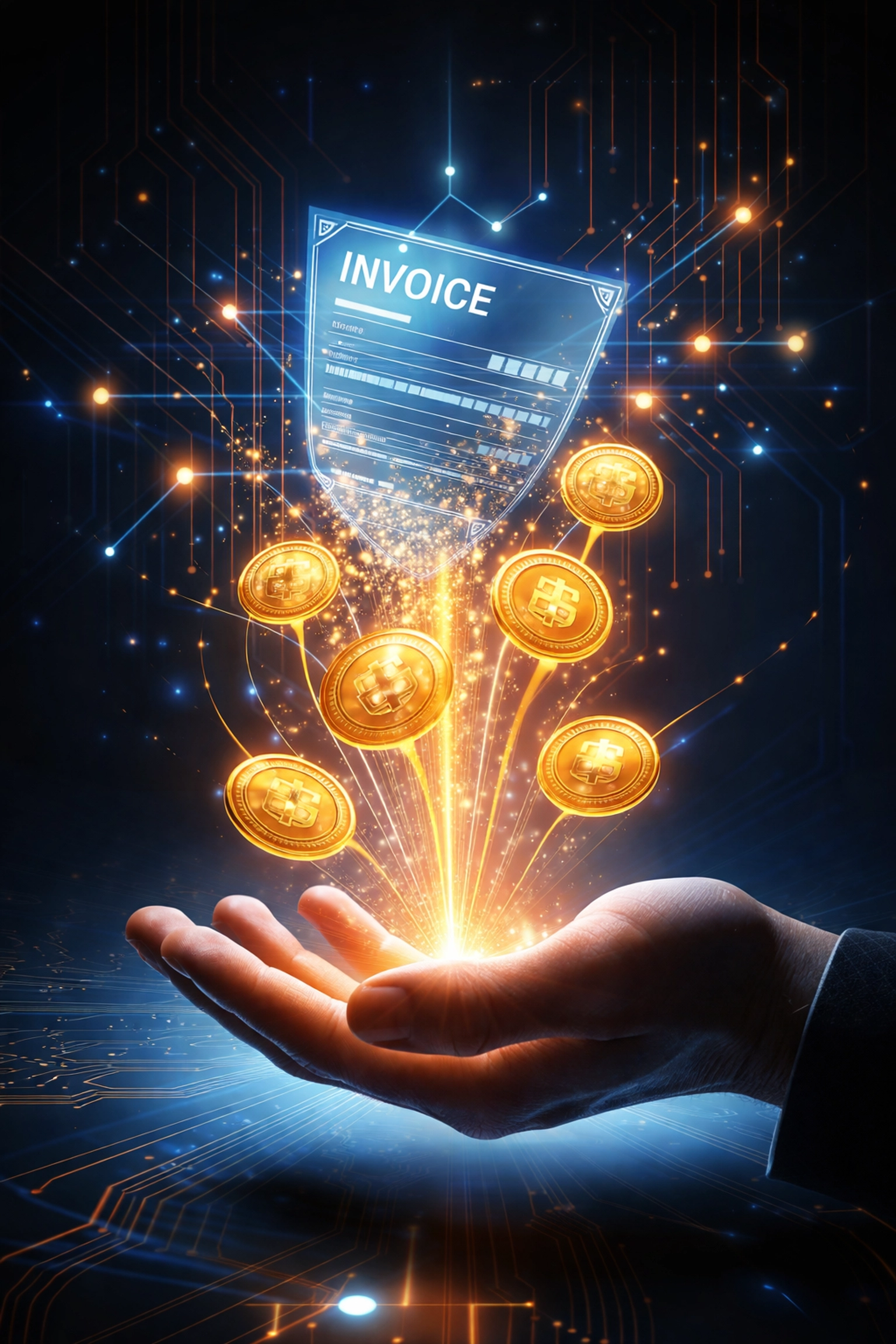
A receivables token represents an unpaid invoice as a digital asset on the blockchain. Instead of waiting for customers to pay, you tokenize that receivable and unlock its value immediately.
Think of it as invoice factoring: but decentralized. No banks. No lengthy approval processes. No middlemen taking a cut.

Here's how it works:
You issue an invoice to a customer
That invoice gets tokenized on-chain
The token can be traded, used as collateral, or sold for immediate liquidity
When the customer pays, the smart contract settles automatically
No manual follow-ups. No chasing payments. The blockchain handles execution.
The Problem With Traditional Crypto Payment Processors
Let's talk competitors.
Platforms like NOWPayments and CoinPayments offer crypto acceptance. They've been around. They work.
But here's the catch:
Custodial models. Your funds sit in their wallets. Not yours.
Fee structures. Hidden costs add up fast.
Settlement delays. Some still take days to process.
Limited innovation. Basic swaps and conversions. Nothing groundbreaking.
If you're searching for a NOWPayments alternative or CoinPayments alternative, the question isn't just "who has lower fees?"
It's: "Who's actually building for the future of Web3 global payments?"
Receivables tokenization isn't a feature these legacy processors offer. They're playing catch-up.
Why Receivables Tokens Matter for Merchants
Cash flow is everything.
Especially for small businesses operating on thin margins. Waiting weeks for customer payments can cripple operations.
Receivables tokens solve this by:
For any crypto POS system for small business, this is the evolution merchants have been waiting for.
LUSD Stablecoin Benefits: Stability Meets Speed
Crypto volatility scares merchants. Understandably.
Accepting Bitcoin or Ethereum means price swings can wipe out margins between transaction and settlement.
That's where stablecoins like LUSD enter the picture.
LUSD stablecoin benefits include:
1:1 USD peg. No volatility surprises.
Decentralized collateral. Not controlled by a single entity.
Fast settlement. Minutes, not days.
Lower fees. Skip the credit card networks entirely.
Combine LUSD stability with receivables tokenization, and you've got a system where merchants can:
Accept payments in crypto
Settle instantly in stable value
Tokenize receivables for immediate liquidity
Reduce merchant interchange fees by 50% or more
That's not incremental improvement. That's a fundamental shift in how business gets done.
Self-Custody Merchant Accounts: Your Keys, Your Funds
Here's a truth most payment processors won't tell you:
When your funds sit in someone else's wallet, you don't really own them.
Self-custody merchant accounts change that equation.
With self-custody:
You control the private keys. Always.
No platform can freeze your funds. Period.
No withdrawal limits imposed by third parties.
Complete financial sovereignty.
This matters especially in 2026, where regulatory uncertainty and platform collapses have taught merchants hard lessons about custodial risk.
Larecoin's infrastructure prioritizes self-custody from day one. Your business. Your funds. Your control.
Check out the Larecoin ecosystem to see how this works in practice.
NFT Receipts for Accounting: Bulletproof Your Records
Tax season. Audits. Compliance headaches.
Traditional payment records scatter across platforms. Receipts get lost. Data conflicts arise.
NFT receipts for accounting solve this elegantly.
Every transaction generates an NFT receipt: a permanent, verifiable record stored on-chain. Here's why that matters:
Immutable proof. Can't be altered or deleted.
Instant verification. Auditors can confirm transactions in seconds.
Organized records. All transactions tied to a single wallet.
Simplified compliance. Clear trails for every receivable, payment, and settlement.
For businesses operating across borders: especially in Web3: this isn't just convenient. It's essential infrastructure.
How Larecoin Implements Receivables Tokenization
Let's get specific.
Larecoin isn't just talking about these concepts. The platform is building them into a cohesive Web3 payments ecosystem.
Key features:
Feature | Benefit |
Receivables Token | Convert invoices to tradeable assets instantly |
LUSD Integration | Stable settlement without volatility risk |
Self-Custody Architecture | Full control over merchant funds |
NFT Receipt System | Permanent, verifiable transaction records |
Gas-Only Transfers | Minimal transaction costs |
Push-to-Card | Off-ramp crypto to traditional payment methods |
This isn't piecemeal innovation. It's a complete stack designed for merchants who want to operate outside traditional banking rails while maintaining professional-grade financial operations.
Looking for a modern crypto POS system for small business?Explore what Larecoin offers.
The Competitive Edge: Beyond NOWPayments and CoinPayments
Let's compare directly.
Traditional processors (NOWPayments, CoinPayments, Triple-A):
Custodial by default
Limited to basic swap functionality
No receivables tokenization
Standard receipt systems
Bank-dependent settlement options
Larecoin's approach:
Self-custody first
Receivables tokenization built-in
NFT receipts for accounting and compliance
LUSD stablecoin integration
Global reach without bank intermediaries
The gap isn't subtle. It's structural.
When merchants evaluate which platform to build on, the question becomes: Do you want 2020-era crypto payment rails? Or do you want infrastructure designed for where Web3 is actually heading?
What This Means for Your Business
Here's the bottom line.
Receivables tokens aren't a gimmick. They're a fundamental rethinking of how value moves between businesses.
For merchants, this translates to:
Faster access to working capital. No more waiting on slow-paying customers.
Lower costs. Slash interchange fees. Eliminate intermediary markups.
Greater control. Self-custody means you decide when and how funds move.
Better records. NFT receipts create audit-proof transaction histories.
Global reach. Accept payments from anywhere without correspondent banking friction.
Whether you're running an e-commerce store, a service business, or operating in the metaverse: this infrastructure levels the playing field.
Ready to Make the Switch?
The old way: Wait for payments. Pay fees. Hope your processor doesn't freeze funds.
The new way: Tokenize receivables. Settle instantly. Maintain full custody.
Larecoin is building the infrastructure for bank-free business operations.
Dive deeper into the Larecoin forum to explore how receivables tokenization fits into broader Web3 payment strategy.
Or jump straight to the main site and see the ecosystem in action.
The future of crypto payments isn't waiting around. Neither should you.
Comments