

.png)
Why Self-Custody Merchant Accounts Will Change the Way You Accept Crypto Payments
- [[[Free!!]<<<<]] Watch: 스포르팅 - 토트넘 Live Stream 13 September 2022
- 2 hours ago
- 5 min read
![Writer: [[[Free!!]<<<<]] Watch: 스포르팅 - 토트넘 Live Stream 13 September 2022](https://lh3.googleusercontent.com/a/AItbvmktwQc0wCdd3ZEETSYItRQubwwBzOyjD_dcigRf=s96-c)
Traditional payment processors control your money. They hold your funds. They freeze your account. They charge excessive fees.
Self-custody changes everything.
The Problem With Custodial Payment Processors
You're running a business, but you don't control your own capital.
Services like NOWPayments and CoinPayments sit between you and your money. They act as middlemen. They custody your funds in their wallets. You need permission to access what's already yours.
Sound ridiculous? It is.
Here's what happens with traditional custodial processors:
Your funds settle in 3-5 business days (sometimes longer)
Processors hold your crypto in their accounts
They charge 0.5-1% per transaction plus withdrawal fees
Your account can freeze for vague "terms of service" violations
You're one policy change away from losing access
Chargebacks drain 0.47% of annual revenue on average
The Web3 revolution promised financial sovereignty. Custodial processors deliver the opposite.
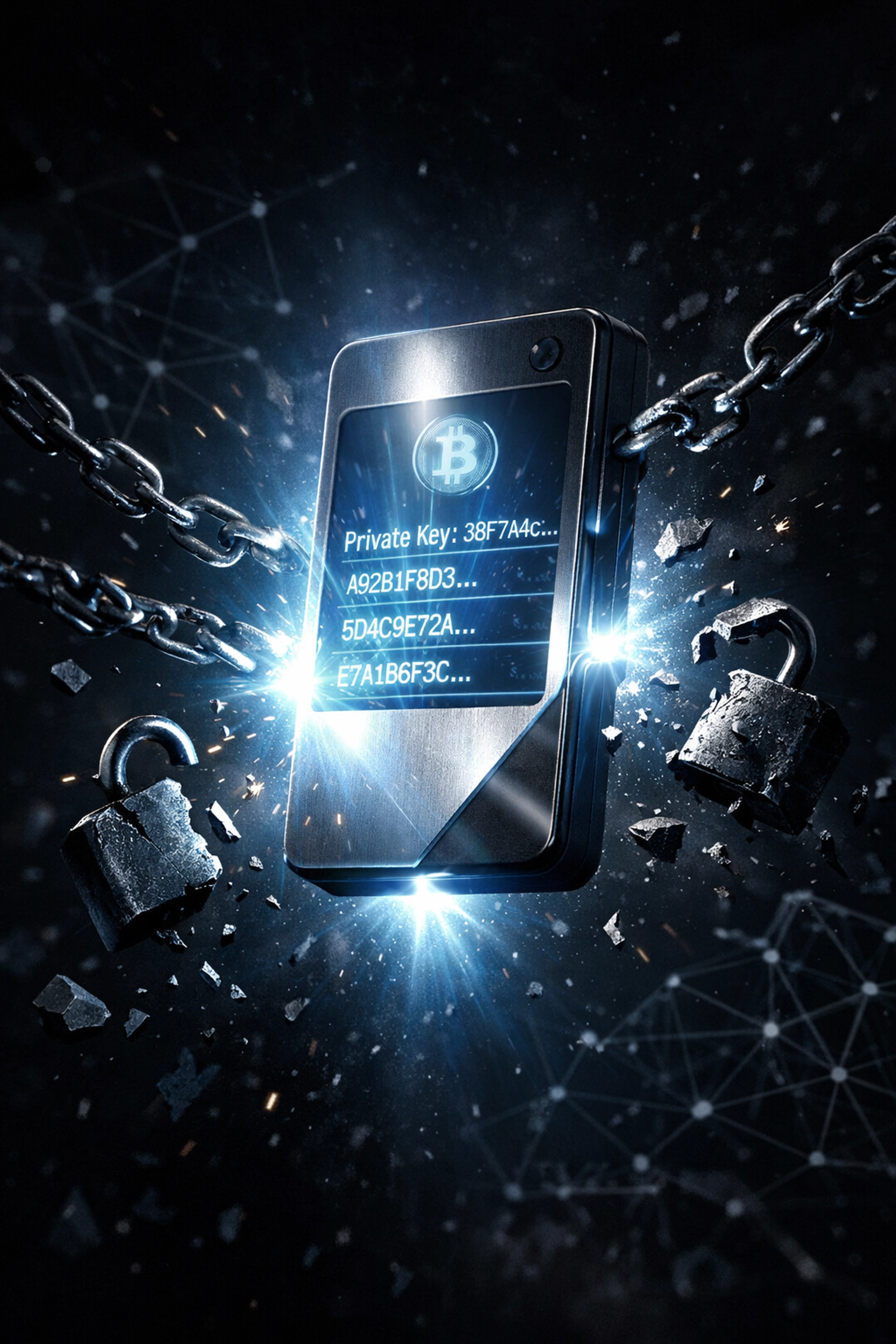
Self-Custody Eliminates the Middleman Entirely
With self-custody merchant accounts, cryptocurrency transfers directly from customer to your wallet. No intermediary. No gatekeeper. No settlement delays.
The transaction flow is simple:
Customer pays → Blockchain confirms → Funds appear in YOUR wallet → You control the private keys
That's it. Pure peer-to-peer commerce.
Larecoin's self-custody architecture gives you complete control from the first confirmation. Your wallet. Your keys. Your money. Instantly.
Compare this to NOWPayments, which holds funds in their custodial wallets before releasing them to you. Or CoinPayments, which requires withdrawal requests and processing time. These aren't crypto solutions: they're traditional banking with blockchain logos.
Slash Your Fees by 50% or More
Traditional payment processors charge percentage-based fees on every transaction. The more you make, the more they take.
Standard custodial processor fees:
NOWPayments: 0.5% transaction fee + withdrawal fees
CoinPayments: 0.5% per transaction + network fees
Additional charges for currency conversion
Monthly platform fees for higher volumes
Self-custody eliminates percentage-based fees entirely.
You pay only blockchain gas fees: typically under $1 per transaction regardless of amount. Process a $100 payment? $1 gas fee. Process a $10,000 payment? Same $1 gas fee.
The math is simple:
$10,000 payment with custodial processor at 0.5% = $50 fee
$10,000 payment with self-custody = $1 gas fee
That's a 98% cost reduction.
For high-volume merchants, the savings compound dramatically. Process $1 million monthly? Save $5,000 in fees. Every single month.
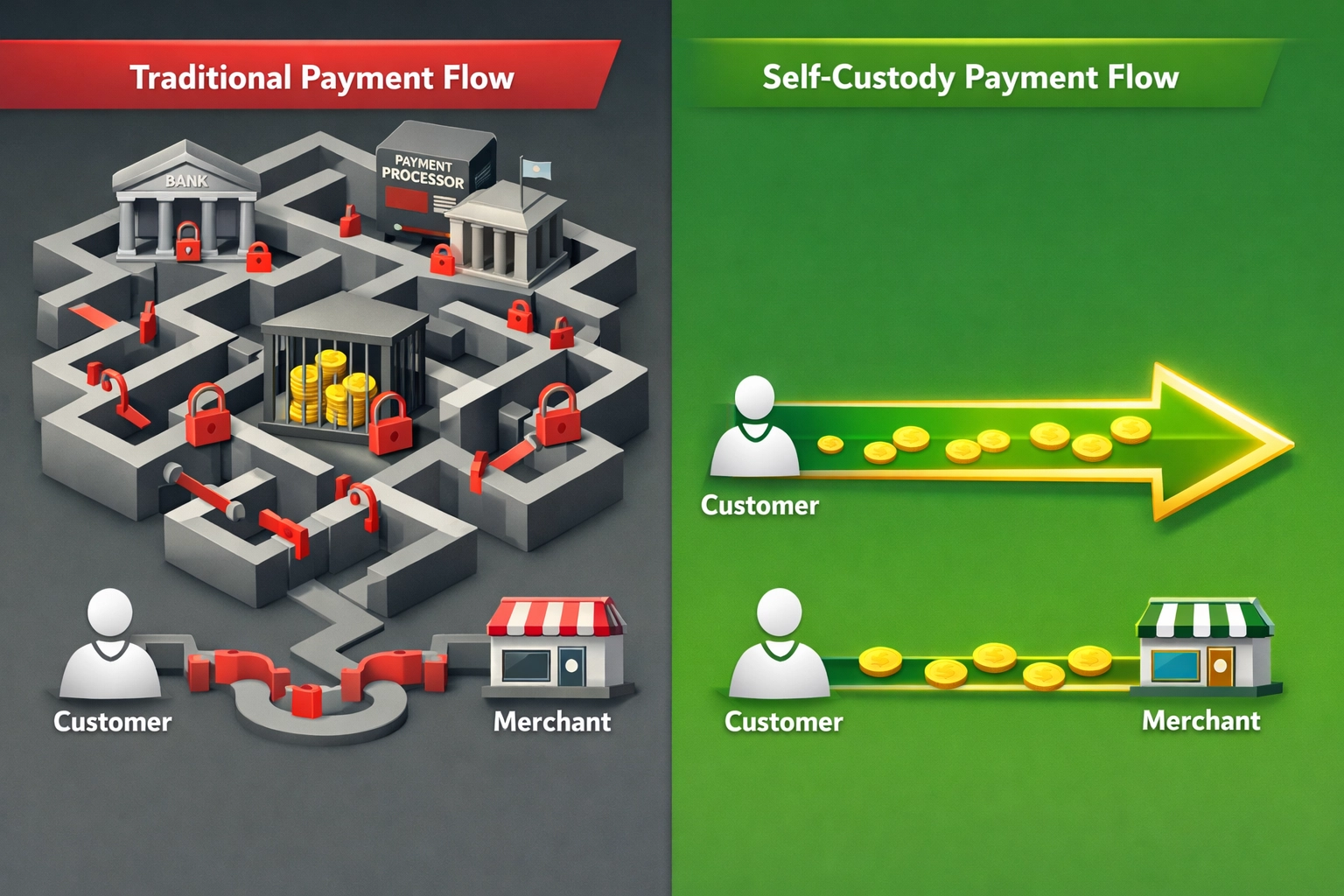
Settlement in Seconds, Not Days
Traditional banking operates on decades-old infrastructure. Payment processors built on this foundation inherit the same delays.
Typical settlement timeline with custodial services:
Transaction initiated
10-30 minute blockchain confirmation
Held in processor's custody account
3-5 business day settlement period
Transfer to your bank account
Another 1-2 days for availability
Total time: Up to 7 business days.
Self-custody settlement timeline? 10-30 minutes.
Once the blockchain confirms, funds exist in your wallet. Immediately available. No waiting period. No settlement batch processing. No banking hours.
This changes cash flow management completely. Especially for businesses operating on thin margins or managing inventory costs.
Chargebacks Become Impossible
The payment industry loses $125 billion annually to chargebacks. Merchants lose 60% of disputes even when fraud is obvious.
The chargeback nightmare:
Customer disputes legitimate charge
Payment processor automatically sides with customer
Your funds get reversed
You pay $15-100 chargeback fee
You lose the product/service already delivered
Too many chargebacks? Account termination
Blockchain transactions eliminate this entirely.
Once confirmed, transactions are irreversible. Cryptographically secured. Permanently recorded. Customers cannot file fraudulent disputes because the blockchain itself proves payment completion.
This doesn't mean zero customer service. It means customers must resolve issues directly with you: the merchant: not through a third-party arbitrator who profits from taking your money.
Self-custody with LUSD (Larecoin's stablecoin) gives you chargeback protection with price stability. The best of both worlds.
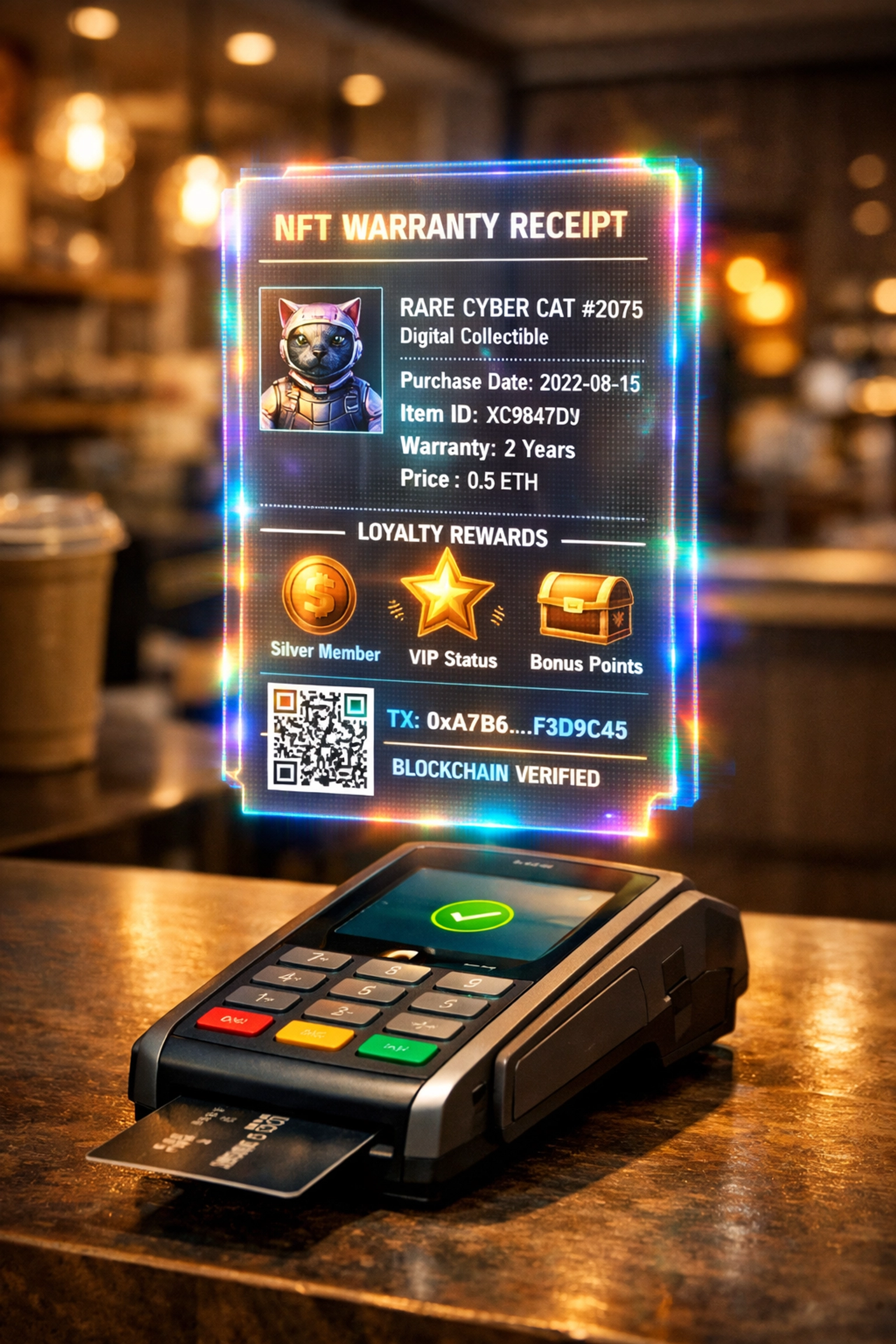
NFT Receipts: The Smart Documentation Layer
Every Larecoin transaction can generate an NFT receipt. Immutable. Timestamped. Cryptographically verified.
NFT receipts provide:
Permanent proof of purchase on-chain
Automatic warranty tracking
Loyalty program integration
Resale verification for secondary markets
Complete accounting reconciliation
Tax documentation without manual entry
Traditional receipts are paper slips or PDF files. Easily lost. Manually organized. Zero built-in utility.
NFT receipts are programmable assets. They can unlock exclusive content. Grant access to private communities. Prove authenticity for resale. Automatically calculate depreciation for business expenses.
This transforms receipts from administrative burden to value-added feature.
Customers gain portable proof of purchase that follows them across platforms. Merchants gain automatic record-keeping and customer engagement tools.
NOWPayments doesn't offer this. CoinPayments doesn't offer this. Traditional processors can't even conceive of this functionality.
LUSD: Stablecoin Advantages Without Custodial Risk
Price volatility scares merchants away from crypto payments. Fair concern.
LUSD solves this while maintaining self-custody principles.
LUSD advantages:
Pegged to USD for price stability
Decentralized collateralization (no custodian risk)
Self-custody compatible
Low gas fees on efficient blockchains
Instant conversion from volatile crypto
Accepted across Larecoin's entire ecosystem
Accept payments in Bitcoin or Ethereum. Automatically convert to LUSD. Maintain purchasing power without custodial exposure.
Traditional stablecoin processors like CoinPayments require you to trust their custody. USDC and USDT have centralized issuers who can freeze assets. LUSD operates through decentralized smart contracts.
Your funds. Your control. Zero counterparty risk.

Account Freezes Become Impossible
Custodial processors can freeze your account anytime. Vague policy violations. Suspicious activity flags. Changed terms of service.
Common freeze triggers:
High transaction volume
Customer complaints (even fraudulent ones)
Business type suddenly deemed "high risk"
Geographic location restrictions
Unexplained "security reviews"
Self-custody makes account freezes technologically impossible.
No company controls your wallet. No terms of service apply to blockchain protocols. No arbitrary policy changes affect your access.
You hold the private keys. The blockchain validates transactions. That's the entire system.
This matters especially for businesses in emerging markets, controversial industries, or innovative sectors where traditional processors deploy heavy-handed restrictions.
Your Capital, Your Timeline
Traditional processors dictate when you access your money. Batch settlements. Banking hours. Weekends and holidays.
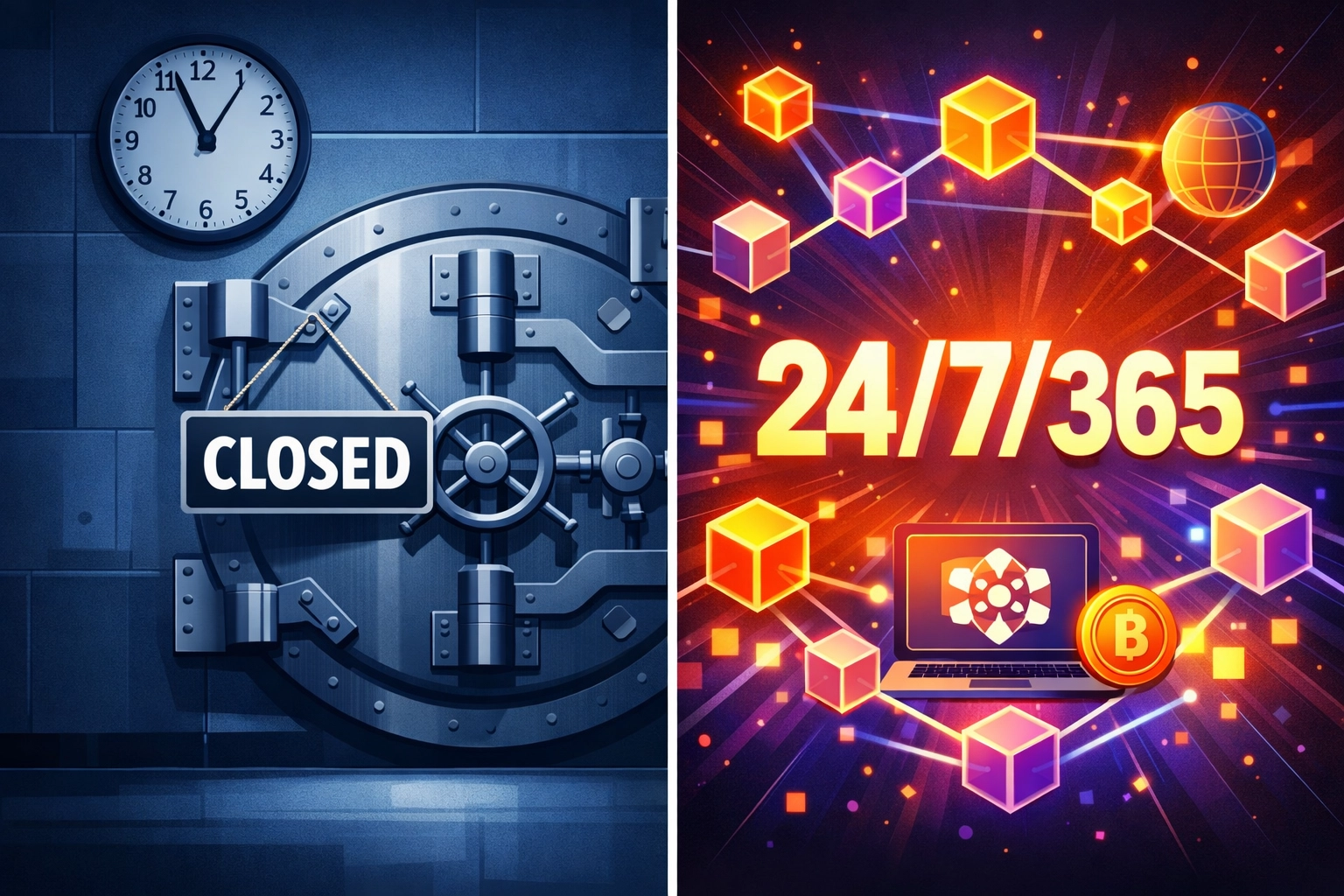
Self-custody operates 24/7/365.
Receive payment at 2 AM on Sunday? Funds arrive immediately. Need to pay suppliers in different time zones? Send directly from your wallet.
The blockchain doesn't take lunch breaks or observe holidays.
This flexibility compounds for international businesses. No currency conversion delays. No intermediary bank approvals. No correspondent banking fees.
Pure peer-to-peer value transfer at internet speed.
Larecoin vs. The Competition
NOWPayments:
Custodial architecture
0.5% transaction fees
Settlement delays
Limited stablecoin options
No NFT receipt functionality
Account control in their hands
CoinPayments:
Custodial wallet system
0.5% fees + withdrawal charges
Batch settlement processing
Traditional merchant account model
Zero self-custody options
Freeze risk on their platform
Larecoin:
Pure self-custody from transaction one
Gas-only fees (90%+ cost reduction)
Instant settlement to your wallet
LUSD stablecoin integration
NFT receipt generation
Impossible to freeze your account
The difference isn't incremental. It's fundamental.
Traditional processors adapted banking models to blockchain. Larecoin built Web3-native infrastructure from the ground up.
The Financial Sovereignty Standard
Self-custody represents more than technical architecture. It's a philosophical commitment to merchant independence.
You built your business. You serve your customers. You deserve control over your capital.
Every custodial middleman extracts value while adding risk. Payment processors profit from your success while maintaining kill-switch control over your operation.
Self-custody inverts this dynamic completely.
Larecoin's merchant solutions prioritize your sovereignty. Your growth. Your financial independence. We provide infrastructure, not control.
The tools exist today to eliminate intermediaries, slash fees by 50%+, settle transactions instantly, and maintain complete financial autonomy.
Self-custody merchant accounts aren't the future. They're the present.
The question: Are you still paying processors to control your money?
Visit Larecoin to set up your self-custody merchant account. Your capital. Your timeline. Your business.
Comments