

.png)
Your Quick-Start Guide to Web3 Global Payments: Do This First
- [[[Free!!]<<<<]] Watch: 스포르팅 - 토트넘 Live Stream 13 September 2022
- 3 days ago
- 4 min read
![Writer: [[[Free!!]<<<<]] Watch: 스포르팅 - 토트넘 Live Stream 13 September 2022](https://lh3.googleusercontent.com/a/AItbvmktwQc0wCdd3ZEETSYItRQubwwBzOyjD_dcigRf=s96-c)
Traditional payment processors eat your profits. 2-4% interchange fees. International transaction markups. Bank approvals that take weeks.
Web3 global payments change everything.
You keep more revenue. You go global instantly. You control your own merchant account.
But where do you actually start?
This guide breaks down exactly what to do first. No fluff. Just actionable steps to get your business accepting crypto payments today.
Why Web3 Payments Matter Right Now
Here's the reality. Credit card processors charge merchants anywhere from 2.5% to 4% per transaction. International payments? Even worse: 4-6% plus currency conversion fees.
Web3 payments slash those costs dramatically. We're talking approximately 0.5% or less. Sometimes just blockchain gas fees.
That's not a minor savings. For a business processing $100,000 monthly, that's potentially $3,500+ back in your pocket. Every single month.
But cost savings are just the beginning.
Self-custody merchant accounts mean you're not waiting on bank approvals. No frozen funds. No chargebacks. No middlemen deciding whether your business is "acceptable."
Financial sovereignty isn't just a buzzword. It's operational freedom.
Step 1: Set Up Your Self-Custody Merchant Account
First move? Create your merchant account.
Unlike traditional payment processors, a self-custody merchant account puts you in control. Your keys. Your wallet. Your funds.
Here's what that means:
No bank approval required – Start accepting payments immediately
No frozen accounts – Your crypto stays accessible
No intermediary holding your revenue – Funds go directly to your wallet
Visit Larecoin to set up your merchant portal. Generate your wallet addresses for receiving payments.
Running multiple locations or departments? Set up master and sub-wallets to track revenue streams separately.
Pro tip: Organize your wallet structure before you start processing. Makes accounting significantly cleaner down the road.
Step 2: Choose Your Stablecoin Strategy
Crypto volatility scares some merchants. Understandable.
That's where stablecoins come in.
LUSD and other stablecoins maintain a 1:1 peg with traditional currencies. You get all the benefits of crypto payments: low fees, fast settlement, global reach: without the price swings.
LUSD stablecoin benefits include:
Price stability – No worrying about BTC dropping 10% overnight
Instant settlement – Funds available immediately
Easy accounting – Values map directly to fiat for reporting
Configure your payment settings to accept stablecoins as your primary currency. You can always add BTC, ETH, or other cryptos later.
Start stable. Expand from there.
Step 3: Select Your Integration Method
How you accept payments depends on your business model. Pick the path that fits.
E-Commerce Websites
Running Shopify, WooCommerce, or Magento? Use ready-made plugins. Install. Configure. Done.
No developer required. Copy-paste integration in most cases.
In-Store Payments
Need a crypto POS system for small business operations? Generate QR codes for contactless transactions.
Customer scans. Pays. You receive funds instantly.
No swipe machines. No terminal fees. Just clean, fast transactions.
Apps and Games
Building something custom? Use API integration for headless implementation. Full control over the user experience.
Plug-and-play UI components also available for faster deployment.

Step 4: Configure Payment Settings
Time to dial in the specifics.
Supported Currencies
Decide which cryptocurrencies you'll accept:
LUSD (recommended for stability)
USDC
USDT
BTC
ETH
SOL
Start with 2-3 options. Add more based on customer demand.
Blockchain Networks
Select which networks to support. Popular choices:
Solana (fast, low fees)
Ethereum (widespread adoption)
Polygon (low fees, high speed)
More networks = more flexibility for customers. But also more complexity to manage.
Settlement Preferences
Want to hold crypto? Keep funds in your wallet.
Prefer fiat? Connect your bank account after completing KYC. Automatic conversion handles the rest.
Most merchants use a hybrid approach. Hold some crypto. Convert some to fiat for operational expenses.
Step 5: Leverage NFT Receipts for Accounting
This is where Web3 gets interesting.
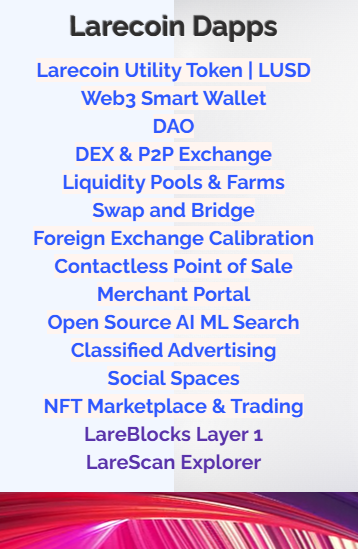
NFT receipts for accounting transform how you track transactions. Every payment generates a unique, immutable record on the blockchain.
Benefits:
Tamper-proof records – Auditors love this
Automatic documentation – No manual receipt management
Real-time tracking – See every transaction instantly
Receivables token integration – Tokenize outstanding invoices
Traditional accounting systems require manual reconciliation. NFT receipts create a permanent, verifiable trail automatically.
Your accountant will thank you.
Step 6: Test Before You Launch
Never skip testing.
Use testnets or sandbox mode to validate everything:
Transaction paths work correctly
Wallet addresses receive funds
Conversion settings function properly
Receipts generate accurately
Run test transactions. Verify each step. Then launch confidently.
How Larecoin Compares to Alternatives
Looking for a NOWPayments alternative or CoinPayments alternative? Here's how Larecoin stacks up.
vs. NOWPayments
NOWPayments offers solid basic functionality. But Larecoin delivers more advanced features:
NFT receipt generation for superior record-keeping
LUSD stablecoin integration
True self-custody without intermediary control
Receivables tokenization for cash flow management
vs. CoinPayments
CoinPayments has been around for years. The interface feels dated. Processing times lag behind newer solutions.
Larecoin provides:
Faster settlement on modern blockchain networks
Cleaner merchant portal experience
Advanced POS system for in-store transactions
Better fee structures
vs. Triple-A
Triple-A focuses heavily on enterprise clients. Smaller merchants get overlooked.
Larecoin scales both directions. Works for the solo entrepreneur running an online store. Works for multi-location retail operations. Same powerful features regardless of size.
Reduce Merchant Interchange Fees Immediately
Let's talk numbers again.
Traditional payment processing:
Interchange fees: 1.5-3.5%
Assessment fees: 0.13-0.15%
Processor markup: 0.2-0.5%
Total: 2-4%+ per transaction
Web3 payments through Larecoin:
Blockchain gas fees: Variable (often under $0.01 on Solana)
Platform fees: Minimal
Total: Approximately 0.5% or less
That's potentially slashing fees by 50%+ instantly.
For a small business processing $50,000 monthly, switching from traditional processors to Web3 payments could save $1,500+ monthly. That's $18,000 annually.
What would you do with an extra $18,000 in profit?
Going Global Without the Headaches
International payments traditionally mean:
Currency conversion fees
Wire transfer delays
Correspondent bank charges
Compliance complications
Web3 global payments eliminate all of that.
Customer in Tokyo pays in LUSD. You receive it instantly. No intermediary banks. No conversion markup. No 3-5 business day settlement windows.
Global reach without global complexity.
Your Action Plan
Ready to start? Here's your checklist:
Today: Create your self-custody merchant account at Larecoin
This week: Configure wallet addresses and payment settings
This week: Choose your integration method
Next week: Test thoroughly in sandbox mode
Launch: Go live and start saving on every transaction
Bank-free business operations aren't the future. They're available right now.
The question isn't whether Web3 payments make sense for your business.
The question is how much longer you'll keep paying unnecessary fees while your competitors make the switch.
Start today. The setup takes less time than you think.
Comments