

.png)
5 Steps How to Accept Crypto Payments with Self-Custody Merchant Accounts (Easy Guide for Small Business)
- [[[Free!!]<<<<]] Watch: 스포르팅 - 토트넘 Live Stream 13 September 2022
- Feb 18
- 4 min read
![Writer: [[[Free!!]<<<<]] Watch: 스포르팅 - 토트넘 Live Stream 13 September 2022](https://lh3.googleusercontent.com/a/AItbvmktwQc0wCdd3ZEETSYItRQubwwBzOyjD_dcigRf=s96-c)
Self-custody merchant accounts are changing the game for small businesses.
No credit checks. No approval waiting periods. No third parties holding your funds.
You control your wallet. You control your money. That's it.
Traditional payment processors take 2.9% + $0.30 per transaction. They hold your funds for days. They can freeze your account without warning.
Self-custody crypto payments? Instant settlement. Gas-only fees. Complete control.
Here's how to set it up in about 30 minutes.
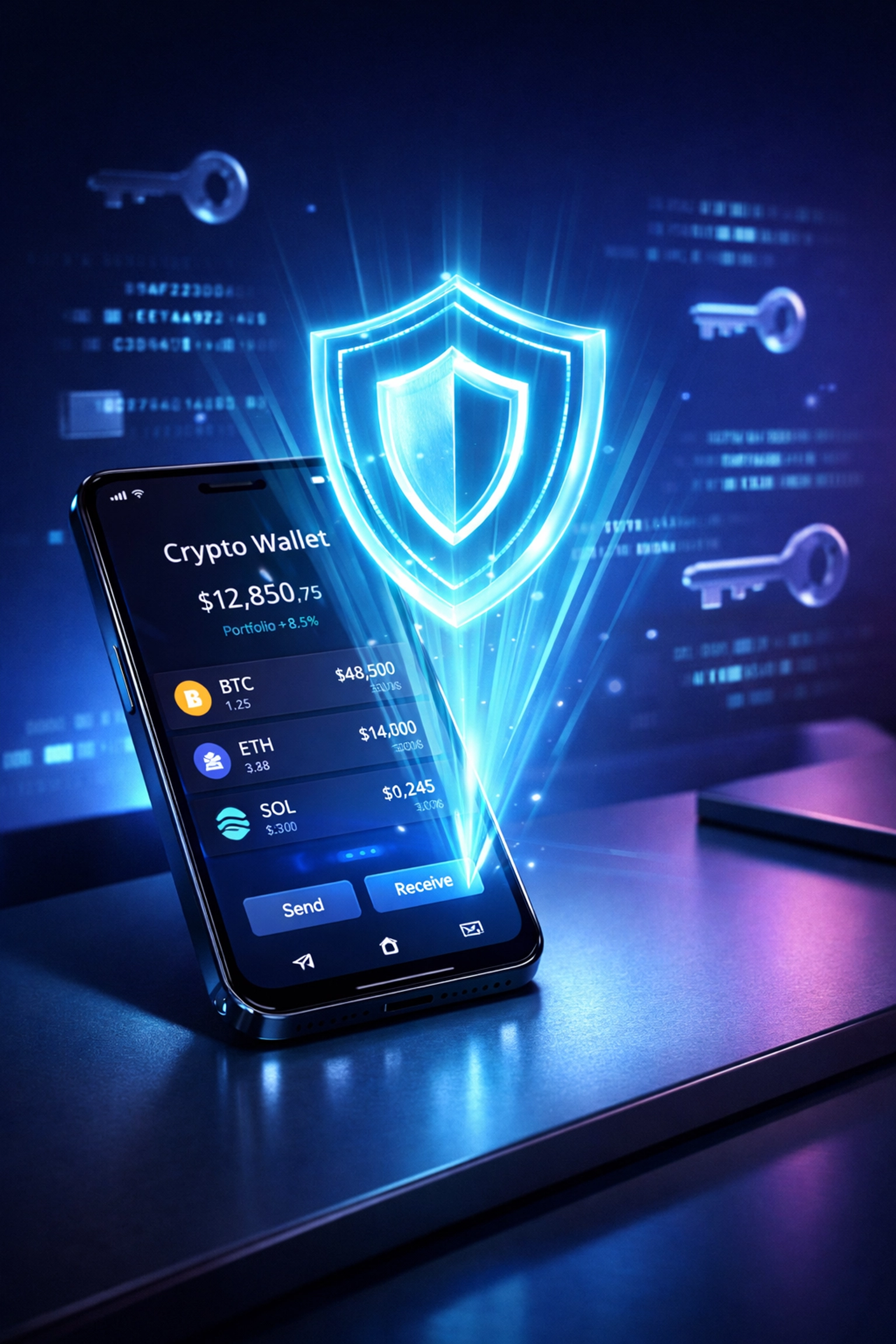
Step 1: Set Up Your Self-Custody Wallet
Download a wallet that supports the blockchain you want to use.
For Solana-based payments (like Larecoin), go with Phantom or Solflare. Both are solid.
Generate your private key. Write down your recovery phrase. Store it in multiple physical locations, never digitally.
This recovery phrase is your master key. Lose it, and you lose access to everything. No customer service can help you recover it.
That's the trade-off for complete control.
Unlike NOWPayments or CoinPayments, which hold your funds in custodial wallets, you're the only person with access. No intermediary can freeze, delay, or control your merchant revenue.
Step 2: Acquire Gas Fees (Minimal Crypto)
You need a tiny amount of cryptocurrency to cover network fees.
For Solana payments, grab some SOL tokens. For Larecoin specifically, you'll need minimal SOL to process transactions.
Gas-only transfers mean no platform markups. You're paying the network directly, not a processor charging 2-3% on top.
Transfer this from any crypto exchange to your self-custody wallet.
That's your setup cost. Seriously.
Compare that to traditional merchant accounts requiring bank statements, credit checks, and sometimes weeks of approval time.
Step 3: Connect to Larecoin's Merchant Platform
Head to larecoin.com and connect your self-custody wallet directly.
The platform recognizes your wallet address. Sets up your merchant profile. Done.
Here's the key difference: Larecoin never touches your funds. The platform facilitates payment routing, generates invoices, and provides merchant tools, but funds land directly in your wallet.
NOWPayments and CoinPayments use custodial models. They collect your payments first, then batch settle to your account later. That creates settlement delays and introduces counterparty risk.
Larecoin's self-custody model? Instant on-chain confirmation = instant settlement.
Plus, Larecoin operates under rigorous US compliance. We're structured with MSB registration and pursuing state-by-state MTL (Money Transmitter License) strategy. That's rare in crypto payments, most platforms operate in regulatory gray zones.
You get Web3 freedom with compliance backing.
Step 4: Generate Payment Links and QR Codes
Create QR codes and payment links for your products through the Larecoin merchant dashboard.
Each link directs to your wallet address. Customers scan, pay, done.
You can generate:
Static QR codes for in-store checkout
Dynamic payment links for invoices
Embeddable checkout buttons for your website
NFT receipts (yes, really: more on this below)
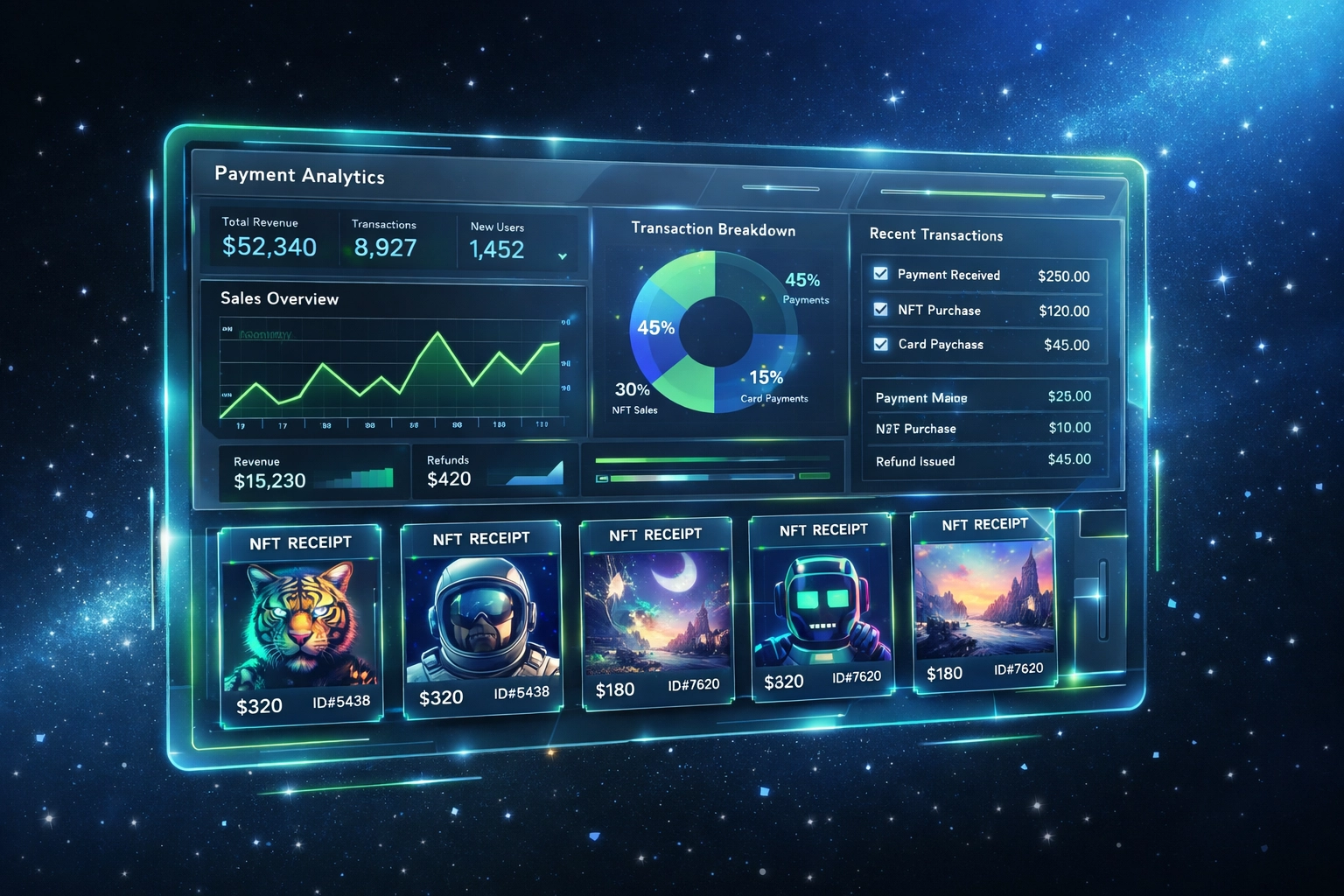
Here's where it gets wild: Larecoin can issue NFT receipts for every transaction.
Why does that matter?
NFT receipts create immutable proof of purchase. They enable loyalty programs, resale verification, warranty tracking, and customer engagement in ways traditional payment receipts never could.
Imagine a coffee shop issuing collectible NFT receipts. After 10 purchases, customers unlock a free drink via smart contract. No punch cards. No databases. Just programmable loyalty built into the payment itself.
That's Web3 merchant infrastructure.
Step 5: Start Accepting Payments Instantly
Share your payment links. Accept payments. Withdraw whenever you want.
Funds arrive in your wallet the moment transactions confirm on-chain. No settlement delays.
You control:
When you withdraw
Where you swap to fiat
How you use the funds
No waiting 3-5 business days. No processor holding your money "for security." No sudden account freezes.
Self-custody means instant liquidity.
For small businesses running tight cash flow, that's transformative. You can pay suppliers the same day you receive payment. You can convert to fiat immediately if you need stability. You can hold crypto if you believe in long-term appreciation.
Your money, your choice.
Why Larecoin Beats NOWPayments and CoinPayments
Let's be direct about the alternatives.
NOWPayments offers custodial wallets with batch settlements. They charge 0.5% per transaction, which sounds low: but you're still paying platform fees on top of network costs. And your funds sit in their custody until you withdraw.
CoinPayments operates similarly. Custodial model. Settlement delays. Platform fees.
Both require you to trust them with your merchant revenue.
Larecoin's self-custody model eliminates that entirely.
Here's the fee breakdown:
NOWPayments: 0.5% + gas fees + custodial risk
CoinPayments: 0.5% + gas fees + custodial risk
Larecoin: Gas fees only + zero custodial risk
You're saving minimum 0.5% on every transaction. For a business processing $50,000/month, that's $250 in pure savings. Every month. Forever.
Plus, Larecoin supports LUSD (Larecoin USD), our stablecoin version.

The LUSD Advantage for Merchants
LUSD is Larecoin's stablecoin pegged to the US dollar.
Merchants who want crypto's speed and low fees: but not the volatility: can accept LUSD instead.
Benefits:
Price stability (1 LUSD = 1 USD)
Instant settlement (same as LARE)
Gas-only fees (no platform markup)
Easy conversion to fiat when needed
You get all the advantages of crypto payments without exposure to price swings.
For businesses with thin margins, LUSD is perfect. Accept payments in stable value. Avoid conversion timing risks. Maintain predictable cash flow.
And because LUSD operates on Solana, transactions cost fractions of a cent: not the $20+ gas fees you see on Ethereum-based stablecoins during peak times.
Compliance That Actually Matters
Most crypto payment platforms operate offshore or in regulatory gray areas.
Larecoin doesn't.
We're pursuing full US compliance with MSB registration and state-by-state MTL licensing strategy. That means:
Legitimate regulatory backing
Banking relationships that won't disappear overnight
Protection from enforcement actions
Long-term stability for merchant accounts
If you're building a business, you need a payment processor that'll still exist in five years.
Larecoin's compliance-first approach ensures that. Check our Trust page for full regulatory details.
The Bottom Line
Self-custody merchant accounts take about 30 minutes to set up.
You get:
Instant settlement (no 3-5 day holds)
Gas-only fees (save 0.5-3% per transaction)
Complete control (no custodial risk)
NFT receipt capabilities (programmable loyalty)
LUSD stability option (zero volatility exposure)
US compliance backing (regulatory legitimacy)
Traditional processors charge more, settle slower, and control your funds.
Crypto custodial platforms like NOWPayments and CoinPayments eliminate some fees: but still introduce settlement delays and counterparty risk.
Larecoin's self-custody model eliminates everything except network gas fees.
Your wallet. Your funds. Your control.
Ready to set up your self-custody merchant account? Head to larecoin.com and connect your wallet. Takes less time than reading this article.
Comments