

.png)
7 Mistakes You're Making with Crypto Payment Processing (And How LareBlocks Layer 1 Fixes Them)
![Writer: [[[Free!!]<<<<]] Watch: 스포르팅 - 토트넘 Live Stream 13 September 2022](https://lh3.googleusercontent.com/a/AItbvmktwQc0wCdd3ZEETSYItRQubwwBzOyjD_dcigRf=s96-c)
Payment processors promise easy crypto acceptance. But most merchants are bleeding money and missing opportunities.
The legacy platforms: think NOWPayments and CoinPayments: force you into outdated architectures. High fees. Custodial nightmares. Zero innovation.
Here's what's actually breaking your crypto checkout flow. And how LareBlocks Layer 1 solves it.
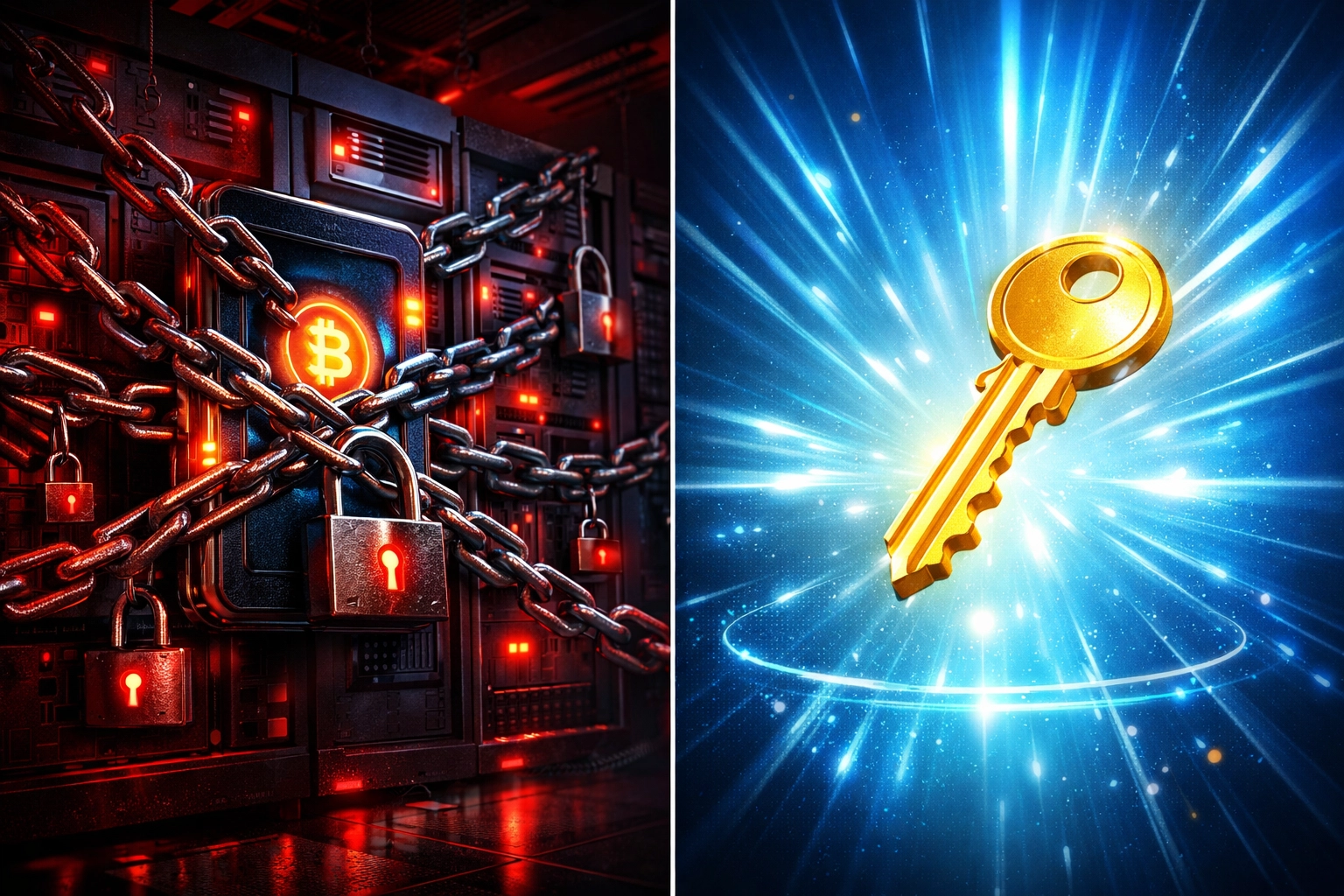
Mistake #1: Surrendering Custody to Third Parties
You don't own your funds. The processor does.
Platforms like CoinPayments hold your crypto in their wallets. You're trusting a middleman with your revenue. Every transaction flows through their custodial system.
Security risks multiply. Regulatory exposure expands. You're one hack away from disaster.
The LareBlocks Fix: Self-custody built into Layer 1 architecture. Your keys. Your crypto. Your control.
No intermediary touching your funds. Direct wallet-to-wallet settlement on LareBlocks. The blockchain handles verification: not some centralized company.
Smart wallet integration gives you institutional-grade security with consumer-level simplicity. Gas-only transfers mean minimal friction.
Mistake #2: Paying 3-5% Transaction Fees
Legacy payment processors eat your margins.
NOWPayments charges 0.5% to 1% per transaction. Add network fees. Add currency conversion spreads. You're looking at 2-4% total cost per sale.
Credit cards already take 3%. Crypto was supposed to be cheaper. But these platforms replicate the same rent-seeking model.
The LareBlocks Fix: 50% fee reduction compared to traditional systems.
Layer 1 architecture eliminates middleman markups. No payment gateway taking a percentage. No hidden conversion fees.
You pay actual network costs: that's it. Gas fees on LareBlocks are fractional. Merchant portal shows transparent pricing in real-time.
For a $10,000 monthly revenue business, that's $1,800 saved annually. Scale that to $100K monthly and you're banking $18,000 extra profit.
Mistake #3: Operating in Regulatory Gray Zones
Most crypto payment systems lack legal clarity. You're accepting digital assets with uncertain commodity classification.
Compliance teams at banks flag crypto transactions. Payment processors can't guarantee regulatory standing. Merchants face constant uncertainty.
The LareBlocks Fix: CLARITY Act (H.R. 3633) positions Larecoin as a digital commodity.
This isn't vaporware regulation. It's actual Congressional legislation defining crypto commodities. Larecoin qualifies under the framework.
Digital commodity status means:
Clear tax treatment for merchants
Reduced regulatory friction with banks
Institutional legitimacy for B2B transactions
Protection from securities classification
You're not operating in legal limbo. You're accepting a properly classified digital commodity with Congressional backing.
Mistake #4: Generating Zero-Value Transaction Records
Your customers get nothing after checkout. Maybe a confirmation email. Definitely no proof of authenticity.
Digital receipts are forgettable files. No resale value. No collectability. No brand engagement beyond the transaction.
The LareBlocks Fix: NFT receipts minted on-chain for every purchase.
Every transaction generates a unique, tradeable NFT receipt. Customers now own verifiable proof of purchase with actual utility.
Benefits multiply:
Warranty verification without paper records
Loyalty rewards embedded in receipt metadata
Secondary market for limited edition purchases
Proof of authenticity for high-value items
Marketing channel through NFT holder airdrops
Your receipt becomes a brand asset. Customers collect them. Trade them. Show them off in Web3 wallets.
Competitors hand out PDFs. You're minting digital collectibles.
Mistake #5: Exposing Customers to Price Volatility
Bitcoin fluctuates 5% while your customer completes checkout. The $100 purchase becomes $95 or $105 depending on which way the market moves.
Traditional processors force this volatility risk onto merchants or customers. Someone always loses when prices swing.
Stablecoin options exist: but most platforms offer limited selection or require separate processing.
The LareBlocks Fix: LUSD stablecoin integrated at the protocol level.
Native stablecoin removes volatility completely. Customers pay in LUSD. You receive LUSD. Price locked in at checkout.
LUSD maintains 1:1 USD peg without centralized reserves. Decentralized stability mechanism backed by crypto collateral. No Tether-style opacity.
Merchants can instantly convert LUSD to LARE tokens for potential upside. Or hold stable value. Or off-ramp to fiat. Total flexibility.
The choice belongs to you: not forced by payment processor limitations.
Mistake #6: Limiting Sales to 2D Web Checkouts
Your payment processor thinks it's still 2019. Flat checkout pages. Basic cart systems. Zero spatial commerce integration.
The metaverse isn't coming. It's here. AI shopping assistants are mainstream. Customers expect immersive experiences.
NOWPayments can't process transactions in virtual environments. CoinPayments doesn't understand 3D commerce contexts.
The LareBlocks Fix: AI-powered metaverse shopping built into the ecosystem.
Virtual storefronts with native Larecoin payment rails. Customers browse, try on, and purchase in spatial environments. Payments happen in-world without breaking immersion.
AI assistants handle customer service. Answer questions about products. Process transactions conversationally. No checkout page required.
The system supports:
VR/AR payment interfaces
Voice-activated purchases
Gesture-based confirmations
Avatar-to-avatar transactions
In-game item sales
Check out the 15 metaverse shopping features merchants are already using.
Your competitors serve websites. You're building virtual flagship stores.
Mistake #7: Suffering Network Congestion and Slow Confirmations
Bitcoin takes 10-60 minutes for confirmation. Ethereum slows during high traffic. Layer 2 solutions add complexity.
Traditional payment processors can't fix underlying blockchain limitations. They're stuck with base layer performance.
Customer abandonment spikes when transactions take too long. "Waiting for confirmation" kills conversion rates.
The LareBlocks Fix: Purpose-built Layer 1 blockchain for payment processing.
LareBlocks Layer 1 achieves consistent sub-second confirmations. Dedicated infrastructure optimized for commerce transactions.
No congestion from DeFi apps or NFT mints. Payment processing gets priority. Merchant transactions confirm instantly.
The architecture includes:
Parallel transaction processing
Smart routing for optimal speed
Predictable gas costs
99.9% uptime guarantee
Built-in fraud detection
Your customers don't wait. They transact and move on. Just like credit cards: but with crypto economics.

Why This Matters Now
The crypto payment industry is consolidating. Winners are emerging.
Platforms that can't deliver self-custody, regulatory clarity, and next-gen features will disappear. Merchants will migrate to complete ecosystems.
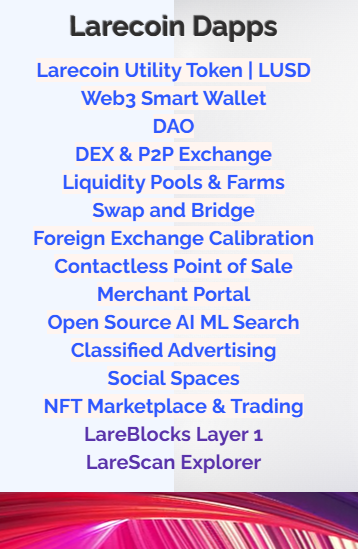
LareBlocks Layer 1 isn't another payment gateway. It's the infrastructure layer for Web3 commerce. Token. Stablecoin. Smart contracts. Explorer. All integrated.
The marathon continues. 100 new posts documenting exactly how merchants win with proper crypto architecture.
Traditional processors had their decade. This is the Larecoin era.
Stop making mistakes your competitors already abandoned. Start accepting payments the way 2026 demands.
Visit larecoin.com to set up your merchant portal. Or grab some Larecoin merch while you explore the ecosystem.
The Layer 1 revolution doesn't wait. Neither should you.
Comments