

.png)
7 Mistakes You're Making with Crypto Payment Processors (and Why Self-Custody Matters)
- [[[Free!!]<<<<]] Watch: 스포르팅 - 토트넘 Live Stream 13 September 2022
- 2 hours ago
- 4 min read
![Writer: [[[Free!!]<<<<]] Watch: 스포르팅 - 토트넘 Live Stream 13 September 2022](https://lh3.googleusercontent.com/a/AItbvmktwQc0wCdd3ZEETSYItRQubwwBzOyjD_dcigRf=s96-c)
Most merchants accept crypto the expensive way.
They're paying unnecessary fees. Dealing with complex setups. Losing control of their funds.
And the crazy part? They think this is just how crypto payments work.
It's not.
Here are the seven biggest mistakes merchants make with traditional crypto payment processors, and why self-custody changes everything.
Mistake #1: Paying Ridiculous Processing Fees
NOWPayments charges 0.5% per transaction. CoinPayments hits you with 0.5% to 1% depending on volume.
Sounds small until you do the math.
Process $100,000 monthly? That's $500 to $1,000 in fees just for the privilege of accepting crypto. Add withdrawal charges, platform fees, and currency conversion costs, and you're looking at $800 to $1,200 monthly.
Every. Single. Month.
Traditional processors treat crypto like credit cards, extracting value at every step. But crypto was designed to eliminate intermediaries, not add more expensive ones.
Self-custody payments run on gas fees only. No percentage cuts. No platform fees. No withdrawal charges. Just the network cost to move funds, typically pennies, not hundreds of dollars.

Mistake #2: Wrestling with Complex Setup and Hardware
CoinPayments demands extensive KYC documentation. NOWPayments requires API configuration and technical expertise.
Some processors even push physical hardware for point-of-sale systems.
The onboarding process takes days or weeks before you can accept your first payment. Multiple verification steps. Integration headaches. Technical support tickets that go nowhere.
And if you want to update anything? Start the process all over again.
Self-custody solutions skip the middleman entirely. Generate a wallet. Share your address. Accept payments. Done.
No approval process. No waiting period. No technical gymnastics.
Mistake #3: Giving Up Control of Your Money
Here's the part most merchants miss: when you use a traditional processor, you don't control the funds.
They hold your crypto. You request withdrawals. They process them on their schedule, charging fees along the way.
Sound familiar? It's the banking system all over again, just with crypto logos slapped on top.
Traditional processors become gatekeepers. They can freeze accounts. Delay withdrawals. Change terms. Add fees.
Self-custody means you own your crypto. No intermediary. No permission needed. No one standing between you and your money.
It's the entire point of cryptocurrency.
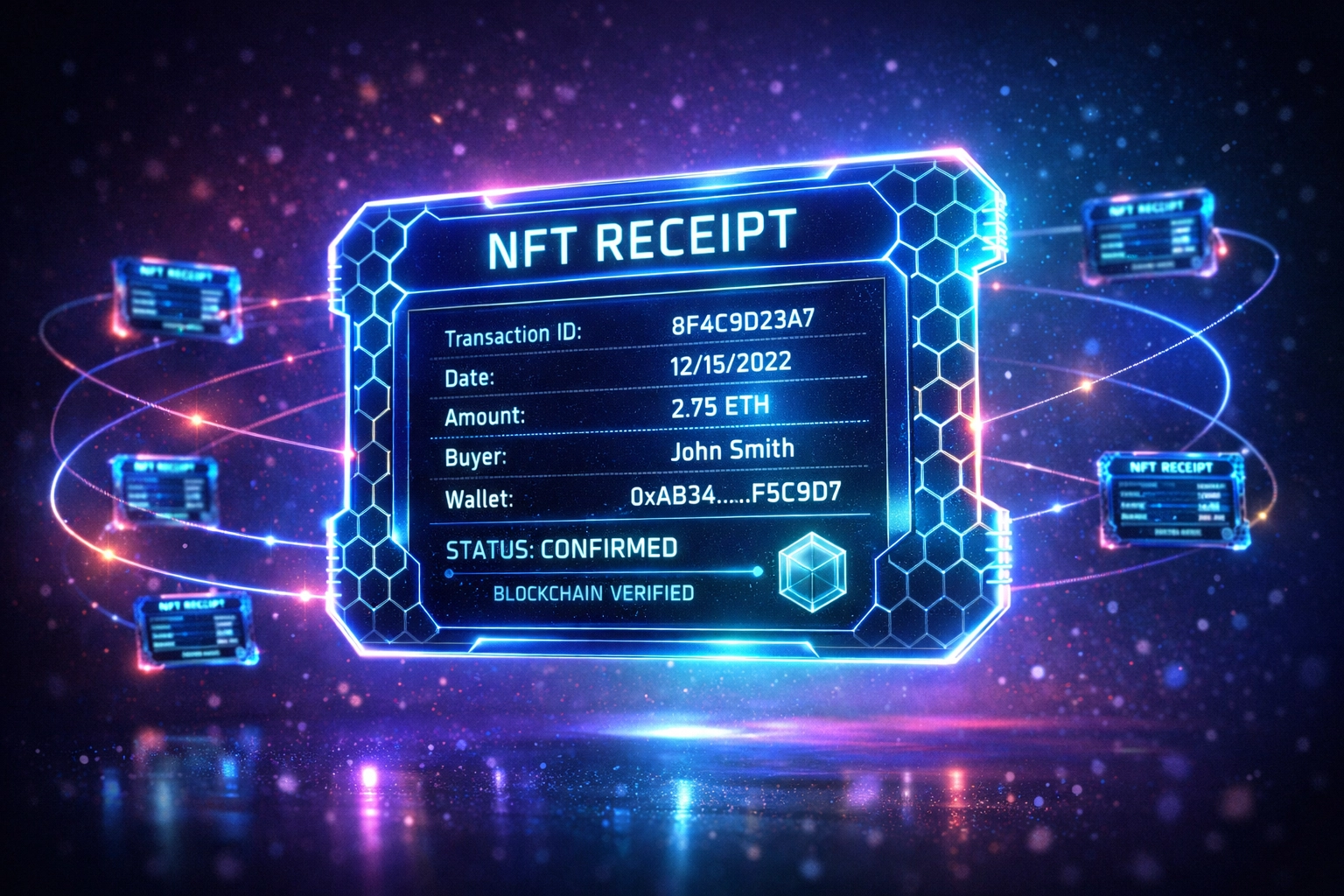
Mistake #4: Ignoring the Power of NFT Receipts
Traditional processors send confirmation emails. Maybe a PDF invoice if you're lucky.
Then what? The transaction disappears into an inbox or spam folder.
NFT receipts transform every transaction into a permanent, verifiable record on the blockchain. Customers can prove purchases. Merchants can track sales across wallets. Both parties have immutable proof that lives forever.
But here's where it gets interesting: NFT receipts unlock loyalty programs, exclusive access, and customer analytics traditional processors can't touch.
Imagine rewarding repeat customers automatically. Offering VIP perks to holders of specific NFT receipts. Building community around purchases instead of just processing transactions.
CoinPayments and NOWPayments don't even have this on their roadmap.

Mistake #5: Accepting Slow, Expensive International Payments
Bitcoin confirmations take 10+ minutes. Ethereum gas fees spike to $20+ during peak times.
Traditional processors inherit these limitations. They can't fix slow blockchains. They can't reduce gas fees. They just pass the pain to merchants and customers.
International payments become a guessing game. Will it take minutes or hours? Will fees be $2 or $50?
Stablecoins like LUSD solve this. Fast settlements. Predictable costs. No volatility risk.
LUSD maintains a stable peg to the US dollar while offering the speed and transparency of blockchain payments. Merchants get crypto benefits without crypto chaos.
Check out our ultimate guide to Web3 global payments for the full breakdown on reducing merchant fees while improving payment speed.
Mistake #6: Suffering from Too Many Options
NOWPayments brags about supporting 300+ cryptocurrencies. CoinPayments lists hundreds of tokens.
Sounds impressive until your customers face decision paralysis.
Which chain should they use? Which token? What about network fees? Multiple options create confusion, not convenience.
And on the merchant side? You're managing settlements across dozens of chains. Tracking prices for hundreds of tokens. Dealing with technical quirks for each network.
Focused ecosystems outperform bloated marketplaces. Offer what customers actually use. Make payment decisions simple. Reduce complexity on both sides.
Larecoin's ecosystem centers on LARE and LUSD: one for value appreciation, one for stable payments. That's it. No confusion. No complications.
Mistake #7: Using Processors That Only Process Payments
Traditional processors forward payments. Take their cut. Send you what's left.
That's the entire value proposition.
No customer analytics. No loyalty programs. No business intelligence. No growth tools. Just basic transaction forwarding at premium prices.
Modern crypto payment systems should amplify your business, not just accept payments.
Integration with NFT ecosystems. On-chain customer tracking. Automated reward systems. Direct wallet connectivity. These features separate payment solutions from payment processors.
Larecoin builds an entire decentralized payments ecosystem: not just a checkout button. Accept payments, issue NFT receipts, reward loyalty, track analytics, and maintain complete control.
All without giving up 0.5% to 1% on every transaction.
Why Self-Custody Matters More Than Ever
Self-custody isn't just about controlling your crypto. It's about merchant independence.
Traditional processors position themselves as necessary intermediaries. They charge fees for convenience. They hold your funds for "security." They complicate crypto to justify their existence.
Self-custody proves you don't need them.
Web3 payments work wallet-to-wallet. Customer sends crypto. You receive it directly. No middleman. No permission. No fees beyond network costs.
This is merchant freedom.
Traditional finance spent decades convincing businesses they needed banks, processors, and payment gateways. Crypto removes those dependencies: but only if you actually use self-custody.
Hand your crypto to a centralized processor, and you're just recreating the old system with blockchain buzzwords.
The Larecoin Advantage
Larecoin was built for merchants who want independence.
Accept LARE and LUSD directly to your wallet. Issue NFT receipts automatically. Pay gas fees only: no percentage cuts. Maintain complete control of your funds.
No KYC delays. No complex integrations. No monthly platform fees.
Just straightforward, decentralized crypto payments that actually save you money.
Traditional processors like NOWPayments and CoinPayments charge premium fees for basic services. They complicate crypto to justify their costs.
Larecoin simplifies it to eliminate them.
Ready to stop overpaying for crypto payments?
Explore the Larecoin ecosystem at larecoin.com and see why merchants are choosing self-custody over traditional processors.
The future of payments isn't centralized. It's direct. It's decentralized. It's here.
Comments