

.png)
7 Mistakes You're Making with Crypto POS Systems (and How NFT Receipts Fix Them)
- [[[Free!!]<<<<]] Watch: 스포르팅 - 토트넘 Live Stream 13 September 2022
- 2 hours ago
- 4 min read
![Writer: [[[Free!!]<<<<]] Watch: 스포르팅 - 토트넘 Live Stream 13 September 2022](https://lh3.googleusercontent.com/a/AItbvmktwQc0wCdd3ZEETSYItRQubwwBzOyjD_dcigRf=s96-c)
Most merchants think they're winning by accepting crypto.
They're actually bleeding money.
Traditional crypto POS systems look innovative on the surface. Underneath? They're repeating the same mistakes as legacy payment processors: just with blockchain branding.
Let's break down the seven critical mistakes costing you thousands monthly. More importantly, we'll show you how NFT receipts solve problems you didn't know existed.
Mistake #1: Paying Ridiculous Processing Fees
The Problem:
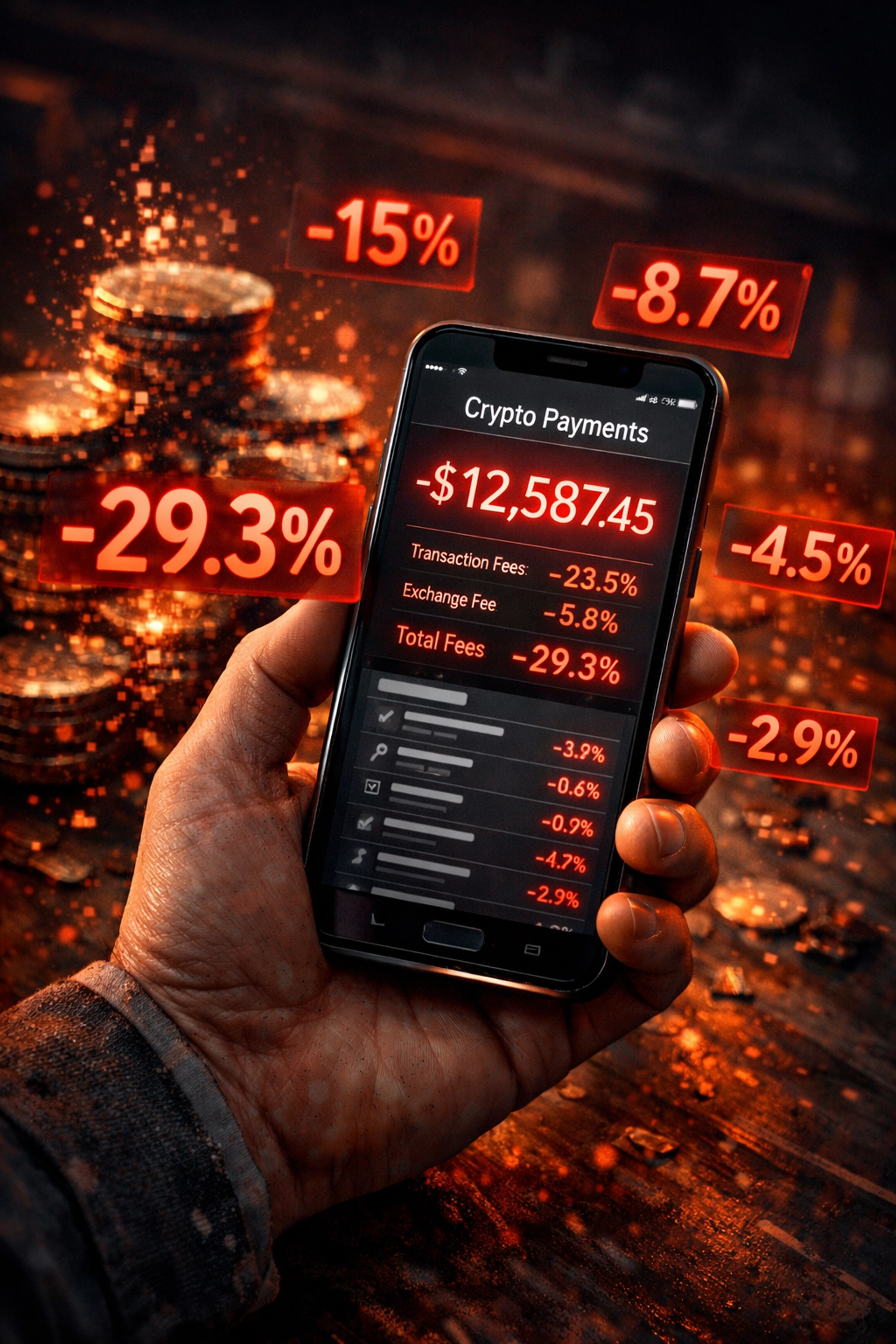
NOWPayments charges 0.5% transaction fees. CoinPayments hits you with 0.5–1%. Add network costs and withdrawal fees? You're looking at 2–3% per transaction.
Process $50,000 monthly? That's $500–$1,500 in fees alone.
Why are you paying intermediaries to process decentralized currency?
The NFT Receipt Fix:
NFT receipts eliminate middleman fees entirely. Self-custody means zero processing charges. You pay only network gas fees: typically under $0.50 per transaction.
LUSD stablecoin transactions? Even cheaper.
That $50,000 monthly volume now costs you around $25 in gas fees instead of $1,500.
Do the math.
Mistake #2: Surrendering Custody (Again)
The Problem:
You escaped traditional banks. Then you handed custody to NOWPayments or CoinPayments.
Your crypto sits in their wallets until they decide to release it. Sound familiar?
Remember FTX? Merchants who trusted intermediaries lost everything.
"Not your keys, not your crypto" isn't just a slogan. It's survival.
The NFT Receipt Fix:
NFT-based payment systems enable direct wallet-to-wallet transfers. Payments land in your wallet instantly.
No intermediary custody. No withdrawal delays. No "processing times."
Complete merchant independence from day one.
Mistake #3: Supporting 150 Useless Tokens
The Problem:
Payment processors brag about accepting 150+ cryptocurrencies.
Reality check: 85–90% of crypto transactions happen in Bitcoin, Ethereum, and stablecoins.
Those obscure altcoins? They add:
Security vulnerabilities
Accounting nightmares
Tax complications
Customer confusion
Zero meaningful revenue.
The NFT Receipt Fix:
Focus on what works. LUSD stablecoin eliminates volatility concerns. Ethereum dominates merchant adoption. Bitcoin remains king for larger transactions.
NFT receipts work seamlessly with established tokens customers actually hold.
Simplicity wins. Every time.

Mistake #4: Creating Checkout Friction That Kills Conversions
The Problem:
Unclear payment confirmations murder conversion rates.
Studies show 20–40% cart abandonment when customers can't verify successful payment. Mobile users abandon even faster.
Traditional crypto POS systems offer vague "processing" messages. Customers don't know if they paid. They don't know if they need to retry.
Result? Lost sales.
The NFT Receipt Fix:
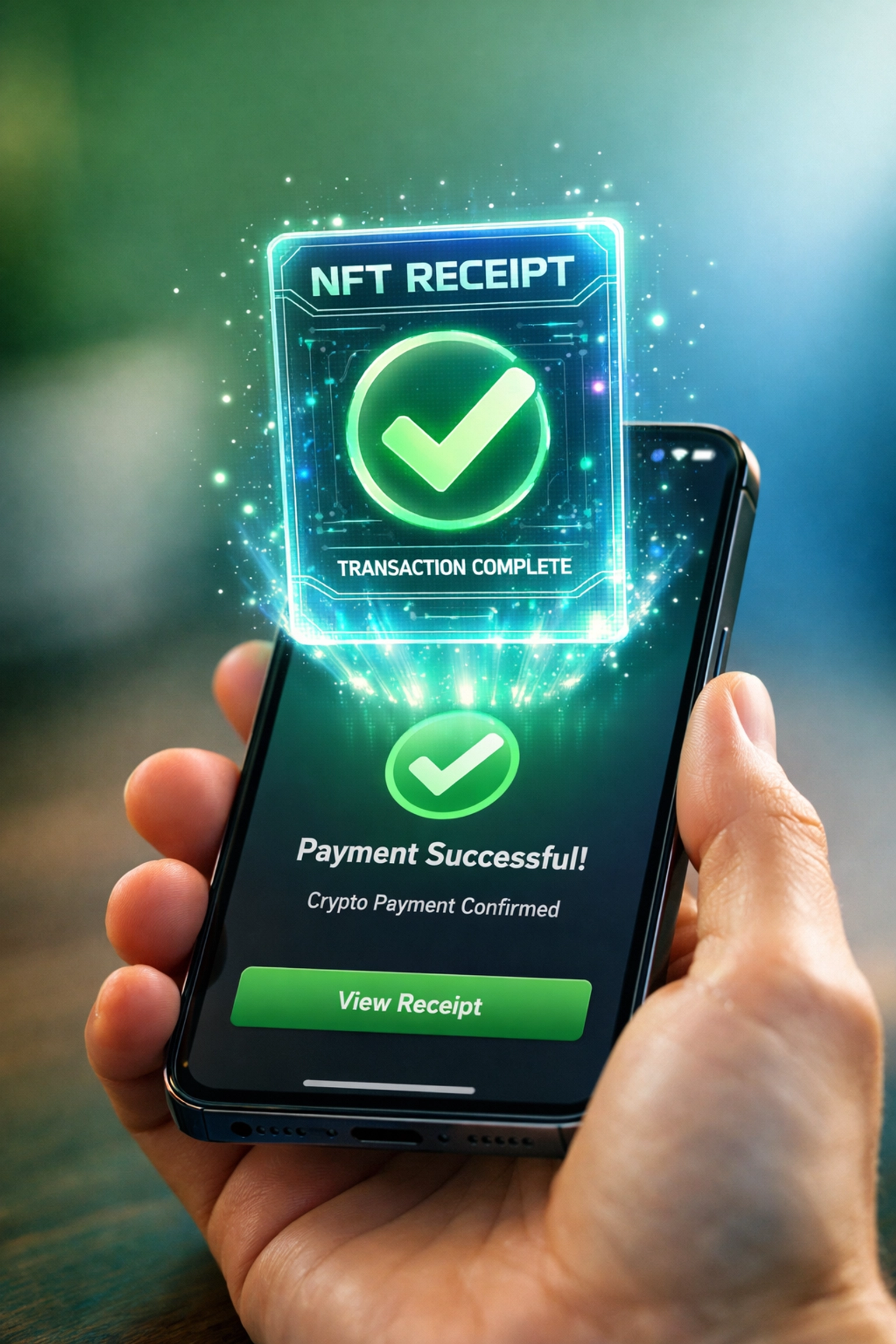
NFT receipts provide instant, verifiable proof of purchase.
Customer completes payment → NFT receipt mints to their wallet → Transaction confirmed on-chain.
No ambiguity. No confusion. No abandoned carts.
The NFT itself becomes permanent purchase verification. Customers see it instantly in their wallet alongside their payment.
Conversion rates improve. Sales increase.
Mistake #5: Terrible Refund Protocols (Or None at All)
The Problem:
Crypto transactions are irreversible. Refunds require manual wallet transfers.
Most merchants handling refunds through NOWPayments or CoinPayments must maintain balances in processor custody. Defeats the entire purpose of crypto independence.
Manual refunds create:
Accounting headaches
Customer service disasters
Lost time tracking wallet addresses
Tax reconciliation nightmares
The NFT Receipt Fix:
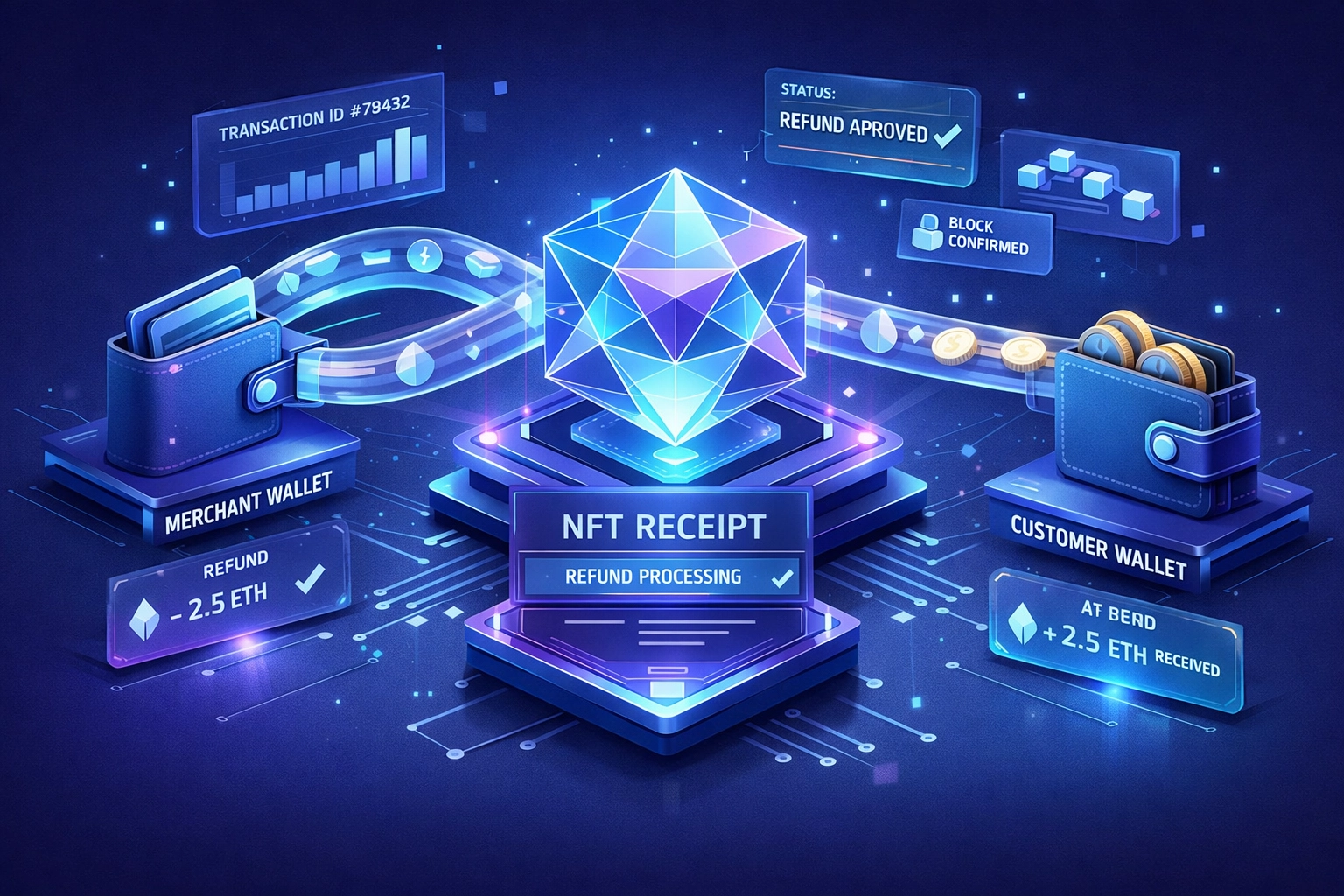
NFT receipts enable programmable refund logic through smart contracts.
Refund approved? Smart contract automatically processes return to customer's wallet. No manual transfers. No custody requirements.
The NFT receipt contains all transaction metadata: amounts, wallet addresses, timestamps. Refund processing becomes one-click simple.
Accounting software integrates directly with on-chain data. Everything reconciles automatically.

Mistake #6: Manual Accounting That Wastes 15 Hours Monthly
The Problem:
Traditional crypto POS systems don't talk to QuickBooks, Xero, or your accounting software.
You're manually reconciling:
Sales data
Crypto transactions
Inventory changes
Multiple blockchain explorers
Fiat conversions
Merchants spend 10–15 hours monthly on crypto accounting alone.
That's $2,000+ in lost productivity using even conservative valuations.
The NFT Receipt Fix:
NFT receipts create immutable, queryable transaction records on-chain.
Every sale generates structured metadata: product details, pricing, timestamps, wallet addresses, payment amounts.
Accounting integrations pull directly from blockchain data. No manual entry. No reconciliation delays.
Generate reports in seconds instead of hours. Tax time becomes painless.
Smart merchants automate everything.
Mistake #7: Assuming Customers Know Crypto
The Problem:
You built perfect crypto payment infrastructure.
Your customers don't have funded wallets. They don't understand network fees. They're terrified of private key management.
Adoption barriers kill sales regardless of technical sophistication.
Customer education falls entirely on you. Most merchants fail here.
The NFT Receipt Fix:
NFT receipts make crypto payments tangible and collectible.
Customers understand receipts. Show them the NFT receipt in their wallet? They get it instantly.
The collectible nature creates additional engagement. Some customers pay with crypto specifically to receive NFT receipts.
Gamification opportunities:
Limited edition receipts for special purchases
Receipt collections unlock loyalty rewards
Rare NFT receipts for high-value transactions
Education becomes engagement. Friction becomes feature.
The Real Cost of These Mistakes
Add it up for a $50,000 monthly merchant:
Processing fees: $500–$1,500
Withdrawal fees: $75–$150
Customer service (refund issues): $240
Lost sales (checkout friction): $2,000+
Manual accounting time: $2,000
Total monthly losses: $4,815–$5,890
That's $57,780–$70,680 annually.
On preventable mistakes.
Why Legacy Processors Can't Fix This
NOWPayments and CoinPayments can't solve these problems. Their business models require custody, processing fees, and complexity.
They're intermediaries cosplaying as crypto innovation.
Real decentralization means:
Self-custody from first transaction
Direct peer-to-peer payments
Zero intermediary fees
Complete merchant control
NFT receipts enable this reality.
The Larecoin Difference
Larecoin built the entire ecosystem around merchant freedom.
NFT receipts aren't an add-on feature. They're core infrastructure.
Combined with LUSD stablecoin payments, contactless POS integration, and true self-custody, Larecoin delivers what legacy processors promise but never provide.
Real decentralization. Actual fee savings. Complete independence.
Stop Making Expensive Mistakes
Every day you operate with traditional crypto POS systems costs you money.
Processing fees compound. Custody risks accumulate. Manual accounting wastes hours.
NFT receipts solve all seven mistakes simultaneously.
The technology exists. The infrastructure works. The savings are real.
Question is: how much longer will you pay for preventable problems?
Explore how Larecoin's NFT receipt ecosystem transforms crypto payments at larecoin.com.
Your customers are ready. Your competition is watching. Your wallet is waiting.
Make the switch.
Comments