

.png)
7 Mistakes You're Making with Crypto POS Systems (and How NFT Receipts Fix Them)
- [[[Free!!]<<<<]] Watch: 스포르팅 - 토트넘 Live Stream 13 September 2022
- Feb 14
- 5 min read
![Writer: [[[Free!!]<<<<]] Watch: 스포르팅 - 토트넘 Live Stream 13 September 2022](https://lh3.googleusercontent.com/a/AItbvmktwQc0wCdd3ZEETSYItRQubwwBzOyjD_dcigRf=s96-c)
Running a crypto POS system shouldn't feel like rocket science. But if you're using traditional processors like NOWPayments or CoinPayments, you're probably bleeding money and time on avoidable mistakes.
NFT receipts change everything. They're not just digital proof of purchase: they're programmable records that solve the biggest headaches merchants face with crypto payments.
Let's break down the seven mistakes you're making right now and how NFT receipts fix them.
Mistake #1: Paying 0.5% Processing Fees (When You Could Pay Gas Only)
Traditional crypto processors charge 0.5% per transaction. Sounds small until you calculate it across thousands of transactions monthly.
The Math: $100,000 in monthly sales = $500 in processing fees. That's $6,000 annually disappearing into processor pockets.
NOWPayments and CoinPayments both operate on this model. They extract value from every single transaction you process.
How NFT Receipts Fix It:
NFT receipts on Larecoin operate on gas-only transfers. No middleman taking cuts. No percentage-based fees eating your margins.
You pay network costs. Nothing more.
Self-custody means complete control. No processor holding your funds. No waiting for settlements. Your money stays yours from the moment customers pay.

Mistake #2: Submitting Mountains of KYC Documentation
Complex onboarding kills momentum. NOWPayments requires extensive KYC documentation. CoinPayments demands API integrations that take weeks to implement.
You're not building a nuclear reactor. You're accepting crypto payments.
The Reality:
Small merchants spend 3-7 days on setup. Larger operations? Even longer. That's lost revenue while you're waiting for approval emails and verification processes.
How NFT Receipts Fix It:
Decentralized systems don't need gatekeepers. Web3 payments bypass traditional verification bottlenecks.
NFT receipts generate automatically at point of sale. No approval process. No waiting. Install, connect wallet, start accepting payments.
Merchant freedom isn't a buzzword: it's how crypto payments should work from day one.
Mistake #3: Exposing Your Business to Crypto Volatility
Bitcoin drops 15% overnight. Ethereum gas fees spike during network congestion. Your pricing becomes unpredictable chaos.
Traditional processors offer conversion services, but they charge extra fees for the privilege of stability.
How NFT Receipts Fix It:
LUSD stablecoin integration solves volatility completely. Accept payments in LUSD: a decentralized stablecoin pegged to USD.
Price stays stable. Customer pays $50 in LUSD, you receive $50 in LUSD. No surprises. No sudden devaluations.
NFT receipts record the exact LUSD amount at transaction time. Perfect accounting records without volatility anxiety.
Larecoin's ecosystem supports both LARE tokens and LUSD, giving merchants flexibility without forcing them into volatility exposure.
Mistake #4: Waiting 10+ Minutes for Payment Confirmations
Customer stands at your register. Payment submitted. Now you both wait awkwardly while blockchain confirmations crawl forward.
Bitcoin takes 10+ minutes minimum. Ethereum during peak times? Even longer with $20+ gas fees.
The Customer Experience Problem:
Modern consumers expect instant payment confirmation. Standing around waiting destroys the seamless checkout experience they're used to.
How NFT Receipts Fix It:
NFT receipts mint immediately upon transaction broadcast. Customer receives digital proof instantly: before full network confirmation completes.
This creates a trust layer. The immutable NFT serves as cryptographic proof the transaction occurred. Merchants can let customers leave while confirmations process in the background.
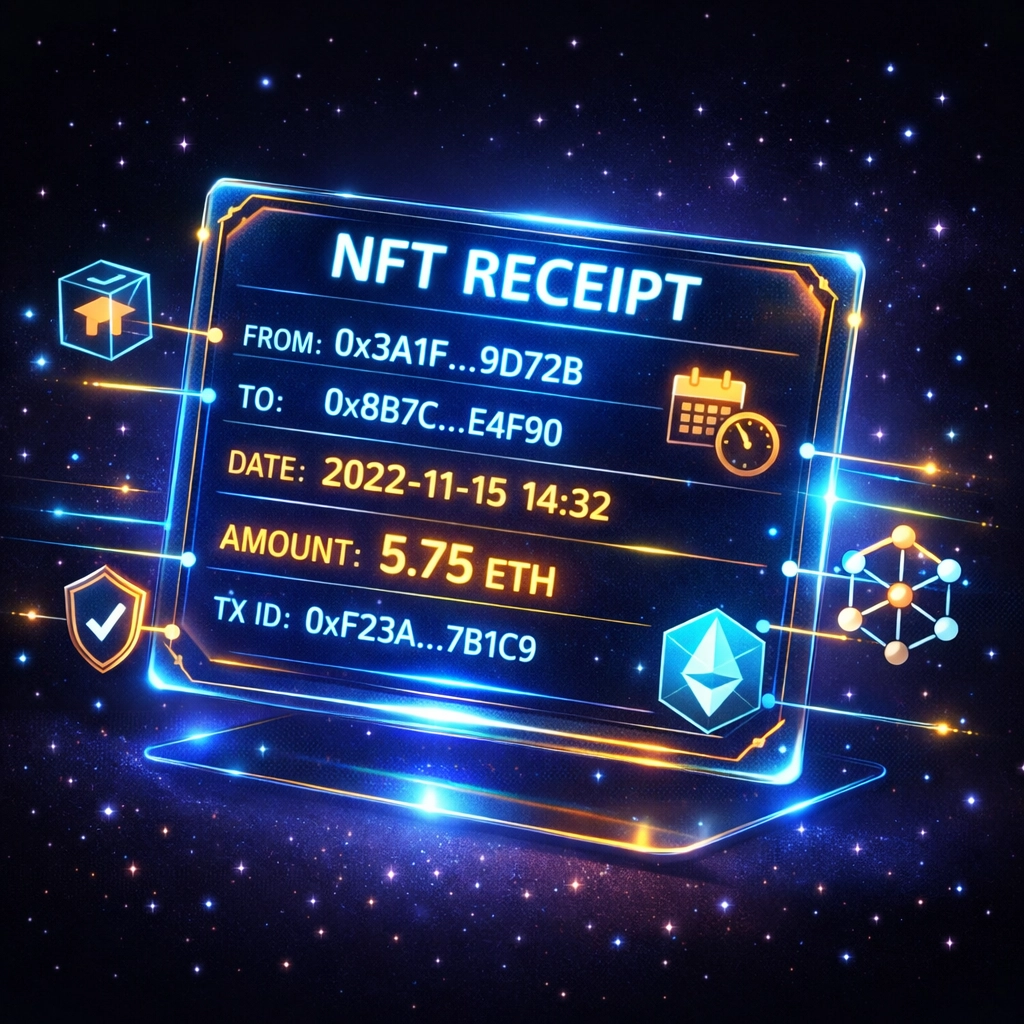
Dispute resolution becomes simple. The NFT timestamp, wallet addresses, and transaction details are permanently recorded on-chain.
Mistake #5: Unclear Custody and Liability Models
Who's responsible when something goes wrong? Traditional processors create confusion around custody.
Your funds sit in their wallets. They control private keys. You're trusting intermediaries with your revenue.
The Trust Problem:
Processors can freeze accounts. Delay withdrawals. Change terms of service. You're at their mercy despite doing nothing wrong.
How NFT Receipts Fix It:
Self-custody eliminates third-party risk completely. Your wallet, your keys, your funds.
NFT receipts provide transparent proof of every transaction without requiring custodial services. The blockchain becomes your accountant and auditor simultaneously.
Liability questions disappear. The NFT shows exactly what happened, when it happened, and between which addresses.
Merchants regain independence. No processor can freeze your business operations. No sudden policy changes affecting your cash flow.
Mistake #6: No Real Solution for Transaction Disputes
Customer claims they didn't receive their order. Traditional credit card disputes have established resolution processes.
Crypto transactions? The "code is law" mentality leaves merchants and customers without clear recourse.
The Current Gap:
NOWPayments and CoinPayments offer support tickets. But blockchain immutability means transactions can't be reversed like traditional payments.
How NFT Receipts Fix It:
NFT receipts create comprehensive transaction records with programmable smart contract functionality.
Each NFT contains:
Exact timestamp
Wallet addresses (buyer and merchant)
Purchase amount in both crypto and fiat equivalents
Product/service details
Transaction hash reference
This creates an indisputable record both parties can reference. Smart contracts can even include automated refund mechanisms or escrow conditions.
Disputes get resolved through transparent, on-chain evidence rather than "he said, she said" scenarios.
Mistake #7: Complex Integration That Requires Developer Teams
API documentation. Webhook configurations. Server-side implementations. Testing environments.
Traditional crypto processors require technical expertise most small merchants don't have.
The Resource Drain:
Small businesses can't afford dedicated blockchain developers. Hiring consultants costs thousands. DIY approaches lead to security vulnerabilities.
How NFT Receipts Fix It:
Web3 POS systems with NFT receipt integration simplify everything. Connect wallet. Start accepting payments.
Larecoin's merchant portal provides plug-and-play solutions. No coding required. No API complexity. No developer team needed.
NFT receipts generate automatically through smart contracts. The system handles technical complexity behind the scenes while presenting simple interfaces to merchants.
Real Independence:
Traditional processors lock you into their ecosystems. Switching providers means rebuilding integrations from scratch.
Decentralized NFT receipts are portable. Your transaction history lives on the blockchain: not in a processor's proprietary database.
Want to switch systems? Your complete receipt history travels with you. True merchant freedom means owning your data permanently.
The Larecoin Advantage
NFT receipts aren't theoretical future tech. They're operational right now within Larecoin's ecosystem.
Larecoin's platform combines:
Gas-only transfer fees (no percentage-based extraction)
LUSD stablecoin support (eliminate volatility)
Self-custody architecture (complete control)
Instant NFT receipt generation (immediate proof)
Simple merchant integration (no developer required)
Compare this to NOWPayments charging 0.5% plus custody control. Or CoinPayments requiring complex API implementations plus similar fees.
The choice becomes obvious when you calculate actual costs and control levels.
Making the Switch
Transitioning from traditional crypto processors to NFT receipt systems doesn't require burning down existing operations.
Start parallel. Accept both traditional and Larecoin payments simultaneously. Compare costs, speed, and customer experience directly.
Most merchants realize within weeks that the old way was costing them thousands unnecessarily.
The Bottom Line:
Seven mistakes. One solution. NFT receipts represent the next evolution of crypto payments: prioritizing merchant independence, customer experience, and transparent accounting.
Traditional processors built their businesses extracting fees and maintaining control. Decentralized systems flip that model entirely.
Your business. Your funds. Your control. That's how crypto payments should work.
Stop making expensive mistakes. Start using NFT receipts.
Comments