

.png)
7 Reasons Self-Custody Merchant Accounts Will Change the Way You Accept Crypto Payments
- [[[Free!!]<<<<]] Watch: 스포르팅 - 토트넘 Live Stream 13 September 2022
- Feb 12
- 4 min read
![Writer: [[[Free!!]<<<<]] Watch: 스포르팅 - 토트넘 Live Stream 13 September 2022](https://lh3.googleusercontent.com/a/AItbvmktwQc0wCdd3ZEETSYItRQubwwBzOyjD_dcigRf=s96-c)
The payment processing industry just hit a breaking point.
Traditional crypto payment processors drain merchant profits. They impose delays. They control your money. They create bottlenecks that shouldn't exist in 2026.
Self-custody merchant accounts eliminate all of it.
At Larecoin, we've built the ultimate Web3 payment solution around one core principle: merchants own their funds the moment a transaction confirms. No middlemen. No delays. No control surrendered.
Here's why self-custody merchant accounts are replacing custodial processors like NOWPayments and CoinPayments: and why smart merchants are making the switch now.

1. Fee Savings That Actually Move the Needle
NOWPayments charges 0.5% per transaction. CoinPayments takes 0.5% plus network fees.
Do the math. Process $1 million in annual sales, and you're handing over $5,000 to NOWPayments. For what? Holding your money and releasing it on their timeline.
Self-custody merchant accounts reduce fees to network gas fees only. That's it. No processor cut. No platform percentage. Just blockchain transaction costs.
Larecoin takes this further with LUSD: our stablecoin built for merchant transactions. LUSD transactions cost pennies on Solana. We're talking fractions of a cent, not percentage points. That $5,000 annual fee? Now it's $20 in gas fees.
The savings compound fast. The more you process, the more you keep.
2. Instant Settlement Changes Cash Flow Completely
Traditional processors hold funds for 3-5 business days. Sometimes longer if they flag your account for "review."
Customer pays Monday. You see funds Friday. Meanwhile, your business needs to cover payroll, inventory, operations.
Self-custody eliminates settlement delays entirely.
Transaction flow: Customer pays → blockchain confirms → funds arrive in YOUR wallet. Immediate. No holding period. No review process. No processor deciding when you access your own money.
Cash flow bottlenecks disappear. You operate on blockchain time, not banking time.

3. True Ownership Eliminates Platform Risk
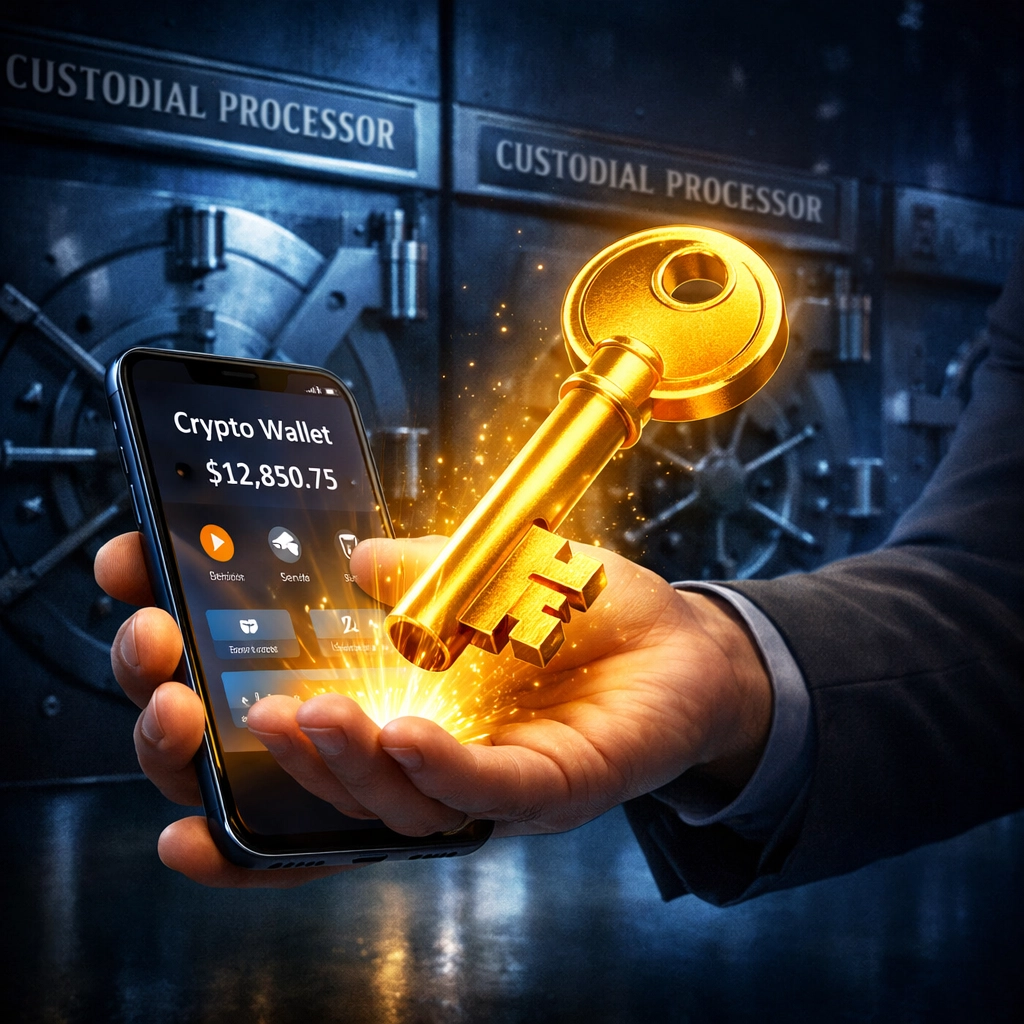
When you use custodial processors, they control the private keys. They own the wallets. You own an IOU.
Your funds sit in their accounts. They decide when to release. They can freeze accounts. They can delay withdrawals. They can go insolvent and take your capital with them.
Self-custody means you hold the private keys. You control the wallets. You own the assets the moment transactions confirm.
Larecoin's architecture gives merchants direct wallet ownership from day one. No pooled accounts. No shared custody. Your business funds in your business wallet.
Platform risk drops to zero. Your capital can't be frozen by a processor's decision or bankruptcy.
4. NFT Receipts Create Legal-Grade Transaction Records
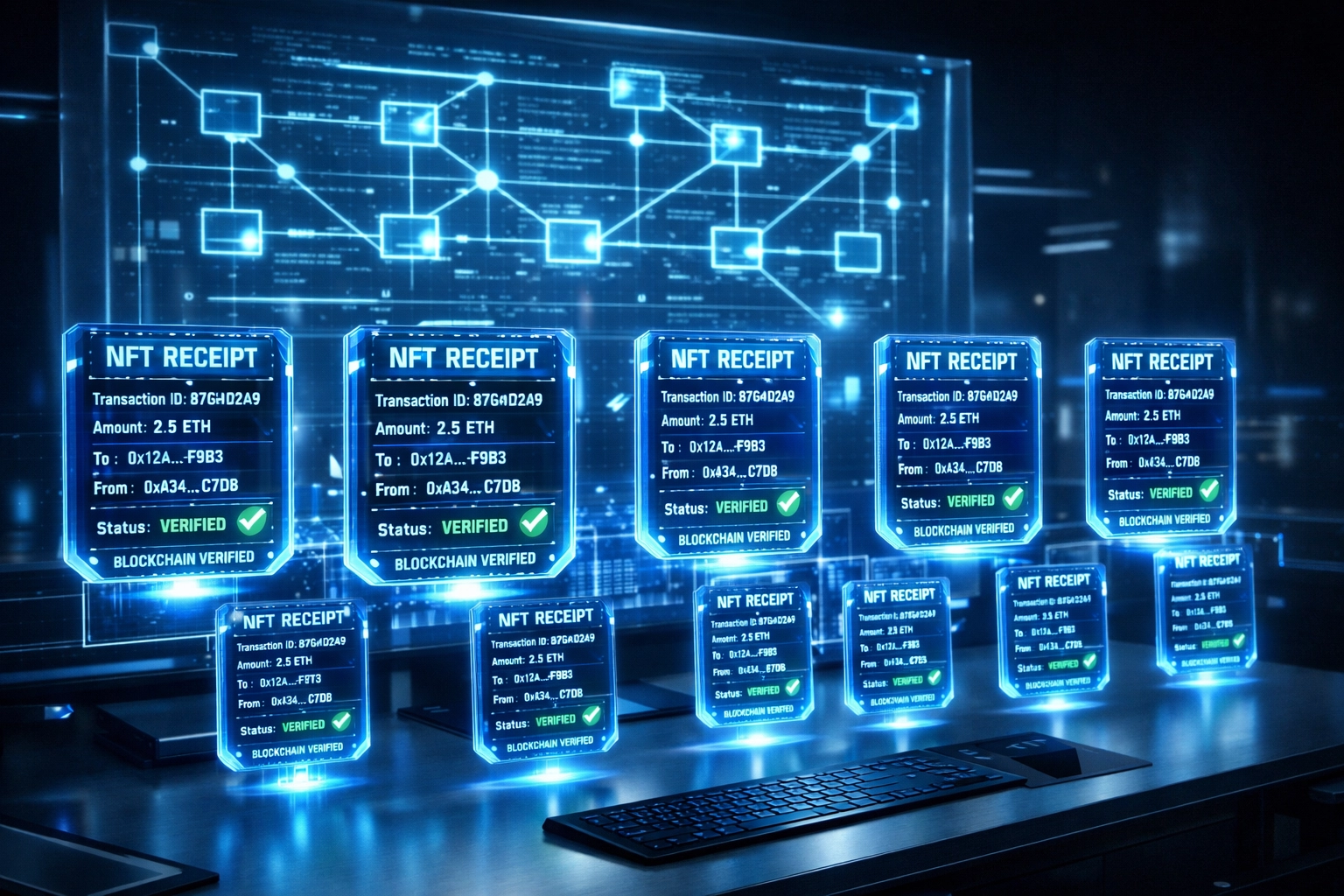
Larecoin generates NFT receipts for every transaction. Permanent. Immutable. Blockchain-verified.
These aren't database entries that can be edited or deleted. They're on-chain records meeting legal evidentiary standards.
Tax audits? Pull your NFT receipts. Blockchain-verified timestamps and amounts. No disputes.
Chargebacks? They don't exist with crypto payments. NFT receipts prove payment occurred and was confirmed.
Compare this to NOWPayments and CoinPayments. They provide transaction histories in their dashboards. But those are centralized database records. Hackable. Editable. Not blockchain-native.
NFT receipts eliminate reconciliation headaches. Your accounting team accesses permanent records that match blockchain truth exactly.
5. Enterprise Infrastructure Built for Growth
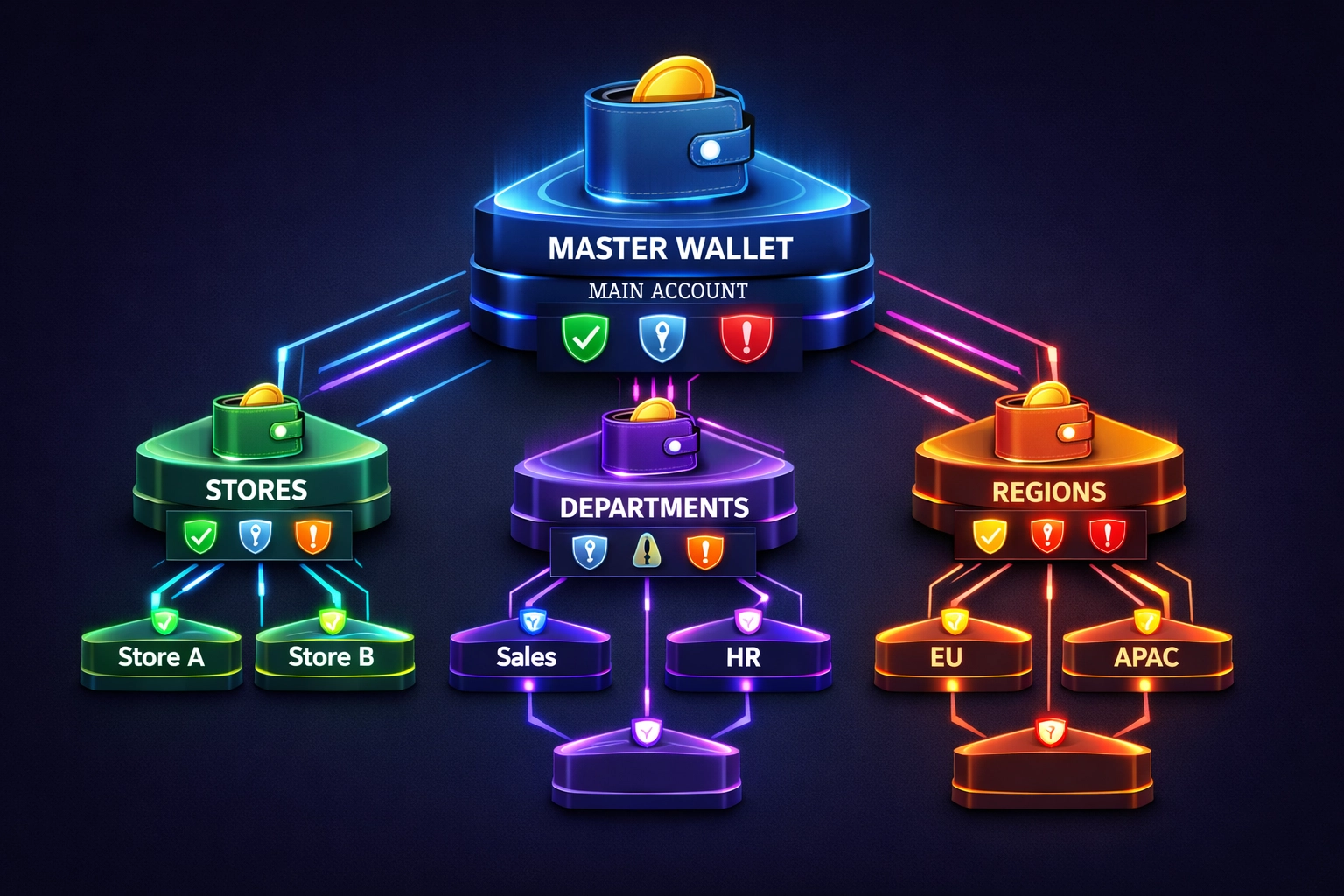
Self-custody doesn't mean sacrificing functionality. Larecoin's system includes master/sub-wallet architecture.
Create separate wallets for:
Different store locations
Product lines
Departments
Geographic regions
Maintain unified oversight while giving location managers appropriate access. Your CFO sees everything. Individual managers see their wallets only.
Granular permission controls mean accountants access read-only views. Operations teams process refunds. Finance approves large transfers.
This infrastructure matches enterprise requirements while preserving self-custody principles. You're not choosing between control and convenience. You get both.
6. Deploy in 15 Minutes Without Approval Barriers
NOWPayments and CoinPayments require approval processes. Applications. Credit checks. Business verification. Revenue history reviews.
Wait weeks or months. Risk rejection. Start over if denied.
Self-custody merchant accounts launch immediately.
Larecoin deployment:
Create wallet (5 minutes)
Integrate payment gateway (10 minutes)
Start accepting payments
No approval. No rejection risk. No waiting period.
Your business controls the timeline. You decide when to go live. Not a processor's underwriting department.
7. US Compliance Without Custodial Compromise
Here's where Larecoin separates from the pack.
We're pursuing rigorous US compliance: MSB registration and state-by-state MTL strategy. This matters because compliant self-custody is rare.
Most self-custody solutions operate in regulatory gray zones. Most compliant processors force custodial arrangements.
Larecoin delivers both. Full self-custody with US regulatory compliance. You maintain control while we handle compliance infrastructure.
This positions merchants for long-term stability. Regulatory environments tighten. Larecoin merchants stay compliant while keeping self-custody benefits.
The LUSD Advantage
Larecoin's LUSD stablecoin eliminates price volatility concerns that keep merchants from adopting crypto payments.
Customer pays in LUSD. You receive LUSD. No conversion needed. No price fluctuation between payment and settlement.
LUSD operates on Solana: fast confirmation, minimal gas fees, maximum throughput. Process hundreds of transactions per second during peak periods. Costs stay negligible.
Traditional stablecoins work. But LUSD is purpose-built for merchant transactions within the Larecoin ecosystem. Tighter integration. Lower friction. Better economics.
What This Means for Your Business
Self-custody merchant accounts aren't experimental technology anymore. They're production-ready infrastructure that outperforms custodial alternatives on every metric that matters:
Lower costs. Instant settlement. True ownership. Permanent records. Enterprise features. Rapid deployment. Regulatory compliance.
The custodial model made sense when crypto infrastructure was immature. In 2026, it's a relic.
Smart merchants are switching now. They're cutting processor fees. They're eliminating settlement delays. They're taking control of their payment infrastructure.
The question isn't whether self-custody is viable. It's whether you're ready to stop paying processors to hold your money.
Ready to Make the Switch?
Larecoin's self-custody merchant accounts are live and processing transactions for businesses worldwide.
Check out our comprehensive guide to Web3 global payments to see how merchants are cutting costs while upgrading infrastructure.
The future of crypto payments is self-custody. The future is already here.
Visit larecoin.com to get started.
Comments