

.png)
Are Banks Still Necessary for Merchants? How Self-Custody Crypto Payments Unlock True Financial Freedom
- [[[Free!!]<<<<]] Watch: 스포르팅 - 토트넘 Live Stream 13 September 2022
- 2 hours ago
- 4 min read
![Writer: [[[Free!!]<<<<]] Watch: 스포르팅 - 토트넘 Live Stream 13 September 2022](https://lh3.googleusercontent.com/a/AItbvmktwQc0wCdd3ZEETSYItRQubwwBzOyjD_dcigRf=s96-c)
The Banking Bottleneck
Your business makes a sale. The money sits in limbo for 3-5 days.
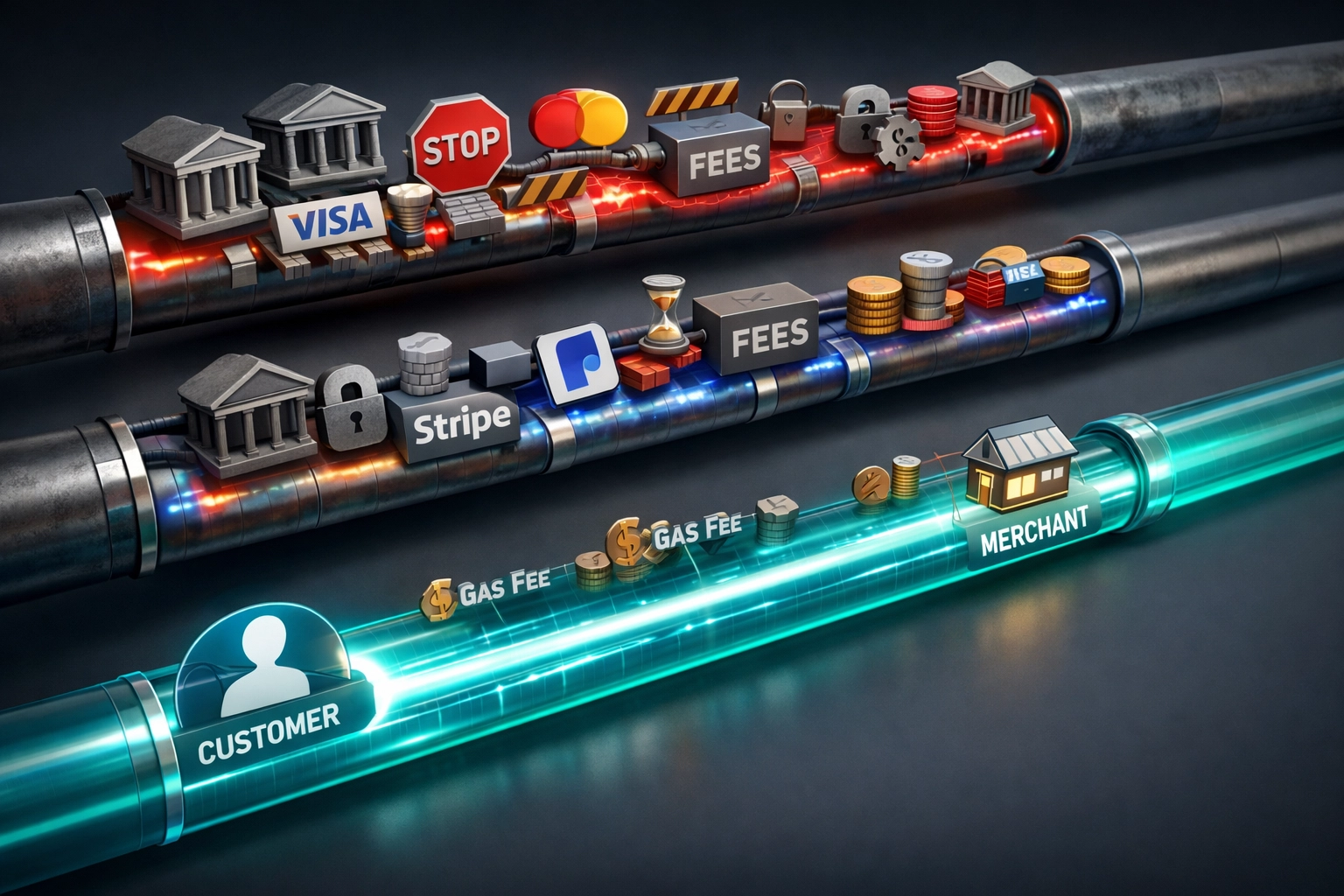
Banks take their cut. Payment processors take theirs. Card networks grab another slice.
By the time funds hit your account, you've lost 3-5% in fees alone.
This isn't 2016 anymore. There's a better way.
What Traditional Banking Actually Costs Merchants
Let's talk numbers.
Standard merchant account fees:
Interchange fees: 1.5-3.5% per transaction
Processing fees: 0.3-0.5% additional
Monthly account fees: $10-30
Chargeback fees: $20-100 per dispute
Currency conversion: 3-4% for international sales
A $100,000/month business loses $3,000-$5,000 just in payment processing.
Then add the hidden costs:
Settlement delays (cash flow killer)
Account freezes without warning
Geographic restrictions
Compliance paperwork
Banking relationship requirements
Banks control your money. Not you.

Self-Custody: Your Keys, Your Coins, Your Business
Self-custody means exactly what it sounds like.
You hold the private keys. You control the funds. No intermediary required.
Traditional banking = permission-based finance Self-custody crypto = sovereign finance
When a customer pays with crypto to your self-custody wallet, the funds are yours immediately.
No bank approval needed. No waiting period. No asking permission to access your own money.
This is what financial sovereignty looks like in 2026.
How Larecoin Enables True Self-Custody for Merchants
Most crypto payment processors still act like banks. They hold your funds. They control withdrawals.
Larecoin flips the script.
The self-custody advantage:
Direct wallet-to-wallet transactions
Zero custodial risk
Instant settlement (no 3-day holds)
LUSD stablecoin integration for price stability
Gas-only transfer fees (pennies, not percentages)
Compare this to NOWPayments or CoinPayments. They're crypto processors, sure. But they still custody your funds temporarily.
That's not freedom. That's just a different middleman.
Slashing Fees: The 50%+ Savings Reality
Traditional interchange fees exist because of infrastructure bloat.
Banks, card networks, payment processors, each layer adds costs.
Web3 global payments eliminate the layers.
Larecoin fee structure:
Network gas fees: $0.001-$0.50 per transaction
No percentage-based fees
No monthly minimums
No chargeback fees (crypto transactions are final)
A merchant processing $100,000 monthly:
Traditional fees: $3,000-$5,000
Larecoin fees: <$100 in gas costs
That's a 95%+ reduction.

NFT Receipts: The Accounting Revolution
Here's where it gets interesting.
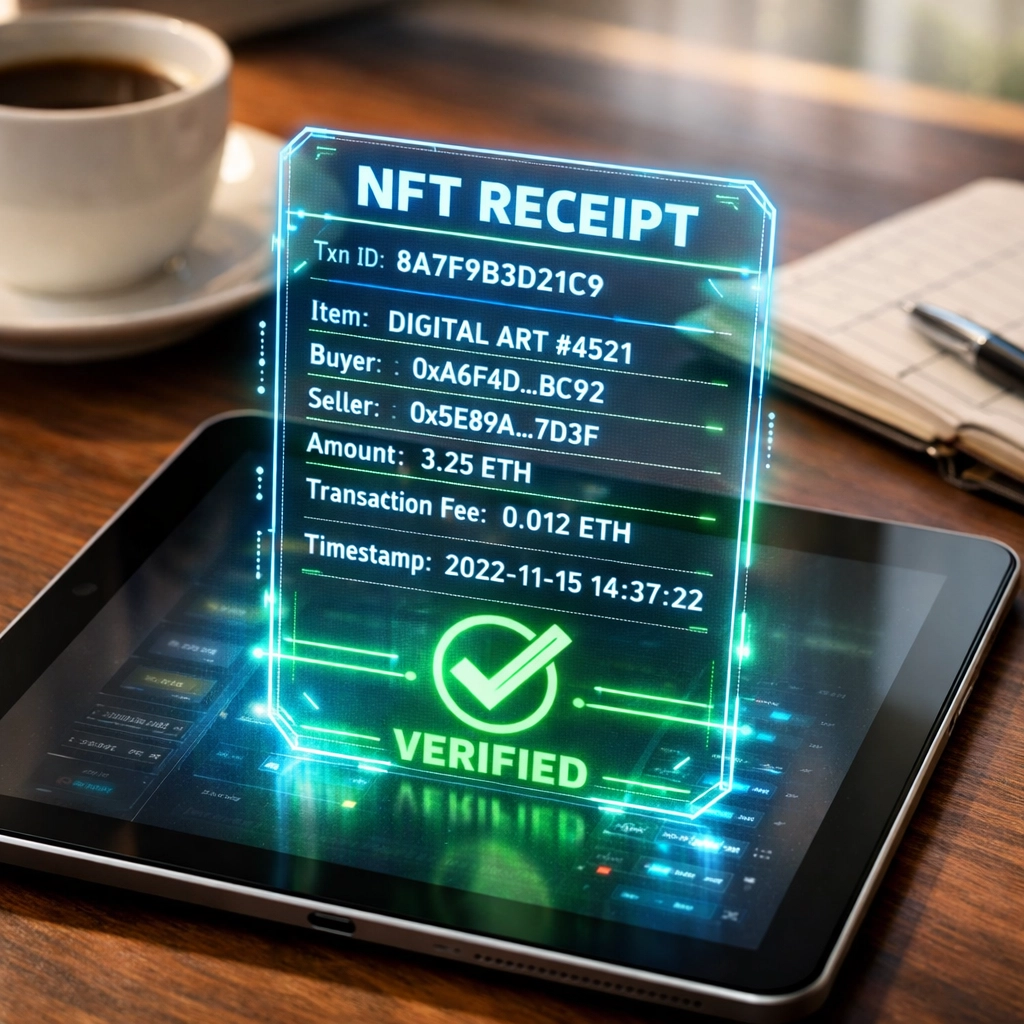
Every transaction generates an NFT receipt. Permanent. Immutable. Blockchain-verified.
Why this matters for merchants:
Instant proof of sale
Automatic record-keeping
Tax compliance simplified
Dispute resolution without banks
Audit trails that can't be manipulated
Traditional receipts can be lost, forged, or disputed. NFT receipts exist forever on-chain.
Your accountant will thank you.
LUSD Stablecoin: Stability Without Banking
The crypto volatility problem is solved.
LUSD (Liquity USD) is a decentralized stablecoin pegged to the US dollar. No bank backing required.
LUSD benefits for merchants:
Price stability (no Bitcoin roller coaster)
Self-custody compatible
Decentralized (no central point of failure)
Redeemable for ETH at any time
Interest-free borrowing model
Accept LUSD. Hold it. Convert it. All without a bank account.
This is the receivables token approach in action.
Comparing Self-Custody Solutions
Not all crypto payment systems offer true self-custody.
Larecoin vs. competitors:
NOWPayments:
Custody model: Custodial (they hold funds temporarily)
Fee structure: 0.5% per transaction
Settlement: 1-2 days typical
Self-custody: No
CoinPayments:
Custody model: Custodial wallets
Fee structure: 0.5% transaction fee
Settlement: Variable
Self-custody: Optional, but clunky
Triple-A:
Custody model: Hybrid custodial
Fee structure: 0.8-1% per transaction
Settlement: Next business day
Self-custody: Limited
Larecoin:
Custody model: True self-custody
Fee structure: Gas-only (pennies)
Settlement: Instant
Self-custody: Native design
The difference is architectural. Most platforms bolt crypto onto traditional banking models.
Larecoin starts with self-custody as the foundation.
The Crypto POS System for Small Business
Physical retail needs physical solutions.
Larecoin's crypto POS system brings self-custody to brick-and-mortar stores.
How it works:
Customer scans QR code at checkout
Payment sent directly to merchant's wallet
NFT receipt generated automatically
Funds available immediately
No bank account required. No merchant account application. No credit check.
Just download a wallet. Start accepting payments.
This is especially powerful for:
International businesses (no currency conversion fees)
High-risk industries (no bank discrimination)
Underbanked entrepreneurs (no minimum account balances)
Fast-growing startups (no volume caps)
Bank-Free Business Operations: Real-World Scenarios
Scenario 1: E-commerce store
Accepts LUSD payments via Larecoin
Pays suppliers directly in crypto
Uses NFT receipts for accounting
Avoids $4,000/month in banking fees
Scenario 2: International freelancer
Receives payments from global clients
No wire transfer fees or delays
No currency conversion losses
Maintains full control of funds
Scenario 3: Coffee shop
Crypto POS at register
Self-custody wallet on tablet
Instant settlements
Zero chargeback risk
The pattern is clear. Banks add friction. Self-custody removes it.
The Receivables Token Innovation
Here's something competitors don't offer.
Larecoin's receivables token system turns outstanding invoices into tradeable assets.
How it works:
Issue invoice as smart contract
Receive receivables token immediately
Trade token for instant liquidity
Buyer gets discount, seller gets cash flow
No factoring company needed. No bank line of credit. No permission required.
This is decentralized finance solving real business problems.
Are Banks Obsolete for Merchants?
Not quite. But they're becoming optional.
When you might still need a bank:
Paying traditional suppliers (for now)
Employee payroll (transitioning to crypto)
Tax payments (depending on jurisdiction)
Certain business licenses
When you don't need a bank:
Accepting customer payments
Managing working capital
International transactions
Payment processing
Financial record-keeping
The trend is clear. Every month, more businesses operate partially or fully bank-free.
By 2027, self-custody merchant accounts will be standard. Not experimental.
Making the Switch: Practical Steps
Ready to reduce merchant interchange fees by 50%+ and take control of your finances?
Getting started:
Set up a self-custody wallet (5 minutes)
Connect to Larecoin payment gateway
Accept your first crypto payment
Track via NFT receipts
Scale without banking limits
No credit check. No approval process. No waiting.
The Financial Sovereignty Shift
Banking relationships were mandatory because there was no alternative.
Self-custody crypto payments create the alternative.
Lower fees. Instant settlement. Global reach. Complete control.
Banks aren't disappearing. But for merchants, they're becoming optional infrastructure instead of mandatory gatekeepers.
That's the definition of financial freedom.
Ready to explore Web3 global payments and join the merchant revolution?
The future of commerce is self-custody. The future is now.
Comments