

.png)
Are Community Social Hubs the Future of Web3 Payments? Here's What Larecoin Is Building
- [[[Free!!]<<<<]] Watch: 스포르팅 - 토트넘 Live Stream 13 September 2022
- 2 hours ago
- 4 min read
![Writer: [[[Free!!]<<<<]] Watch: 스포르팅 - 토트넘 Live Stream 13 September 2022](https://lh3.googleusercontent.com/a/AItbvmktwQc0wCdd3ZEETSYItRQubwwBzOyjD_dcigRf=s96-c)
Payments Don't Happen in Isolation
Traditional payment processors got it wrong.
They treat transactions like isolated events. A user pays. A merchant receives. Done.
But that's not how commerce actually works.
Real payments happen inside communities. They're social. They're conversations. They're trust networks.
Larecoin is building the infrastructure where transactions happen naturally: inside community social hubs.
The Community Hub Architecture
Here's what we're rolling out:
Community social hubs function as the primary payment environment. Users gather. They discuss. They transact. All in one ecosystem.
No jumping between platforms. No clunky checkout redirects. No abandoning the community to complete a purchase.
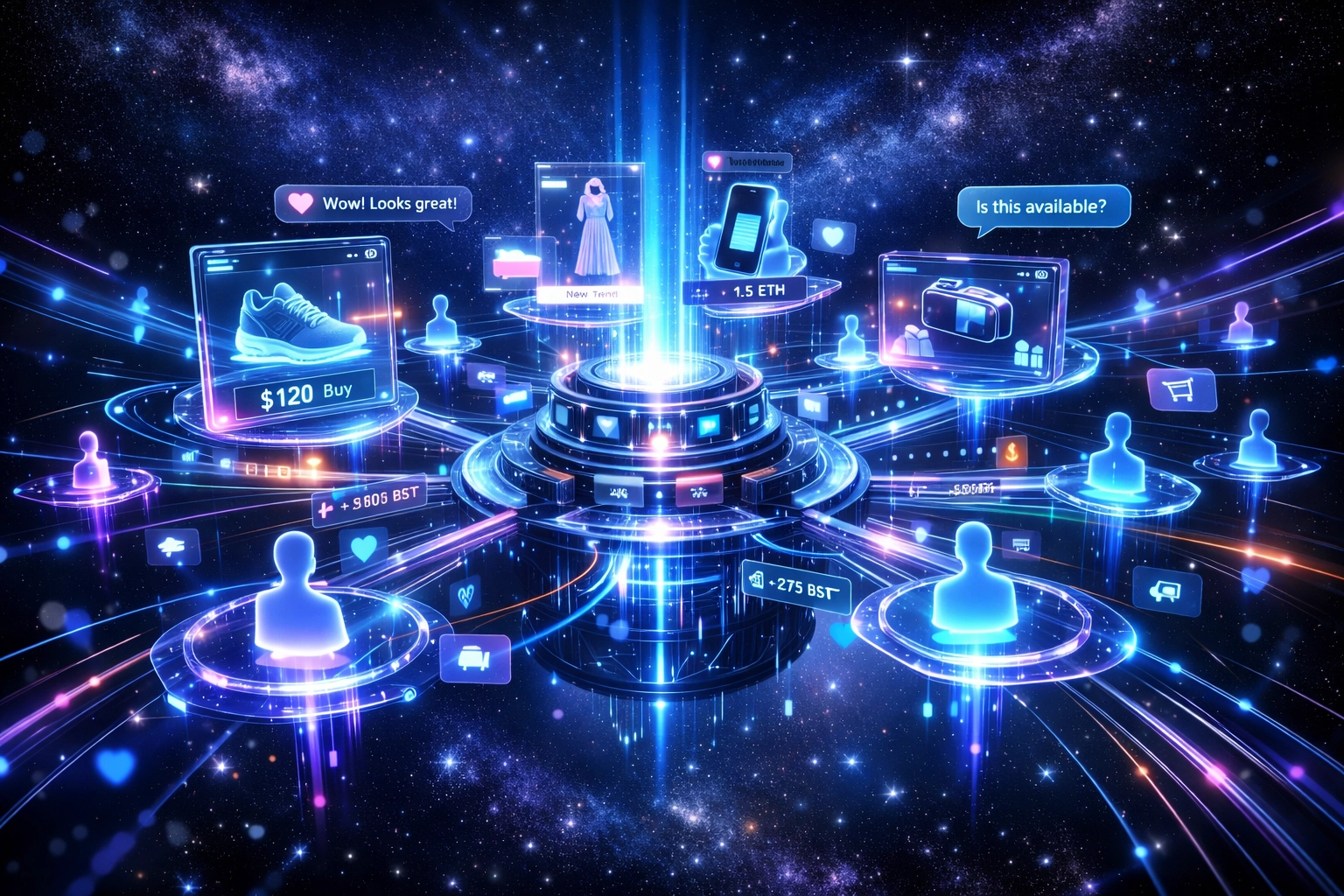
Think forums meet marketplaces meet payment rails. All running on Web3 infrastructure.
The hub architecture includes:
Real-time community discussions where product recommendations happen organically
Integrated wallet functionality that feels native, not bolted-on
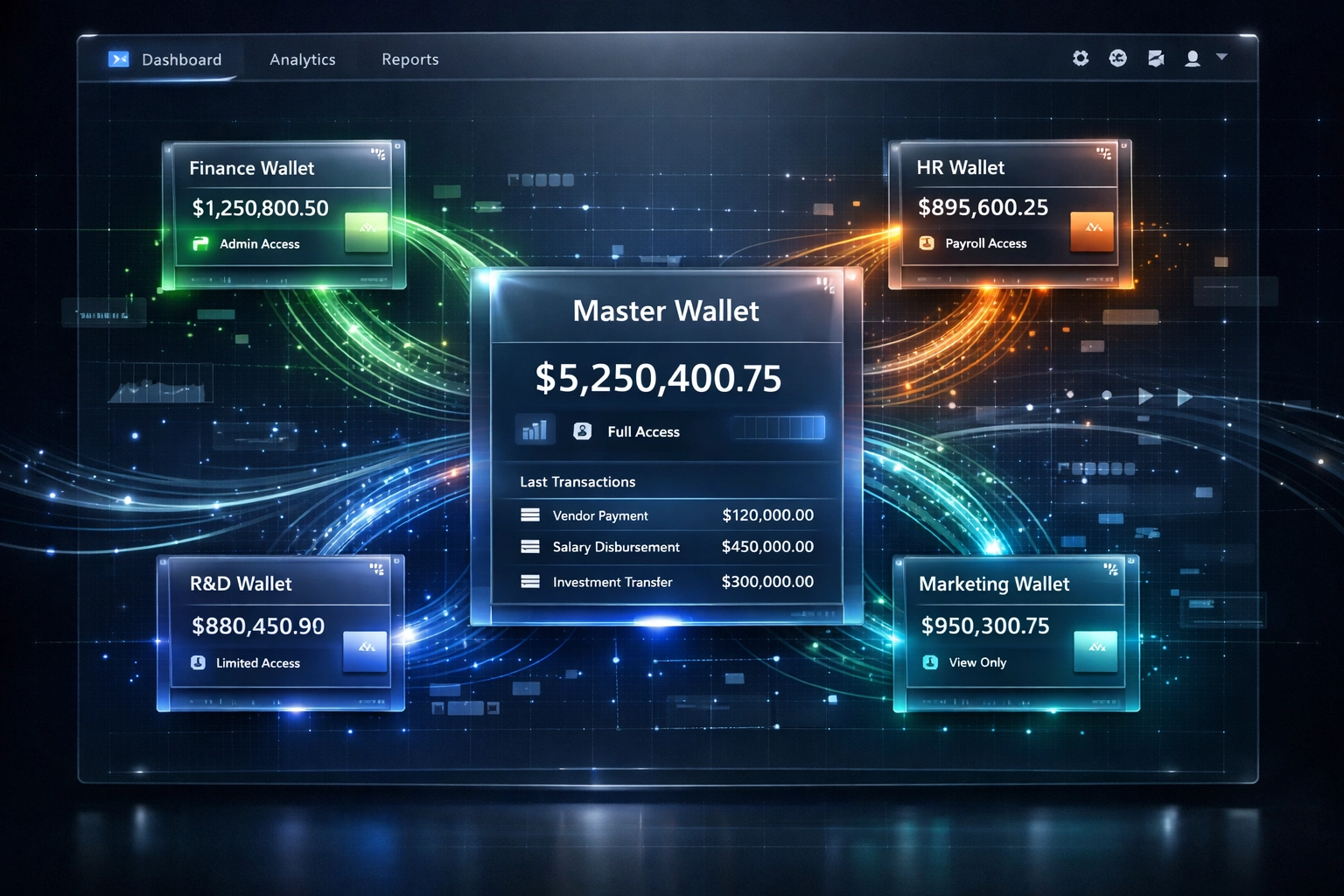
Master/sub-wallet management for enterprises running multiple storefronts
NFT receipt generation automatically for every transaction
LUSD stablecoin support eliminating volatility concerns
Social Impact Baked Into Protocol
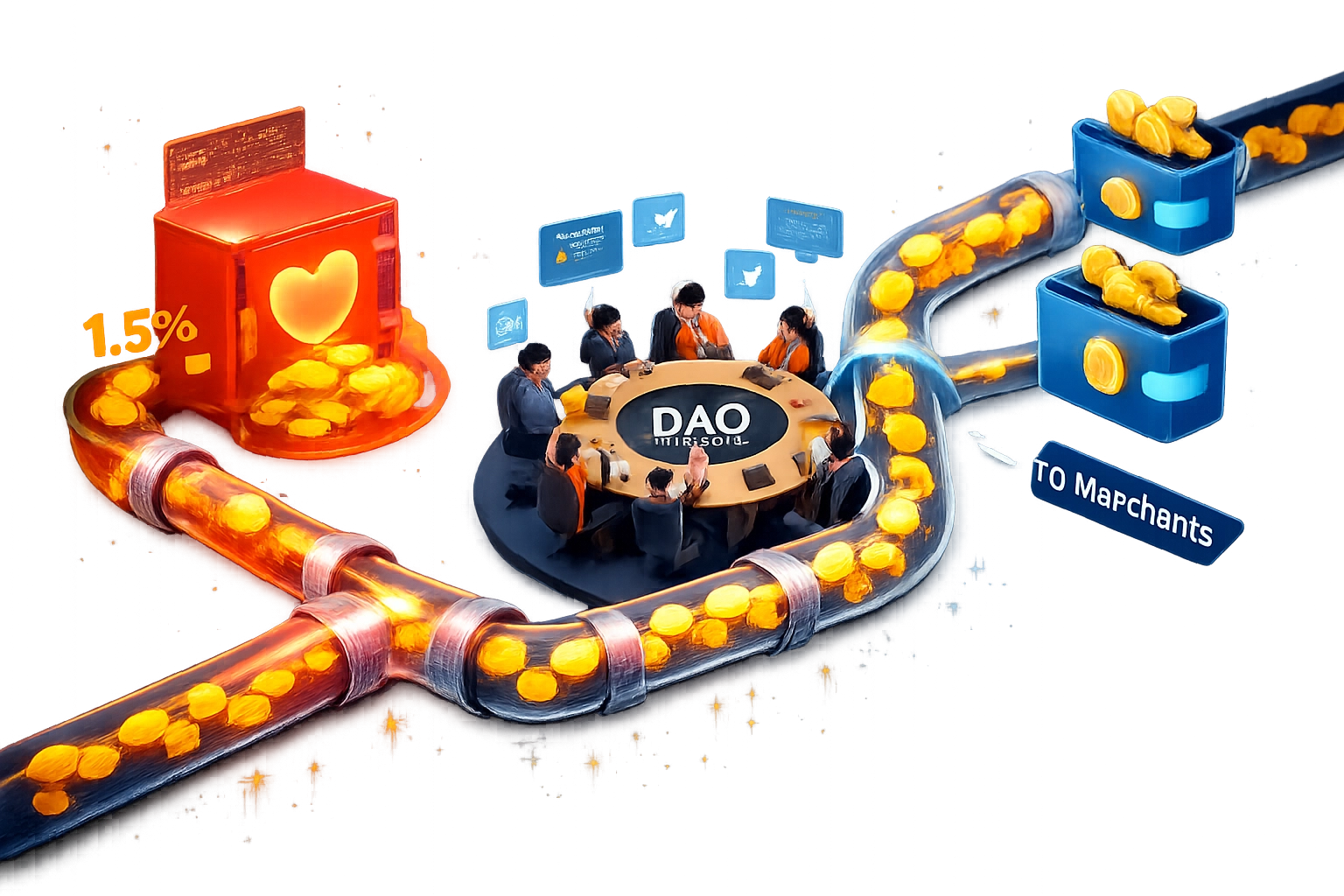
Every transaction routes 1.5% automatically to verified global charities.
Not as a marketing gimmick. As a protocol-level mechanism.
This happens whether merchants remember it or not. Whether users opt-in or not. It's built into the transaction itself.
Community members vote monthly via DAO governance on fund distribution. You hold tokens. You vote. You shape where impact dollars flow.
That's social commerce with actual social impact.
Traditional processors like Visa and Mastercard charge 2-3%+ in fees. Zero goes to verified charities. All goes to shareholders.
Larecoin charges 0.5% base fees. Plus the 1.5% social impact layer. Total: 2%.
Still less than legacy processors. With meaningful global impact attached.
LareBlocks and LareScan Infrastructure
Community hubs need robust infrastructure.
LareBlocks provides the transaction processing layer. Lightning-fast settlement. Sub-second confirmations. Built on Solana's high-throughput architecture.
LareScan offers complete transparency. Every transaction viewable. Every charity distribution trackable. Every NFT receipt verifiable.
This infrastructure supports:
Cross-border commerce without intermediaries
Micropayments that actually make economic sense
Real-time settlement for merchants
Gas-only transfers for maximum efficiency
Push-to-card functionality when users need fiat
The community hub sits on top of this infrastructure. Users experience seamless social commerce. Behind the scenes, LareBlocks and LareScan handle the heavy lifting.
Enterprise-Grade Wallet Management
Big merchants have complex needs.
Multiple stores. Various departments. Different permission levels.
Master/sub-wallet architecture solves this.
A parent company controls the master wallet. Individual stores or departments get sub-wallets. Each with customizable permissions.
Marketing can spend up to X amount. Store A can access certain tokens. Store B handles different inventory NFTs.
All reconcilable under one master wallet. All trackable through LareScan.
Traditional payment processors offer nothing like this. You get one merchant account. Figure out internal accounting yourself.
Larecoin builds wallet management into the protocol.
Gift Cards Meet Crypto Purchases
Community hubs enable creative commerce models.
Gift card crypto purchases represent one emerging use case.
Users buy gift cards with LARE or LUSD. Recipients redeem inside the community hub. No crypto knowledge required on their end.
This bridges crypto-native users with mainstream adoption. Your crypto-savvy friend buys you a gift card. You shop inside the Larecoin ecosystem. You earn rewards. Maybe you get curious about the underlying tech.
Onboarding happens naturally through gifting and community participation.
AI-Driven Shopping Layer
Community hubs generate massive behavioral data.
What products do users discuss? Which merchants get recommended? What price points trigger purchases?
AI shopping assistants leverage this community intelligence.
Instead of generic product recommendations, you get insights from real community members. Combined with AI analysis of what actually converts.
The AI layer watches:
Community discussion patterns
Purchase behaviors across similar user profiles
Seasonal trends within the hub
Cross-promotion opportunities between merchants
Then surfaces relevant products at the right moment in community conversations.
Not invasive advertising. Helpful suggestions based on actual community intelligence.
The Economics of Community Commerce
Let's talk numbers.
Legacy processors:
Visa/Mastercard: 2-3%+ interchange fees
PayPal: 2.9% + $0.30 per transaction
Square: 2.6% + $0.10 per transaction
Zero social impact
Zero community governance
Zero transparency
Larecoin community hubs:
0.5% base fee
1.5% to verified charities
Total: 2%
Full transparency via LareScan
DAO governance over impact funds
NFT receipts for every transaction
LUSD stablecoin eliminates volatility
Merchants save money. Communities generate impact. Users gain governance rights.
That's the economic model traditional finance can't match.
NFT Receipts as Loyalty Primitives
Every transaction generates an NFT receipt automatically.
Sounds gimmicky until you understand the implications.
These receipts become:
Proof of purchase that can't be faked
Loyalty program primitives merchants can program rewards into
Community status symbols showing long-term support
Governance weight in certain DAO proposals
Resellable assets for limited edition purchases
A user who bought your product on day one? Their NFT receipt proves it. You can airdrop them exclusive access. They can display it in the community hub. Other members see their early supporter status.
Legacy receipts sit in email folders. NFT receipts become community identity.
Decentralization as Feature, Not Buzzword
Community social hubs only work if they're actually decentralized.
Centralized platforms die when the company pivots. Or gets acquired. Or changes terms of service.
Larecoin's hub architecture runs on blockchain infrastructure.
No single point of failure. No platform risk. No CEO who can shut it down.
Community members own governance tokens. They vote on:
Charity fund distribution
Protocol upgrades
Fee structures
Hub feature priorities
This matters for merchants. You build your community on stable, decentralized rails. Not on a platform that might change direction next quarter.
Why This Matters Now
Web3 payments are at an inflection point.
Early infrastructure focused on speculative trading. That phase is over.
Real-world commerce adoption needs environments where transactions feel natural. Where community trust already exists. Where social proof drives purchasing decisions.
Community social hubs provide exactly that environment.
Larecoin isn't building payment rails in isolation. We're building the social commerce infrastructure where Web3 payments become the default.
Lower fees than legacy processors. Social impact baked in. Community governance. Enterprise-grade tooling. AI-enhanced shopping.
All happening inside hubs where your customers already gather.
That's not the future of payments. That's payments finally catching up to how humans actually transact.
Ready to see community commerce in action? Join the Larecoin Community and experience social hubs firsthand.
Explore our infrastructure on LareScan. Read the full marathon series covering every aspect of Web3 global payments.
Comments