

.png)
Are Physical Stores Dead? How VR/AR Shopping in the Larecoin Metaverse Is Redefining B2B2C Commerce
- [[[Free!!]<<<<]] Watch: 스포르팅 - 토트넘 Live Stream 13 September 2022
- 2 hours ago
- 5 min read
![Writer: [[[Free!!]<<<<]] Watch: 스포르팅 - 토트넘 Live Stream 13 September 2022](https://lh3.googleusercontent.com/a/AItbvmktwQc0wCdd3ZEETSYItRQubwwBzOyjD_dcigRf=s96-c)
Physical Retail Isn't Dead: It's Just Getting Smarter
Here's the truth: retailers are planning 1,118 store openings in 2026 versus only 566 closures.
Physical stores aren't dying. They're evolving.
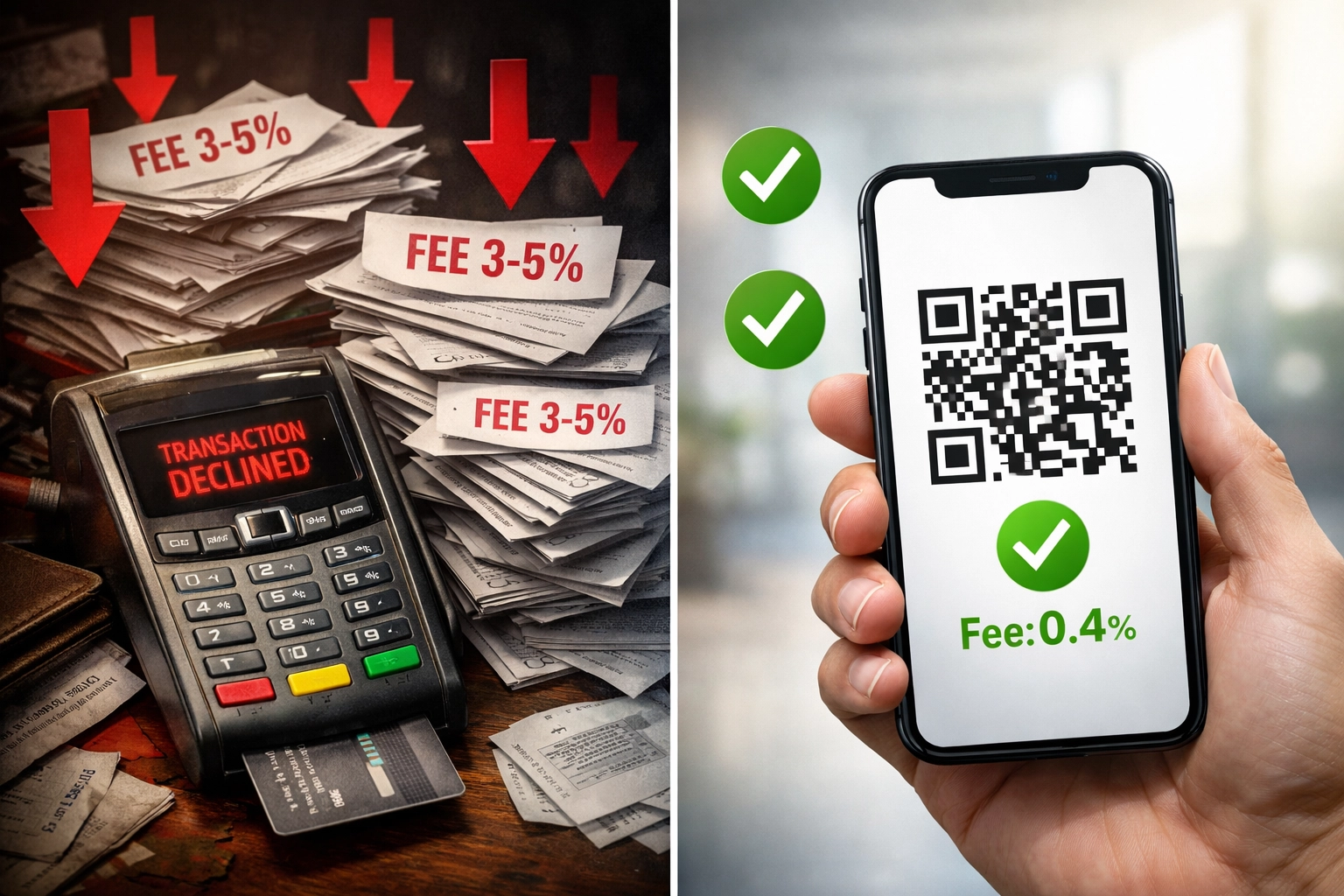
But here's what is dying: outdated payment infrastructure. Interchange fees eating 3-5% of every transaction. Clunky POS systems that can't bridge digital and physical experiences. Payment processors that force you to choose between convenience and custody.
The real question isn't whether physical stores will survive. It's whether your payment infrastructure can keep up with where commerce is headed.
The Payment Problem Nobody's Solving
Walk into any retail store today. The shopping experience? Maybe immersive. The checkout? Still stuck in 2015.
Traditional payment processors like NOWPayments, CoinPayments, and Triple-A offer crypto acceptance. But they're building yesterday's solutions for tomorrow's problems.
NOWPayments: Decent crypto gateway. But you're paying 0.5-1% in fees, dealing with custody issues, and getting zero innovation beyond basic transactions. No NFT receipts. No metaverse integration. No B2B2C infrastructure.
CoinPayments: Broader coin support. Same fundamental problems. You're still looking at conversion fees, withdrawal limits, and a payment experience that feels bolted onto existing retail rather than reimagined for Web3.
Triple-A: Enterprise-focused. Better compliance. Still charging you for the privilege while maintaining control of your funds during settlement.
None of them are thinking about what comes next.
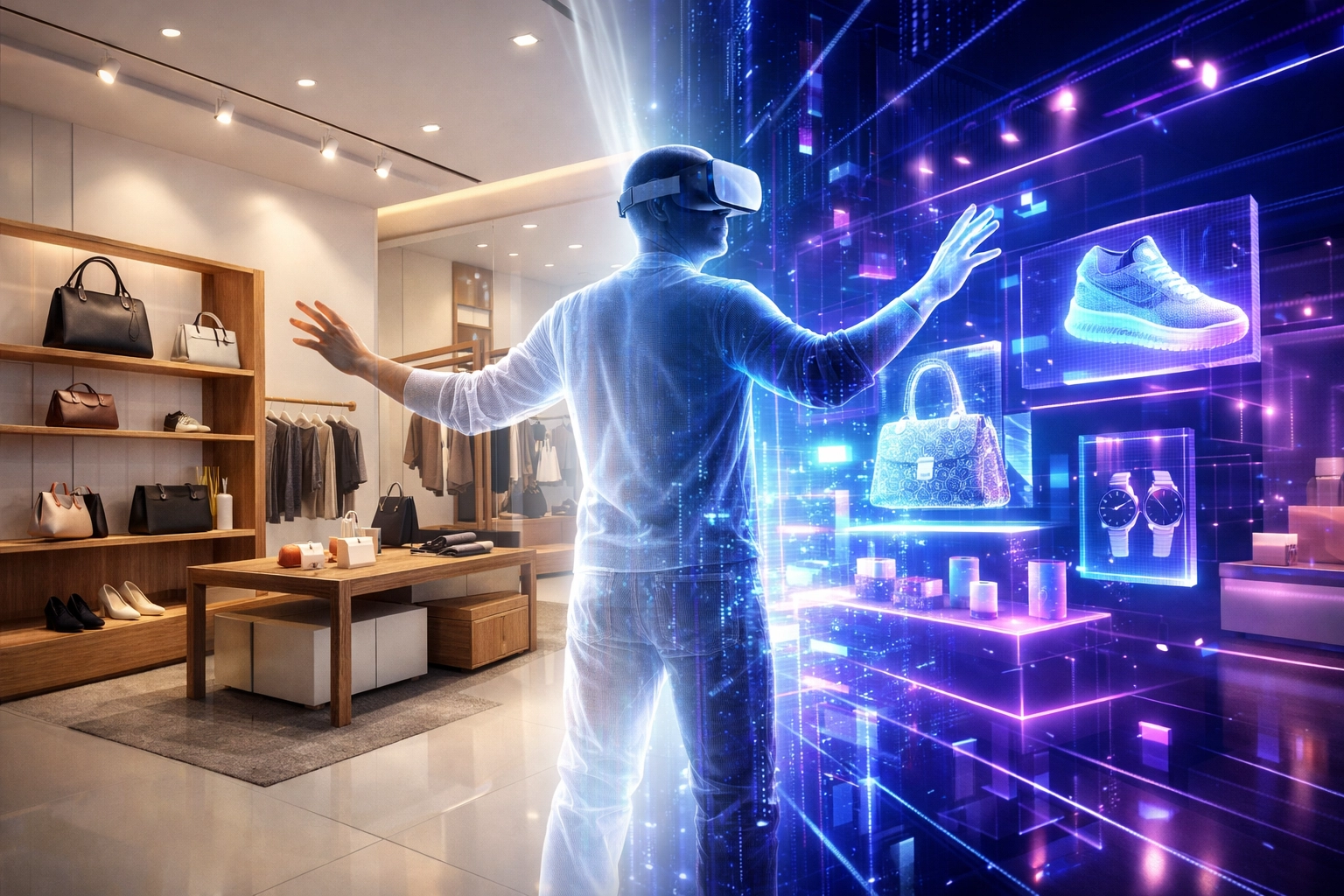
Larecoin's Technical Advantage: Built for Hybrid Commerce
Larecoin didn't just create another crypto payment processor. We built the infrastructure for commerce that exists everywhere: physical stores, online checkouts, and virtual metaverse storefronts.
NFT Receipts: Every transaction generates an immutable, tradeable proof of purchase. Returns? Warranty claims? Loyalty programs? Your receipt is now a programmable asset. Works in a Manhattan boutique or a metaverse marketplace.
LUSD Stablecoin: Price stability without the volatility. Merchants set prices in familiar terms. Customers shop without crypto anxiety. The blockchain benefits without the "did my coffee just cost $47?" problem.
Gas-Only Transfers: You're not paying network fees and platform fees and conversion fees. Just gas. That's it. On Solana, that means fractions of a penny per transaction.
Self-Custody by Default: Your keys. Your crypto. Your business. We're not holding your funds, charging you to access your money, or introducing counterparty risk into every transaction.
This isn't theoretical. This is live infrastructure powering real commerce across physical and virtual environments.
Merchants: Cut Interchange Fees by More Than 50%
Let's talk numbers.
Traditional credit card processing: 2.9% + $0.30 per transaction minimum. High-risk categories? 3.5-5%. International transactions? Add another 1-2%.
Larecoin: Gas fees only. On high-volume days, you're looking at under 0.4% total costs. On normal days? Even less.
For a business processing $500K annually, that's $12,000+ back in your pocket. Every year.
Master/Sub-Wallet Architecture: Run multiple locations, franchises, or brands? Set up hierarchical wallet structures that let you manage everything from one dashboard while maintaining separate accounting. Physical store in Brooklyn, pop-up in Miami, metaverse storefront: all under one master wallet with granular control.
QR-Generated POS: No expensive hardware. No monthly terminal fees. Generate a QR code, customer scans, payment complete. Works for your counter transaction or your VR showroom with identical infrastructure.
Your physical store and your metaverse presence run on the same payment rails.
The B2B2C Metaverse: Where Shopping Gets Social
Here's where it gets interesting.
Larecoin's metaverse isn't trying to replace your physical store. It's extending it into dimensions physical retail can't reach.
Virtual Showrooms: A furniture retailer doesn't need a 50,000 sq ft warehouse anymore. Stock 10 display models physically. Showcase 1,000 options in VR. Customers walk through virtual rooms, configure custom pieces, see products at scale in their actual space via AR.
Payment happens the same way whether they're standing in your store or shopping from their couch in a VR headset.
Social Shopping Spaces: Your customers aren't shopping alone in the metaverse. They're bringing friends. Hosting virtual shopping parties. Getting real-time opinions from people across the country. The transaction still happens through your branded environment.
B2B2C Commerce Model: Manufacturers showcase to retailers in virtual trade shows. Retailers curate virtual storefronts. End customers shop across multiple brands in unified social spaces. Revenue sharing happens automatically through smart contracts. Everyone gets paid instantly. No 60-day net terms. No payment processing delays.
This isn't replacing physical retail. It's multiplying what physical retail can do.
Compliance You Can Trust: Federal MSB + State MTL Coverage
Innovation without compliance is just risk.
Larecoin operates as a federally registered Money Services Business (MSB). We're not hoping regulators don't notice. We're building in the open with proper licensing.
State-Level MTL Coverage: Money Transmitter Licenses across U.S. states where required. Not cutting corners. Not operating in gray areas. Proper registration, proper compliance, proper consumer protections.
Know Your Business (KYB): Merchant onboarding includes proper verification. We're not enabling bad actors or putting your business at risk by association.
Transaction Monitoring: Real-time compliance checks. Automatic flagging of suspicious patterns. You get to focus on commerce. We handle the regulatory heavy lifting.
When you're processing payments across physical stores, e-commerce, and metaverse environments, compliance complexity multiplies. We've built it into the infrastructure from day one.
Learn more about our trust and compliance framework.
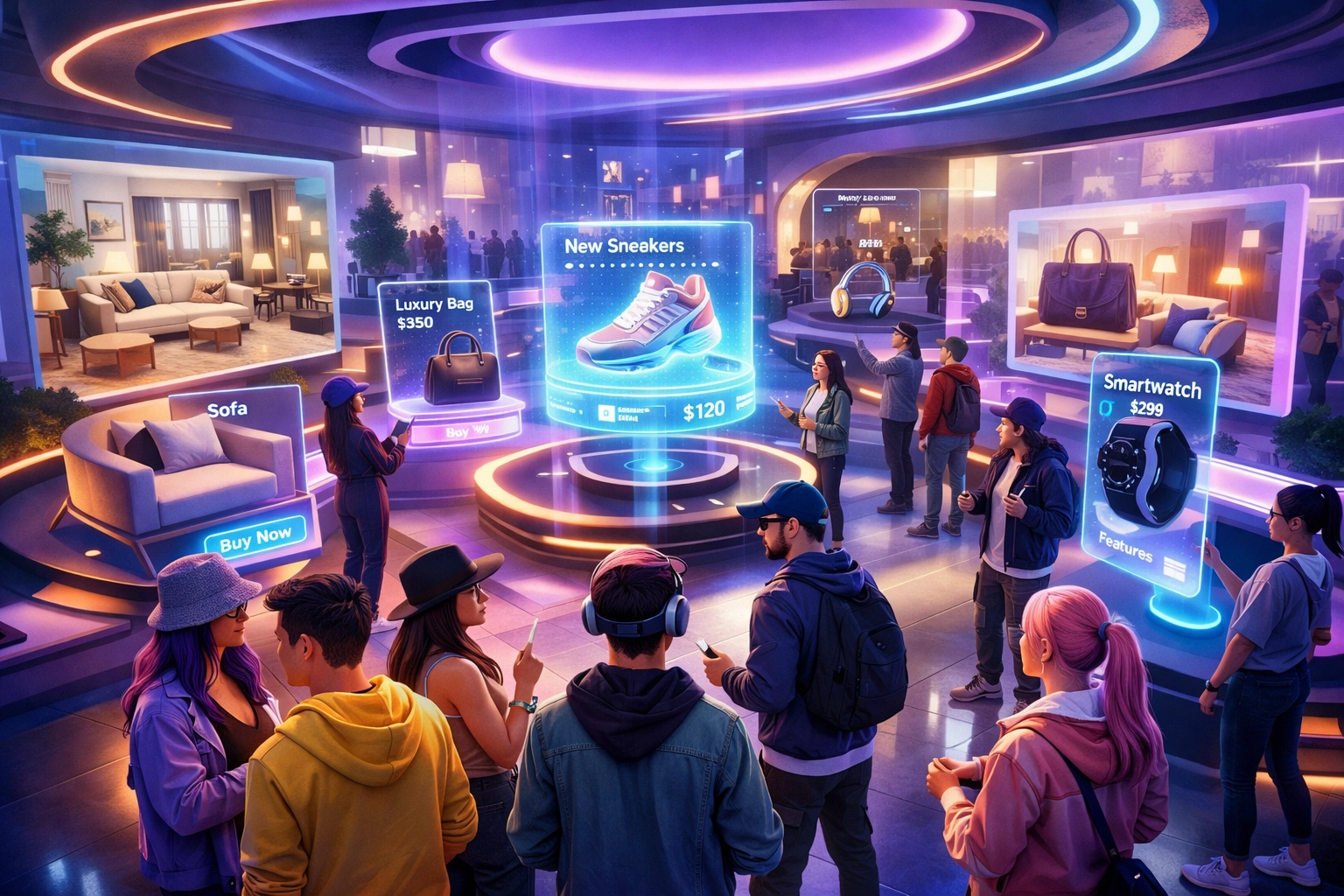
The Hybrid Future: Physical + Virtual = Unlimited
The smartest retailers in 2026 aren't choosing between physical and digital. They're doing both.
Pop-up stores that exist for 48 hours physically but live permanently in the metaverse. Product launches that happen simultaneously across five cities and 500 virtual locations. Shopping experiences that start in AR, continue in-store, and complete with NFT proof of authenticity.
The payment infrastructure has to work everywhere. Same fees. Same settlement. Same custody model. Same compliance.
That's what Larecoin enables.
Your customer walks into your physical store. Scans a QR code on a product. Sees AR visualization of how it fits in their space. Invites three friends into a shared VR space to get opinions. Makes the purchase. Receives an NFT receipt with warranty information and loyalty points already loaded.
Total friction? Less than traditional retail. Total fees? A fraction of credit card processing. Total innovation? Light years ahead of NOWPayments or CoinPayments.
What This Means for Your Business
Physical stores aren't dead. But businesses stuck with 2015 payment infrastructure might be.
The commerce landscape is expanding. Your customers are shopping in physical stores and online and in virtual environments and in augmented reality.
Your payment infrastructure should work everywhere without multiplying your costs, complexity, or compliance burden.
Larecoin built that infrastructure. We're not waiting for the future of retail. We're enabling it today.
Fee savings over 50%. NFT receipts as standard. LUSD stability without volatility. Self-custody without compromise. Federal MSB and state MTL compliance. Master/sub-wallet architecture for complex operations. QR-generated POS that works identically across physical and virtual environments.
This is B2B2C commerce redefined. This is the metaverse meeting main street. This is retail evolution happening in real-time.
The question isn't whether you'll eventually need this infrastructure. The question is how much market share you'll lose to competitors who adopt it first.
Ready to future-proof your commerce infrastructure? Explore the Larecoin ecosystem and see what payments look like when they're built for everywhere.
Comments