

.png)
Are You Wasting 50% on Merchant Interchange Fees? Here's How Larecoin Cuts Payment Costs in Half
- [[[Free!!]<<<<]] Watch: 스포르팅 - 토트넘 Live Stream 13 September 2022
- 2 hours ago
- 4 min read
![Writer: [[[Free!!]<<<<]] Watch: 스포르팅 - 토트넘 Live Stream 13 September 2022](https://lh3.googleusercontent.com/a/AItbvmktwQc0wCdd3ZEETSYItRQubwwBzOyjD_dcigRf=s96-c)
The Hidden Tax Killing Your Margins
Every swipe. Every tap. Every online checkout.
Traditional payment processors are bleeding you dry. The average merchant pays 1.79–1.91% per transaction in interchange fees alone. Add in processing fees, card brand fees, and gateway charges? You're looking at 2.2% minimum: often closer to 3.5% for premium cards and online transactions.
Let's do the math. A $1 million revenue business loses $22,000–$35,000 annually just to process payments. That's capital you could reinvest in inventory, marketing, or expansion. Instead, it's padding the pockets of legacy financial institutions.
The legacy system is broken. Web3 payments are the fix.
Why Traditional Processors Are Obsolete
Traditional payment rails were built in the 1970s. Credit card networks operate on antiquated infrastructure designed for a pre-internet world. Multiple intermediaries. Opaque fee structures. Zero merchant control.
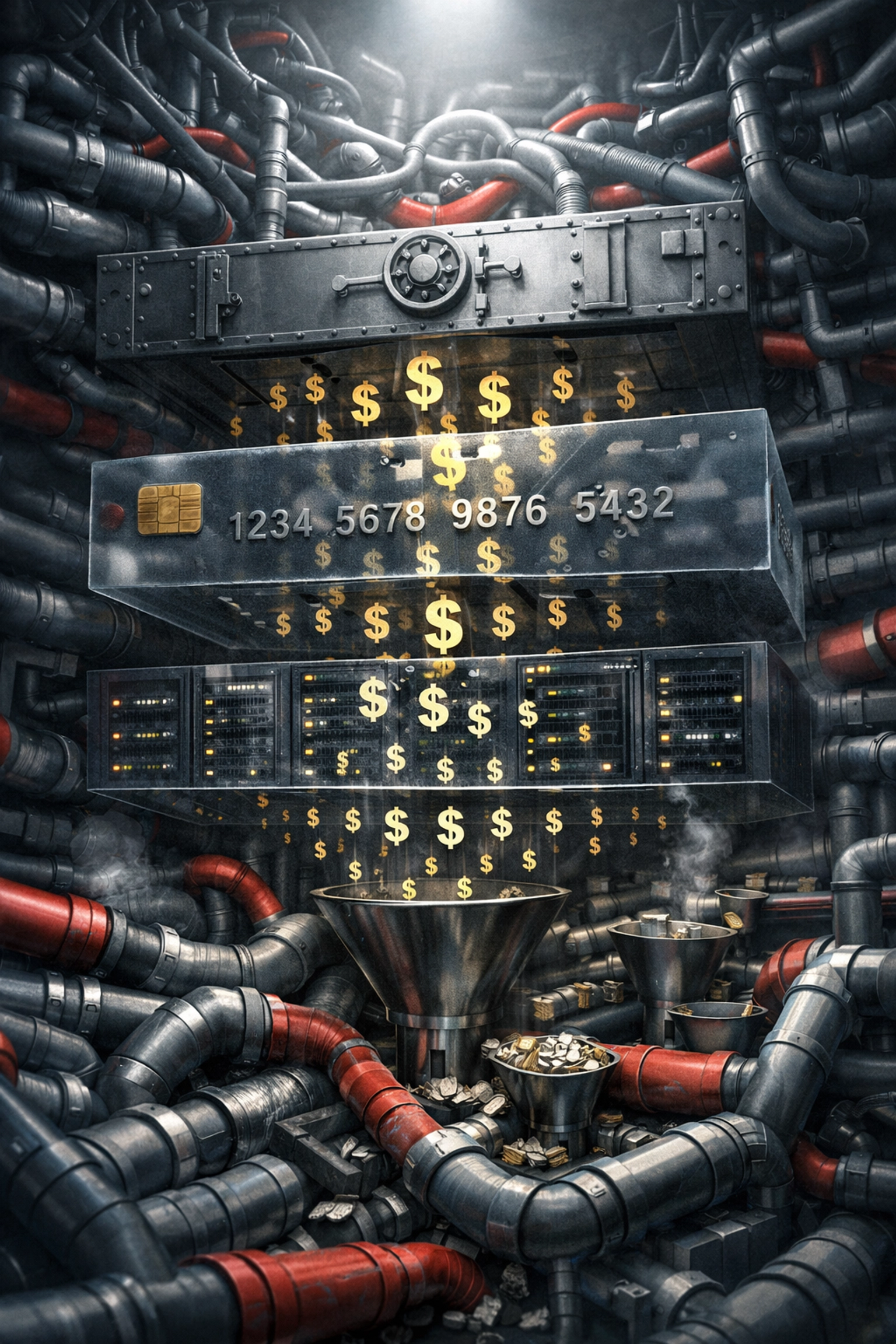
The Traditional Payment Stack:
Issuing bank (cuts a piece)
Card network (Visa/Mastercard: another cut)
Acquiring bank (another fee)
Payment processor (yet another fee)
Gateway provider (you guessed it: more fees)
Each layer extracts value. Each handoff introduces risk. Chargebacks? You're guilty until proven innocent. Cross-border transactions? Add another 1–2% and wait 3–7 days for settlement.
This isn't innovation. It's extraction.
How Larecoin Slashes Costs by 50%+
Larecoin operates on Solana blockchain infrastructure. Peer-to-peer. Direct wallet-to-wallet transactions. No intermediaries siphoning fees.

The Larecoin Advantage:
Gas-only transfer fees: ~$0.00025 per transaction
No interchange fees
No card network fees
No acquiring bank fees
Instant settlement (not 3–7 days)
For high-volume merchants, this translates to savings of 50–90% compared to traditional processors. A $1 million business keeps an extra $20,000–$30,000 annually. Scale that to $10 million? You're saving $200,000+.
That's not incremental improvement. That's structural transformation.
NFT Receipts: The Web3 Loyalty Revolution
Every Larecoin transaction generates an NFT receipt. Not just a boring PDF in your inbox. A programmable, tradeable, collectible proof of purchase.
Why NFT Receipts Matter:
Automatic warranty tracking
Embedded loyalty rewards
Resale value for limited products
Proof of authenticity for luxury goods
Data ownership (you control it, not the merchant)
Imagine buying limited-edition sneakers. Your NFT receipt becomes a transferable warranty. Sell the shoes? The warranty transfers with the NFT. No paperwork. No customer service calls. Pure efficiency.
Or consider loyalty programs. Traditional punch cards and point systems leak value everywhere. NFT receipts automate the entire stack. Purchase triggers reward. Reward lives in your wallet. Redeem instantly. No accounts to manage. No forgotten passwords.
Merchants gain unprecedented insight into customer behavior: without violating privacy. You own your data. You decide what to share. True financial sovereignty.
LUSD Stablecoin: Volatility Protection Built-In
Crypto volatility scares merchants. Fair concern. No one wants to accept Bitcoin at $60K only to watch it crash to $45K before settlement.
Enter LUSD stablecoin integration.
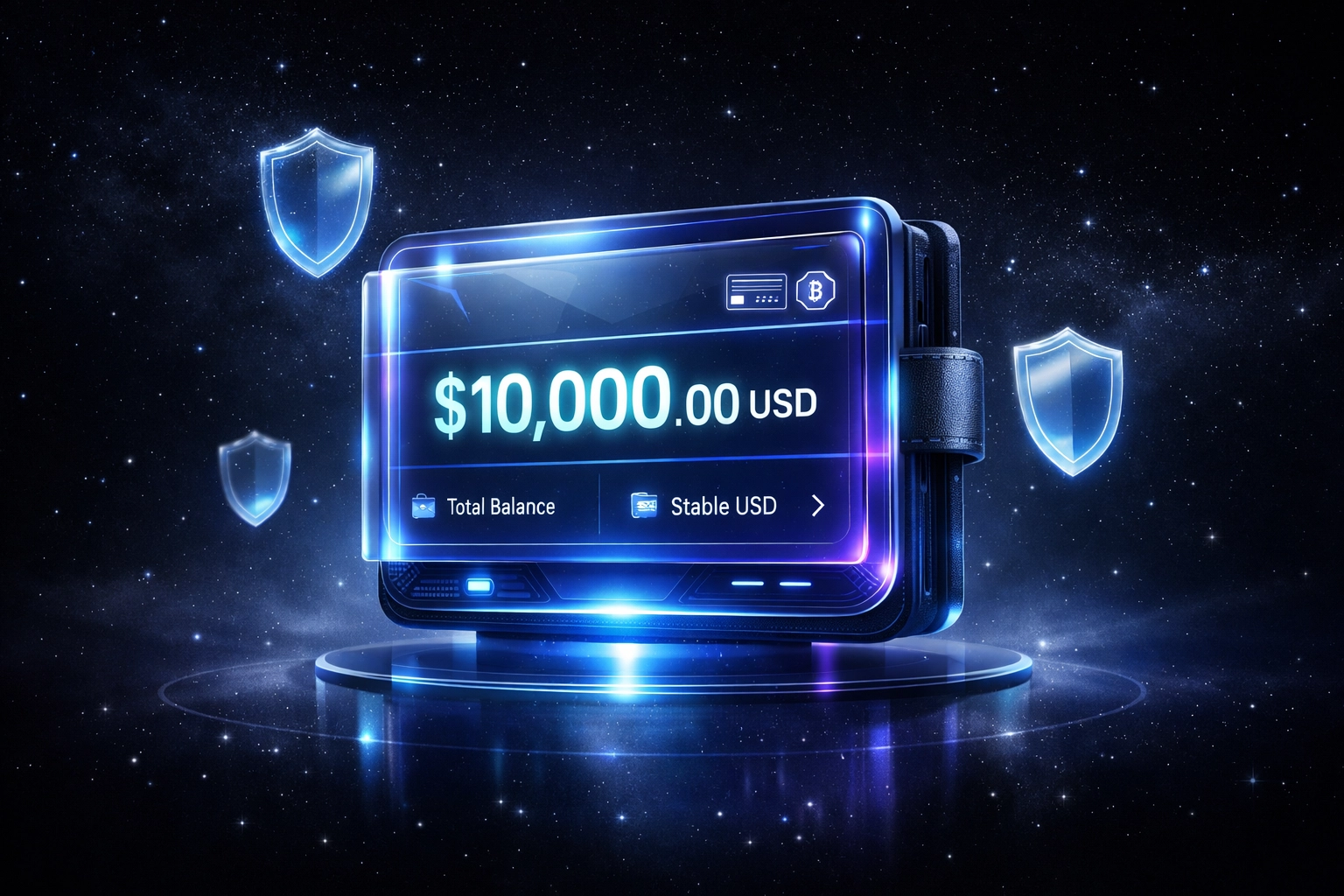
LUSD is a decentralized, over-collateralized stablecoin pegged 1:1 to the US dollar. Unlike centralized stablecoins (looking at you, USDC and Tether), LUSD maintains price stability through algorithmic mechanisms: not bank reserves you have to trust.
Merchant Benefits:
Accept crypto, receive stable value
No price exposure between transaction and settlement
Fully decentralized (no bank account freezes)
Instant conversion to fiat if needed
Zero counterparty risk
You get crypto's efficiency without the volatility headache. Customers pay with whatever token they prefer. You receive LUSD or convert to USD instantly. Best of both worlds.
Self-Custody: Your Keys, Your Funds
NOWPayments and CoinPayments force you into custodial wallets. They hold your funds. They control access. They can freeze accounts. They can impose withdrawal limits.
Sound familiar? That's just traditional banking with a crypto wrapper.

Larecoin champions true self-custody. Your private keys. Your wallet. Your funds. No third party can freeze, seize, or restrict your capital.
Self-Custody Advantages:
Immune to platform shutdowns
No KYC delays on withdrawals
Instant access to your funds 24/7/365
True ownership (not IOUs)
Regulatory independence
When you control the keys, you control the business. No payment processor can hold your revenue hostage. No bank can question your transactions. No bureaucrat can freeze your account.
This is financial sovereignty. This is the Web3 promise delivered.
Larecoin vs. NOWPayments: Speed and Control
NOWPayments charges 0.5–1% per transaction plus network fees. Better than traditional processors? Sure. But still extractive. Still custodial. Still slow.
Settlement times:
NOWPayments: 24–72 hours
Larecoin: Instant (Solana finality in 400ms)
Control:
NOWPayments: Custodial wallets (they hold your funds)
Larecoin: Non-custodial (you hold your funds)
Transparency:
NOWPayments: Opaque fee structure with "network fees" that vary
Larecoin: Fixed gas costs visible on-chain
NOWPayments is crypto payments 1.0. Larecoin is 3.0. Massive difference.
Larecoin vs. CoinPayments: True Decentralization
CoinPayments has been around since 2013. Legacy crypto processor. Custodial model. Centralized infrastructure. Classic single point of failure.
Fee Comparison:
CoinPayments: 0.5% transaction fee minimum
Larecoin: Gas-only (effectively $0.00025–$0.001)
Supported Chains:
CoinPayments: Multiple chains but fragmented experience
Larecoin: Solana-native with cross-chain bridging
Regulatory Risk:
CoinPayments: Centralized entity subject to government pressure
Larecoin: Decentralized protocol resistant to censorship
CoinPayments can be shut down. Larecoin cannot. The protocol lives on-chain. No CEO to subpoena. No servers to raid. Pure protocol economics.
The Implementation Reality
Switching sounds complicated. It's not.
Three Steps:
Set up Solana wallet (5 minutes)
Integrate Larecoin payment gateway (plug-and-play APIs)
Start accepting payments
Done. You're live.
Compare that to traditional merchant accounts: credit checks, underwriting, 2–4 weeks approval time, reserve requirements, contract lock-ins.
Web3 payments eliminate the gatekeepers. Open to everyone. Instant approval. No permission needed.
Real Numbers: The 10-Year Impact
Small business doing $500K annually:
Traditional processing: $11,000/year in fees
Larecoin: ~$500/year in gas fees
Annual savings: $10,500
10-year savings: $105,000
Mid-size business doing $5M annually:
Traditional processing: $110,000/year
Larecoin: ~$5,000/year
Annual savings: $105,000
10-year savings: $1,050,000
These aren't projections. This is math. Interchange fees are fixed costs in traditional systems. Larecoin eliminates them entirely.
That million dollars over a decade? That's equity financing without dilution. That's expansion capital without debt. That's retirement security.
The Future Is Already Here
Legacy payment processors had their moment. 50 years of monopolistic rent-seeking. The Web3 rails are live. Functional. Battle-tested.
Larecoin processes transactions for merchants globally: today. Not in beta. Not coming soon. Right now.
The question isn't whether Web3 payments will replace traditional processors. They already are.
The question is: How much longer will you subsidize outdated infrastructure?
Ready to cut your payment costs in half?Visit Larecoin and start accepting Web3 payments in under 10 minutes. Your margins will thank you.
Comments