

.png)
Bank-Free Business in 2026: Why Receivables Tokens Are Replacing Traditional Payment Processors
- [[[Free!!]<<<<]] Watch: 스포르팅 - 토트넘 Live Stream 13 September 2022
- 2 hours ago
- 5 min read
![Writer: [[[Free!!]<<<<]] Watch: 스포르팅 - 토트넘 Live Stream 13 September 2022](https://lh3.googleusercontent.com/a/AItbvmktwQc0wCdd3ZEETSYItRQubwwBzOyjD_dcigRf=s96-c)
Traditional payment processors are dying. Not slowly. Fast.
Merchants in 2026 are pulling the plug on Visa networks, acquiring banks, and legacy gateways. They're ditching the 2.9% + $0.30 transaction tax. They're eliminating chargebacks that hit 60-90 days after settlement. They're done with frozen accounts and unexplained payment holds.
The replacement? Receivables tokens.
This isn't theory. Businesses across retail, B2B, and e-commerce are slashing payment costs by 85-95% while gaining complete control over their funds. No intermediaries. No delays. No permission required.
What Are Receivables Tokens?
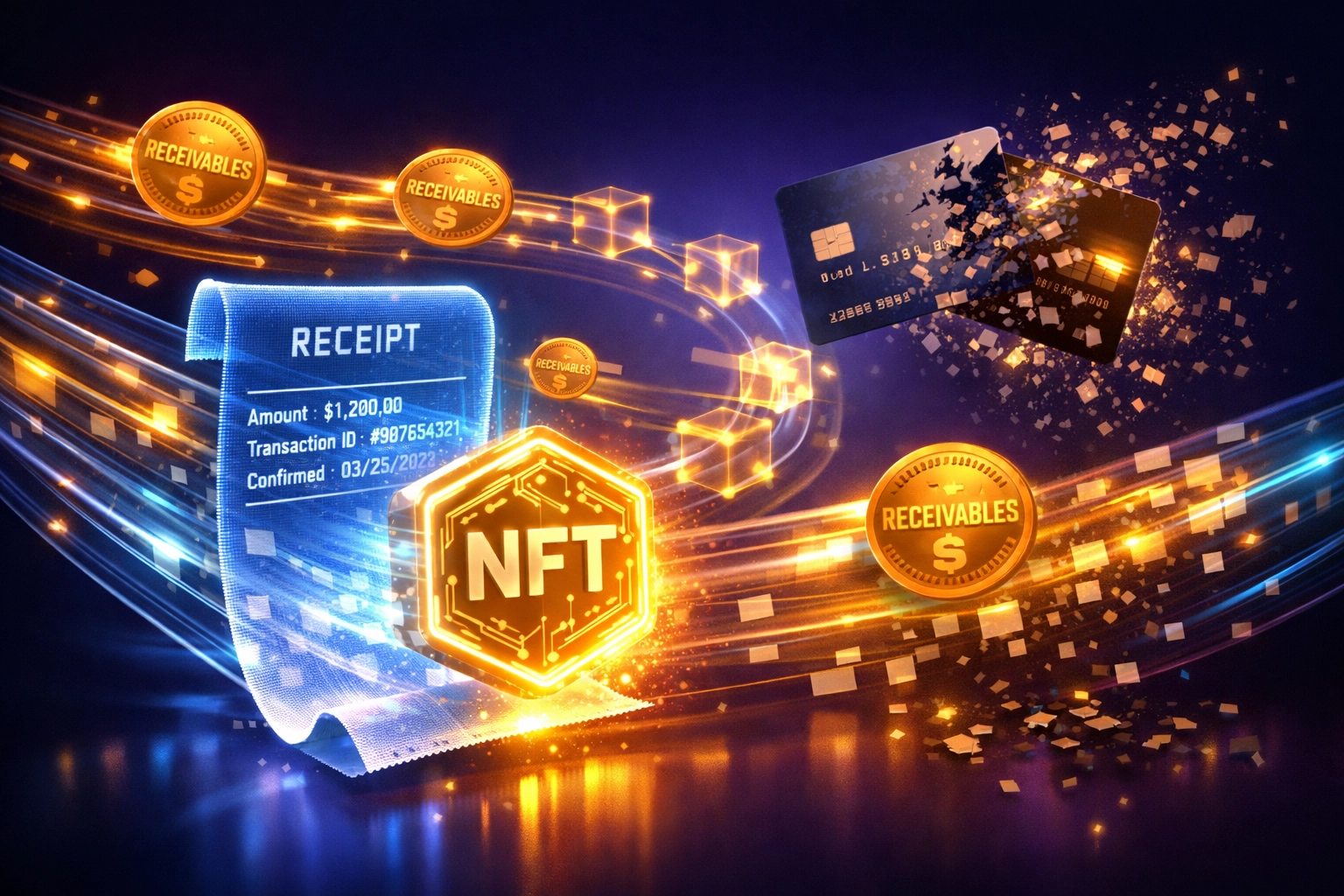
A receivables token is a programmable blockchain asset generated automatically when a customer completes a transaction.
Think of it as a smart receipt. Except it's:
Cryptographically verified on-chain
Owned entirely by the merchant
Tradeable and transferable
Packed with transaction metadata
Every token contains timestamp, amount, items purchased, customer wallet address, and merchant wallet address. All immutable. All transparent. All accessible without calling a payment processor's support line.
When a customer pays using LARE or LUSD stablecoins through Larecoin, the receivables token mints instantly. It serves triple duty: receipt, accounting record, and proof of payment.
The $1,200 Monthly Problem Traditional Processors Create
Standard payment flows route transactions through multiple parties:
Card networks (Visa/Mastercard)
Acquiring banks
Issuing banks
Payment gateways
Fraud detection services
Each takes a cut. Settlement takes 2-7 days. Chargebacks arrive months later with zero merchant recourse.
A merchant processing $40,000 monthly pays roughly $1,200 in fees. That's $14,400 annually. Money that vanishes into a black box of intermediaries.
Receivables tokens eliminate every layer.
Payment goes directly from customer wallet to merchant wallet. Zero middlemen. Settlement is instant: seconds, not days. Funds are accessible immediately because they're already in your self-custody wallet.
Merchants switching to this model report 85-95% cost reductions. That $1,200 monthly expense drops to $60-$180. The savings scale with volume.
Self-Custody Changes Everything
Traditional processors control your account. They hold your funds. They decide when you can access money. They freeze accounts for "suspicious activity" without explanation.
Receivables tokens flip this model completely.
You control the private keys. Funds settle directly to your wallet. No payment holds. No account suspensions. No compliance documentation requests that lock up capital for weeks.
Blockchain validation doesn't care about your business model. It doesn't discriminate by industry, geography, or transaction volume. Smart contracts execute based on code, not corporate policy.
This is financial sovereignty. Your money. Your control. Your timeline.

NFT Receipts Solve Accounting Nightmares
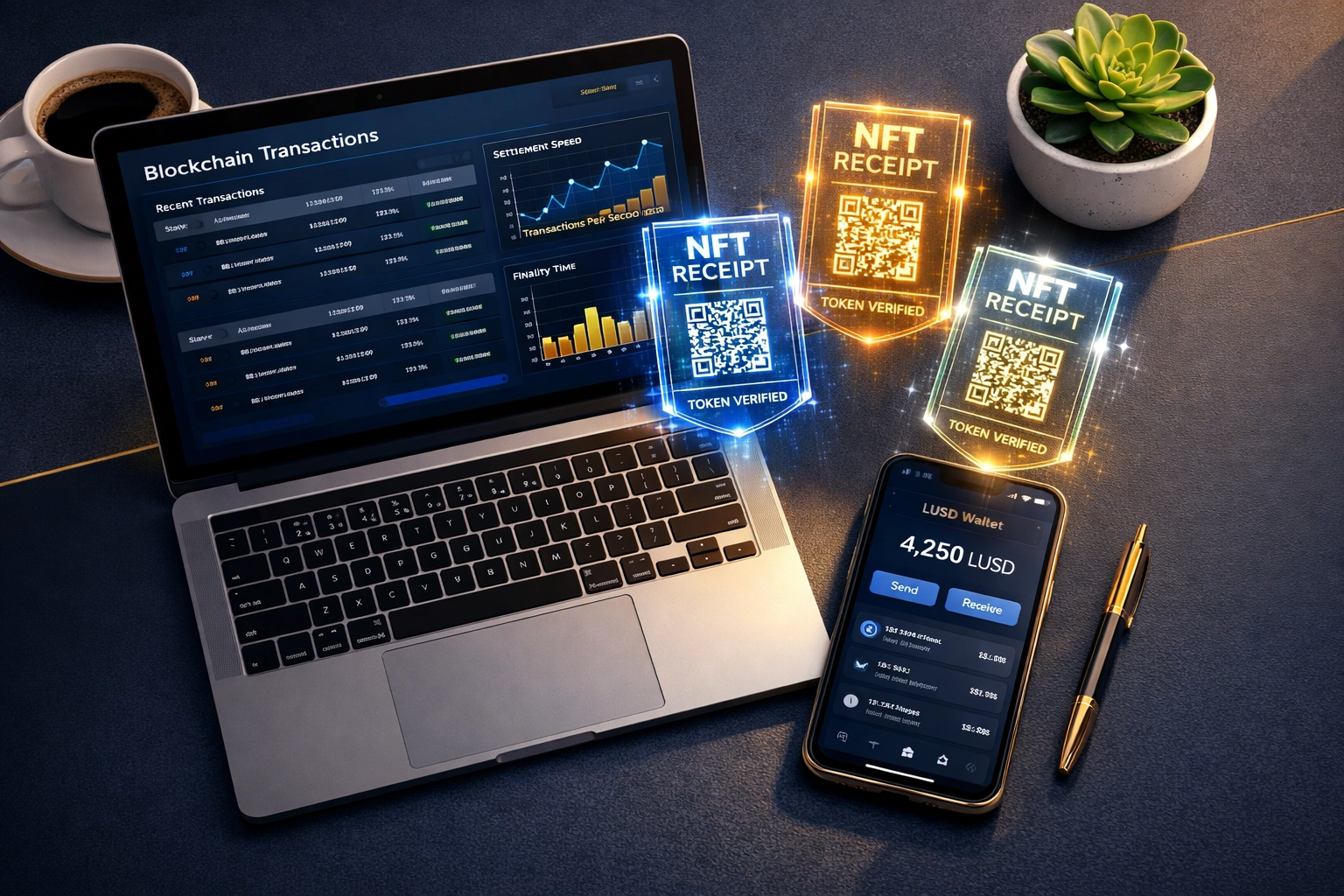
Every receivables token is essentially an NFT receipt.
Accountants can export complete transaction histories directly from the blockchain. No reconciling multiple processor statements. No chasing down missing records. No manual data entry.
The token contains everything:
Sales amount
Tax calculation
Item-level details
Timestamp with millisecond precision
Cryptographic proof of authenticity
This streamlines revenue recognition, tax documentation, warranty validation, and audit trails. The blockchain becomes your single source of truth.
Some merchants are getting creative. They're building loyalty programs around receipt NFTs. Hold specific tokens, unlock VIP status. Collect receipts from multiple purchases, earn exclusive merchandise. The receipt becomes a programmable business asset with marketing utility.
B2B Game-Changer: Instant Invoice Liquidity
Traditional B2B commerce runs on Net 30/60/90 payment terms. You ship product. You wait months for payment. Your capital is locked up in accounts receivable.
Invoice factoring companies will advance you 95-97% of invoice value: and charge 3-5% for the privilege.
Receivables tokens destroy this model.
Issue a tokenized invoice through a smart contract. It's instantly tradeable, transferable, or redeemable. Your accounts receivable become liquid capital immediately.
No factoring fees. No waiting periods. No intermediary extracting margin.
This transforms cash flow management for manufacturers, wholesalers, and service businesses operating on extended payment terms.
How Larecoin Compares to Legacy Crypto Processors
Let's talk alternatives. NOWPayments and CoinPayments offer crypto acceptance. But they're still centralized processors with custodial models.
NOWPayments charges 0.5-1% fees plus custody risk. They hold your funds. They control withdrawal timing. You're still dealing with an intermediary: just a crypto-native one instead of Visa.
CoinPayments operates similarly. Lower fees than traditional processors, but still custodial. Still requires KYC. Still introduces counterparty risk.
Triple-A offers crypto-to-fiat conversion but maintains control over settlement. Fees range 0.8-1.5%. Faster than banks, slower than blockchain native solutions.
Larecoin's receivables token model eliminates all of this.
Self-custody from transaction one. No KYC requirements for basic operations. No withdrawal limits. No account minimums. Settlement is instant because you're receiving funds directly.
The LUSD stablecoin option provides price stability without centralized stablecoin risk. It's decentralized, over-collateralized, and maintains dollar peg through algorithmic mechanisms rather than bank reserves.
Implementation Takes Two Weeks
The technical barrier is minimal.
Physical retail: NFC-enabled POS terminals with tap-to-pay functionality. Customer taps phone. Transaction settles. Receivables token mints.
E-commerce: Integrate checkout widget. Customers connect wallet. Pay with LARE or LUSD. Done.
Service businesses and subscriptions: Smart contracts handle recurring payments automatically. No manual invoicing. No payment processing lag.
Metaverse storefronts: Native integration for virtual goods transactions. The receipts double as in-game assets or proof of digital ownership.
Most merchants complete setup within 14 days. The learning curve is gentler than switching traditional processors.
The Cash Flow Advantage Nobody Talks About
Instant settlement fundamentally changes business operations.
Traditional processors hold funds for 2-7 days. High-risk merchants wait 30+ days with rolling reserves. That's capital you can't use for inventory, payroll, or growth.
With receivables tokens, funds are available in seconds. This enables:
Just-in-time inventory purchasing
Daily cash flow management
Immediate reinvestment of revenue
Elimination of short-term bridge financing
Small businesses with thin margins operate differently when every transaction immediately increases available capital.
Global Reach Without Currency Conversion Fees
Cross-border payments through traditional processors involve:
Currency conversion fees (3-5%)
International transaction fees (1-3%)
Correspondent banking delays (3-7 days)
Compliance documentation requirements
Crypto payments ignore borders entirely. A customer in Japan pays the same way as someone in Brazil. No conversion. No delays. No international fees.
LUSD maintains dollar stability globally without relying on localized banking infrastructure. This opens international markets for businesses that couldn't previously afford cross-border payment processing.
The Chargeback Problem Disappears
Chargebacks cost merchants $40 billion annually. Traditional processors side with cardholders by default. Merchants lose product, lose payment, and pay chargeback fees.
Crypto transactions are irreversible. Once settled, funds can't be clawed back. This eliminates chargeback fraud entirely.
Dispute resolution happens off-chain through reputation systems and escrow smart contracts when needed. But the power dynamic shifts dramatically in favor of merchants operating legitimately.
What This Means for Your Business in 2026
The bank-free business model isn't experimental anymore. It's mainstream.
Merchants keeping traditional processors are paying 10-20x more than necessary. They're surrendering control of their funds. They're accepting delays, holds, and chargebacks as "normal."
None of this is normal. None of this is necessary.
Receivables tokens represent the infrastructure upgrade commerce needed. Lower costs. Instant settlement. Complete control. Programmable receipts. Global reach.
The transition happens fast. Two weeks to implementation. Immediate cost savings. Permanent financial sovereignty.
Visit Larecoin to see how receivables tokens work in practice. The payment processing revolution started without permission. It's accelerating without apology.
Your next transaction doesn't need a bank. It doesn't need Visa. It doesn't need any intermediary except the blockchain itself.
That's the point.
Comments