

.png)
Bank-Free Business Operations 101: A Beginner's Guide to Self-Custody Merchant Accounts with Web3 Payments
- [[[Free!!]<<<<]] Watch: 스포르팅 - 토트넘 Live Stream 13 September 2022
- 3 hours ago
- 5 min read
![Writer: [[[Free!!]<<<<]] Watch: 스포르팅 - 토트넘 Live Stream 13 September 2022](https://lh3.googleusercontent.com/a/AItbvmktwQc0wCdd3ZEETSYItRQubwwBzOyjD_dcigRf=s96-c)
Banks are optional now. Not tomorrow. Today.
Self-custody merchant accounts flip the script on traditional payment processing. No more waiting 2-5 business days for your money. No more surprise account freezes. No more paying 3%+ in fees because some bank decided your industry is "high-risk."
Welcome to bank-free business operations.
What Is Self-Custody Anyway?
Self-custody means you control your funds.
Not Stripe. Not PayPal. Not your bank. You.
When customers pay you through a self-custody merchant account, crypto lands directly in your wallet. You hold the private keys. You own the assets. No intermediary touches your money.
Traditional merchant accounts? They're custody accounts. Banks hold your funds. They can freeze them. Reverse them. Hold them hostage for "compliance reviews."
Self-custody eliminates that risk entirely.
Why Traditional Merchant Accounts Are Dying
Let's get real about what traditional processing actually costs:
The Hidden Fee Monster:
Base rate: 2.9% + $0.30 per transaction
Monthly account fees: $10-30
Chargeback fees: $15-100 per dispute
International fees: Additional 1-3%
Gateway fees: $10-25 monthly
PCI compliance: $50-200 annually
Processing $100,000 monthly? You're hemorrhaging $3,000+ in fees. Every. Single. Month.
And that's just the money.
The Control Problem:
Traditional merchant accounts come with strings attached. Banks can freeze your account without warning. Payment processors can change terms unilaterally. High-risk industries? Denied outright.
Cannabis businesses. Adult content creators. Cryptocurrency merchants. Political organizations. VPN providers.
The list of "unacceptable" businesses grows longer every quarter.
Self-custody doesn't care what you sell. The blockchain doesn't discriminate.
How Self-Custody Works with Web3 Payments
The process is ridiculously simple:
Step 1: Customer hits checkout Step 2: Your wallet generates a payment address Step 3: Transaction confirms on-chain Step 4: Funds land in your wallet
Settlement time? Instant.
Compare that to traditional ACH transfers taking 3-5 business days. Or international wires taking a week and costing $40 per transfer.
Web3 payments eliminate settlement delays completely. The moment a transaction confirms, the money is yours. No holds. No pending status. No "processing."

Larecoin's Self-Custody Approach: Built Different
Larecoin isn't just another crypto payment processor. It's a complete financial infrastructure replacement.
Here's what makes it different:
1. True Self-Custody Architecture
Your funds never touch Larecoin's wallets. Payments flow directly from customer to merchant. No custodial middleman. No counterparty risk.
Competitors like NOWPayments and CoinPayments? They use custody models. Your funds hit their wallets first, then get forwarded to you. That's not self-custody. That's just crypto-flavored traditional processing.
2. NFT Receipt System
Every transaction generates an NFT receipt. Automatic. Immutable. Perfect for accounting.
Your bookkeeper gets cryptographic proof of every sale. Tax audits become trivial. Reconciliation takes minutes instead of hours.
No competitor offers this. Not NOWPayments. Not CoinPayments. Not Triple-A.
3. LUSD Stablecoin Integration
Crypto volatility scaring you? Fair.
Larecoin integrates LUSD stablecoins. Accept payment in volatile crypto. Receive stable value in your wallet. Zero conversion fees.
You get the benefits of self-custody without price risk. Customer pays in ETH or SOL or whatever. You receive LUSD pegged to the dollar.
4. Receivables Token System
Here's where it gets wild. Larecoin converts outstanding invoices into tradeable tokens.
Customer owes you $10,000 due in 30 days? Mint a receivables token. Sell it for immediate cash at a discount. No bank loans. No factoring companies taking 5-15%.
This is working capital on demand. Traditional businesses can't access this. Self-custody merchants using Larecoin can.
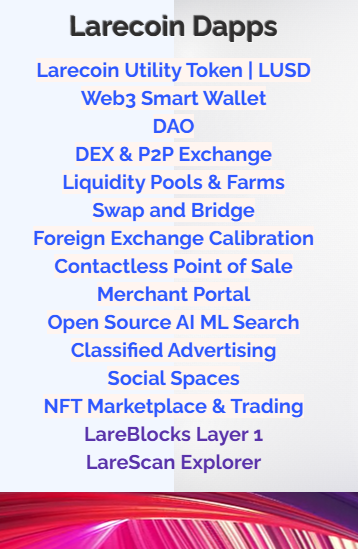
Competitor Comparison: The Real Numbers
Let's compare actual costs. No fluff. Just numbers.
Processing $50,000 Monthly:
Traditional Merchant Account:
Transaction fees: $1,500
Monthly fees: $25
Chargeback fees: $150 average
Total: $1,675/month
NOWPayments:
0.5% transaction fee: $250
KYC required above $1,000
Custody model (they hold your funds)
Total: $250/month
CoinPayments:
0.5% transaction fee: $250
Wallet fees for certain coins
Limited stablecoin options
Total: $250-300/month
Larecoin:
Blockchain gas fees only: $10-30
No percentage fees
True self-custody
NFT receipts included
LUSD conversion available
Total: $10-30/month
That's 50%+ cost reduction compared to traditional processing. And 90%+ reduction compared to competitors.
Want to see more detailed breakdowns? Check out our comparison guide.
Setting Up Your Self-Custody Merchant Account
Getting started takes under 30 minutes. No credit checks. No business license reviews. No approval waiting periods.
What You Need:
Web3 wallet (MetaMask, Rainbow, or Larecoin's smart wallet)
Basic website or e-commerce store
That's it. Seriously.
The Setup Process:
Step 1: Create your Web3 wallet Download MetaMask or use Larecoin's built-in smart wallet. Generate your private keys. Back them up securely.
Step 2: Integrate Larecoin payment gateway Add a simple code snippet to your website. Takes 5 minutes. No developer required.
Step 3: Configure payment options Choose which cryptocurrencies to accept. Enable LUSD conversion if you want stable value. Turn on NFT receipts.
Step 4: Display payment QR codes Customers scan. Pay. Done. Funds hit your wallet in seconds.
Traditional merchant accounts take 7-14 days for approval. Self-custody? You're live in 30 minutes.

The Security Trade-Off You Need to Understand
Self-custody transfers security responsibility to you.
Banks can't freeze your account. But they also can't recover lost private keys.
Best Practices:
Store operational funds in hardware wallets (Ledger, Trezor)
Use multi-signature requirements for large amounts
Maintain encrypted backups of private keys
Implement clear key management procedures
Never store keys on internet-connected devices
The trade-off is worth it. No third party can freeze $50,000 of your money because an algorithm flagged your account. No payment processor can hold your funds for "review" during your busiest season.
You own the risk. You own the reward.
Who Benefits Most from Bank-Free Operations?
High-Risk Merchants: Cannabis. Adult content. Kratom. Firearms. Political organizations. If banks won't touch you, self-custody doesn't care.
International Businesses: Avoid cross-border fees. No currency conversion markups. Accept payments from anywhere. Send payments anywhere.
High-Volume Operations: Percentage-based fees become prohibitive at scale. Self-custody charges flat gas fees. Process $1 million monthly for the same cost as $10,000.
Digital Nomads: Location-independent operations. No business address required. No local bank account needed.
Privacy-Focused Merchants: Minimize KYC requirements. Reduce transaction surveillance. Maintain customer privacy.
The Bank-Free Future Is Now
Self-custody enables complete financial sovereignty.
Accept payments through self-custody wallets. Pay vendors via direct crypto transfers. Manage payroll with stablecoins. Store reserves in DeFi protocols. Access credit through collateralized crypto loans.
Your entire business runs on blockchain infrastructure. Banks become optional.
For businesses facing banking discrimination or operating in sectors banks deem "high risk," this eliminates institutional gatekeeping entirely.
Traditional merchant accounts aren't dead yet. But they're dying fast.
Self-custody merchant accounts with Web3 payments are the future. The future where you control your money. Where fees are 90% lower. Where settlement is instant. Where nobody can freeze your account.
Ready to ditch the banks? Explore Larecoin's self-custody solutions and join the bank-free revolution.
Your money. Your rules. Your wallet.
That's the promise of self-custody.
Comments