

.png)
How to Build a Layer 1 Blockchain That Actually Gives Back: LareBlocks Explained
![Writer: [[[Free!!]<<<<]] Watch: 스포르팅 - 토트넘 Live Stream 13 September 2022](https://lh3.googleusercontent.com/a/AItbvmktwQc0wCdd3ZEETSYItRQubwwBzOyjD_dcigRf=s96-c)
Most Layer 1 blockchains extract value.
LareBlocks returns it.
We're not talking about another clone chain promising decentralization while centralizing profits. We're talking about infrastructure that puts community first. Real utility. Actual social impact. And technology that makes traditional payment rails look ancient.
Let's break down what makes LareBlocks different: and why it matters for the next decade of Web3.
What Is LareBlocks?
LareBlocks is Larecoin's Layer 1 blockchain infrastructure. Built from the ground up for global payments. Designed for merchants. Optimized for social good.
Think of it as the engine powering everything Larecoin does. Every transaction. Every NFT receipt. Every stablecoin transfer. All running on infrastructure that prioritizes giving back over extracting fees.

The core principle? Technology should serve communities, not drain them.
Here's what that looks like in practice:
Transaction Speed: Sub-second finality Fee Structure: Less than 50% of Visa/Mastercard rates Transparency: Full auditability via LareScan Accessibility: Master/sub-wallet architecture for enterprises Impact: Built-in social contribution mechanisms
The Architecture of Giving Back
Most blockchains charge high fees and call it "network security." We flipped that model.
LareBlocks operates on a fee structure that benefits users, merchants, and communities simultaneously. Transaction fees get redistributed through multiple channels:
Network validators securing the chain
Community development funds
Social impact initiatives
Merchant incentive programs
No VC extraction. No hidden premium. Just transparent value flow.
Compare that to traditional payment processors. Visa and Mastercard charge merchants 2-3% per transaction. Sometimes more. Those fees go straight to corporate profits and shareholder dividends.
LareBlocks cuts those fees by more than half. And the fees we do collect? They fund real-world impact projects tracked transparently on-chain.
Fee Revolution: Sub-50% Compared to Traditional Rails
Let's talk numbers.
Visa/Mastercard Average: 2.9% + $0.30 per transaction LareBlocks Average: 1.2% flat
For a $100 transaction:
Traditional processor fee: $3.20
LareBlocks fee: $1.20
Merchant savings: $2.00

That difference compounds fast. A merchant processing $50,000 monthly saves over $1,000 per month. That's $12,000+ annually. Money that stays in businesses instead of feeding middlemen.
But savings alone don't make a blockchain revolutionary.
NFT Receipts: Every Transaction Tells a Story
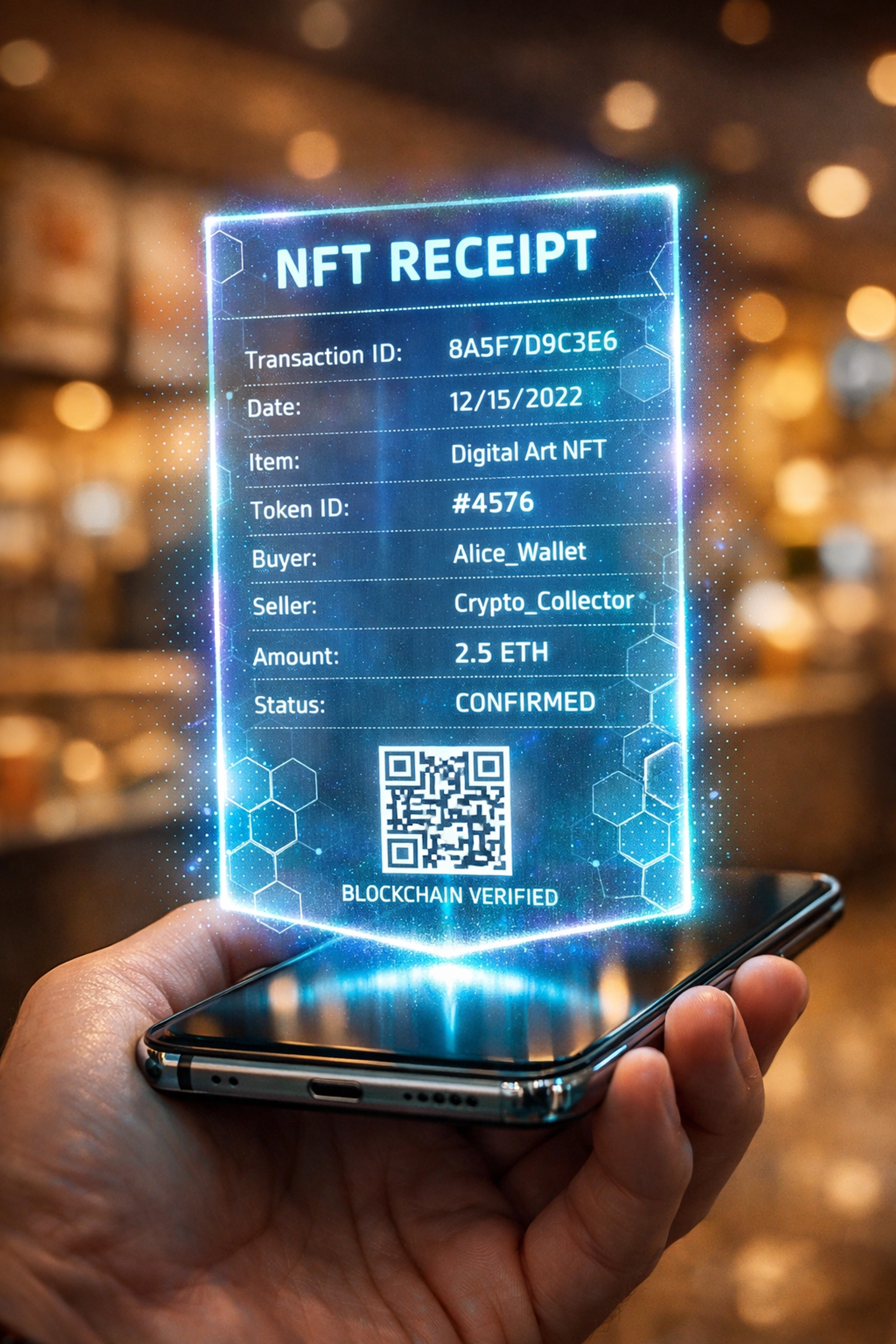
Every purchase on LareBlocks generates an NFT receipt.
Not for hype. For utility.
These aren't collectible monkey JPEGs. They're verifiable proof of purchase stored permanently on-chain. Fraud protection. Warranty tracking. Accounting automation. All built into every transaction.
Lost your receipt? Impossible. It's in your wallet forever.
Need to prove purchase for a warranty claim? Pull up the NFT. Timestamp. Amount. Merchant details. All cryptographically verified.
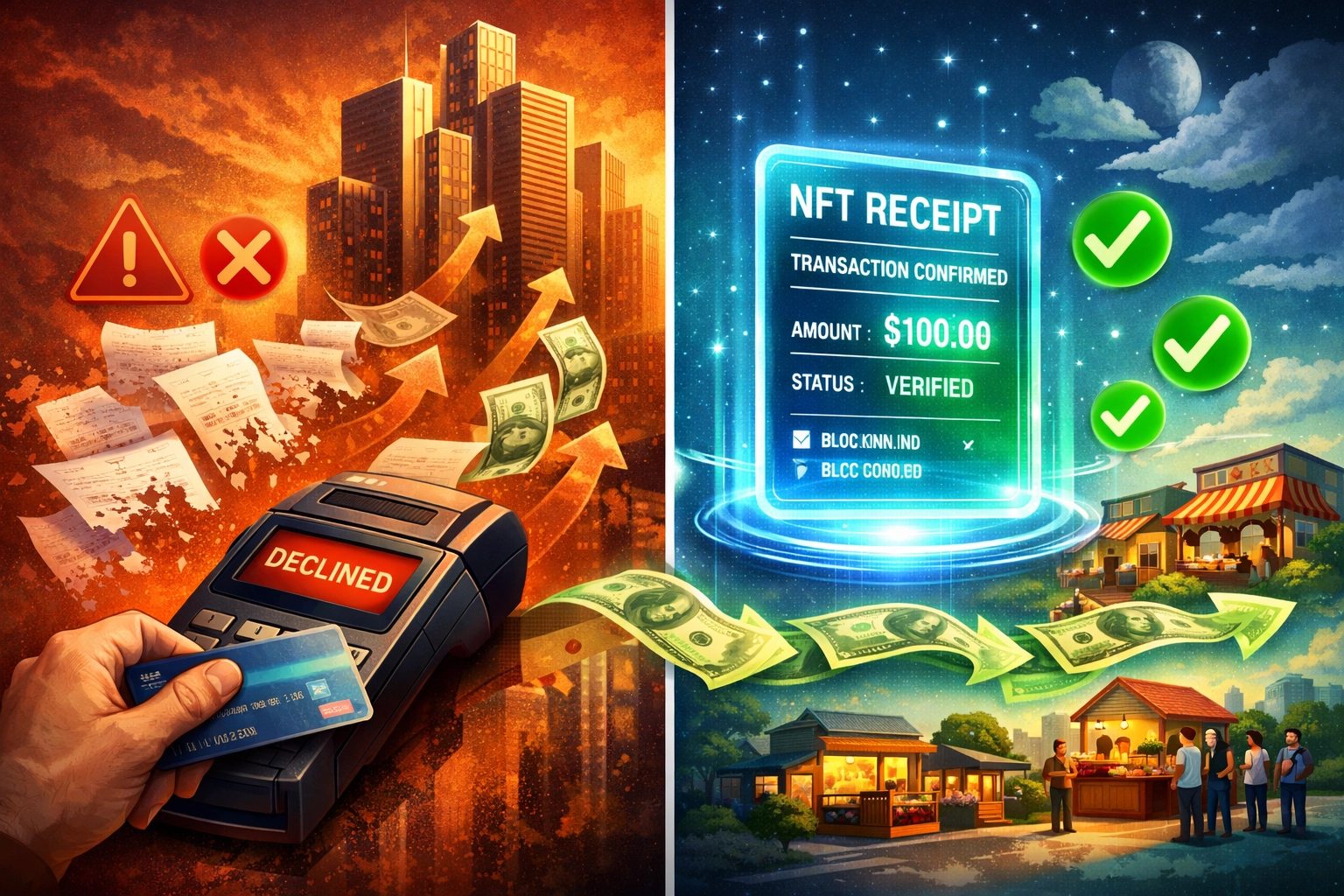
This changes retail. Changes accounting. Changes how businesses handle returns, exchanges, and customer disputes.
Traditional receipts fade. Get lost. Can be faked.
NFT receipts are permanent, portable, and provable.
LUSD Stablecoin: Stability Meets Innovation
Volatility kills mainstream adoption.
That's why LareBlocks integrates LUSD: Larecoin's native stablecoin pegged 1:1 to USD.
Merchants need predictability. Consumers need familiarity. LUSD delivers both while maintaining all the benefits of blockchain technology.
Key Features:
Dollar-pegged stability
Instant settlements
Cross-border transfers with no currency conversion fees
Full integration with master/sub-wallet systems
Want to accept crypto without price volatility risk? Accept LUSD. Want to pay with crypto without watching exchange rates? Use LUSD.
It's the bridge between crypto's innovation and traditional finance's stability.
Master/Sub-Wallet Architecture for Enterprises
Enterprise payment management is complex.
Multiple locations. Different departments. Various authorization levels. Traditional banking handles this terribly. LareBlocks handles it natively.
Our master/sub-wallet architecture lets businesses:
Create unlimited sub-wallets under one master account Set spending limits per sub-wallet Track transactions across entire organization Automate reconciliation through unified dashboard Maintain custody while delegating access
Imagine a restaurant chain with 50 locations. Each location gets a sub-wallet. The corporate master wallet maintains oversight. Every transaction flows through LareBlocks. Full transparency. Zero reconciliation headaches.
This isn't theoretical. It's live infrastructure powering real businesses today.
Check out how we're reducing merchant interchange fees across the board.
LareScan: Transparency Built In
You can't trust what you can't verify.
LareScan is our blockchain explorer. Full transparency into every transaction on LareBlocks. Real-time monitoring. Complete auditability. Zero opacity.
Want to see where social impact fees go? Check LareScan. Need to verify a transaction? Check LareScan. Building an integration? Check LareScan.
Every wallet. Every transfer. Every smart contract interaction. Fully visible. Completely verifiable.
This is decentralization in action. Not corporate promises: cryptographic proof.
Decentralization That Actually Matters
"Decentralized" became crypto's most abused term.
Projects claim decentralization while running on centralized servers. They promise community governance while maintaining founder control. They talk about transparency while hiding token distributions.
LareBlocks took the long road. Real decentralization. Real community ownership. Real distributed infrastructure.
Network validators: Community-run nodes across multiple continents Governance: On-chain voting for protocol upgrades Development: Open-source codebase with public contribution Token distribution: No insider advantages or hidden allocations
This isn't decentralization theater. It's the actual thing.
Social Impact By Design
Here's where LareBlocks diverges from every other blockchain.
A percentage of every transaction fee goes directly to social impact initiatives. Not through some separate charity arm. Not via marketing budgets. Built into the protocol itself.
Current allocation: 15% of network fees Governance: Community votes on fund deployment Transparency: Every donation tracked on LareScan Impact: Real-world projects verified through partner organizations
We're funding education programs. Clean energy projects. Financial inclusion initiatives. Not because it looks good in a press release. Because that's what the technology enables.
Blockchain can extract value or create it. We chose creation.
The 10-Year Vision
This is post number [continuing count] in our 100-post marathon.
We're not building for next quarter's earnings. We're building for the next decade of global payments.
LareBlocks infrastructure today supports:
Cross-border payments
Merchant processing
Enterprise wallet management
NFT receipt generation
Stablecoin settlements
Social impact funding
Tomorrow it'll support exponentially more.
The foundation is solid. The architecture is scalable. The community is growing.
Getting Started with LareBlocks
Ready to build on infrastructure that gives back?
For Developers: Full documentation at larecoin.com For Merchants: Integration guides and API access available now For Enterprises: Master/sub-wallet setup with dedicated support For Community: Join the conversation and help shape development
This is Web3 payments done right. Lower fees. Better infrastructure. Real social impact.
Not promises. Proof.
Want to see the technology in action? Explore our community forums and connect with builders already using LareBlocks.
The future of payments isn't extractive. It's regenerative. And it's running on LareBlocks right now.
Comments