

.png)
Bank-Free Business Operations: Are Self-Custody Merchant Accounts the Future of Web3 Global Payments?
- [[[Free!!]<<<<]] Watch: 스포르팅 - 토트넘 Live Stream 13 September 2022
- 2 hours ago
- 5 min read
![Writer: [[[Free!!]<<<<]] Watch: 스포르팅 - 토트넘 Live Stream 13 September 2022](https://lh3.googleusercontent.com/a/AItbvmktwQc0wCdd3ZEETSYItRQubwwBzOyjD_dcigRf=s96-c)
Traditional banks aren't just slow anymore. They're expensive, restrictive, and increasingly incompatible with global commerce.
The numbers tell the story. Merchants lose 2.5-3.5% per transaction to payment processors. Plus fixed fees. Plus chargeback costs. Plus the wait: sometimes a full week: for your own money to settle.
Self-custody merchant accounts flip this model entirely.
What Self-Custody Actually Means for Your Business
Self-custody means direct control. No intermediary touching your funds. No permission needed to access your revenue.
You hold the private keys. Your wallet. Your money. Instantly.
Compare this to traditional merchant accounts where banks can freeze funds, reject transactions, or shut down accounts without warning. Self-custody Web3 global payments eliminate this risk entirely.
The transaction happens on-chain. Verified cryptographically. Settlement in seconds, not days.
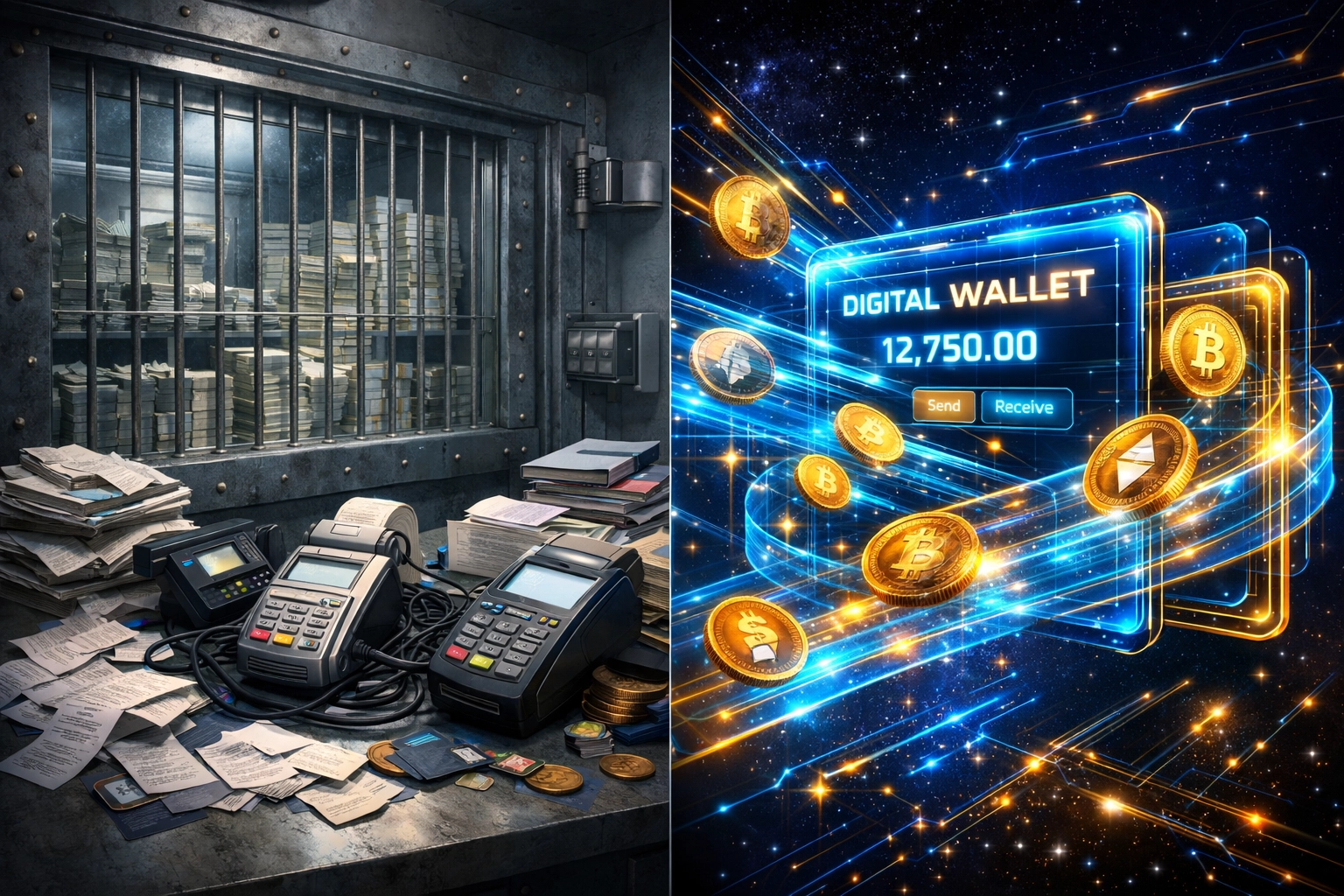
The Real Cost: Why Merchants Are Switching
Here's where self-custody merchant accounts become impossible to ignore.
Traditional Processing:
2.5-3.5% per transaction
$0.15-$0.30 fixed fee per swipe
Monthly gateway fees ($15-$50)
PCI compliance costs
Chargeback fees ($20-$100 each)
Self-Custody Web3 Payments:
Gas fees only: $0.05-$0.15 per transaction
Zero percentage fees
No monthly costs
No compliance overhead
Zero chargebacks (transactions are irreversible)
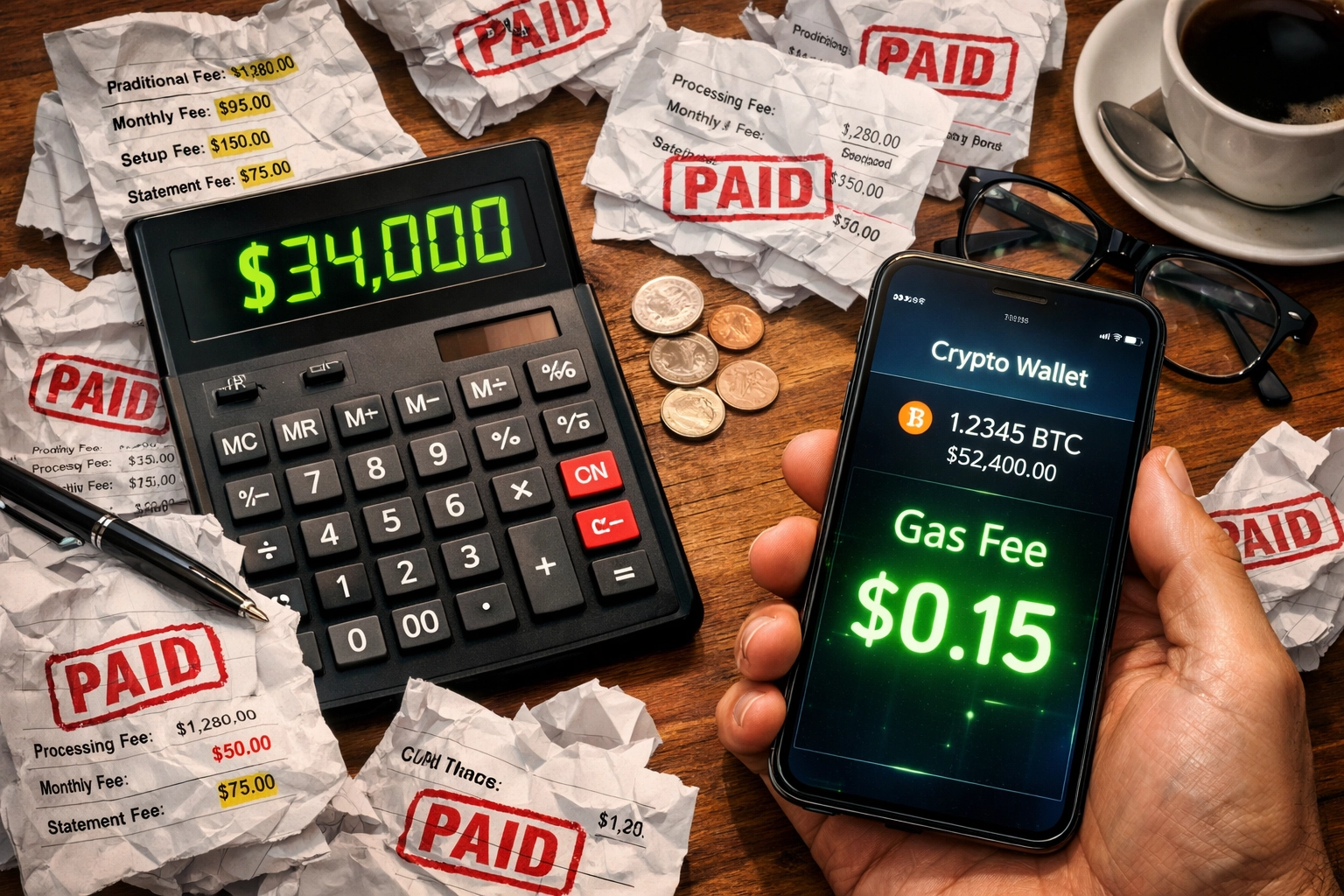
For a business processing $100,000 monthly, traditional systems cost $2,500-$3,500. Self-custody? Less than $150.
That's $34,000+ saved annually. Minimum.
How Larecoin Enables True Self-Custody
Larecoin isn't just another crypto payment processor. It's a complete financial sovereignty solution.
The architecture matters. Where NOWPayments and CoinPayments still act as intermediaries: holding your crypto temporarily before forwarding it: Larecoin enables direct wallet-to-wallet transactions.
Key Technical Advantages:
LUSD Stablecoin Integration Price volatility killed early crypto merchant adoption. LUSD solves this. Backed 1:1 by ETH collateral in Liquity Protocol, it maintains dollar parity without centralized control. Your revenue stays stable. Your custody stays independent.
NFT Receipts for Accounting Every transaction generates an NFT receipt. Immutable proof of sale. Built-in audit trail. Your accountant will thank you. So will the IRS.
Receivables Token System Tokenize your outstanding invoices. Trade them. Use them as collateral. Turn future revenue into working capital today.
Speed Advantage: Instant Settlement vs. 7-Day Waits
Traditional merchant accounts hold your money hostage.
Credit card settlements take 2-7 business days. Sometimes longer during holidays. Your cash flow suffers while banks earn interest on your revenue.
Self-custody merchant accounts settle instantly:
Solana: 1-3 seconds
Ethereum: 12-15 seconds
Polygon: 2-5 seconds
Your customer pays. You receive. Done.
This matters enormously for small businesses operating on thin margins. Every day of delayed settlement is a day you can't reinvest, can't pay suppliers, can't scale.
Comparing the Players: Why Larecoin Dominates
NOWPayments processes through custodial wallets. They hold your crypto temporarily. You're trusting them. That's not self-custody.
CoinPayments offers wallet options but charges 0.5% fees. Still acting as middleman. Still taking a cut.
Triple-A focuses on enterprise but lacks receivables tokenization. No NFT receipt infrastructure. Limited stablecoin options.
Larecoin delivers:
True peer-to-peer transactions
Gas-only costs (below 0.5%)
LUSD stablecoin built-in
NFT receipts automatically generated
Receivables token marketplace
Cross-chain compatibility
No middleman. No percentage fees. No permission needed.
The Chargeback Problem Solved
Chargebacks cost merchants $40 billion annually. Fraudulent disputes. Administrative overhead. Lost products already shipped.
Self-custody eliminates this entirely.
Blockchain transactions are cryptographically verified and irreversible. Once confirmed, there's no reversal mechanism. No friendly fraud. No chargeback fees.
For high-risk merchants constantly battling disputes, this alone justifies the switch.
Global Reach Without Bank Restrictions
Try opening a merchant account for international business. The paperwork. The waiting. The rejections based on country risk profiles.
Self-custody merchant accounts remove geography from the equation.
Your customer in Nigeria pays the same way as your customer in Norway. Same settlement time. Same low cost. No currency conversion fees. No cross-border restrictions.
Larecoin supports 150+ countries instantly. No applications. No approvals. Just your wallet address.
Who Benefits Most Right Now
Self-custody works exceptionally well for:
High-Volume Merchants When you process millions monthly, percentage fees become absurd. Gas-only costs mean predictable expenses regardless of volume.
International Businesses Cross-border transactions without bank intermediaries. No forex fees. No international wire charges.
Crypto-Native Companies If you're already operating in Web3, self-custody aligns with your infrastructure. Hold crypto revenue without forced fiat conversion.
Privacy-Focused Operations Minimal KYC requirements. No bank surveillance. Transaction privacy maintained on-chain.
Digital Goods Sellers Instant delivery upon payment confirmation. No chargeback risk. Perfect for software, courses, NFTs, subscriptions.

Technical Implementation: Easier Than You Think
Setting up self-custody merchant accounts sounds complex. It's not.
Larecoin Setup:
Create wallet (2 minutes)
Generate payment link or QR code (30 seconds)
Integrate checkout API (30 minutes for developers)
Start accepting payments
Your customers pay to your wallet address. You receive immediately. No waiting for third-party approval.
For crypto POS systems, the flow is identical. Customer scans QR at checkout. Pays from their wallet. Transaction confirms. Receipt NFT generated. Done.
Regulatory Landscape: What You Need to Know
Self-custody merchant accounts exist in evolving regulatory space.
Current status: Legal in most jurisdictions. Tax reporting required like any business income. KYC depends on volume and location.
The advantage? You're not dependent on traditional banking infrastructure that regulators can easily control. Your wallet can't be frozen by administrative error. Your account can't be closed based on industry discrimination.
Major payment networks acknowledge this shift. Mastercard and Visa both developed self-custody wallet integrations. They see where the industry moves.
The Sustainability Question
Traditional payment infrastructure burns massive energy. Data centers. Bank branches. Physical card production. Armored truck logistics.
Blockchain networks: especially proof-of-stake like Ethereum post-merge: consume 99.95% less energy per transaction than legacy systems.
Self-custody also eliminates redundant intermediaries. Each middleman removed means servers eliminated, offices closed, overhead reduced.
Making the Switch: Migration Strategy
You don't need to abandon traditional processing immediately.
Hybrid Approach:
Offer crypto as payment option alongside traditional cards
Start with digital products (lower risk)
Gradually shift volume as comfort grows
Maintain traditional backup during transition
Many merchants find 20-30% of customers eager to pay with crypto. Those transactions become your highest-margin sales. Zero percentage fees. Instant settlement. No chargeback risk.
Over time, the cost savings and operational efficiency make full migration obvious.
The Future Is Already Here
Self-custody merchant accounts aren't theoretical. They're operational today.
Thousands of merchants process millions in self-custody transactions monthly. The infrastructure exists. The savings are real. The technology works.
Traditional banking will adapt or become irrelevant for payment processing. The 3% tax on commerce can't survive when 0.05% alternatives exist.
Web3 global payments powered by self-custody represent the biggest structural shift in commerce since credit cards emerged in the 1950s.
The question isn't if self-custody becomes standard. It's how quickly merchants realize the cost of staying with legacy systems.
Ready to slash your merchant fees by 50%+ and take full control of your revenue?
Explore Larecoin's self-custody merchant solutions and join the bank-free business revolution.
Comments