

.png)
Looking For a Crypto POS System for Small Business? Here Are 10 Things You Should Know Before Choosing
- [[[Free!!]<<<<]] Watch: 스포르팅 - 토트넘 Live Stream 13 September 2022
- 2 hours ago
- 5 min read
![Writer: [[[Free!!]<<<<]] Watch: 스포르팅 - 토트넘 Live Stream 13 September 2022](https://lh3.googleusercontent.com/a/AItbvmktwQc0wCdd3ZEETSYItRQubwwBzOyjD_dcigRf=s96-c)
You're done with legacy payment processors eating 3-5% of every transaction.
You've heard crypto POS systems cut fees to almost nothing.
But here's the problem: Not all crypto payment solutions are created equal.
Some trap you in the same centralized nightmare you're trying to escape. Others promise the moon but deliver slow transactions that leave customers frustrated at your register.
Here are 10 things you absolutely need to know before choosing a crypto POS system for your small business in 2026.
1. Fee Structure: This Is Where You Win or Lose Money
Traditional processors charge 2.9% + $0.30 per transaction minimum. Visa's 2026 updates didn't help: fees are still bleeding merchants dry.
Crypto POS systems operate differently.
NOWPayments charges 0.5% per transaction. CoinPayments takes 0.5% for crypto-to-crypto and up to 1% for fiat conversion.
But here's what they don't advertise: withdrawal fees, conversion fees, monthly minimums, and "processing" charges that add up fast.
Self-custody solutions change the game entirely.
No middleman taking cuts. Just blockchain network fees: often pennies per transaction. With LUSD stablecoins on efficient chains, you're looking at fees under $0.01 for most transactions.
Do the math. On $100,000 annual revenue:
Traditional processor: $3,000+ in fees
NOWPayments: $500 in fees
Self-custody with LUSD: Under $100 in network fees
That's not a small difference. That's rent money. Payroll. Growth capital.

2. Payment Processing Speed Matters More Than You Think
Customer standing at your register. Waiting. Waiting. Still waiting.
Bitcoin takes 10-60 minutes for confirmation. Good luck keeping that customer happy.
Ethereum? Better but still 2-15 minutes depending on network congestion.
Solana processes 65,000 transactions per second with sub-second confirmation.
NOWPayments and CoinPayments both support multiple chains, but they add processing layers that slow things down. Extra steps = extra waiting time.
Direct blockchain integration means instant settlement. QR code scan. Blockchain confirmation in seconds. Customer walks out happy.
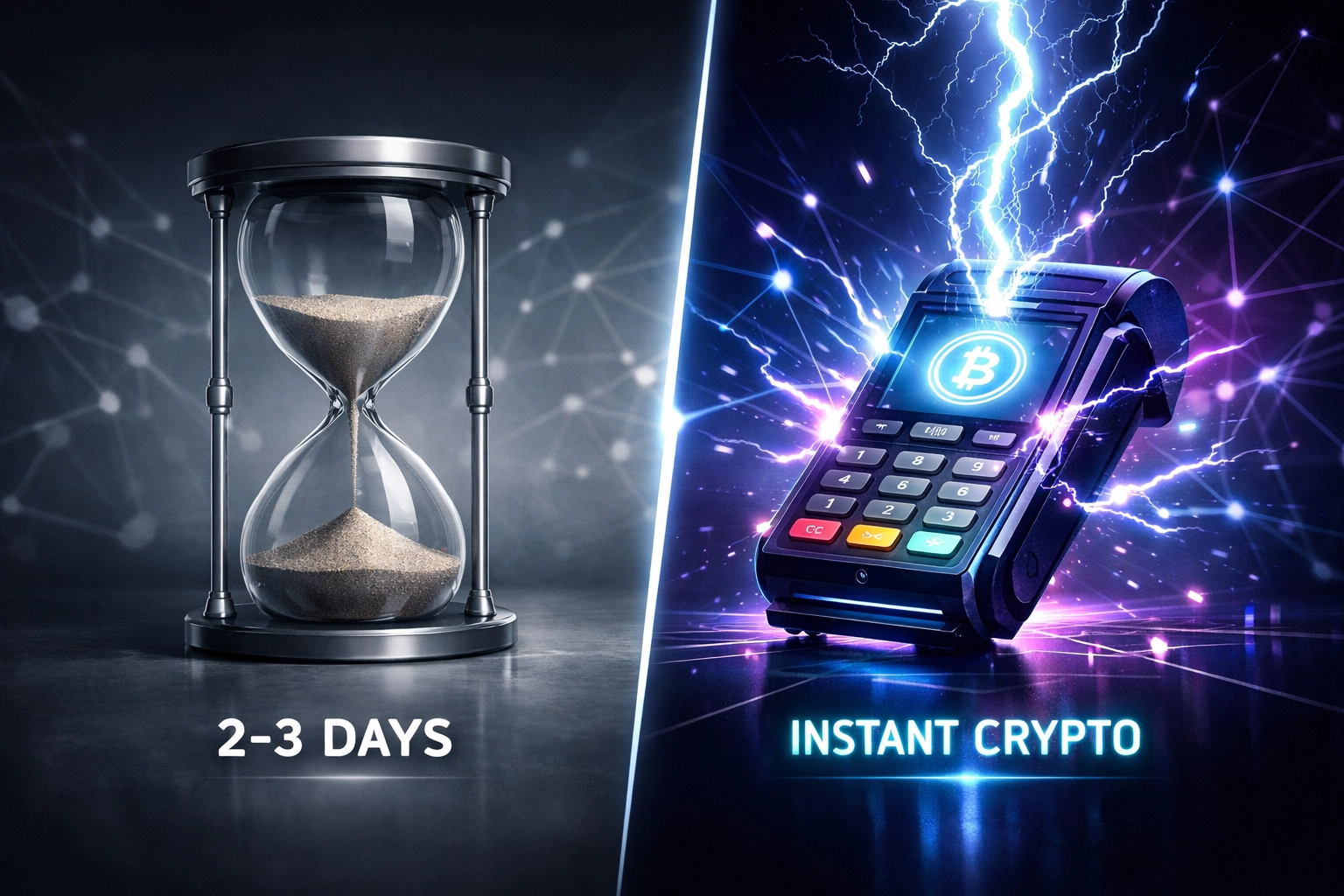
Compare that to traditional POS systems that take 2-3 business days for actual settlement. You're already winning on speed even with slower blockchains.
3. Multi-Crypto Support: Don't Leave Money on the Table
Your customer holds Bitcoin. Next customer prefers ETH. Another one only trusts stablecoins.
Leading crypto POS systems accept 10+ cryptocurrencies minimum.
But here's what matters more: stablecoin support eliminates volatility risk.
LUSD, USDC, USDT: these keep value stable so you're not gambling on price swings between sale and withdrawal.
NOWPayments supports 200+ cryptocurrencies. Impressive number. But do you really need 200 options, or do you need the RIGHT options with the BEST economics?
Focus on systems that prioritize:
Bitcoin for crypto purists
Ethereum for DeFi users
LUSD and other stablecoins for practical daily transactions
Fast chains like Solana for speed
Quality over quantity. Always.
4. Integration: Don't Rip Out Your Existing Infrastructure
Replacing your entire POS system is expensive and disruptive.
Smart crypto systems layer onto existing infrastructure.
Your current cash register? Keep it.
Inventory management software? Keep it.
Accounting system? Keep it.
Crypto becomes another payment option: like adding Apple Pay, not replacing your entire register.
Both NOWPayments and CoinPayments offer plugins for major e-commerce platforms. Shopify, WooCommerce, PrestaShop.
But brick-and-mortar is trickier. Look for solutions that work with Square terminals, Clover devices, or provide dedicated crypto-native hardware that doesn't force you to choose between traditional and crypto payments.
5. Security Features: Self-Custody Is Non-Negotiable
Centralized processors hold your funds. You're trusting them not to get hacked. Not to freeze your account. Not to disappear with your money.
That's not crypto. That's just another bank.
Look for these security features:
Hardware wallet integration (Ledger, Trezor support)
Multi-signature requirements for large withdrawals
Transaction limits and confirmation requirements
Whitelisted withdrawal addresses
2FA and biometric authentication
Self-custody architecture eliminates counterparty risk entirely.
Your keys. Your crypto. Your control.
NOWPayments and CoinPayments both hold merchant funds in custodial wallets. That's convenient until it's not. Remember Mt. Gox? QuadrigaCX? FTX?
Non-custodial solutions mean you're never at risk of a platform collapse taking your money with it.
6. NFT Receipts: The Feature You Didn't Know You Needed
Traditional receipts are paper trash or forgotten emails.
NFT receipts are programmable digital assets.
Every purchase generates an NFT receipt stored in the customer's wallet. Blockchain-verified. Tamper-proof. Perfect for accounting and tax deductions.
But here's where it gets interesting: NFT receipts enable loyalty programs on steroids.
Customer collects 10 NFT receipts? Unlock 15% discount.
Verified purchase history means no more fake returns or receipt fraud.
Collectible receipts from limited edition products? Now they have resale value.
This isn't available on NOWPayments or CoinPayments. This is next-level innovation that separates future-focused systems from basic payment processors.
7. Compliance and Reporting: Tax Time Shouldn't Be Hell
Crypto transactions need proper documentation for tax reporting.
Your POS system should generate reports that accountants actually understand.
Look for:
Transaction history exports (CSV, Excel, PDF)
Cost basis tracking for each transaction
Automatic conversion to fiat equivalent at time of sale
Integration with crypto tax software (CoinTracker, Koinly)
Both major platforms offer basic reporting. But granular control matters when you're dealing with audits or complex tax situations.
Systems that track both crypto received AND fiat value at time of transaction save you massive headaches. Your accountant will thank you.
8. Real-Time Conversion: Volatility Risk Management
Bitcoin price swings don't stop just because you're running a business.
Real-time crypto-to-fiat conversion eliminates volatility exposure.
Customer pays in Bitcoin. System instantly converts to USDC or fiat. Price risk? Gone.
This feature costs extra on most platforms. NOWPayments charges for instant conversion. CoinPayments takes a percentage.
But with LUSD stablecoins, you don't need conversion. Value stays stable automatically. No conversion fees. No slippage. No volatility risk.
That's the power of building on the right foundation from day one.
9. Setup Time: Live in 30 Minutes, Not 30 Days
Traditional merchant accounts require:
Application paperwork
Credit checks
Approval delays (days or weeks)
Hardware shipping and installation
Training and onboarding
Crypto POS systems go live in 30 minutes.
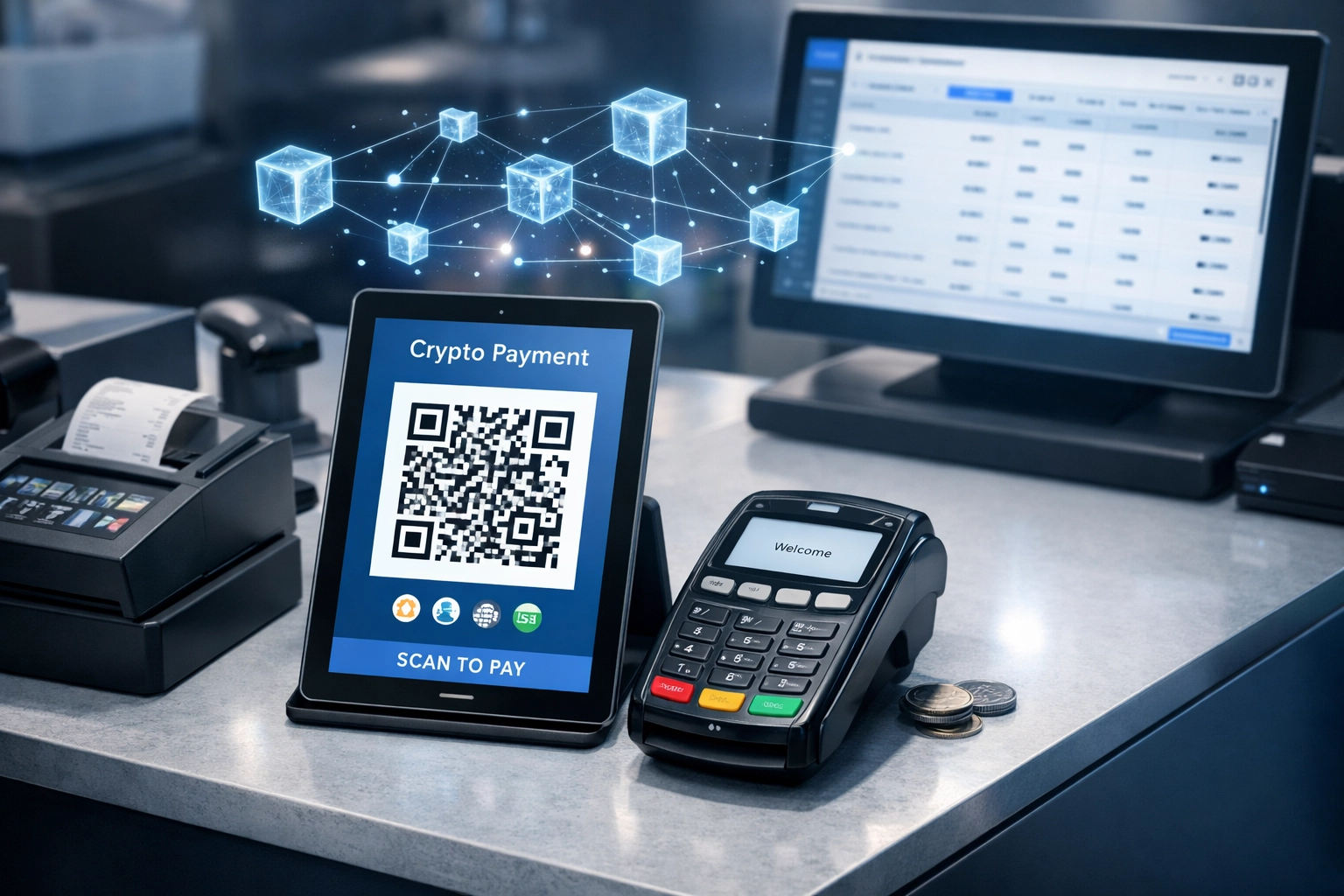
Create wallet. Connect to system. Generate QR codes. Accept payments.
Done.
NOWPayments setup: email registration, API integration, wallet configuration. Maybe 1-2 hours for non-technical users.
CoinPayments: similar timeline, slightly more complex interface.
Self-custody solutions: even faster if you already have a wallet. Connect. Configure. Go.
No credit checks. No bank approval. No waiting. Just payment acceptance starting today.
10. Think Beyond Payments: The Metaverse Integration Advantage
Basic crypto POS systems process payments. Period.
Advanced systems integrate with metaverse commerce and Web3 ecosystems.
Your physical store is just one sales channel. What about:
Virtual storefronts in metaverse environments
Digital product sales (NFTs, virtual goods)
Cross-platform inventory management
Unified customer profiles across physical and digital
This isn't science fiction. Metaverse shopping features are already expanding merchant reach beyond brick-and-mortar limitations.
Traditional crypto payment processors don't think this way. They're focused on replicating existing payment rails with slightly lower fees.
True Web3 payment solutions build for where commerce is going, not where it's been.
The Bottom Line: Merchant Freedom Matters
Choosing a crypto POS system isn't about finding the cheapest option.
It's about reclaiming control over your payment infrastructure.
Centralized processors: whether traditional or crypto: all have the same problem: they control your money until they decide to send it to you.
Self-custody solutions flip that script. Your money. Your timeline. Your terms.
Fee savings matter. Processing speed matters. Security features matter.
But merchant independence matters most.
You didn't start a business to hand control to payment processors. You started it to build something you own.
Your crypto POS system should reflect that philosophy. Decentralized. Open. Free from unnecessary intermediaries taking cuts they didn't earn.
Learn more about Web3 global payments and merchant interchange fee reduction and why self-custody architecture represents the future of merchant services.
The right crypto POS system doesn't just save you money. It gives you freedom.
Choose accordingly.
Comments