

.png)
CoinPayments Alternative: Are You Making These 7 Common Self-Custody Mistakes? (And How Larecoin's Master Wallet System Fixes Them)
- [[[Free!!]<<<<]] Watch: 스포르팅 - 토트넘 Live Stream 13 September 2022
- Feb 20
- 5 min read
![Writer: [[[Free!!]<<<<]] Watch: 스포르팅 - 토트넘 Live Stream 13 September 2022](https://lh3.googleusercontent.com/a/AItbvmktwQc0wCdd3ZEETSYItRQubwwBzOyjD_dcigRf=s96-c)
Self-custody sounds great in theory.
You control your keys. You control your crypto. No middleman.
But here's the reality: most merchants using CoinPayments or NOWPayments are making critical self-custody mistakes that could cost them everything.
These aren't theoretical risks. They're real vulnerabilities happening right now across thousands of crypto payment setups.
Let's break down the seven most dangerous mistakes: and how Larecoin's Master Wallet system eliminates each one.

Mistake #1: Single-Point-of-Failure Vulnerability
The Problem:
You have one wallet. One private key. One person with access.
If that key gets compromised: phishing attack, malware, shoulder surfing: your entire business treasury evaporates.
CoinPayments gives you a wallet. NOWPayments gives you a wallet. Both rely on single-signature authorization for most transactions.
One breach = total loss.
The Larecoin Fix:
Master Wallet multi-signature architecture requires 3-of-5 approvals for large transfers.
Your finance director can't move funds alone. Your CEO can't move funds alone. Even if one key gets stolen, your crypto stays locked down.
Multi-sig isn't optional in Larecoin's system: it's built into the infrastructure.
No single point of failure. No single point of compromise.
Mistake #2: Everyone Has Full Access (Or No One Has Any)
The Problem:
Traditional crypto payment processors force you into two terrible choices:
Give everyone full wallet access (dangerous), or lock everyone out except one person (bottleneck).
Your accounting team needs to see transactions. Your department heads need to approve spending. Your executives need full control.
CoinPayments doesn't differentiate. It's all or nothing.
The Larecoin Fix:
Hierarchical permission structures with role-based access controls.
Accounting teams: View-only access. Check balances, export reports, zero spending power.
Department heads: Spending limits. Approve payments up to defined thresholds.
Executives: Full control. Override permissions, adjust limits, manage emergency situations.
Your operations manager can handle daily vendor payments without touching your cold storage reserves.
Your CFO can monitor everything without waiting for your CEO to log in.
Permissions that match your actual organizational structure.

Mistake #3: Hot Wallet = Everything Wallet
The Problem:
Most merchants keep 100% of their crypto in hot wallets.
Why? Because CoinPayments and NOWPayments require instant access for payment processing.
But hot wallets are connected to the internet 24/7. Hackers don't sleep. Exploits don't take vacations.
Keeping everything online is like storing your entire cash register and your safe deposit box at the checkout counter.
The Larecoin Fix:
Cold storage integration with Master Wallet orchestration.
Long-term holdings live in cold storage: completely offline, totally secure.
Master Wallet manages hot wallet operations for daily transactions with just enough liquidity for business operations.
Automated sweeping moves excess funds from hot to cold storage based on your defined thresholds.
You never expose more crypto than necessary. Your treasury stays protected. Your payments still process instantly.
Mistake #4: One Compromised Wallet Destroys Everything
The Problem:
Single monolithic wallets mean total exposure.
If your payment processing wallet gets compromised, attackers access everything: retail revenue, B2B invoices, employee payroll reserves, long-term holdings.
One phishing email. One malware infection. Total catastrophe.
The Larecoin Fix:
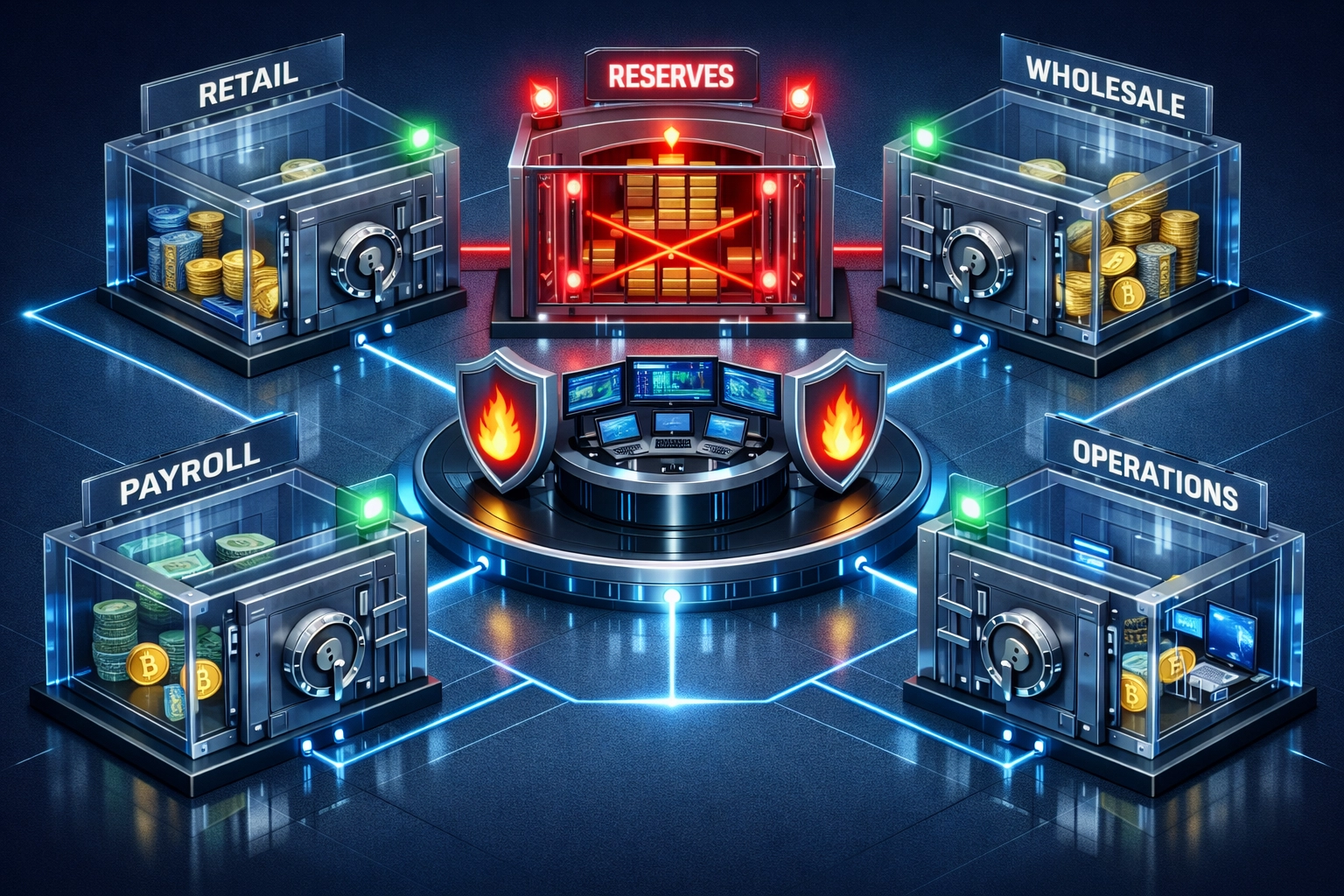
Sub-wallet isolation across departments, locations, and functions.
Retail location A: Independent sub-wallet with daily operational limits
Retail location B: Separate sub-wallet, separate permissions
Wholesale operations: Dedicated sub-wallet with higher thresholds
Payroll reserves: Isolated sub-wallet with time-locked releases
Each sub-wallet operates autonomously. Each maintains centralized oversight through your Master Wallet dashboard.
One compromised sub-wallet? Contain the breach. Lock that wallet. Other operations continue unaffected.
CoinPayments gives you one vault with everything inside. Larecoin gives you a security system with independent compartments.

Mistake #5: Transaction Opacity Creates Trust Gaps
The Problem:
Who approved that payment? When did funds move? Why was that wallet drained?
Traditional payment processors provide basic transaction logs. But stakeholder visibility? Cross-department transparency? Real-time verification?
Good luck.
Your accounting team sees one version. Your executives see another. Your auditors need to reconcile everything manually.
Information asymmetry creates disputes, delays, and compliance nightmares.
The Larecoin Fix:
Complete transaction transparency through LareScan explorer integration.
Every stakeholder sees the same data in real-time:
Transaction timestamps with blockchain verification
Approval chains showing which signatures authorized each transfer
Sub-wallet balances updated live across all departments
NFT receipt generation for compliance documentation
LUSD stablecoin conversions for predictable accounting
No hidden fees. No surprise charges. No "processing delays" that mysteriously reduce your balances.
Everything on-chain. Everything verifiable. Everything transparent.
Your auditors pull data directly from the blockchain. Your team checks balances from any device. Your partners verify payments without asking for screenshots.
Mistake #6: Software-Only Key Storage
The Problem:
Most merchants store private keys in browser extensions, mobile apps, or cloud password managers.
All software. All vulnerable to network-level attacks.
Keyloggers capture your seed phrase. Browser exploits export your private keys. Cloud breaches expose your entire security infrastructure.
CoinPayments stores keys server-side. NOWPayments uses encrypted databases.
Still software. Still connected. Still compromised when networks get breached.
The Larecoin Fix:
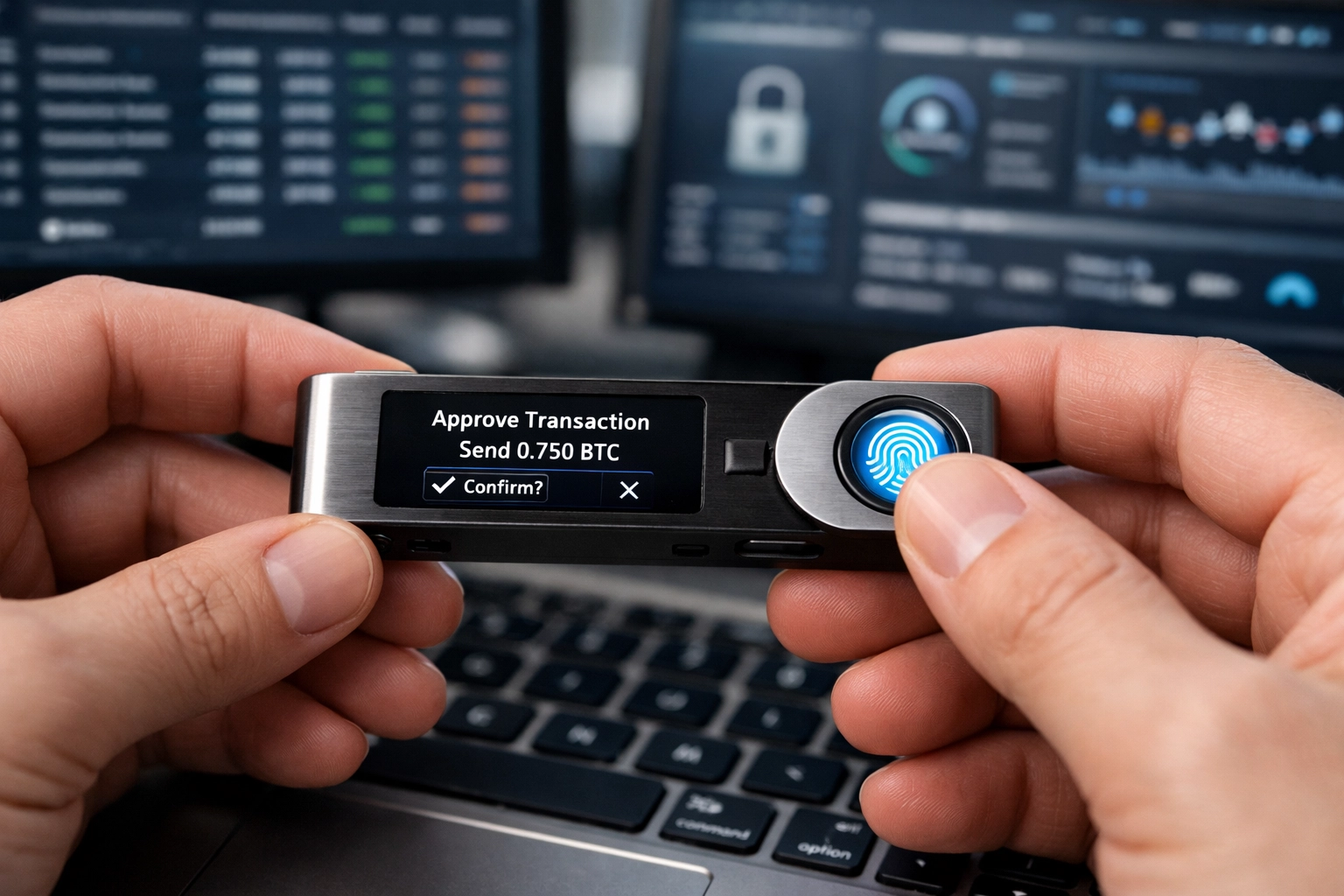
Hardware key integration with USB security devices.
Your most critical private keys never touch the internet. Ever.
USB devices store keys offline. Transactions require physical device connection. Multi-sig approvals need hardware confirmation from multiple authorized users.
Sign transactions locally on the hardware device. Broadcast signed transactions to the network. Private keys never leave the physical security module.
Network breach? Your keys stay safe. Server compromise? Your keys stay safe. Phishing attack? Your keys stay safe.
Hardware-enforced security that doesn't rely on "unhackable" software promises.
Mistake #7: Fees That Destroy Your Margins
The Problem:
Let's talk about the elephant in the crypto payment room: fees.
CoinPayments charges standard processing fees. NOWPayments takes their cut. Both eat into your margins with every transaction.
You switched to crypto to reduce payment costs. Instead, you're paying comparable rates to traditional processors.
Add network fees. Add conversion fees. Add withdrawal fees.
Suddenly your "decentralized" payment system costs as much as the centralized alternatives you were trying to escape.
The Larecoin Fix:
Sub-1% fees across the entire ecosystem.
That's approximately 50% lower than CoinPayments standard rates.
No hidden conversion charges. No surprise processing fees. No withdrawal penalties that appear when you try moving your crypto.
Gas-only transfers when using LARE tokens. NFT receipts generated automatically without extra charges. LUSD stablecoin conversions at transparent rates.
You keep more of your revenue. Your customers pay less in fees. Your margins improve instead of shrinking.
Lower fees don't mean lower security. They mean better architecture that doesn't require massive overhead to operate.
Why Master Wallet Architecture Matters
CoinPayments built a centralized service with crypto wrapper.
NOWPayments replicated the same model with different branding.
Neither actually solved the fundamental custody challenges merchants face.
Larecoin's Master Wallet system was designed from the ground up for real self-custody:
Enterprise-grade security without enterprise complexity
Individual control with organizational oversight
Flexibility that doesn't sacrifice protection
Transparency that doesn't expose vulnerabilities
You're not renting custody from a third party. You're not trusting a black box with your treasury.
You're operating true self-custody infrastructure with institutional-grade tooling.
Take Control of Your Crypto Custody
Still using CoinPayments? Still trusting NOWPayments with your merchant funds?
Ask yourself:
Do you control your keys, or do you just have "access" to a custodial account?
Real self-custody means real control. Not permission. Not conditional access. Not "as long as our platform approves."
Larecoin's Master Wallet system gives you the infrastructure enterprises use without the enterprise price tag.
Multi-signature security. Role-based permissions. Cold storage integration. Sub-wallet isolation. Complete transparency. Hardware key support. Sub-1% fees.
This isn't a CoinPayments alternative. It's a complete evolution in merchant crypto custody.
Ready to fix your self-custody mistakes?
Explore the Larecoin ecosystem at larecoin.com.
Check real-time transparency at LareScan explorer.
Stop making custody mistakes. Start controlling your crypto correctly.
Your keys. Your crypto. Your rules.
That's what self-custody actually means.
Comments