

.png)
CoinPayments Alternative: Why Merchants Are Switching to Self-Custody Crypto POS in 2026
- [[[Free!!]<<<<]] Watch: 스포르팅 - 토트넘 Live Stream 13 September 2022
- Feb 24
- 5 min read
![Writer: [[[Free!!]<<<<]] Watch: 스포르팅 - 토트넘 Live Stream 13 September 2022](https://lh3.googleusercontent.com/a/AItbvmktwQc0wCdd3ZEETSYItRQubwwBzOyjD_dcigRf=s96-c)
Merchants are ditching custodial crypto payment processors.
The reason? Control. Fees. Independence.
CoinPayments has dominated the crypto payment gateway space for years. But 2026 marks a turning point. Self-custody crypto POS systems are flipping the script on how merchants accept digital currencies.
No more intermediaries holding your funds. No more conversion friction. No more 1% transaction fees bleeding your margins dry.
Let's break down exactly why merchants are making the switch: and what it means for your business.
The CoinPayments Problem: Why Merchants Are Looking Elsewhere
CoinPayments charges 1% per transaction.
That's double what competitors like NOWPayments charge (0.5%). And it's astronomically higher than self-custody solutions offering near-zero fees.
But cost isn't the only issue.
Custodial Risk Your funds sit in CoinPayments' wallet. Not yours. You're trusting a third party with your revenue. Every transaction flows through their infrastructure. That's counterparty risk you don't need.
Settlement Delays Converting crypto to fiat creates friction. Multiple steps. Multiple fees. Days of waiting. Traditional payment processors add unnecessary complexity to what should be a simple transaction.
Limited Innovation Legacy platforms move slow. They're not building NFT receipts. They're not integrating stablecoins like LUSD. They're stuck in 2020 while the crypto payments landscape evolves rapidly.
Merchants want more. They deserve better.

Self-Custody: The New Standard for Crypto Merchants
Self-custody means exactly what it sounds like.
Payments settle directly to YOUR wallet. No intermediary. No custodian. No third party controlling your money.
How It Works Customer scans QR code at POS. Crypto transfers directly to your wallet address. Transaction completes in seconds. You control the private keys. You control the funds.
Zero settlement delay. Zero counterparty risk. Maximum control.
The Technical Advantage Self-custody solutions leverage blockchain technology the way it was designed. Peer-to-peer. Trustless. Permissionless.
You're not dependent on a payment processor's uptime. No maintenance windows. No service interruptions. The blockchain never closes.
Regulatory Benefits When you hold custody, you control compliance. You're not subject to a processor's KYC requirements or sudden policy changes. You operate on your terms within your jurisdiction's framework.
This is merchant freedom in its purest form.
Fee Comparison: CoinPayments vs NOWPayments vs Larecoin
Numbers don't lie.
CoinPayments: 1% per transaction On $100,000 in monthly sales, you pay $1,000 in fees. That's $12,000 annually. Gone. Just for payment processing.
NOWPayments: 0.5% per transaction Same sales volume costs you $500 monthly. $6,000 per year. Better than CoinPayments, but still substantial.
Larecoin Self-Custody: Gas-only transfers You pay network fees. That's it. On Solana, we're talking fractions of a cent per transaction. Monthly fees? Maybe $10-20 in gas costs. Annual savings? Thousands of dollars.
The math is simple. Self-custody wins.

NFT Receipts: Innovation CoinPayments Can't Match
Here's where legacy processors fall flat.
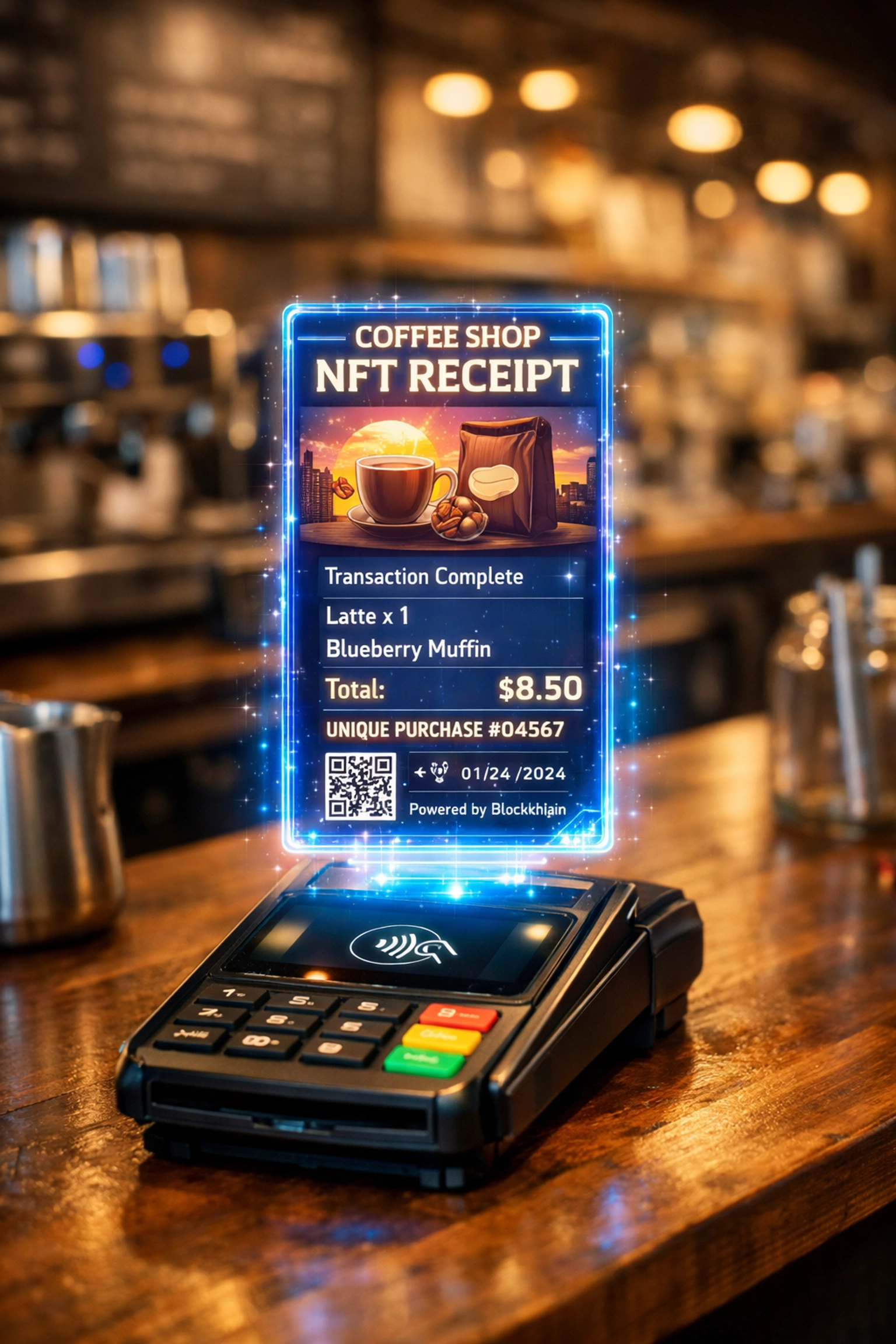
Self-custody POS systems like Larecoin integrate NFT technology. Every transaction can generate an NFT receipt. Immutable proof of purchase stored on-chain.
Why NFT Receipts Matter
Permanent transaction records
Proof of authenticity for high-value items
Loyalty program integration
Collectible receipts that build brand engagement
Smart contract functionality for warranties and returns
CoinPayments processes payments. That's it. No innovation layer. No Web3 features. No competitive differentiation for your business.
NFT receipts transform transactions from mundane exchanges into branded experiences. Your customers collect their purchase history. You build community through technology.
This is the future of merchant-customer relationships.
LUSD: The Stablecoin Advantage
Crypto volatility concerns merchants. Understandably.
LUSD solves this. It's a decentralized, algorithmic stablecoin pegged to USD. Unlike USDT or USDC, there's no central authority. No bank accounts to freeze. No regulatory risk from a single issuer.
Why LUSD Works for Merchants You accept payment in LUSD. Value stays stable. No conversion needed if you want to hold stablecoins. No exposure to Bitcoin or Ethereum volatility.
Traditional processors force you through conversion steps. Crypto to fiat. Multiple fees. Settlement delays. LUSD eliminates this entirely.
Price your goods in dollars. Accept LUSD. Your accounting stays simple. Your revenue stays stable.
Self-custody POS systems supporting LUSD give you the best of both worlds: crypto's efficiency with fiat's stability.
Merchant Freedom: Breaking Free from Payment Processor Control
Independence matters.
CoinPayments and NOWPayments control your account. They set the rules. They can freeze funds. They dictate terms of service. You're a user on their platform.
Self-custody flips this dynamic.
You control:
Which coins you accept
Your wallet security
Transaction privacy
Settlement timing
Business continuity
No one can deplatform you. No one can hold your funds hostage. No terms of service updates that suddenly make your business model unprofitable.
This is permissionless commerce. This is financial sovereignty.
Merchants operating in high-risk industries or controversial niches face constant processor risk. Self-custody removes this vulnerability entirely. You answer to blockchain consensus, not corporate compliance departments.
Direct Settlement: Eliminating Intermediary Friction
Every intermediary adds cost and complexity.
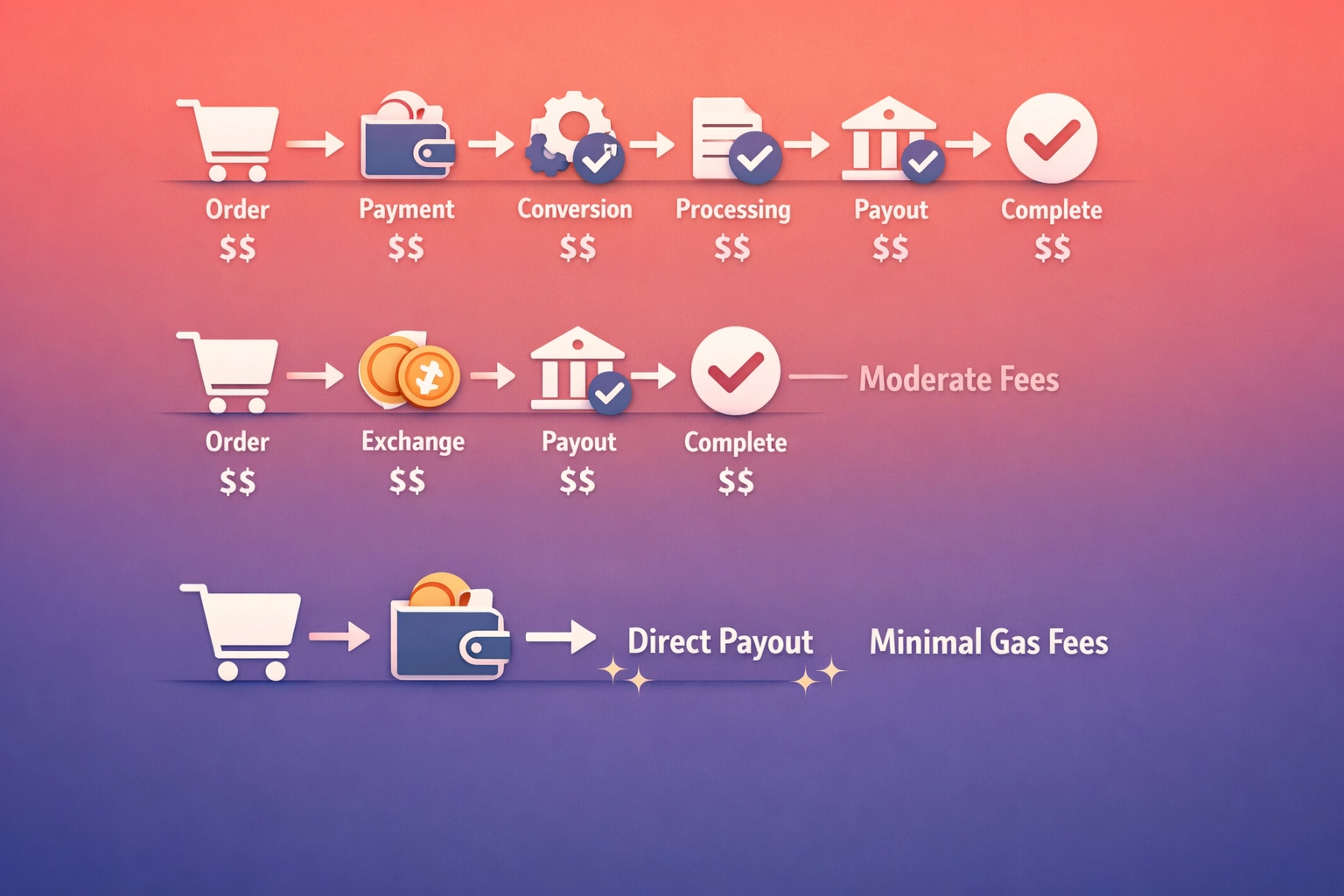
Traditional flow: Customer pays → CoinPayments receives → CoinPayments holds → You request withdrawal → CoinPayments processes → Funds settle to your bank.
Self-custody flow: Customer pays → You receive.
That's it. Two steps instead of six. No custody period. No withdrawal requests. No processing delays.
Speed Matters Same-day settlement isn't just convenient: it's cash flow optimization. You can reinvest revenue immediately. Purchase inventory faster. Pay suppliers without waiting.
NOWPayments improved on CoinPayments' model. But they're still custodial. They still introduce intermediary steps. Self-custody eliminates the middleman entirely.
The Decentralized Advantage: Why Web3 Payments Win
CoinPayments runs on centralized infrastructure. Servers. Databases. Single points of failure.
Self-custody solutions leverage decentralized networks. Solana. Ethereum. Blockchain-native payment rails.
Benefits:
99.9% uptime guaranteed by network consensus
No geographic restrictions
Censorship resistance
Transparent transaction history
Open-source verification
You're not trusting a company. You're trusting cryptographic proof and distributed consensus. That's a fundamentally stronger security model.
Making the Switch: What Merchants Need to Know
Transitioning from CoinPayments is straightforward.
Step 1: Set up your crypto wallet Choose a self-custody wallet that supports your preferred chains. Phantom for Solana. MetaMask for Ethereum. Hardware wallets for maximum security.
Step 2: Integrate POS software Self-custody POS systems generate payment QR codes. Customers scan. Transactions settle directly to your wallet.
Step 3: Train your team Staff learns to confirm transactions on-chain. Basic blockchain literacy takes minutes to develop.
Step 4: Update accounting Track wallet addresses instead of processor dashboards. Most crypto accounting software integrates seamlessly.
The technical barrier is lower than ever. If you can use CoinPayments, you can use self-custody solutions.
The 2026 Merchant Revolution
We're witnessing a fundamental shift in crypto commerce.
Custodial processors served a purpose when crypto was new. Merchants needed hand-holding. Infrastructure was complex. User experience was rough.
2026 is different.
Self-custody tools are intuitive. Blockchain technology is mature. Transaction speeds rival traditional payments. And merchants are educated enough to manage their own wallets.
The training wheels are off.
CoinPayments represented crypto payments 1.0: bringing blockchain to merchants through familiar custodial models.
Self-custody represents crypto payments 2.0: giving merchants true ownership and independence.
Companies like Larecoin are building this future. NFT receipts. LUSD integration. Gas-only transfers. Decentralized merchant portals. Web3 global payment infrastructure that actually delivers on blockchain's promise.
Take Control of Your Crypto Payments
You don't need permission to accept crypto.
You don't need an intermediary holding your funds.
You don't need to pay 1% per transaction.
Self-custody crypto POS gives you freedom, saves you money, and future-proofs your business.
CoinPayments was the past. Self-custody is the present. Decentralized Web3 payments are the future.
Ready to make the switch? Explore Larecoin's ecosystem and see what merchant independence really looks like.
The revolution isn't coming. It's already here.
Comments