

.png)
CoinPayments vs Larecoin: Which Receivables Token Platform Is Better for Your Merchant Growth?
- [[[Free!!]<<<<]] Watch: 스포르팅 - 토트넘 Live Stream 13 September 2022
- 3 days ago
- 4 min read
![Writer: [[[Free!!]<<<<]] Watch: 스포르팅 - 토트넘 Live Stream 13 September 2022](https://lh3.googleusercontent.com/a/AItbvmktwQc0wCdd3ZEETSYItRQubwwBzOyjD_dcigRf=s96-c)
Choosing the right crypto payment platform can make or break your merchant operations.
CoinPayments has been around since 2013. Massive coin support. Established reputation. But in 2026, "established" doesn't always mean "optimal."
Larecoin enters as a Web3-native contender. Built different. Receivables token architecture. Self-custody by default. NFT receipts baked in.
Let's break it down.
The Quick Verdict
CoinPayments: Legacy player. 2,000+ coins. Centralized custody. Traditional fee structures.
Larecoin: Next-gen Web3 payments. Receivables token model. Self-custody merchant accounts. LUSD stablecoin integration. Up to 50%+ fee reduction.
Both work. One positions you for future growth.
CoinPayments: The Incumbent
CoinPayments dominates the crypto payment processor space. Founded in 2013, they've processed billions in transactions.
What they offer:
Support for 2,000+ cryptocurrencies
Shopping cart plugins for major e-commerce platforms
Multi-coin wallet functionality
0.5% transaction fee (flat rate)
$GAU token for ecosystem rewards
The limitations:
Custodial model: they hold your funds
Traditional payout structures with delays
No receivables tokenization
Limited Web3 integration
Standard accounting: no blockchain-verified receipts
CoinPayments works. But it operates on Web2 infrastructure with crypto bolted on top.
Larecoin: The Web3-Native Alternative
Larecoin approaches merchant payments from a fundamentally different angle.
Built ground-up for Web3. Not an afterthought. Not a retrofit.
Core differentiators:
Receivables token architecture: tokenize incoming payments
Self-custody merchant accounts: you control your funds. Always.
NFT receipts for accounting: immutable, blockchain-verified transaction records
LUSD stablecoin: volatility protection built in
Gas-only transfers: minimal transaction overhead
Push-to-card functionality: instant fiat access when needed
This isn't just crypto acceptance. It's financial sovereignty for merchants.

Head-to-Head: Fee Structures
Fees eat into margins. Every percentage point matters.
CoinPayments:
0.5% flat transaction fee
Additional withdrawal fees vary by coin
Currency conversion costs
Potential monthly minimums on certain plans
Larecoin:
Gas-only transfer model
Dramatically reduced interchange fees
Up to 50%+ savings versus traditional processors
No hidden conversion costs with LUSD
The math is simple. Lower fees = higher margins = faster merchant growth.
For small businesses running tight operations, this difference compounds fast. A crypto POS system for small business needs to maximize every dollar.
Self-Custody: Who Controls Your Money?
Here's where philosophies diverge completely.
CoinPayments model: Funds flow through their wallets. They process. They hold. They release.
Standard practice for legacy processors. But not ideal.
Larecoin model: Self-custody merchant accounts. Your keys. Your funds. Your timeline.
No waiting for batch settlements. No counterparty risk on the platform. No withdrawal windows.
Financial sovereignty isn't just a buzzword here. It's architecture.
For merchants burned by frozen accounts or delayed payouts elsewhere, this matters. A lot.
The Receivables Token Advantage
This is where Larecoin genuinely innovates.
Traditional payment flow: Customer pays → Processor holds → Merchant waits → Settlement arrives.
Receivables token flow: Customer pays → Payment tokenized instantly → Merchant has liquid asset immediately.
What this enables:
Immediate liquidity access
Receivables as collateral for DeFi protocols
Transparent cash flow tracking
Programmable payment terms
Reduced reconciliation headaches
CoinPayments doesn't offer anything comparable. It's traditional processing with crypto characteristics.
Larecoin treats your incoming payments as programmable financial instruments. Game-changing for cash flow management.
NFT Receipts: Accounting Transformed
Bookkeeping in crypto has traditionally been... painful.
Spreadsheets. CSV exports. Manual reconciliation. Auditor nightmares.
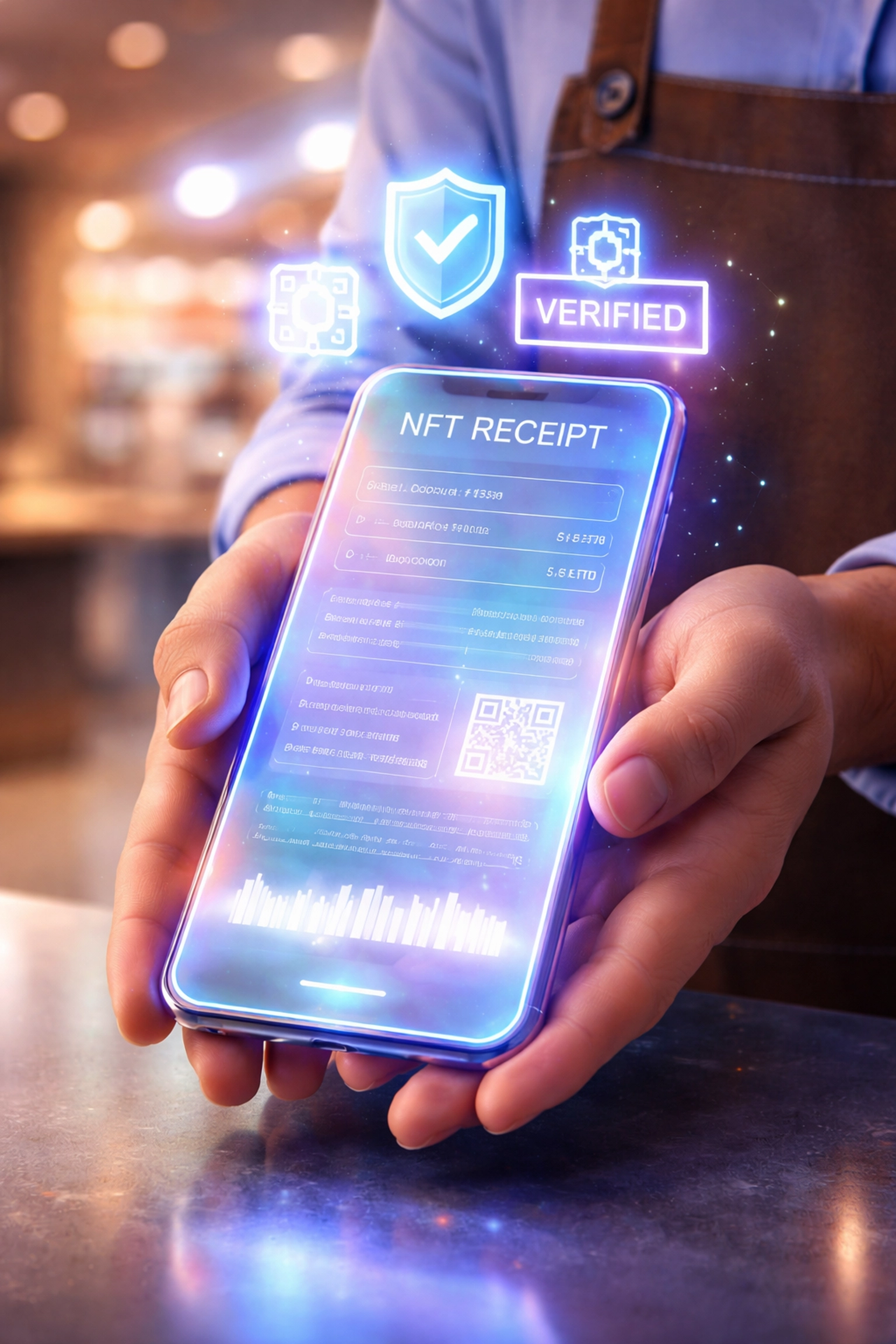
Larecoin's approach: Every transaction generates an NFT receipt. Immutable. Timestamped. Blockchain-verified.
Benefits for merchants:
Audit-ready transaction records
No disputed receipt authenticity
Automated accounting integration potential
Permanent, tamper-proof documentation
Simplified tax preparation
NFT receipts for accounting aren't gimmicky. They're practical infrastructure for compliant operations.
CoinPayments provides transaction histories. Standard stuff. But nothing with the verification guarantees that blockchain-native receipts deliver.
LUSD Stablecoin Benefits
Volatility kills merchant adoption. Always has.
Accept Bitcoin at $95,000. Watch it dip to $88,000 before you convert. That's not sustainable.
Larecoin's solution: LUSD
A stablecoin built into the ecosystem. Accept crypto. Settle in LUSD. Lock in value.
LUSD stablecoin benefits:
Volatility protection without fiat conversion
Stays within the Web3 ecosystem
Lower friction than bank settlements
Maintains crypto liquidity advantages
Clean on-chain accounting
CoinPayments offers conversion to various stablecoins. But LUSD integration in Larecoin is native. Seamless. No extra steps.
Global Reach Comparison
Both platforms operate globally. But implementation differs.
CoinPayments:
190+ countries
Bank-dependent payout options
Regional restrictions on certain features
Traditional currency conversion paths
Larecoin:
Borderless by design
Bank-free business operations possible
No geographic feature restrictions
Web3 global payments infrastructure
For merchants targeting international customers, Larecoin's architecture removes friction. No banking intermediaries required. No correspondent bank fees. No settlement delays across borders.
A merchant in Lagos transacts with a customer in Berlin the same way they'd transact locally. That's the promise of Web3 global payments: delivered.
Integration & Setup
Getting started matters. Complexity kills adoption.
CoinPayments:
Established plugins for WooCommerce, Shopify, Magento
API documentation available
Requires account verification
Custodial setup process
Larecoin:
Merchant portal access
Contactless POS solutions
Smart wallet integration
Self-custody setup: you maintain control from day one
Both platforms offer reasonable onboarding. Larecoin's decentralized architecture means fewer gatekeepers in the setup process.
Who Should Choose CoinPayments?
Be fair here. CoinPayments works for specific use cases:
Merchants needing 2,000+ coin support
Businesses comfortable with custodial solutions
Operations prioritizing established track records over innovation
Those not concerned with self-custody
It's a reliable workhorse. Just not pushing boundaries.
Who Should Choose Larecoin?
Larecoin fits merchants who want:
Self-custody merchant accounts: non-negotiable fund control
Fee reduction: reduce merchant interchange fees significantly
NFT receipts: blockchain-verified accounting
Receivables tokenization: next-level cash flow management
LUSD stability: volatility protection
True Web3 infrastructure: not Web2 with crypto painted on
If financial sovereignty matters to your business, the choice is clear.
If bank-free operations align with your vision, Larecoin delivers.
If you're building for the next decade of commerce, not the last one: check out Larecoin.
The Bottom Line
CoinPayments built the roads. Larecoin is building the highways.
Legacy vs. innovation. Custodial vs. self-custody. Standard receipts vs. NFT verification. Traditional fees vs. 50%+ reduction.
Both accept crypto. Only one positions your merchant operations for genuine Web3 integration.
Your growth strategy determines your choice.
Choose accordingly.
Ready to explore self-custody merchant solutions with receivables token architecture? Visit larecoin.com and see what Web3-native payments actually look like.
Comments