

.png)
Do You Really Need a Bank for Business Payments? Here's the Truth About Self-Custody Merchant Accounts
- [[[Free!!]<<<<]] Watch: 스포르팅 - 토트넘 Live Stream 13 September 2022
- 5 days ago
- 5 min read
![Writer: [[[Free!!]<<<<]] Watch: 스포르팅 - 토트넘 Live Stream 13 September 2022](https://lh3.googleusercontent.com/a/AItbvmktwQc0wCdd3ZEETSYItRQubwwBzOyjD_dcigRf=s96-c)
Banks have had a monopoly on business payments for centuries.
They hold your money. They set the rules. They decide when you can access your own revenue.
But here's the thing: it doesn't have to be this way anymore.
Self-custody merchant accounts are flipping the script. They're giving businesses complete control over their funds, no intermediaries, no permission required, no surprise freezes.
Let's break down what this means for your business and whether you actually need a traditional bank for payments in 2026.
What Is a Self-Custody Merchant Account?
Simple concept. Revolutionary execution.
A self-custody merchant account lets you accept payments directly into your own wallet. No middleman holds your assets. No institution controls your access.
Here's how it works:
Customer initiates payment
Funds transfer directly to your merchant wallet
Transaction records on-chain in real-time
You have immediate access to your revenue
That's it. No waiting 3-5 business days. No payment processor sitting between you and your money.
The Problem With Traditional Bank-Based Payments
Let's be real about what traditional merchant accounts actually cost you.
Interchange fees eat your margins. Average credit card processing fees range from 1.5% to 3.5% per transaction. For high-volume businesses, that's thousands, sometimes hundreds of thousands, in annual fees.
Account freezes happen without warning. Banks and payment processors can freeze your funds during disputes, compliance reviews, or simply because their algorithm flagged something. Your money. Their decision.
Settlement delays kill cash flow. Waiting days or weeks for funds to clear? That's capital you can't reinvest in inventory, marketing, or growth.
Geographic restrictions limit your reach. Traditional banking infrastructure doesn't serve all markets equally. International payments come with extra fees, delays, and regulatory headaches.
Self-Custody vs. Traditional Banking: The Real Comparison
Feature | Traditional Bank | Self-Custody Merchant Account |
Fund Access | 1-5 business days | Immediate |
Third-Party Control | Yes | No |
Account Freeze Risk | High | None |
Interchange Fees | 1.5-3.5% | Near-zero |
Global Reach | Limited | Borderless |
Transaction Transparency | Statements only | On-chain verification |
The numbers don't lie. Self-custody merchant accounts reduce merchant interchange fees by 50% or more compared to traditional card processing.
5 Reasons Businesses Are Ditching Banks for Self-Custody
1. Complete Financial Sovereignty
Your funds stay in your wallet. Period.
No institution can restrict access based on your geographic location, account status, or arbitrary policy changes. You maintain full ownership and control.
This matters especially for businesses operating in underbanked regions or industries that traditional finance considers "high-risk."
2. Slash Your Payment Processing Costs
Traditional interchange fees are a tax on every transaction.
With crypto-native self-custody solutions, you're looking at gas fees only: often pennies compared to percentage-based card processing fees.
For a business processing $100,000 monthly, switching from 3% card fees to self-custody could save $36,000 annually. That's real money back in your pocket.

3. Instant Settlement, Better Cash Flow
No more waiting for funds to clear.
Self-custody means transactions settle in real-time. Customer pays. You receive. Done.
This instant settlement transforms cash flow management. You can reinvest revenue immediately instead of floating expenses while waiting for processors to release your funds.
4. On-Chain Transparency and NFT Receipts for Accounting
Every transaction lives on the blockchain. Permanently. Verifiably.
This creates an immutable audit trail that simplifies accounting, tax preparation, and compliance reporting.
Some platforms: like Larecoin: take this further with NFT receipts for accounting. Each transaction generates a unique, timestamped receipt token that can't be altered or disputed.
No more reconciliation headaches. No more missing transaction records.
5. True Global Reach Without Banking Barriers
Traditional banking infrastructure wasn't built for global commerce.
Self-custody merchant accounts operate on blockchain rails: borderless by design. Accept payments from customers anywhere in the world without currency conversion fees or international wire transfer delays.
This is especially powerful for e-commerce, SaaS, and digital services businesses with international customer bases.
How Larecoin Enables Bank-Free Business Payments
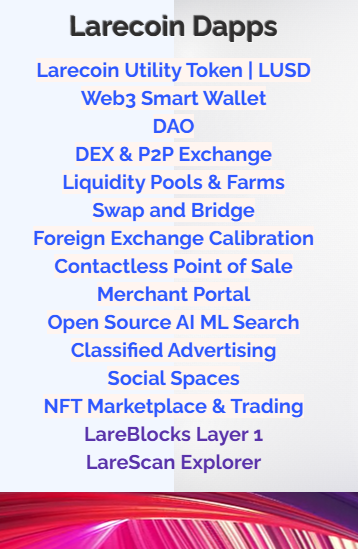
Larecoin built an entire ecosystem around financial sovereignty for merchants.
Self-Custody Merchant Accounts: Funds flow directly to your wallet. No intermediary custody. No permission required.
LUSD Stablecoin: Accept payments without volatility risk. LUSD maintains dollar parity while giving you all the benefits of crypto rails: instant settlement, low fees, global reach.
Receivables Token: Tokenize your incoming payments. Unlock liquidity. Manage cash flow with on-chain tools.
Crypto POS System for Small Business: Accept crypto payments at physical locations with contactless terminals designed for Web3 commerce.
NFT Receipts: Every transaction generates an immutable receipt token for seamless accounting and audit trails.
The full stack is designed for merchants who want to reduce costs, increase control, and operate globally without banking limitations.
How Does Larecoin Compare to Other Crypto Payment Processors?
Not all crypto payment solutions are created equal.
NOWPayments Alternative: NOWPayments offers crypto payment processing but still operates as an intermediary. Larecoin's self-custody model eliminates this middleman entirely: you're not trusting a third party to hold and release your funds.
CoinPayments Alternative: CoinPayments has been around since 2013, but their custodial model means they control your funds until withdrawal. Plus, interchange fees add up. Larecoin's direct-to-wallet approach removes these friction points.
Triple-A Comparison: Triple-A focuses on enterprise crypto payments with fiat settlement. Useful for some use cases, but you're still dependent on their infrastructure. Larecoin gives you the option to stay entirely in crypto or settle to fiat: your choice.
The key differentiator: Larecoin doesn't sit between you and your money.

The Trade-Offs: What You Need to Know
Self-custody isn't magic. It comes with responsibilities.
Security is on you. No institution is safeguarding your funds. You must maintain control of your private keys, implement proper backup procedures, and ensure your wallet infrastructure is secure.
Compliance still matters. Larecoin works with regulated banking partners for AML/KYC compliance where required. You get regulatory protections without surrendering custody: best of both worlds.
Volatility management. If accepting crypto, you need a strategy for price movements. LUSD stablecoin benefits include dollar-parity stability, solving this for most merchants.
For businesses willing to take responsibility for their own security, the benefits far outweigh these trade-offs.
Who Should Consider Self-Custody Merchant Accounts?
Self-custody makes sense for:
E-commerce businesses tired of losing 3%+ on every transaction
International sellers dealing with cross-border payment headaches
High-volume merchants where fee savings add up fast
Businesses in underbanked regions without reliable banking access
Companies in "high-risk" categories facing account terminations
Forward-thinking brands wanting to accept Web3 global payments
If you're processing significant volume and frustrated with traditional payment infrastructure, self-custody deserves serious consideration.
The Bottom Line
Do you really need a bank for business payments?
No. You don't.
Self-custody merchant accounts offer complete financial sovereignty, dramatically lower fees, instant settlement, and global reach that traditional banking simply can't match.
The infrastructure exists. The technology is mature. The savings are real.
Larecoin is leading this shift with a full-stack Web3 payments solution designed for merchants ready to take control.
Ready to explore bank-free business payments?Visit Larecoin and see what financial sovereignty looks like for your business.
Comments