

.png)
Do You Really Need Self-Custody Merchant Accounts? Here's the Truth About Web3 Global Payments
- [[[Free!!]<<<<]] Watch: 스포르팅 - 토트넘 Live Stream 13 September 2022
- 2 hours ago
- 4 min read
![Writer: [[[Free!!]<<<<]] Watch: 스포르팅 - 토트넘 Live Stream 13 September 2022](https://lh3.googleusercontent.com/a/AItbvmktwQc0wCdd3ZEETSYItRQubwwBzOyjD_dcigRf=s96-c)
Let's cut through the noise.
Self-custody isn't a buzzword. It's the backbone of financial sovereignty. And if you're a merchant still relying on custodial payment processors, you're leaving money, and control, on the table.
Here's the real talk on whether self-custody merchant accounts belong in your payment stack. Spoiler: they probably do.
The Problem With Traditional Merchant Payment Processing
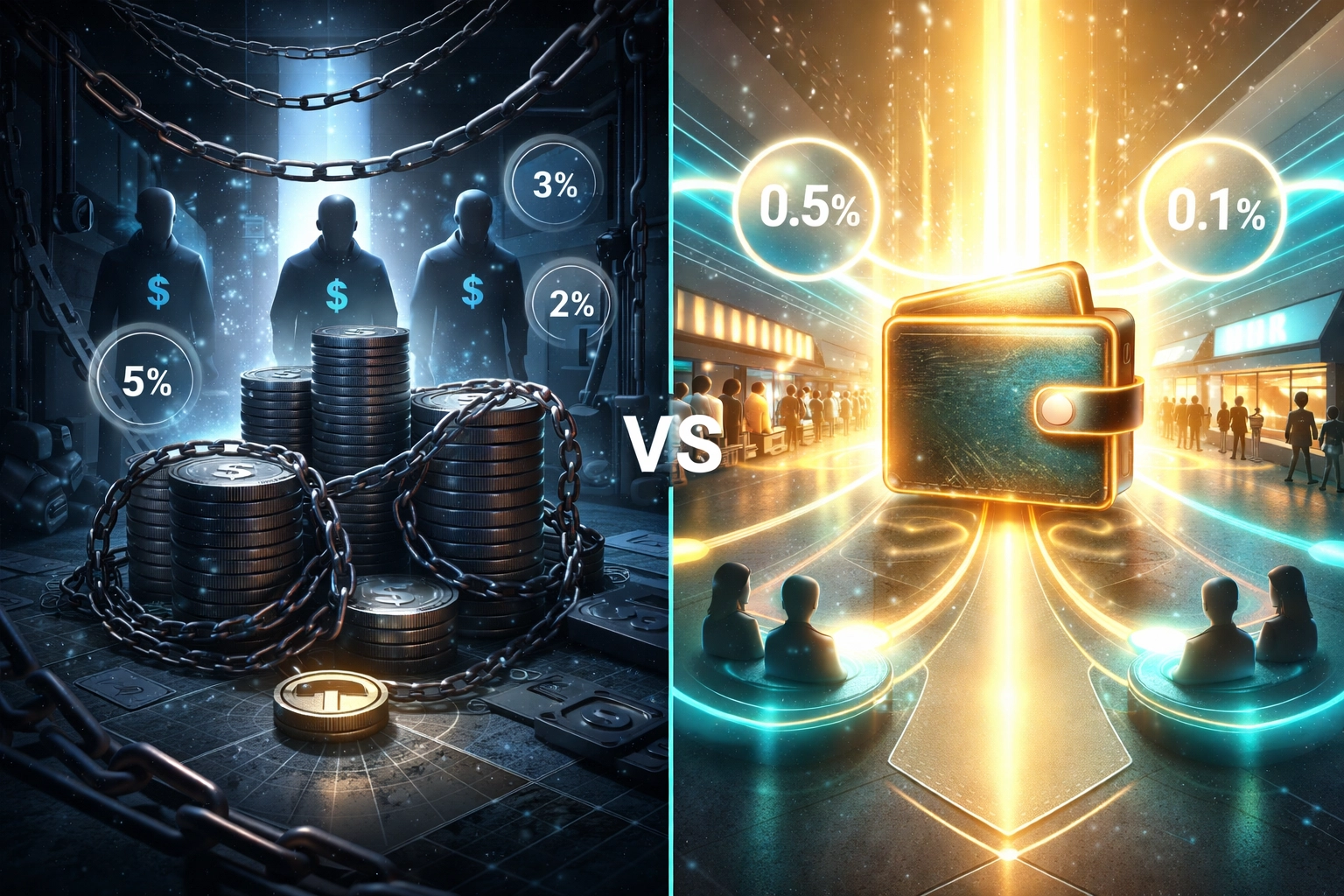
Traditional payment processors take a massive cut. We're talking 2.5% to 3.5% per transaction. Sometimes more.
That's before chargebacks. Before currency conversion fees. Before the mysterious "processing fees" that seem to multiply like rabbits.
For global merchants? Even worse.
Cross-border fees stack up fast
Settlement times stretch to 3-5 business days
Funds get frozen without explanation
You're at the mercy of third-party infrastructure
Custodial crypto payment solutions like NOWPayments and CoinPayments improved some of this. But they introduced new problems.
Your funds sit in their wallets. Your keys? Non-existent. Your control? Limited.
That's not Web3. That's Web2 with extra steps.
What Self-Custody Actually Means for Merchants
Self-custody = you hold the keys.
Every payment hits your wallet directly. No intermediary holding your funds hostage. No waiting for withdrawal approvals. No custodial risk.
The core benefits:
Instant settlement. Funds arrive in your wallet the moment a transaction confirms on-chain.
Zero custodial risk. Exchange hacks? Platform insolvencies? Not your problem.
Lower fees. No intermediary markup eating into your margins.
True ownership. Your money. Your keys. Your rules.
Self-custody shifts security responsibility to the user. That's the trade-off. But for crypto-native businesses, and increasingly, traditional merchants expanding into Web3, the benefits far outweigh the learning curve.
Why Larecoin's Self-Custody Approach Changes Everything
Larecoin doesn't just offer self-custody. We engineered an entire ecosystem around merchant empowerment.
Here's what separates us from the pack:
50%+ Reduction in Interchange Fees
Traditional card networks charge merchants anywhere from 1.5% to 3.5% per swipe. Add gateway fees, PCI compliance costs, and chargeback penalties, it adds up.
Larecoin slashes those costs by more than half.
How? Direct on-chain settlements. No card networks. No middlemen inflating the transaction chain.
For a business processing $100,000 monthly, that's potentially $15,000+ back in your pocket annually.
Not a minor upgrade. A game-changer.
LUSD Stablecoin: Stability Meets Sovereignty
Volatility kills merchant confidence. Bitcoin swings 10% in a day? Not ideal when you're trying to price products.
Enter LUSD.
Larecoin's stablecoin maintains a steady peg while operating within our self-custodial framework. You get:
Price stability for invoicing and accounting
Instant conversions within the Larecoin ecosystem
Reduced exposure to market volatility
Seamless integration with push-to-card services
LUSD isn't just another stablecoin. It's designed specifically for merchant use cases. Payments in. Payments out. Stable throughout.
NFT Receipts: The Future of Transaction Records
Paper receipts are dead. Digital receipts clog inboxes. Neither provides verifiable proof of purchase on a decentralized ledger.
NFT receipts do.
Every Larecoin transaction can generate an NFT receipt that:
Lives on-chain permanently. No lost records. No "the dog ate my receipt."
Enables warranty tracking. Smart contracts can automate warranty claims and product authentications.
Unlocks loyalty programs. NFT receipts become keys to exclusive discounts, early access, and membership perks.
Simplifies returns and disputes. Immutable proof of purchase streamlines customer service.
This isn't gimmicky tech. It's utility. And merchants leveraging NFT receipts now are building customer relationships their competitors can't replicate.
Larecoin vs. The Competition: An Honest Comparison
Let's talk about NOWPayments and CoinPayments. Both legitimate platforms. Both missing the mark on true merchant sovereignty.
NOWPayments
Custodial model by default
Fees range from 0.5% to 1%, still higher than Larecoin's self-custodial approach
Limited stablecoin options
No native NFT receipt functionality
CoinPayments
Hybrid custodial model
0.5% transaction fee baseline, but hidden fees accumulate
Multi-coin support is broad but shallow
Settlement delays for certain assets
Larecoin
Full self-custody from day one
50%+ fee reduction vs. traditional processors
LUSD stablecoin integration
Native NFT receipt generation
Global payment rails without banking restrictions
Push-to-card functionality for instant fiat off-ramps
The difference? We built for merchants. Not for intermediaries hoping to skim from both sides.
When Self-Custody Makes Sense for Your Business
Not every business needs self-custody. But most would benefit from it.
Self-custody is ideal if:
Your customers are crypto-savvy or crypto-curious
You process significant cross-border transactions
Traditional banking restrictions limit your growth
You're tired of 3-5 day settlement windows
Fee compression is a priority
You value financial sovereignty
Consider hybrid models if:
Your audience spans crypto-native and traditional customers
You need custodial backup for compliance-heavy jurisdictions
Technical wallet management isn't feasible for your team
The smartest play? Integrate both. Larecoin's ecosystem supports merchants who want flexibility without sacrificing sovereignty. Custodial rails for mainstream shoppers. Self-custody for those who demand ownership.
The Bigger Picture: Web3 Global Payments Are Here
Global commerce is evolving. Fast.
Cross-border payment volume hit $156 trillion in 2023. And traditional rails are buckling under the weight.
Web3 payments aren't a future possibility. They're a present reality.
Direct merchant-to-customer transactions
Near-instant settlement regardless of geography
Transparent fee structures
Programmable money via smart contracts
Larecoin positions merchants at the forefront of this shift. Not playing catch-up. Leading.

The Bottom Line
Do you need self-custody merchant accounts?
If you want control, yes. If you want lower fees, yes. If you want to future-proof your payment infrastructure, absolutely yes.
The question isn't whether Web3 payments will dominate global commerce. It's whether you'll be ready when they do.
Larecoin makes that readiness simple.
Lower fees. NFT receipts. LUSD stability. True self-custody.
No middlemen. No compromises.
Ready to take control of your payments?
Explore the Larecoin ecosystem at larecoin.com and join the growing community of merchants who refuse to leave their financial sovereignty to chance.
Check out our official announcements for the latest updates. Or dive into Larecoin economics to understand exactly how our fee structure works.
Your keys. Your funds. Your future.
Comments