

.png)
Does Financial Sovereignty Really Matter in 2026? Why Bank-Free Merchants Are Thriving with Web3 Global Payments
- [[[Free!!]<<<<]] Watch: 스포르팅 - 토트넘 Live Stream 13 September 2022
- 4 days ago
- 4 min read
![Writer: [[[Free!!]<<<<]] Watch: 스포르팅 - 토트넘 Live Stream 13 September 2022](https://lh3.googleusercontent.com/a/AItbvmktwQc0wCdd3ZEETSYItRQubwwBzOyjD_dcigRf=s96-c)
The year is 2026.
Governments are tightening their grip. CBDCs are rolling out. Data sovereignty laws like DORA are in full effect. Central banks are accelerating digital currency development to maintain control over financial flows.
And yet: bank-free merchants are absolutely crushing it.
Sounds counterintuitive, right?
Here's the thing: as institutions double down on financial control, smart business owners are doing the opposite. They're opting out. Choosing self-custody. Embracing Web3 global payments.
The result? Lower fees. Faster settlements. Zero chargebacks. Complete ownership of their funds.
Financial sovereignty isn't just a philosophical concept anymore. It's a competitive advantage.
The 2026 Financial Landscape: Control vs. Freedom
Let's be real about what's happening.
Central banks worldwide are pushing CBDCs specifically to counter the threat of stablecoins and decentralized finance. The EU's Digital Operational Resilience Act now mandates financial data stays within national borders. Governments are incentivizing domestic production of everything from semiconductors to critical minerals.
The message is clear: sovereignty for the state, not for you.
But here's what regulators didn't anticipate.
Merchants are tired of playing by rules designed to benefit banks, not businesses. They're tired of:
3-5% interchange fees eating into margins
3-5 day settlement times killing cash flow
Frozen accounts with zero explanation
Chargeback fraud destroying revenue
Geographic restrictions limiting global expansion
The alternative? Web3 global payments. Self-custody. True financial sovereignty.
What Financial Sovereignty Actually Means for Merchants
Let's cut through the noise.
Financial sovereignty for merchants isn't about ideology. It's about operations. Control. Efficiency.
Here's what it looks like in practice:
You control your funds. No bank can freeze your account. No payment processor can hold your money for 30 days "pending review." Your crypto hits your wallet. Done.
You set your terms. Accept payments from anywhere in the world. No currency conversion delays. No international wire fees. No "high-risk merchant" labels.
You keep your data. Customer transactions aren't harvested by third parties. Your financial activity isn't feeding someone else's algorithm.
You reduce costs dramatically. We're talking 50%+ reduction in merchant interchange fees compared to traditional payment processors.
This isn't theory. This is what bank-free merchants are experiencing right now.
Why Traditional Payment Processors Are Losing Ground
Quick comparison.
Traditional processor: Customer pays. Processor takes 2.9% + $0.30. Funds sit in limbo for 3-5 business days. Chargeback window stays open for 120 days. Customer disputes? You lose the money AND the product.
Web3 payments: Customer pays. Transaction settles in seconds. Funds hit your self-custody wallet immediately. Chargeback? Doesn't exist on blockchain. You keep everything.
The math isn't complicated.
A merchant processing $100,000/month through traditional rails pays roughly $3,200 in fees. Same merchant using a crypto POS system for small business? Under $1,500. Often less.
That's $20,000+ back in your pocket annually.

The Self-Custody Merchant Account Revolution
Here's where it gets interesting.
Self-custody merchant accounts flip the entire payment model. Instead of your funds sitting in someone else's vault, they're in wallets you control.
No intermediary. No custodial risk. No third-party holding your business hostage.
Larecoin's approach takes this further with features competitors like NOWPayments and CoinPayments simply don't offer:
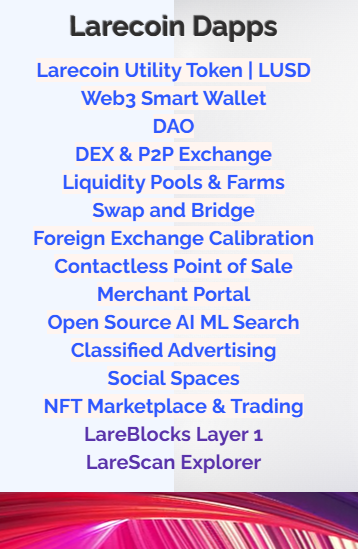
LUSD Stablecoin Benefits
Volatility concerns? Gone. LUSD maintains stable value while giving you all the advantages of crypto rails. Fast settlement. Low fees. Price stability.
No more converting Bitcoin to fiat at the worst possible moment. Accept payments in LUSD, hold in LUSD, pay suppliers in LUSD if you want.
NFT Receipts for Accounting
This one's huge for compliance.
Every transaction generates an NFT receipt: immutable, timestamped, blockchain-verified. Your accountant will thank you. Your auditor will love you. No more digging through payment processor dashboards.
Receivables Token
Turn your future receivables into tokenized assets. Access liquidity without traditional factoring. This is DeFi meeting practical business needs.
Competitor Reality Check: Why Alternatives Fall Short
Let's talk specifics.
NOWPayments Alternative
NOWPayments does crypto payments. That's... about it. No stablecoin ecosystem. No NFT receipts. No receivables tokenization. Basic custody options at best.
If you want a simple payment button, sure. If you want actual financial sovereignty with modern Web3 features? Look elsewhere.
CoinPayments Alternative
Similar story. CoinPayments has been around forever. The interface shows it. The feature set shows it. They're stuck in 2019 crypto thinking while 2026 demands more.
No LUSD integration. Limited self-custody options. Fees that add up faster than you'd expect.
Triple-A Comparison
Enterprise-focused. Bank-adjacent. The antithesis of financial sovereignty. If you want to plug into traditional finance with a crypto veneer, that's their lane.
But why would you?
The whole point of Web3 global payments is escaping those rails. Not recreating them with extra steps.
The Larecoin Difference
Real talk.
Larecoin was built for exactly this moment. When governments tighten control, merchants need options. Real options.
Here's what's in the stack:
Self-custody merchant accounts : Your keys, your coins, your business
LUSD stablecoin : Price stability without bank dependency
NFT receipts : Automated, immutable accounting documentation
Receivables token : Unlock capital from future payments
Gas-only transfers : Minimal transaction costs
Push-to-card : Off-ramp when you need fiat
Cross-chain support : Solana, Binance, and beyond
This isn't a payment processor pretending to be decentralized. It's Web3 infrastructure designed for merchants who actually want sovereignty.
Global Reach Without Global Headaches
Here's the underrated part of Web3 global payments.
Traditional international payments are a nightmare. SWIFT transfers. Correspondent banks. Currency conversion fees. 5-7 day settlement. Potential holds at every border.
Crypto payments? Customer in Tokyo pays you in Germany. Transaction confirms in seconds. No bank approval needed. No currency conversion delay. No "international merchant" premium.
Your market isn't your zip code anymore. It's the planet.
Is Financial Sovereignty Worth It?
Let's circle back to the original question.
Does financial sovereignty really matter in 2026?
Look at the landscape. Governments are consolidating control. Banks are getting more restrictive. Payment processors are increasing fees while decreasing service.
The merchants who opted out early? They're not worried about frozen accounts. They're not losing sleep over chargeback fraud. They're not watching 3-5% of revenue disappear into interchange fees.
They're thriving.
Bank-free isn't just possible. It's profitable.
Your Move
Financial sovereignty isn't philosophical anymore. It's operational.
Every day you run payments through traditional rails, you're:
Paying more fees than necessary
Accepting unnecessary chargeback risk
Trusting third parties with your business lifeline
Limiting your global reach
The tools exist. The infrastructure is ready. The question is whether you'll use them.
Check out Larecoin's merchant solutions and see what bank-free operations actually look like.
2026 is the year merchants take back control.
Will you be one of them?
Comments