

.png)
How the CLARITY Act Makes NFT Receipts Your Secret Weapon for Tax Season (2026 Merchant Guide)
- [[[Free!!]<<<<]] Watch: 스포르팅 - 토트넘 Live Stream 13 September 2022
- Feb 14
- 5 min read
![Writer: [[[Free!!]<<<<]] Watch: 스포르팅 - 토트넘 Live Stream 13 September 2022](https://lh3.googleusercontent.com/a/AItbvmktwQc0wCdd3ZEETSYItRQubwwBzOyjD_dcigRf=s96-c)
Tax season. Two words that make every merchant groan.
Shoebox full of receipts. Spreadsheets that don't match. Missing transaction details from three months ago. The usual nightmare.
Not anymore.
The CLARITY Act Changed the Game (But Not How You Think)
Here's what actually happened when H.R. 3633 passed the House in July 2025:
Regulatory clarity arrived. The SEC and CFTC now have defined roles. Stablecoins have standards. DeFi has treatment guidelines.
But here's what didn't change: how the IRS treats crypto transactions.
Still property. Still taxable events. Still your responsibility to track everything.
So why are NFT receipts suddenly a secret weapon?
Because the CLARITY Act created the regulatory framework that makes blockchain-based accounting systems finally make sense for mainstream merchants.
What NFT Receipts Actually Do for Your Tax Prep
Forget the hype. Here's the practical reality.
Instant Verification Kills Disputes
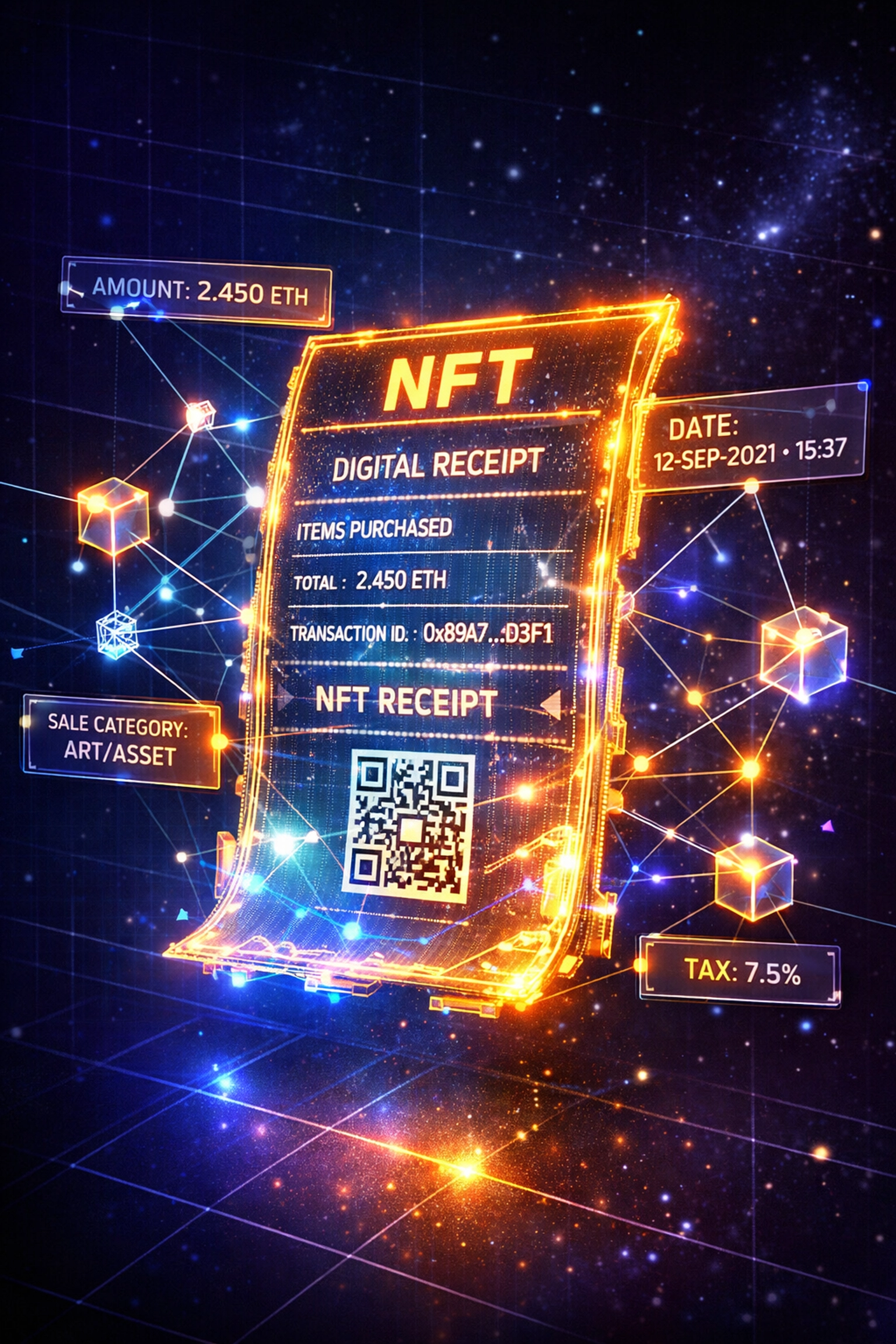
Traditional receipt? Lost it. Faded it. Customer says they never got it.
NFT receipt? Immutable blockchain record. Timestamp. Transaction hash. Product details. Payment method. All there. Forever.
Your accountant loves this. So does the IRS during an audit.
Accounting Software Reads the Metadata
Here's where it gets interesting.
Larecoin's NFT receipts contain structured metadata that modern accounting platforms can parse automatically:
Transaction date and time
Product SKU and category
Payment amount in LUSD stablecoin
Customer wallet address
Tax jurisdiction data
The 1.5% charity allocation (automatic tax deduction documentation)
Your QuickBooks or Xero integration? It reads this metadata and auto-categorizes everything. No manual entry. No human error.
The De Minimis Sweet Spot
Separate from the CLARITY Act, new provisions create a $300 per transaction exclusion with a $5,000 annual gains cap.
Most merchant transactions? They fall right into this zone.
Your NFT receipt system tracks which transactions qualify automatically. At year-end, you've got a clean report showing excludable gains versus reportable income.
Larecoin's Master/Sub-wallet architecture makes this even cleaner. Route small transactions through sub-wallets. Large B2B orders through your master wallet. Automatic categorization for tax purposes.

How Larecoin's Implementation Destroys the Competition
Let's talk specifics.
NOWPayments Charges What?
Traditional crypto payment processors:
0.5% to 1% transaction fees
Manual receipt generation
CSV exports you still need to parse
No built-in tax categorization
Larecoin's approach:
50% lower fees than NOWPayments, CoinPayments, and Triple-A. That's not marketing speak. That's LareBlocks Layer 1 efficiency.
Every transaction automatically generates an NFT receipt. Minted on our blockchain. Tied to your merchant portal. Synced with your accounting software.
Zero manual work.
The LUSD Stablecoin Advantage
Here's what keeps merchants up at night: price volatility.
You sell a $100 item. Customer pays in Bitcoin. By the time you convert to USD, it's worth $87.
Tax implication? Capital loss you need to document. Accounting nightmare.
LUSD stablecoin eliminates this completely:
Pegged 1:1 to USD
No conversion volatility
Clean tax reporting (no capital gains/losses on payment receipt)
Customers can pay with any crypto, auto-converted to LUSD
Your NFT receipt shows the LUSD amount. Your books match your bank. Your accountant doesn't call you confused.
Real-World Merchant Scenarios
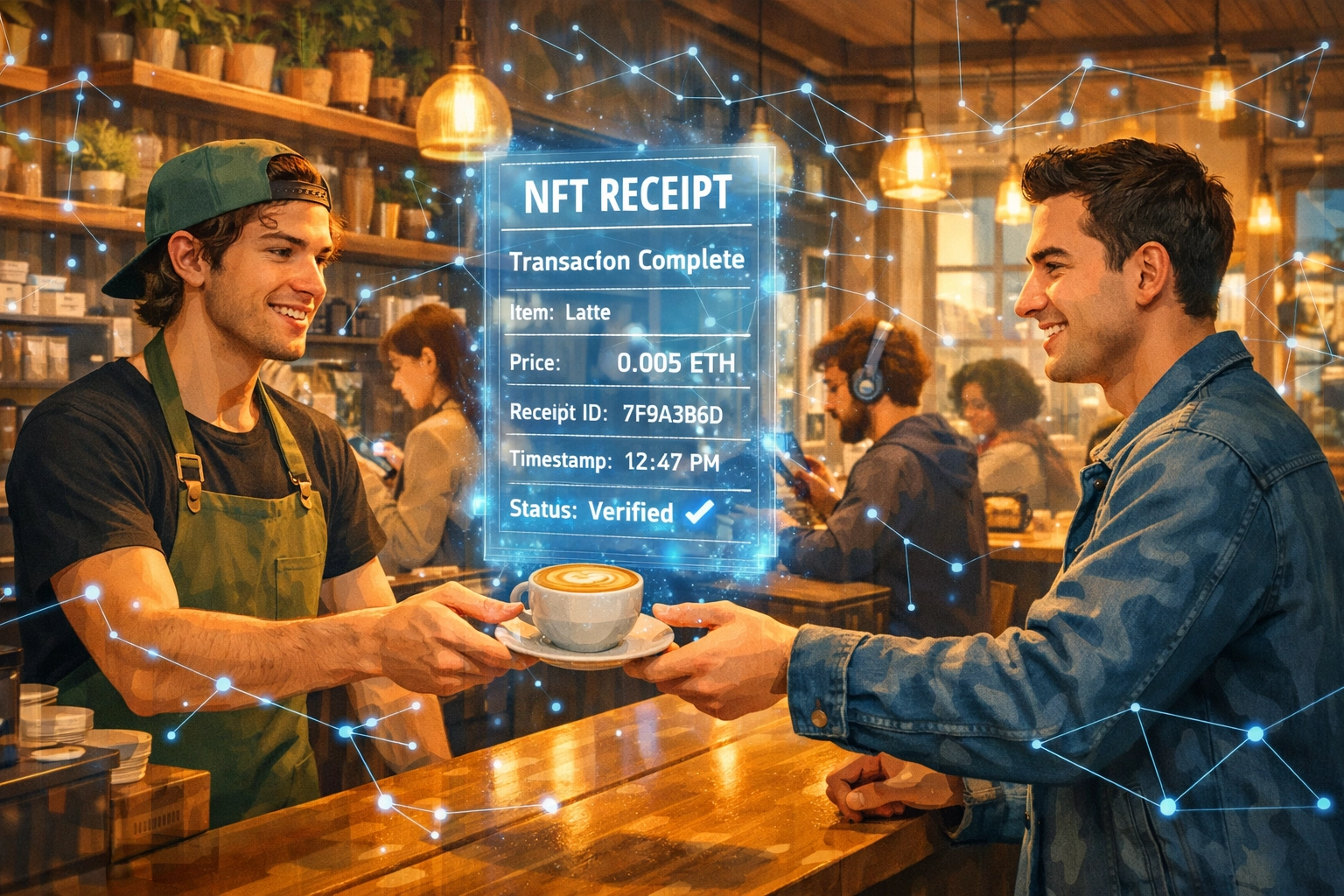
Scenario 1: Coffee Shop with High Transaction Volume
3,000 transactions monthly. Average ticket $8.
Traditional crypto payments? You're tracking 36,000 transactions annually. Manual reconciliation takes days.
Larecoin NFT receipts? Your sub-wallet handles all point-of-sale transactions. Master wallet handles supplier payments. Tax software reads the NFT metadata. Done.
The 1.5% charity allocation? Automatic documentation for your Schedule A deductions.
Scenario 2: E-Commerce Store Going Global
You're selling to 47 countries. Each has different VAT/sales tax rules.
Your NFT receipt system includes geo-data and tax jurisdiction codes. Avalara or TaxJar integrations read this automatically and apply correct tax treatment.
Customer in Germany pays with ETH. Transaction converts to LUSD. NFT receipt mints with EU VAT codes. Your accounting software categorizes it correctly.
Zero manual lookup.

Scenario 3: B2B Metaverse Sales
You're selling digital goods in Larecoin's B2B2C metaverse. Customer buys $5,000 worth of virtual inventory.
Traditional receipt? Doesn't exist. Digital goods are notoriously hard to document.
NFT receipt? It's the product AND the receipt. Smart contract execution creates the transaction record automatically. Your customer gets proof of purchase. You get tax documentation. Win-win.
The Push-to-Card Bridge
Here's the practical problem nobody talks about:
You accept crypto. You need USD in your business checking account. Today.
Traditional processors make you wait. Convert manually. Pay conversion fees. Track the exchange rate for tax purposes.
Larecoin's Push-to-Card service solves this:
Customer pays in crypto → Auto-converts to LUSD → Pushes to your business debit card → NFT receipt documents everything
Your card statement matches your blockchain records. Your accountant sees clean USD transactions. But you still get the benefits of crypto payments (lower fees, global reach, no chargebacks).
The NFT receipt ties it all together. One transaction record from crypto payment to fiat settlement.
Setting Up Your Tax-Ready Merchant Portal
Getting started takes 10 minutes:
Step 1: Create your Larecoin merchant account at larecoin.com
Step 2: Set up Master wallet for primary operations, Sub-wallets for POS/online transactions
Step 3: Connect your accounting software (QuickBooks, Xero, FreshBooks)
Step 4: Configure automatic NFT receipt generation
Step 5: Link your business debit card for Push-to-Card settlements
Done. Every transaction from this point forward generates complete tax documentation automatically.
What to Tell Your Accountant
They're going to ask questions. Here's your cheat sheet:
"How do we categorize crypto payments?" Property transactions under IRS Notice 2014-21. But LUSD stablecoin eliminates volatility tracking. NFT receipts provide complete audit trail.
"What about the charity allocation?" 1.5% of every transaction goes to verified charities. Automatic Schedule A documentation. Built into the transaction record.
"Can we prove these transactions?" LareScan blockchain explorer. Every transaction. Every NFT receipt. Publicly verifiable. Immutable record.
"What if we get audited?" Export complete transaction history with NFT receipt metadata. IRS-readable format. Every detail documented on-chain.
The Regulatory Framework Matters
The CLARITY Act didn't create tax loopholes. It created regulatory certainty.
That certainty allows innovative solutions like NFT receipts to become mainstream merchant tools instead of experimental tech.
SEC knows its boundaries. CFTC knows its role. Stablecoins have clear standards. DeFi has treatment guidelines.
Merchants can now build compliant payment infrastructure on blockchain technology without wondering if regulations will change tomorrow.
That's the real value.
Comparing the Ecosystem
You've got choices. Here's the honest breakdown:
CoinPayments: Old guard. High fees. Manual accounting. No NFT receipts.
NOWPayments: Competitive fees. Better API. Still requires external tax tracking.
Triple-A: Enterprise focus. Expensive. Complex setup. No automated receipt system.
Larecoin: 50% lower fees. Automatic NFT receipts. LUSD stability. Master/Sub-wallet architecture. Push-to-Card settlement. Built-in charity allocation. LareBlocks Layer 1 speed.
Not theoretical. Already deployed. Already working for merchants globally.
Your Tax Season Checklist
Make 2026 the year you don't dread April:
✅ Switch to LUSD-based payments (eliminate volatility tracking) ✅ Enable automatic NFT receipt generation ✅ Connect accounting software to read metadata ✅ Set up Master/Sub-wallet structure for clean categorization ✅ Configure Push-to-Card for instant settlement ✅ Document the 1.5% charity allocation for deductions ✅ Export year-end report from LareScan blockchain explorer
That's it. Your tax prep just became a one-afternoon job instead of a one-week nightmare.
The Bottom Line
The CLARITY Act created regulatory clarity. Larecoin built the infrastructure. NFT receipts are the practical tool that makes it work.
You're not just accepting crypto payments. You're building a tax-compliant, audit-ready, accountant-friendly payment system that happens to be 50% cheaper than traditional processors.
2026 tax season? You're ready.
Set up your merchant account. Enable NFT receipts. Let the blockchain handle your bookkeeping.
Your accountant will thank you. Your bottom line will thank you. And next February, when other merchants are scrambling for receipts, you'll be on the beach.
Visit larecoin.com to get started or check out our guide on reducing merchant interchange fees for more ways to optimize your payment infrastructure.
Comments