

.png)
How to Reduce Merchant Interchange Fees by 50%+ While Fighting Global Hunger (Web3 Payments Explained)
- [[[Free!!]<<<<]] Watch: 스포르팅 - 토트넘 Live Stream 13 September 2022
- 2 hours ago
- 4 min read
![Writer: [[[Free!!]<<<<]] Watch: 스포르팅 - 토트넘 Live Stream 13 September 2022](https://lh3.googleusercontent.com/a/AItbvmktwQc0wCdd3ZEETSYItRQubwwBzOyjD_dcigRf=s96-c)
Merchants processing $500K annually lose $10,000-$15,000 to interchange fees.
Every. Single. Year.
Traditional processors like Stripe, Square, and PayPal take 2-3% per transaction. Plus network fees. Plus cross-border surcharges. Plus processing fees. Plus chargeback penalties.
Web3 payments flip this model on its head.
The Legacy Payment Problem
Visa and Mastercard built an empire charging percentage-based fees.
Here's what merchants actually pay:
2.9% base interchange
0.3% network assessment
$0.10-0.30 processing fee per transaction
1-3% additional for international payments
$15-25 per chargeback
A $10,000 monthly revenue business pays $300-400 in fees.
Scale that to $1 million annually? You're hemorrhaging $20,000-$30,000.
That's a full-time employee. A marketing budget. An entire year's worth of profit for small businesses operating on thin margins.

How Blockchain Eliminates The Middlemen
Web3 payments bypass the entire legacy infrastructure.
No banks. No payment processors. No card networks taking their cut.
Just wallet-to-wallet transfers on blockchain rails.
The cost? A flat gas fee that never changes regardless of transaction size.
Solana: $0.00025 per transaction
Polygon: $0.01-0.05 per transaction
Ethereum Layer 2: $0.10-0.50 per transaction
Process a $1,000 sale?
Traditional processor: $20-30 in fees. Blockchain: $0.00025-0.50 in fees.
That's a 98-99.9% cost reduction.
Real Numbers: The 50%+ Savings Breakdown
Let's get specific.
Small Business ($500K annual revenue):
Traditional fees: $10,000-15,000
Web3 fees: $2,000-3,000 (including infrastructure)
Annual savings: $7,000-12,000
Mid-Size Business ($2M annual revenue):
Traditional fees: $40,000-60,000
Web3 fees: $8,000-12,000
Annual savings: $28,000-52,000
Enterprise ($10M annual revenue):
Traditional fees: $200,000-300,000
Web3 fees: $40,000-60,000
Annual savings: $140,000-260,000
International transactions? Even better.
Traditional processors charge 3-4% for cross-border payments. Blockchain charges identical fees whether your customer is in New York or Tokyo.
Cross-border savings: 75%+ fee reduction.
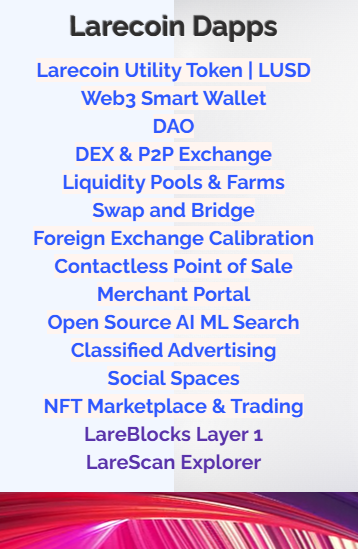
The Social Impact Engine: 1.5% Fighting Global Hunger
Here's where Larecoin gets interesting.
Every transaction includes an optional 1.5% Social Impact Engine tax. This isn't hidden. It's transparent. It's purpose-driven.
That 1.5% goes directly to verified global hunger initiatives.
Compare this to traditional processors:
Stripe: 2.9% → Goes to Stripe's profits
PayPal: 2.9% → Goes to PayPal's profits
Larecoin: 1.5% → Feeds people
You're still saving 50%+ compared to legacy systems. But now your payment processing contributes to solving real-world problems.
Impact transparency: Every contribution tracked on LareScan blockchain explorer. Full audit trail. Zero black box accounting.
This matters for ESG reporting. For brand positioning. For customers who care where their money goes.
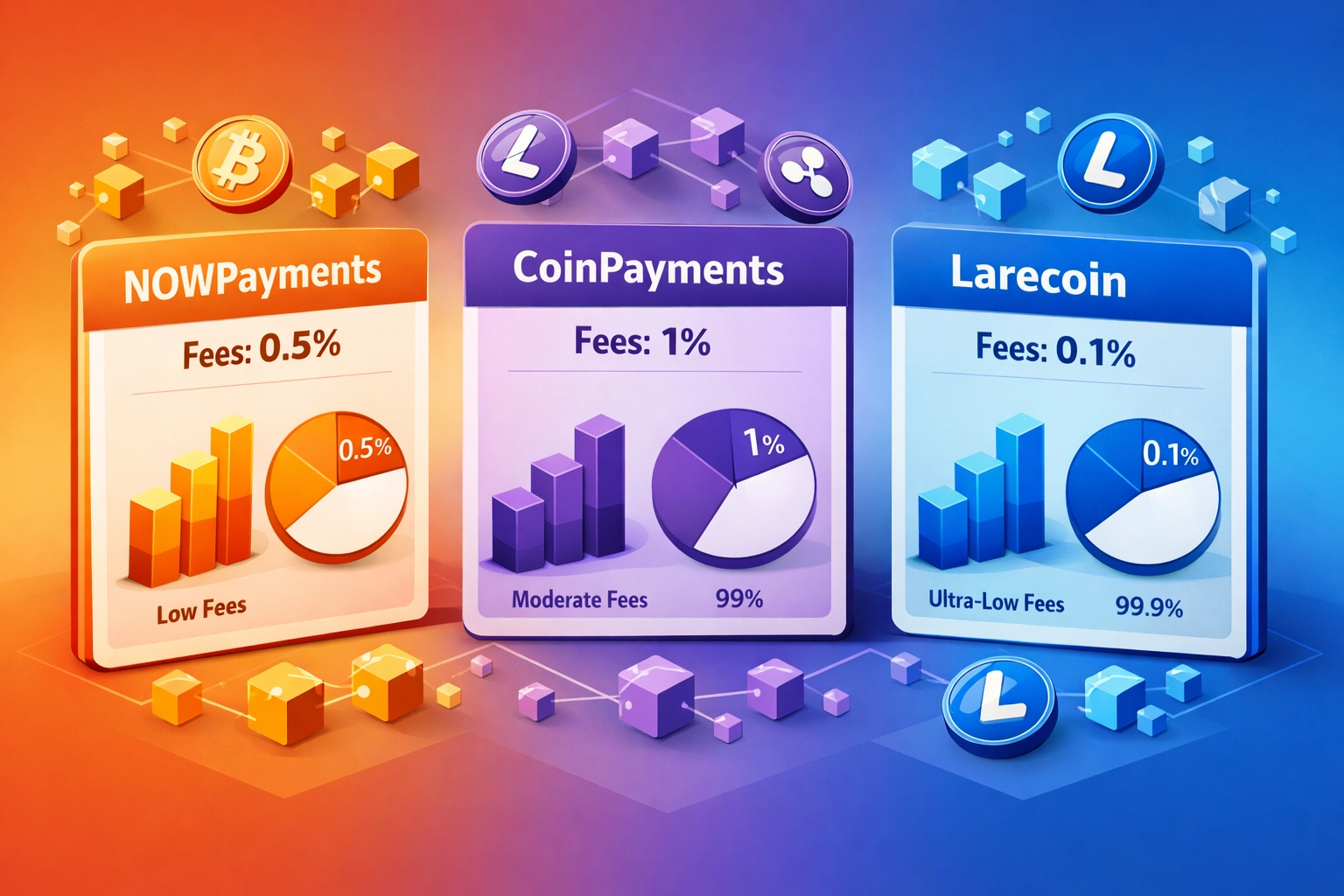
Larecoin vs NOWPayments vs CoinPayments
Let's compare the major crypto payment processors.
NOWPayments:
Fee: 0.5% per transaction
Settlement: T+1 (next day)
Currencies: 200+
Social impact: None
CoinPayments:
Fee: 0.5% per transaction
Settlement: T+1
Currencies: 2,000+
Social impact: None
Additional: $10/month platform fee
Larecoin:
Fee: Gas only ($0.00025-0.50)
Settlement: Instant (3-8 seconds)
Currencies: LARE + LUSD stablecoin
Social impact: 1.5% optional hunger tax
Additional: Master/Sub-wallet management, NFT receipts, Push-to-Card services
The kicker? NOWPayments and CoinPayments still charge percentage-based fees. They've moved from 2.9% to 0.5%, but they're using the same broken model.
Larecoin eliminates percentage fees entirely.

5-Minute Setup (Seriously)
No credit checks. No merchant applications. No 2-week approval process.
Here's the actual setup:
Minute 1: Generate master wallet at larecoin.com Minute 2: Configure sub-wallets for different business units (e-commerce, retail, wholesale) Minute 3: Create QR codes for point-of-sale Minute 4: Copy-paste integration code for online checkout Minute 5: Start accepting LUSD stablecoin payments
You're live in 300 seconds.
Traditional merchant accounts require business verification, bank statements, credit history, processing history, and 10-30 days approval time.
Web3 requires a wallet address.
The LUSD Stablecoin Advantage
Volatility kills crypto adoption for merchants.
Bitcoin swings 5-10% daily. No CFO wants revenue fluctuating that wildly.
LUSD stablecoin solves this.
Pegged 1:1 to USD. Zero volatility. All the blockchain benefits without price risk.
Your customer pays 100 LUSD. You receive 100 LUSD. It's worth $100. Tomorrow it's still worth $100.
Instant conversion to fiat available through Push-to-Card services. Funds hit your bank account in 24 hours.
Or hold LUSD in your master wallet. Deploy it across DeFi protocols. Earn yield. Your choice. Your custody.
Traditional processors hold YOUR money. Freeze YOUR account. Control YOUR cash flow.
LUSD gives you complete financial sovereignty.

NFT Receipts: The Tax/Accounting Game-Changer
Every Larecoin transaction generates an NFT receipt.
Immutable. Time-stamped. Auditable.
This matters for:
Tax reporting: CPA-friendly transaction records
Accounting automation: Direct export to QuickBooks/Xero
Audit trails: Instant compliance documentation
Dispute resolution: Cryptographic proof of payment
Traditional credit card statements are messy. Delayed. Error-prone.
NFT receipts are instant. Permanent. Searchable.
Your accountant will actually thank you.
Master/Sub-Wallet Enterprise Management
Running multiple business units? Different revenue streams? Separate cost centers?
Master/Sub-wallet architecture handles this natively.
One master wallet controls everything. Sub-wallets segment by:
Department
Product line
Geographic region
Franchise location
Revenue type
Real-time visibility into every payment channel. Automated reconciliation. Multi-sig security controls.
Enterprise treasury management without enterprise software costs.
Additional Benefits Nobody Talks About
Zero chargebacks: Blockchain transactions are irreversible. No more fraudulent disputes eating 1-2% of revenue.
Instant settlement: Funds available in 3-8 seconds. Not 2-3 business days.
Global acceptance: No cross-border restrictions. No currency conversion fees.
24/7 operations: Blockchain never sleeps. Process payments on weekends and holidays.
No account freezes: Self-custody means nobody can lock your funds. PayPal freeze horror stories? Not possible with Web3.
Privacy-first: Customer data stays minimal. No PCI compliance headaches.
The Numbers Don't Lie
Processing $1M annually through traditional systems: $20,000-30,000 in fees.
Processing $1M through Larecoin: $2,000-5,000 total costs.
Difference: $15,000-28,000 saved.
Plus you're contributing to fighting global hunger. Plus you get instant settlement. Plus NFT receipt automation. Plus enterprise wallet management.
This isn't incremental improvement.
This is a complete paradigm shift in how merchants handle payments.
Ready To Cut Your Fees In Half?
The infrastructure is live. The technology works. The savings are real.
Traditional payment processors have had 50 years to reduce fees. They've moved from 3% to... 2.9%.
Web3 payments dropped them to 0.00025%.
Your competitors are already making the switch.
Learn more at larecoin.com or explore our full ecosystem in the Metaverse Shopping Features guide.
The question isn't whether you'll adopt Web3 payments.
The question is how much money you'll lose before you do.
Comments