

.png)
How to Reduce Merchant Interchange Fees by 50%+ Without Switching Banks (Web3 Global Payments Guide)
- [[[Free!!]<<<<]] Watch: 스포르팅 - 토트넘 Live Stream 13 September 2022
- 2 hours ago
- 5 min read
![Writer: [[[Free!!]<<<<]] Watch: 스포르팅 - 토트넘 Live Stream 13 September 2022](https://lh3.googleusercontent.com/a/AItbvmktwQc0wCdd3ZEETSYItRQubwwBzOyjD_dcigRf=s96-c)
The 2.9% Problem Every Merchant Faces
You're losing 2.9% plus $0.30 on every transaction.
Visa and Mastercard take their cut. Your payment processor takes theirs. Currency conversion fees stack on top for international orders.
A $10,000 monthly revenue stream becomes $9,710 after fees.
That's $290 gone. Every month. Just for accepting payments.
Traditional advice says negotiate with your processor. Switch to interchange-plus pricing. Optimize Level 2/3 data.
Those tactics save 0.10% to 1.50% at best.
Web3 stablecoin payments eliminate 50%+ of those fees entirely.
No bank switch required. Keep your existing accounts. Add a parallel payment rail that cuts costs by half or more.
The LUSD Stablecoin Model: Flat Fees Instead of Percentage Cuts
Here's how traditional processors calculate fees:
Transaction amount: $500
Credit card rate: 2.9% + $0.30
Your cost: $14.80
Here's how LUSD stablecoin payments work:
Transaction amount: $500 in LUSD
Gas fee: $0.15 - $2.50 (flat rate, regardless of amount)
Your cost: $2.50 maximum
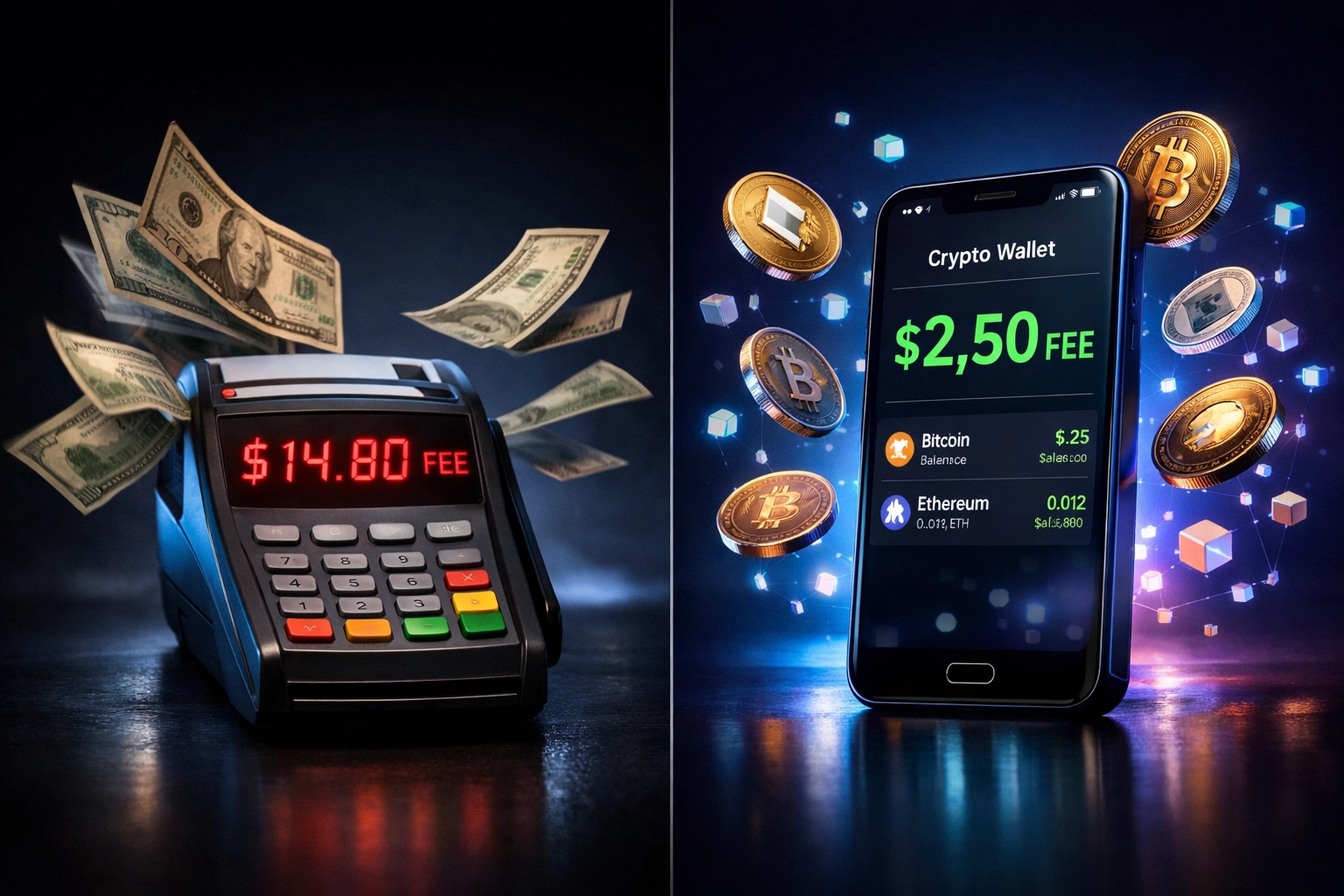
The math is brutal for traditional processors.
A $1,000 transaction costs you $29.30 with Visa/Mastercard.
The same transaction in LUSD costs $2.50.
That's 91.5% savings on that single transaction.
Scale it across your monthly volume. The numbers compound fast.
The Three-Step Implementation (No Approval Process)
Step 1: Set Up Self-Custody Wallet
Download a Web3 wallet like MetaMask, Phantom, or Trust Wallet.
Create your wallet. Save your seed phrase securely.
This wallet is yours. No middleman controls it. No approval committees. No gatekeepers.
Step 2: Integrate Web3 Payment Gateway
Connect your wallet to Larecoin's payment infrastructure.
Add the payment button to your checkout page. Copy-paste integration takes 15 minutes.
Your customers see "Pay with Crypto" alongside traditional options.
Step 3: Accept LUSD Payments
Customer selects crypto payment. Scans QR code. Confirms transaction.
LUSD arrives in your wallet instantly. No 2-3 day settlement periods.
You control when to convert to fiat or hold in stablecoin.
Real Numbers: $50K Monthly Revenue Scenario
Traditional Processing Costs:
Monthly revenue: $50,000
Average transaction: $125
Total transactions: 400
Credit card fees (2.9% + $0.30): $1,570
Annual cost: $18,840
LUSD Stablecoin Processing:
Monthly revenue: $50,000
Average transaction: $125
Total transactions: 400
Gas fees (flat $2.50 avg): $1,000
Annual cost: $12,000
Savings: $6,840 per year.
That's 36.3% reduction with just partial adoption.
Convert 50% of transactions to LUSD? Your savings double. Convert 100%? You've cut fees by over 50%.
Cross-border transactions amplify savings further. Traditional processors add 3-5% currency conversion fees on international orders.
LUSD has no borders. No conversion fees. No currency risk.
Traditional Alternatives: The 1.5% Solution
If you're not ready for Web3 payments, traditional optimization still helps.
Level 2/3 Data Automation reduces interchange by 0.70% - 1.50%. B2B merchants benefit most.
Capture customer tax IDs, purchase order numbers, and line-item details. Cards qualify for lower commercial rates.
Interchange Optimization Software finds 0.10% - 0.30% in savings. These tools correct data entry errors and formatting issues.
Interchange-Plus Pricing Negotiation separates true interchange costs from processor markups. Transparency enables better rate negotiations.
These strategies work. They're proven. They're incremental.
Web3 payments are exponential.
NOWPayments vs. CoinPayments vs. Larecoin
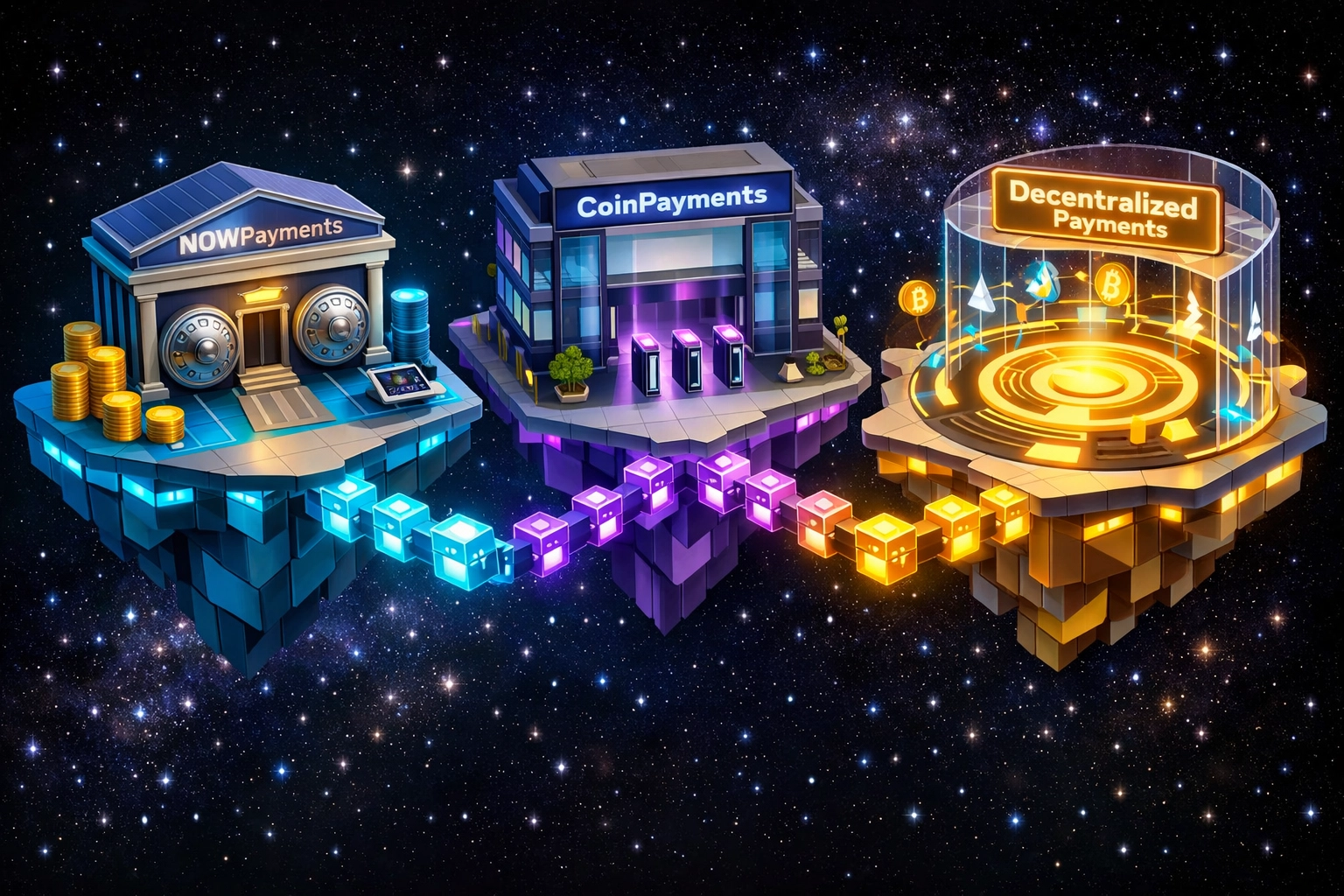
NOWPayments Approach:
Custodial model (they hold your crypto)
0.5% - 1.0% transaction fee
200+ cryptocurrencies accepted
Instant conversion to fiat available
API integration required
Better than credit cards. Still a middleman taking percentage cuts.
CoinPayments Model:
Custodial wallet system
0.5% transaction fee
Multi-coin support
Settlement in your chosen crypto
Requires account approval
Lower fees than Visa. Still gated by platform approval processes.
Larecoin Difference:
Self-custody (you control funds)
Flat gas fees (no percentage cuts)
LUSD stablecoin focus (no volatility)
NFT receipt innovation
Zero approval requirements
The fundamental difference? You're not renting someone else's payment system.
NOWPayments and CoinPayments operate like crypto versions of PayPal. They control your funds. They set the rules. They can freeze accounts.
Larecoin provides infrastructure for true merchant independence.
Your wallet. Your keys. Your money.

Cross-Border Payment Revolution
Traditional international payments are broken:
3-5% currency conversion fees
3-5 business day settlement
Correspondent banking fees
SWIFT transfer costs
Potential chargebacks
LUSD stablecoin payments solve every issue:
Zero conversion fees (LUSD is dollar-pegged)
Instant settlement (seconds, not days)
No intermediary banks
Minimal gas fees
Irreversible transactions (no chargeback fraud)
European customer buying from US merchant? Same fee structure as domestic transaction.
Australian business paying Asian supplier? Identical cost as local payment.
Geography becomes irrelevant. Borders dissolve.
NFT Receipt Innovation: Beyond Cost Savings
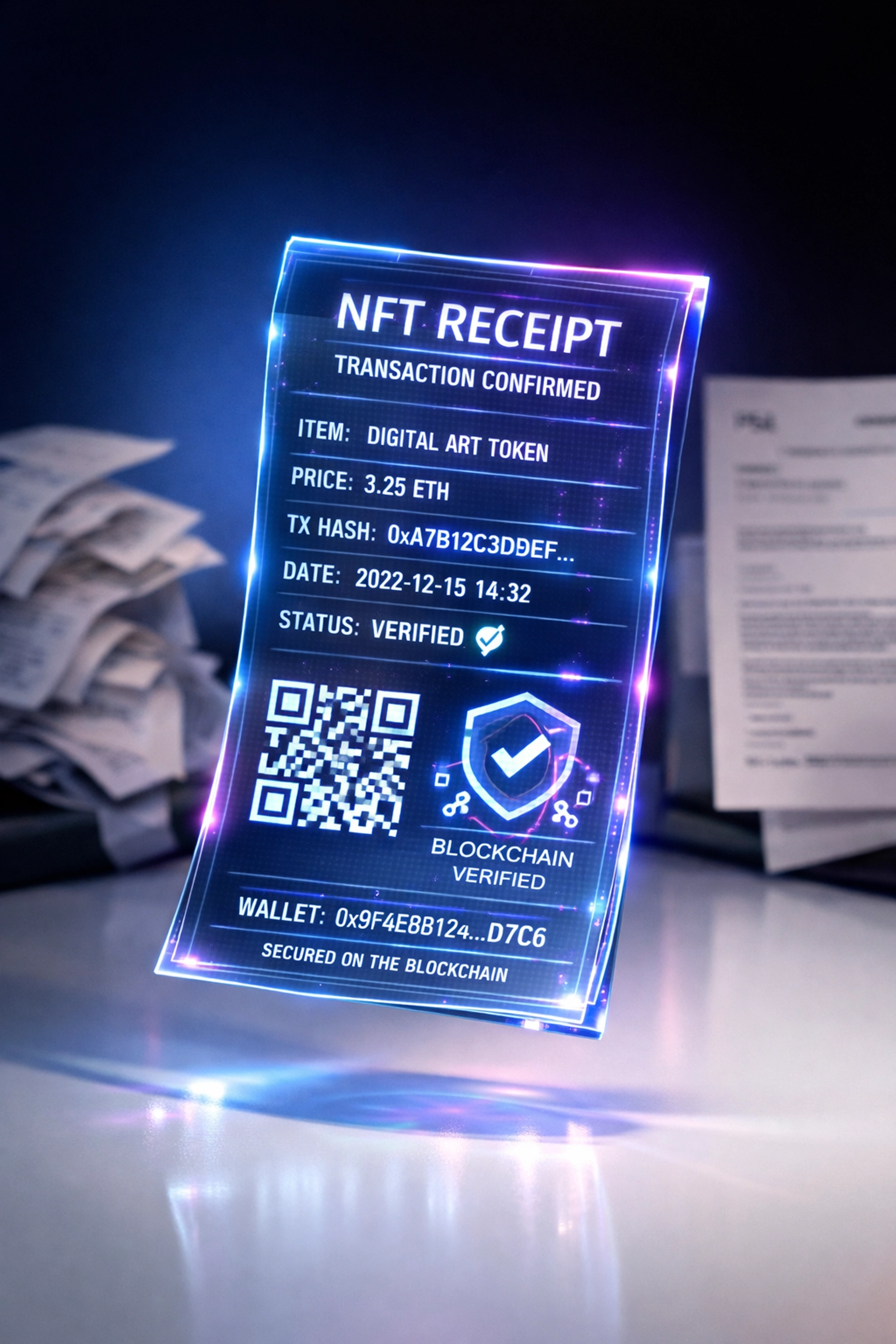
Traditional receipts are paper or email attachments.
Larecoin transforms receipts into NFT proof of purchase.
Each transaction generates an on-chain receipt as a unique NFT. Permanent. Immutable. Verifiable.
Benefits for merchants:
Eliminates fraudulent refund claims
Provides permanent transaction proof
Enables loyalty program integration
Creates collectible purchase history
Benefits for customers:
Unforgeable proof of authenticity
Portable purchase records
Potential resale value for limited items
Simplified warranty claims
NFT receipts aren't a gimmick. They're infrastructure for trustless commerce.
No more "I never received that" disputes. The blockchain doesn't lie.
Implementation Timeline
Week 1: Set up self-custody wallet and fund with small amount for testing.
Week 2: Integrate Larecoin payment gateway on test environment. Run sample transactions.
Week 3: Add crypto payment option to live checkout. Market to existing customers.
Month 2: Analyze adoption rate. Calculate actual savings. Optimize placement of crypto payment button.
Month 3: Scale marketing around crypto payment option. Offer small discount for LUSD payments to drive adoption.
Most merchants see 5-15% crypto payment adoption within 90 days. Early adopters report 20-40% rates.
The Custody Question
Traditional payment processors are custodial by default.
Stripe holds your money. PayPal controls your funds. Square can freeze your account.
You're always at someone's mercy.
Self-custody means merchant freedom.
Your wallet. Your private keys. Your control.
No account freezes. No sudden policy changes. No arbitrary holds on your revenue.
Banks tried to fight crypto. Processors tried to gatekeep it.
Web3 payment infrastructure routes around both.
Gas Fee Reality Check
Critics point to Ethereum gas fees during network congestion.
Valid concern. Outdated reality.
Modern Web3 payment solutions use:
Layer 2 scaling solutions (Polygon, Arbitrum)
Alternative Layer 1 chains (Solana, BSC)
Optimized transaction batching
Typical gas fee for LUSD transfer: $0.15 - $2.50.
During extreme network congestion: $5 - $10.
Still dramatically cheaper than 2.9% + $0.30 on every transaction.

Action Plan: Your Next 48 Hours
Hour 1-2: Research Web3 wallets. Choose one that fits your technical comfort level.
Hour 3-4: Set up wallet. Secure seed phrase. Fund with $50 worth of crypto for testing.
Hour 5-8: Explore Larecoin's merchant tools. Review integration documentation.
Day 2: Install payment gateway on development site. Run test transactions. Calculate potential savings based on your monthly volume.
Week 1: Deploy to production. Market crypto payment option to customers. Monitor adoption and savings.
The technology exists. The infrastructure is live. The savings are real.
Traditional interchange fees are voluntary at this point.
The Merchant Independence Movement
This isn't just about saving money.
It's about breaking free from financial gatekeepers.
Every payment processor is a potential choke point. Every bank is a gatekeeper. Every platform can change rules overnight.
Web3 payments eliminate intermediaries.
You custody funds. You control transactions. You set the terms.
Join the Larecoin community to connect with merchants already making the transition.
Share integration experiences. Compare savings data. Build the future of commerce.
The 50%+ savings are just the beginning.
The real value is sovereignty over your business revenue.
No more percentage cuts. No more approval processes. No more gatekeepers.
Just direct, peer-to-peer, merchant-to-customer transactions.
Welcome to Web3 global payments.
Comments