

.png)
How to Slash Interchange Fees by 50%+ Without Sacrificing Control (A Merchant's Guide)
- [[[Free!!]<<<<]] Watch: 스포르팅 - 토트넘 Live Stream 13 September 2022
- 2 hours ago
- 5 min read
![Writer: [[[Free!!]<<<<]] Watch: 스포르팅 - 토트넘 Live Stream 13 September 2022](https://lh3.googleusercontent.com/a/AItbvmktwQc0wCdd3ZEETSYItRQubwwBzOyjD_dcigRf=s96-c)
Interchange fees kill margins.
$50,000 in monthly revenue? You're paying $17,400 annually to payment processors.
$100,000 monthly? That's $34,800 vanishing into processor pockets.
The game is rigged. Visa and Mastercard set the rates. Traditional processors add their cuts. You're stuck paying 2.9% + $0.30 per transaction while losing control over your money.
Three paths exist to cut these fees by 50% or more. The third one reduces costs by 96-97%.
Let's break down each approach.
Method 1: Surcharging (50% Recovery, Traditional Infrastructure)
Surcharging passes credit card fees directly to customers who choose card payments.
The Numbers:
Maximum surcharge cap in USA: 4%
Most merchants set rates at 2.5-3.5% to stay competitive
Recover up to 50% of interchange costs immediately
Implementation Rules:
Display surcharge notices clearly at point of sale
Show surcharges on receipts and invoices
Offer alternative payment methods (cash, debit, crypto)
Stay compliant with state regulations
Dual pricing works best. Offer discounts for cash or debit. Apply surcharges only to credit cards. Customers choose their preferred payment method based on cost.
The downside? You're still locked into traditional processors. Still dealing with their terms. Still facing potential account freezes.

Method 2: Interchange Optimization (20-30 Basis Point Reduction)
Interchange optimization submits enhanced transaction data to qualify for lower rates.
The Strategy:
Use Level 2 and Level 3 data fields
Optimize B2B transactions specifically
Implement local acquiring strategies
Save approximately $1.00 per $100 spent
B2B merchants see the biggest wins. Manufacturers, distributors, and wholesale operations cut monthly fees by 10-30%.
Around 25% of merchants achieve 30-50% savings through optimization.
The problem? You're still paying percentage-based fees. Still dependent on processor infrastructure. Still vulnerable to chargeback fraud.
Method 3: Self-Custody Crypto Payments (96-97% Fee Reduction)
Self-custody eliminates traditional payment processors entirely.
The Cost Comparison:
$50,000 monthly revenue:
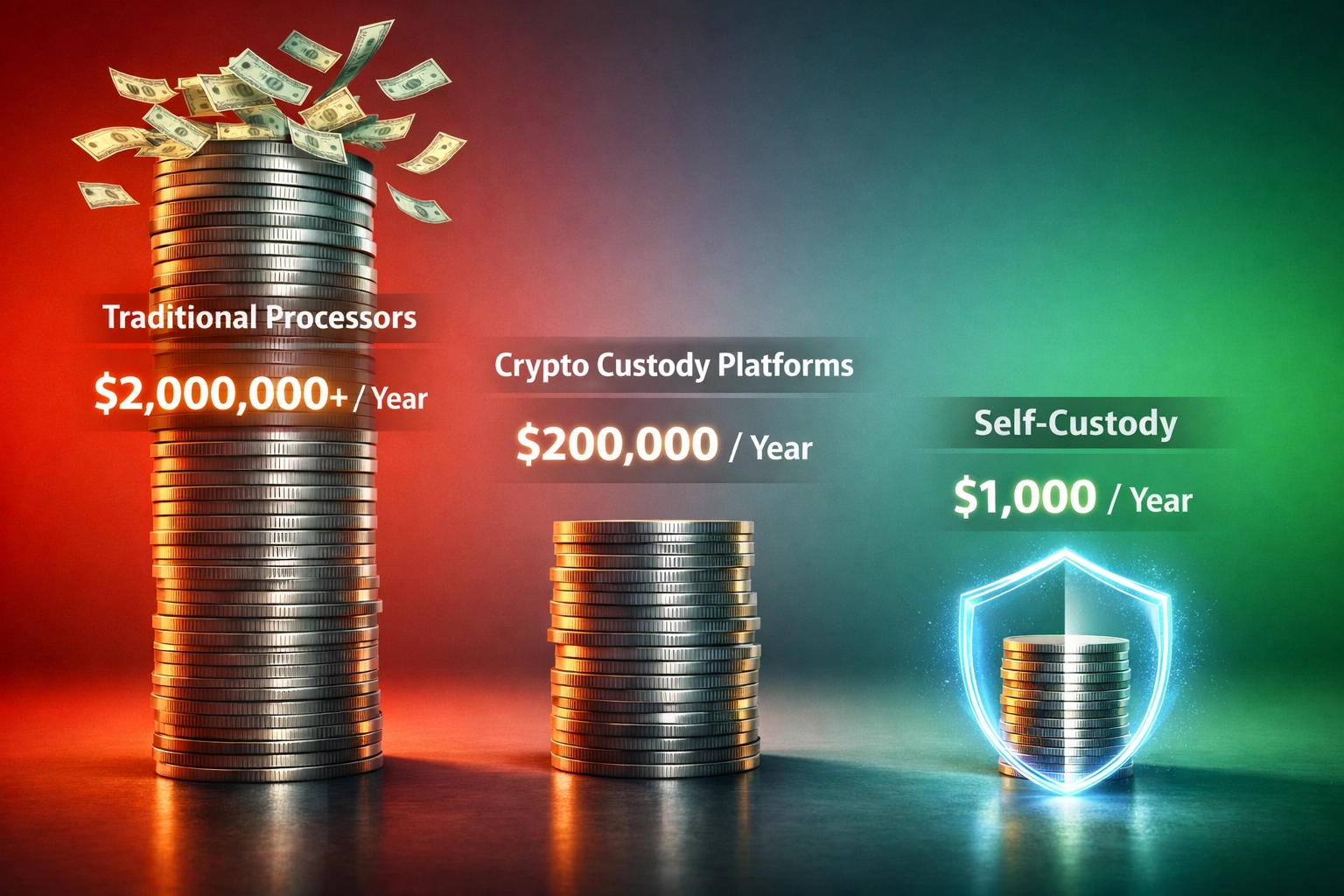
Traditional processors: $17,400/year
Self-custody crypto: $60-$600/year
Savings: 96-97%
$100,000 monthly revenue:
Traditional processors: $34,800/year
Self-custody crypto: $120-$1,200/year
Savings: 96-97%
You pay flat blockchain gas fees. $0.001-$2.00 per transaction. No percentage cuts. No monthly minimums. No processor middlemen.
The Freedom Factor:
Instant settlement (5-30 seconds to your wallet)
Zero chargebacks (crypto transactions are final)
No account freezes (you control your funds)
No processor approval needed
No compliance holdups

How Larecoin Stacks Against NOWPayments and CoinPayments
Let's get specific about crypto payment platforms.
NOWPayments Fee Structure:
0.5-1% per transaction
Still percentage-based pricing
Custody model (they hold your funds temporarily)
Settlement delays possible
Over 70 cryptocurrencies supported
CoinPayments Fee Structure:
0.5% per transaction
Custody-based system
Withdrawal fees apply
Settlement in batches
Multi-currency support
Larecoin Ecosystem Advantage:
Gas-only fees (flat rate, not percentage)
Self-custody (funds go directly to YOUR wallet)
Instant settlement (no withdrawal waiting)
LUSD stablecoin option for zero volatility
NFT receipts for enhanced loyalty programs
No custodial risk
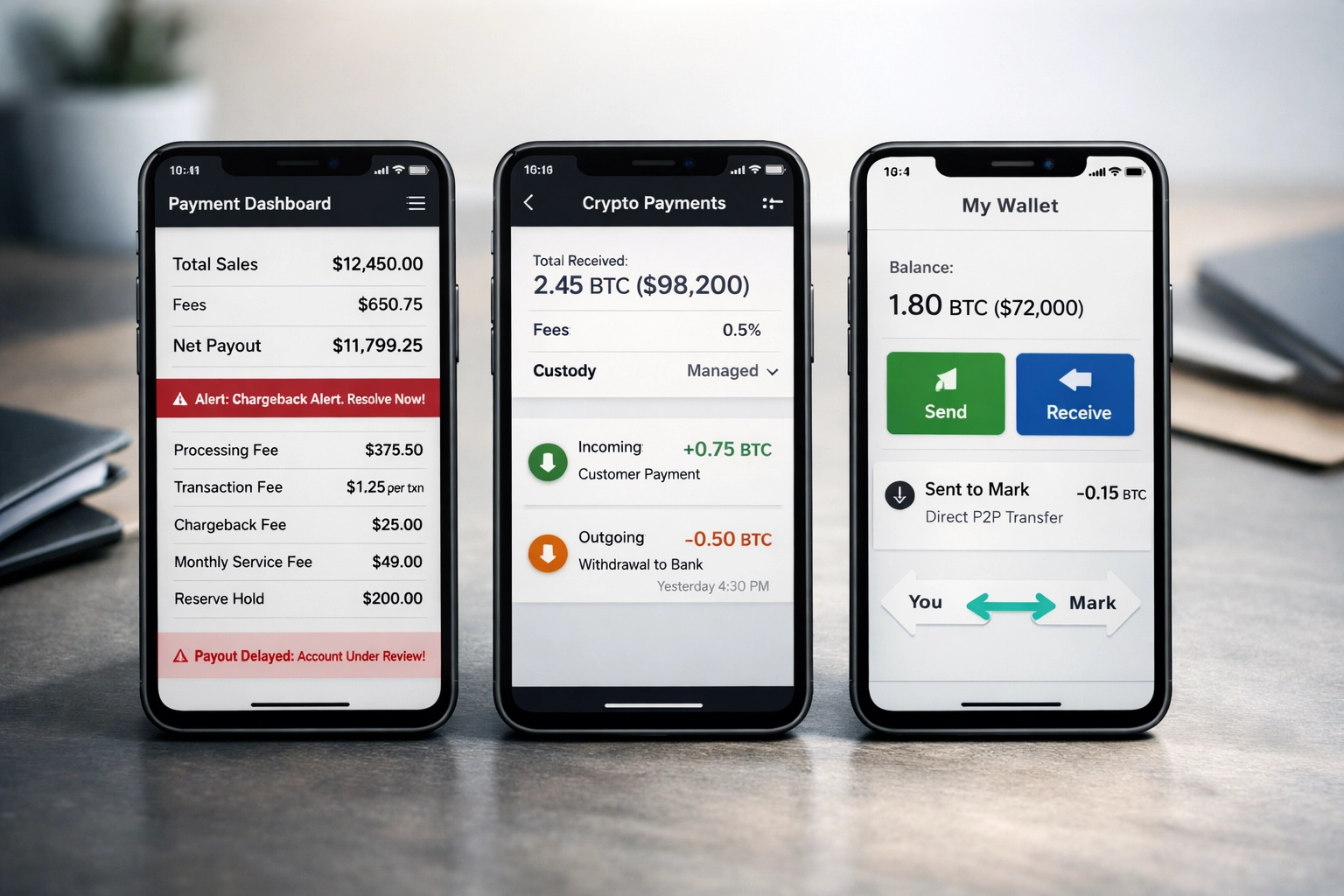
The difference is fundamental. NOWPayments and CoinPayments still operate as intermediaries. They hold your crypto temporarily. They charge percentage fees. They control settlement timing.
Larecoin enables direct peer-to-peer settlement. Customer wallet to merchant wallet. No middleman custody. No percentage extraction.
The LUSD Stablecoin Advantage
Volatility scares merchants away from crypto payments.
Fair concern. Bitcoin fluctuates. Ethereum moves fast. Traditional crypto acceptance creates accounting headaches.
LUSD solves this problem.
What is LUSD?
Decentralized stablecoin pegged to USD
Maintains 1:1 dollar value
No algorithmic instability
Overcollateralized with ETH
Self-custody compatible
Accept LUSD through Larecoin's ecosystem. Get dollar-stable payments with crypto's fee advantages. No conversion needed. No volatility risk. Just stable value directly to your wallet.
Compare that to NOWPayments' auto-conversion fees. Or CoinPayments' settlement delays. LUSD gives you stability AND control.
NFT Receipts: The Loyalty Program Game-Changer
Traditional receipt systems cost money. Email receipts get ignored. Paper receipts waste resources. Digital receipts offer zero customer engagement.
NFT receipts flip the script.
How NFT Receipts Work:
Customer completes purchase via crypto
Receives unique NFT receipt to their wallet
NFT contains purchase data, warranty info, rewards points
Merchant can airdrop exclusive offers to NFT holders
Customers build verifiable purchase history
The Merchant Benefits:
Direct customer wallet connection for remarketing
No email list management costs
Permanent purchase records on blockchain
Loyalty program built into payment infrastructure
Enhanced customer engagement
Neither NOWPayments nor CoinPayments offer native NFT receipt functionality. They process payments. That's it.
Larecoin builds the entire customer relationship infrastructure into the payment layer.

Real Cost Breakdown: Traditional vs. Larecoin Ecosystem
Let's run actual numbers for a mid-sized merchant.
Scenario: $75,000 monthly revenue
Traditional Payment Processors:
Transaction fees (2.9% + $0.30): $26,100/year
Monthly gateway fees: $300/year
Chargeback fees (assume 0.5% dispute rate): $1,350/year
PCI compliance costs: $500/year
Total Annual Cost: $28,250
NOWPayments/CoinPayments:
Transaction fees (0.5-1%): $4,500-$9,000/year
Withdrawal fees: $200-$500/year
Settlement delays (opportunity cost): Variable
Total Annual Cost: $4,700-$9,500
Larecoin Self-Custody:
Gas fees (average $0.50 per transaction): $900/year
Wallet management: $0 (self-custody)
Settlement delays: $0 (instant)
Chargeback costs: $0 (irreversible transactions)
Total Annual Cost: $900
The math is brutal for traditional processors.
Crypto custody platforms improve things. But self-custody through Larecoin's ecosystem delivers maximum savings while maintaining complete control.
Merchant Freedom: The Non-Negotiable Factor
Payment processors hold power over your business.
They freeze accounts. They hold reserves. They demand documentation. They change terms unilaterally.
Traditional Processor Risks:
Account freezes for "high-risk" industries
Rolling reserves (holding 5-10% of revenue)
Sudden fee increases with minimal notice
Compliance audits that halt operations
Chargeback ratio monitoring and penalties
Crypto Custody Platform Risks:
Temporary custody of your funds
Withdrawal limits and delays
KYC requirements that can block access
Platform dependency for settlement
Larecoin Self-Custody Model:
Zero account freeze risk (you control private keys)
Instant access to 100% of funds
No compliance gatekeepers
No withdrawal limits
No platform dependency
This is the independence traditional commerce promised but never delivered.
Implementation Strategy: Hybrid Approach
Not every customer uses crypto yet. Smart merchants run dual systems during transition.
Phase 1: Add Crypto Option
Set up Larecoin payment acceptance
Offer 2-5% discount for crypto payments
Display crypto option prominently at checkout
Keep traditional processor for non-crypto customers
Phase 2: Build Crypto Volume
Launch NFT receipt loyalty program
Market crypto payment benefits to customer base
Use LUSD for customers concerned about volatility
Track percentage of revenue shifting to crypto
Phase 3: Reduce Traditional Dependence
Negotiate lower rates with traditional processor (you have alternatives now)
Shift majority of volume to self-custody crypto
Maintain minimal traditional processing for holdout customers
The goal isn't 100% crypto overnight. The goal is control. Options. Freedom from processor monopolies.
The Bottom Line
Slashing interchange fees by 50% is possible through surcharging or optimization.
Cutting fees by 96-97% requires self-custody crypto payments.
NOWPayments and CoinPayments improve on traditional processors. But they're still intermediaries. Still charging percentage fees. Still controlling your funds temporarily.
Larecoin's ecosystem delivers true merchant independence. Self-custody wallets. Gas-only fees. LUSD stablecoin stability. NFT receipt innovation.
Your business. Your funds. Your control.
Start accepting crypto payments through Larecoin's merchant solutions today. Cut fees. Gain freedom. Keep control.
The payment revolution doesn't need permission. It just needs you to opt in.
Comments