

.png)
How to Slash Merchant Interchange Fees by 50%+ with a Crypto POS System (Easy Guide)
- [[[Free!!]<<<<]] Watch: 스포르팅 - 토트넘 Live Stream 13 September 2022
- 5 hours ago
- 4 min read
![Writer: [[[Free!!]<<<<]] Watch: 스포르팅 - 토트넘 Live Stream 13 September 2022](https://lh3.googleusercontent.com/a/AItbvmktwQc0wCdd3ZEETSYItRQubwwBzOyjD_dcigRf=s96-c)
Interchange fees are eating your profits alive.
Every swipe. Every tap. Every online checkout.
Traditional payment processors take 2-4% domestically. Cross-border? That jumps to 4-6%.
For a business processing $500,000 annually, that's $18,000+ vanishing into the pockets of card networks and middlemen.
There's a better way.
Crypto POS systems are slashing merchant fees below 1%. Some merchants are seeing 50-80% reductions overnight.
This guide shows you exactly how to make the switch.
What Are Interchange Fees (And Why They're Destroying Margins)
Every traditional card transaction involves a chain of middlemen:
Card networks (Visa, Mastercard)
Issuing banks
Acquiring banks
Payment processors
Gateway providers
Each one takes a cut.
Interchange fees alone run 1.5-3.5%. Add network fees and processor markups. Suddenly you're bleeding 3-4% on every domestic transaction.
Cross-border payments? Even worse. Currency conversion fees add another 1-3%.
The math is brutal:
Transaction Type | Traditional Fees | Your Loss on $100 |
Domestic Card | 2-4% | $2-4 |
Cross-Border | 4-6% | $4-6 |
High-Risk Category | 3-5% | $3-5 |
These fees are set by card networks. Non-negotiable. Unavoidable.
Unless you bypass the system entirely.
Enter Crypto POS Systems: The Fee Killer
Blockchain eliminates the middlemen.
No card networks. No correspondent banks. No processing layers.
Direct peer-to-peer transactions between you and your customer.
Here's what happens behind the scenes:
Traditional payment: Customer → Card Network → Issuing Bank → Acquiring Bank → Processor → You
Crypto POS: Customer → Blockchain → You
That's it.
On a $10,000 transfer, traditional fees cost roughly $330. Crypto POS? Approximately $66.
An 80% reduction.
Smart contracts handle compliance checks automatically. Settlement happens in minutes, not 3-5 business days.
No delayed processing fees. No currency exchange premiums. No chargebacks.
Step-by-Step Implementation Guide
Ready to cut your fees in half? Here's the playbook.
Step 1: Set Up Your Self-Custody Merchant Account
Create your account through your chosen crypto POS provider.
Generate wallet addresses for receiving payments. For multi-location businesses, set up master and sub-wallets.
Critical: Choose a self-custody solution. This means YOU control your funds. Not a third party.
More on why this matters below.
Step 2: Integrate With Your Existing Setup
Modern crypto POS systems plug into your current infrastructure:
Contactless NFC payments
QR code scanning
Online checkout widgets
API integrations
No need to rip out your existing hardware.
Step 3: Choose Your Settlement Currency
Options include:
Stablecoins (like LUSD): Zero volatility. Pegged to USD. Best for predictable accounting.
Native tokens: Potential upside if values appreciate.
Multi-crypto acceptance: Maximum flexibility for customers.
LUSD is the smart choice for most merchants. Volatility eliminated. No surprises at month-end.
Step 4: Enable NFT Receipt Generation
This is a game-changer.
Every transaction generates an immutable NFT receipt on the blockchain. Permanent. Tamper-proof. Auditor-friendly.
Tax compliance becomes effortless. Disputes become impossible.
Step 5: Activate Push-to-Card Services (Optional)
Need fiat immediately? Enable instant conversion.
Crypto hits your wallet. Gets converted. Pushed to your bank card in seconds.
Best of both worlds.
Why Larecoin Crushes the Competition
Not all crypto payment processors are equal.
NOWPayments charges 0.5-1% processing fees. No self-custody. Your funds sit in their wallets.
CoinPayments takes a similar cut. Limited stablecoin options. Clunky merchant interface.
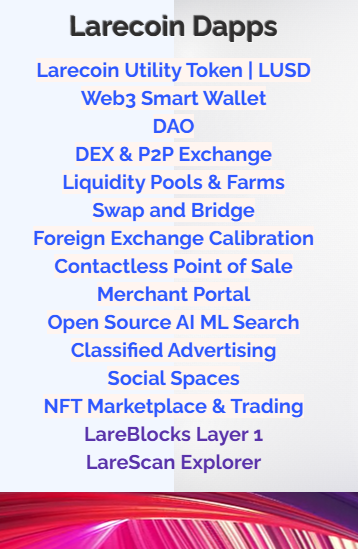
Larecoin does it differently:
Feature | Larecoin | NOWPayments | CoinPayments |
Processing Fees | Below 1% | 0.5-1% | 0.5-1% |
Self-Custody | ✅ Yes | ❌ No | ❌ No |
LUSD Stablecoin | ✅ Native | ❌ Limited | ❌ Limited |
NFT Receipts | ✅ Automatic | ❌ No | ❌ No |
Push-to-Card | ✅ Instant | ⚠️ Delayed | ⚠️ Delayed |
Cross-Border Fees | Zero | Variable | Variable |
Self-custody means financial sovereignty. Your keys. Your crypto. Your control.
LUSD eliminates volatility concerns while bypassing traditional currency exchange fees entirely.
NFT receipts provide immutable transaction records that simplify accounting and make tax season a breeze.
Real-World Savings Breakdown
Let's get specific.
Scenario: E-commerce Business Processing $500,000 Annually
Traditional Processing:
Base rate: 3%
Cross-border premiums: $3,000
Total annual cost: $18,000
Larecoin Crypto POS:
Processing fee: Below 1%
Cross-border premiums: $0
Total annual cost: $4,500
Annual savings: $13,500 (75% reduction)
Scale that up.
At $5 million annual volume, you're saving over $135,000 every year.
That's not a rounding error. That's a new hire. A marketing budget. A competitive advantage.
NFT Receipts: The Accounting Revolution

Traditional receipts get lost. Disputed. Manipulated.
NFT receipts don't.
Here's why they matter:
Immutable: Once recorded on blockchain, they can't be altered
Permanent: No more digging through email threads or filing cabinets
Verifiable: Auditors can independently confirm every transaction
Automated: Generated instantly with zero manual input
Chargebacks become nearly impossible when there's an unalterable record of the transaction.
Tax compliance becomes a one-click export.
Disputes get resolved with cryptographic proof.
This isn't a gimmick. It's a fundamental upgrade to how business records work.
Self-Custody: Why It's Non-Negotiable in Web3
Most crypto payment processors hold your funds.
That's a problem.
When FTX collapsed, merchants using custodial services lost everything. Billions evaporated overnight.
Self-custody means:
You hold the private keys
You control withdrawals
No third party can freeze your funds
No counterparty risk
Larecoin's infrastructure is built on self-custody principles. Your crypto lands in YOUR wallet. Period.
Not our wallet. Not an exchange. Yours.
This is financial sovereignty. This is how Web3 payments should work.
Getting Started Today

The transition is simpler than you think.
Week 1: Set up your Larecoin merchant account. Generate wallet addresses.
Week 2: Integrate the POS system with your existing setup. Test transactions.
Week 3: Go live. Start accepting crypto payments. Watch fees plummet.
Week 4: Enable NFT receipts. Streamline your accounting.
Most merchants are fully operational within 30 days.
No massive infrastructure overhaul. No technical expertise required.
Just lower fees and better records.
The Bottom Line
Traditional interchange fees are a tax on doing business.
Card networks set the rates. Processors add their cut. Merchants pay the bill.
Crypto POS systems break this cycle.
Fees below 1% (50-80% reduction)
Zero cross-border premiums
Instant settlement
Immutable NFT receipts
True self-custody
Larecoin delivers all of this with a merchant-first approach that NOWPayments and CoinPayments can't match.
Your competitors are already making the switch.
The question isn't whether to adopt crypto payments.
It's how fast you can get started.
Comments