

.png)
Larecoin vs CoinPayments: Which Crypto POS System Actually Gives You Self-Custody?
- [[[Free!!]<<<<]] Watch: 스포르팅 - 토트넘 Live Stream 13 September 2022
- 2 hours ago
- 4 min read
![Writer: [[[Free!!]<<<<]] Watch: 스포르팅 - 토트넘 Live Stream 13 September 2022](https://lh3.googleusercontent.com/a/AItbvmktwQc0wCdd3ZEETSYItRQubwwBzOyjD_dcigRf=s96-c)
Here's the uncomfortable truth about most crypto payment processors.
They're just banks wearing a blockchain costume.
You accept crypto. They hold your funds. You wait for them to release your money. Sound familiar? It should. That's exactly how traditional payment processors work.
But wasn't the whole point of cryptocurrency to eliminate intermediaries?
Let's break down what's really happening when you choose between Larecoin and CoinPayments. Spoiler: only one actually gives you self-custody.
What Self-Custody Actually Means for Merchants
Self-custody isn't just a buzzword. It's a fundamental difference in how your business operates.
Self-custody = your keys, your coins, your control.
When a customer pays you, funds hit YOUR wallet. Immediately. No waiting. No approval process. No third party deciding when you can access your own revenue.
Custodial = someone else holds your money.
They process. They verify. They release. On their timeline. According to their rules.
For merchants serious about financial sovereignty, this distinction changes everything.
The CoinPayments Model: Custodial by Design
CoinPayments has been around since 2013. They support 100+ cryptocurrencies. Solid track record.
But here's what they don't advertise in big letters:
They hold your funds.
When your customer pays in crypto through CoinPayments:
Funds go to CoinPayments first
CoinPayments verifies the transaction
CoinPayments processes the payment
CoinPayments releases funds to you
That release timeline? Minutes to hours. Sometimes longer depending on network conditions and their internal processing.
You're trusting them with your revenue. You're dependent on their systems staying online. You're relying on their compliance policies not flagging your legitimate business.
The fee structure:
0.5% to 1% processing fees on every transaction
Additional withdrawal fees
Conversion fees if you want fiat
These percentages add up fast. A business processing $50,000/month in crypto payments loses $250-$500 monthly. Just in processing fees.
That's $3,000-$6,000 annually going to an intermediary.
The Larecoin Model: True Self-Custody
Larecoin built something different from the ground up.
No intermediary. Period.
When a customer pays through Larecoin's crypto POS system:
Funds go directly to YOUR wallet
Transaction confirms on the blockchain
Done
You're not waiting for anyone's approval. You're not trusting a third party with your revenue. You maintain complete control over your merchant funds from second one.
This is what crypto was supposed to be.
The fee structure:
Gas-only fees (network transaction costs)
No percentage-based processing fees
No intermediary markup
You pay what the blockchain charges. Nothing more.

Head-to-Head: The Real Differences
Let's get specific.
Feature | Larecoin | CoinPayments |
Custody Model | Self-custody | Custodial |
Fund Access | Immediate | Minutes to hours |
Processing Fees | Gas-only | 0.5-1% |
Intermediary | None | Yes |
Your Keys | Yes | No |
Financial Control | Complete | Dependent |
The pattern is clear.
CoinPayments recreates traditional payment processing with crypto characteristics. Larecoin delivers what cryptocurrency actually promised.
Why This Matters for Small Business Owners
Running a small business means every percentage point counts.
Traditional card processing already eats 2-3% of every transaction. Interchange fees. Assessment fees. Processing fees. The death by a thousand cuts.
Moving to crypto should reduce those costs. Not replace one intermediary with another.
With Larecoin's self-custody merchant accounts:
Cut processing fees by 50%+ compared to card networks
Eliminate intermediary dependencies
Access revenue instantly
Maintain complete financial autonomy
For a coffee shop doing $10,000/month in crypto-friendly customers, that's the difference between $50-100 in gas fees versus $100-150+ in CoinPayments fees.
Scale that to $100,000/month and you're looking at $500-1,500 in annual savings.
Real money. Back in your pocket.
The LUSD Advantage: Stability Without Sacrifice
Volatility concerns? Addressed.
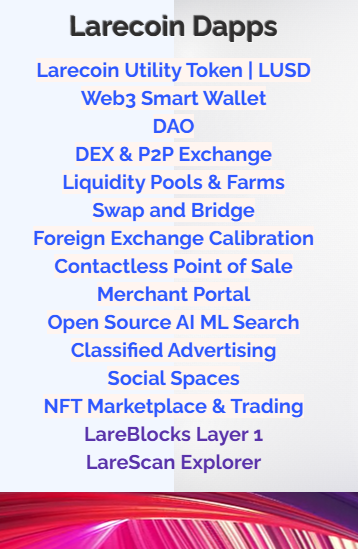
Larecoin's LUSD stablecoin gives merchants the best of both worlds:
Accept crypto payments
Hold value in a stable asset
Maintain self-custody throughout
No need to immediately convert to fiat through a centralized exchange. No exposure to wild price swings. Just stable value, held in your own wallet.
CoinPayments offers stablecoin support too. But remember: they're still holding those funds. Their custody, their rules.
NFT Receipts: Accounting That Actually Works
Here's something CoinPayments doesn't offer: NFT receipts.
Every Larecoin transaction generates an immutable receipt on-chain. This means:
Permanent transaction records
Tamper-proof documentation
Simplified accounting and reconciliation
Audit-ready proof of every payment
Traditional payment processors give you spreadsheets. Larecoin gives you blockchain-verified receipts that exist forever.
For merchants dealing with tax compliance, inventory tracking, or simply wanting clean books: NFT receipts for accounting are a game-changer.
Bank-Free Business Operations
Let's talk about the bigger picture.
Self-custody isn't just about saving on fees. It's about operating your business without banking dependencies.
Banks freeze accounts. Banks require extensive documentation. Banks close merchant accounts for industries they don't like.
With true self-custody:
No bank approval needed
No account freezes
No arbitrary policy changes affecting your revenue
Global reach without correspondent banking limitations
Larecoin enables Web3 global payments that work the same whether you're in Miami or Manila.
CoinPayments still requires you to trust their platform policies. They can suspend accounts. They can delay withdrawals. They're still a centralized point of failure.
The Bottom Line: Which Crypto POS System Deserves Your Business?
CoinPayments is a legitimate platform. They've processed billions in transactions. They work.
But they're not self-custody.
If you want a crypto payment processor that operates like a traditional payment gateway with crypto features: CoinPayments does that job.
If you want actual financial sovereignty:
True self-custody
Gas-only fees
Immediate fund access
NFT receipts
LUSD stability
Zero intermediary dependency
Larecoin is the clear choice.
The question isn't which platform processes payments faster or supports more coins. The question is: do you want to own your revenue or let someone else hold it?
For merchants tired of intermediaries taking cuts and controlling timelines, Larecoin represents what crypto payment processing should have been from day one.
Your business. Your customers. Your money. Your wallet.
That's self-custody. That's Larecoin.
Ready to take control of your merchant payments? Explore Larecoin's ecosystem and see what true financial sovereignty looks like for your business.
Comments