

.png)
Metaverse Shopping 101: Your Quick-Start Guide to Accepting Crypto Payments in VR/AR Stores (Before Your Competitors Do)
![Writer: [[[Free!!]<<<<]] Watch: 스포르팅 - 토트넘 Live Stream 13 September 2022](https://lh3.googleusercontent.com/a/AItbvmktwQc0wCdd3ZEETSYItRQubwwBzOyjD_dcigRf=s96-c)
Why 2026 Is Your Last Window
47% of Gen Z shoppers prefer VR shopping over traditional websites.
Your competitors are already testing virtual storefronts. The merchants who lock in crypto payment infrastructure now will own market share when metaverse commerce scales across platforms.
Traditional payment processors can't handle immersive commerce. You need blockchain-native infrastructure built specifically for VR/AR transactions.
This guide shows you how to implement it in under 30 days.
Why NOWPayments, CoinPayments, and Triple-A Can't Handle Metaverse Commerce
Legacy crypto processors were designed for 2D web checkouts. They fail in three critical areas:
Custody Risk NOWPayments and CoinPayments hold your funds in pooled wallets. You don't control your keys. Withdrawal delays range from 24-72 hours. Triple-A requires KYC verification before you can access your own revenue.
Fee Structure Standard processors charge 0.5-1% transaction fees on top of blockchain gas costs. At scale, this wipes out 50%+ of your fee savings versus traditional payment rails.
Single-Location Architecture These platforms weren't built for multi-channel operations. Managing physical stores, e-commerce sites, mobile apps, and virtual showrooms requires separate integrations with no unified dashboard.
No NFT Receipts Legacy processors can't mint on-chain proof-of-purchase. You're stuck with off-chain records that don't integrate with Web3 wallets or metaverse inventories.
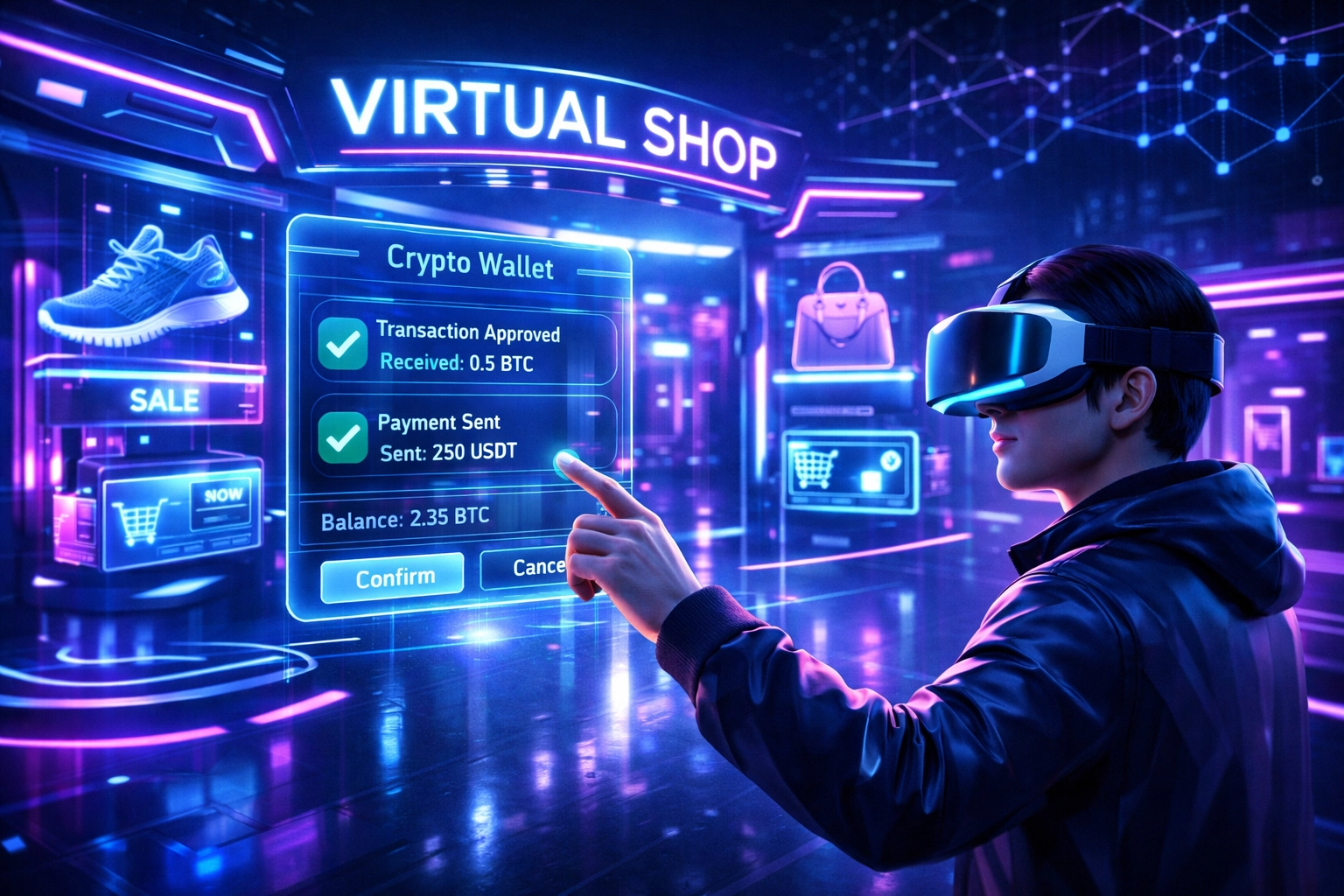
The Technical Stack You Actually Need
Self-Custody Wallets
Your merchant account connects directly to wallets you control. No intermediaries. No withdrawal windows. No custody risk.
You maintain 100% control of revenue at all times.
This eliminates the single biggest vulnerability in crypto payments: trusting a third party with your working capital.
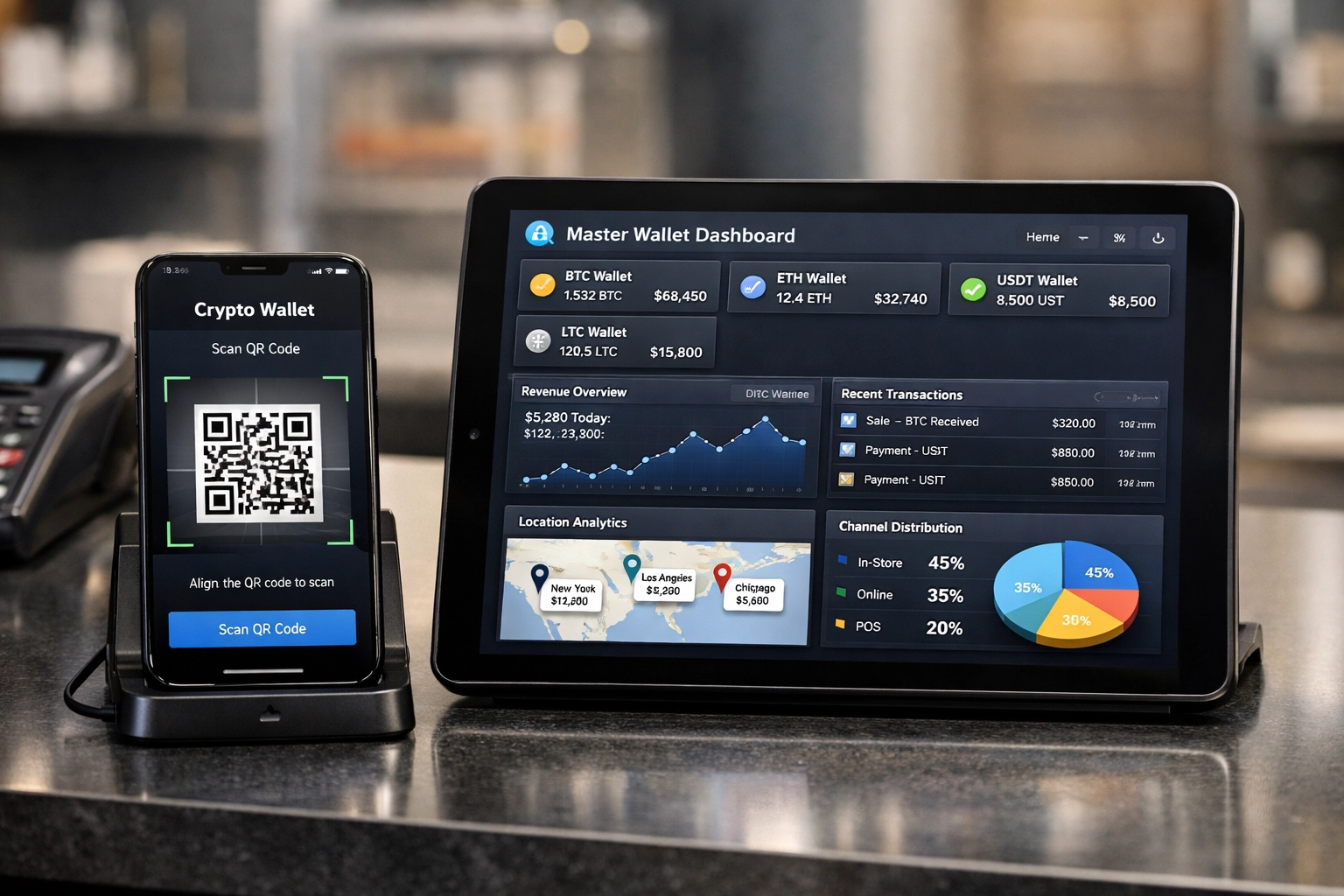
Master/Sub-Wallet Architecture
One dashboard. Multiple channels. Real-time consolidation.
Create sub-wallets for each location:
Physical storefront in Manhattan
E-commerce checkout on your website
Mobile app for delivery orders
Virtual showroom in the metaverse
All funds flow to your master wallet instantly. Revenue reporting breaks down by channel, product category, time period, and geographic location.
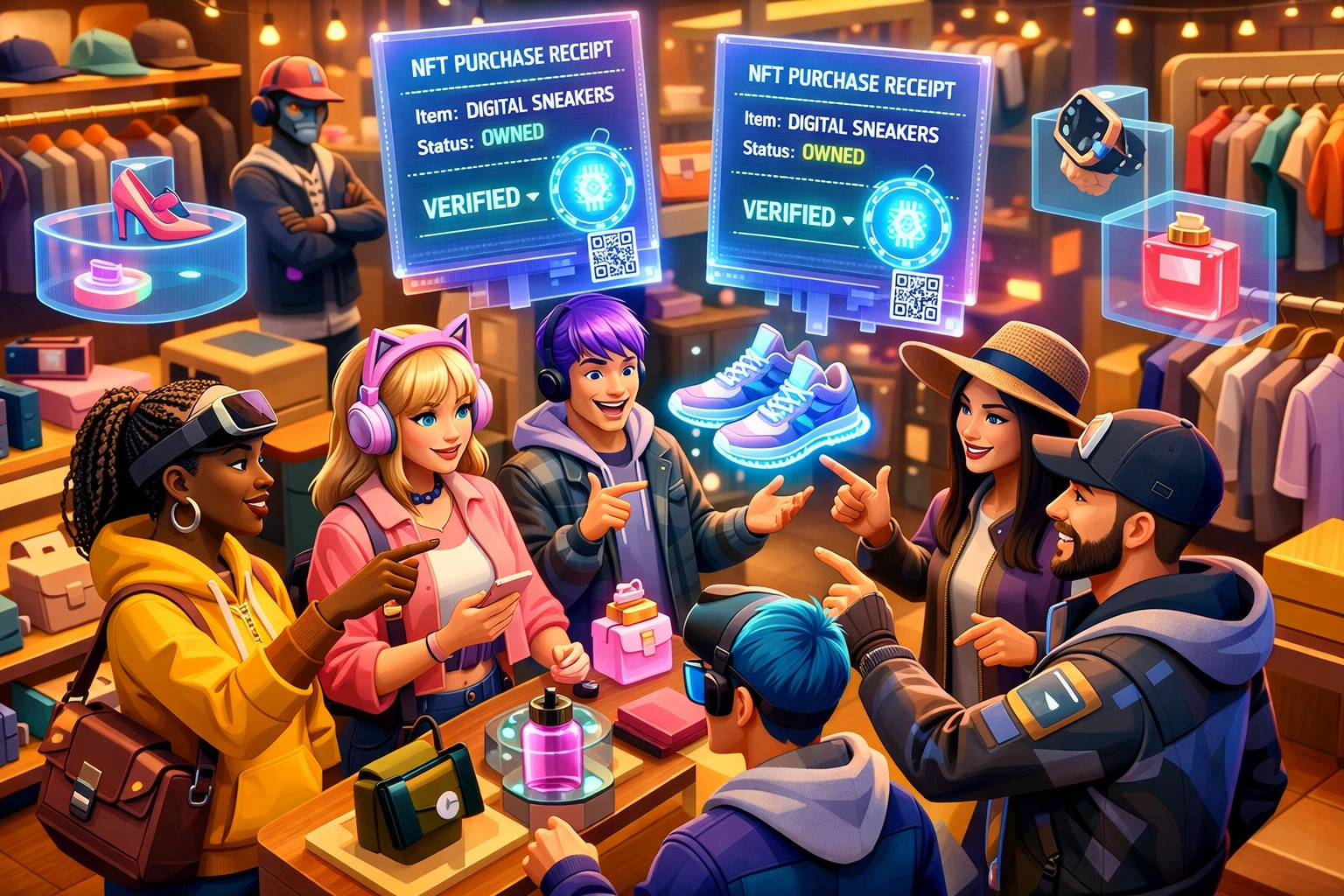
NFT Receipts as Proof-of-Purchase
Every transaction mints an on-chain receipt. Customers get cryptographic proof they can store in Web3 wallets. You get immutable records for accounting and tax documentation.
No paper trails. No third-party storage. No reconciliation headaches during audit season.
Premium products can include additional metadata: authenticity certificates, warranty terms, or exclusive access tokens for future drops.
LUSD Stablecoin Integration
Crypto volatility kills conversion rates. Customers hesitate when prices fluctuate mid-checkout.
LUSD stablecoin conversion happens instantly at point-of-sale. Customers pay in their preferred crypto. You receive stable value pegged 1:1 to USD.
Zero price risk. Zero conversion delays. Zero manual reconciliation.
Gas-Only Transfers
Traditional crypto payments charge percentage-based fees. At high transaction volumes, this erodes margins.
Gas-only transfers charge flat network fees regardless of transaction size. A $50 purchase and a $5,000 purchase pay the same processing cost.
This reduces interchange fees by >50% compared to credit card rails: and eliminates the percentage-based fees from legacy crypto processors.
QR-Generated Crypto POS
No expensive hardware. No monthly subscriptions. No vendor lock-in.
Generate a QR code. Customers scan with Web3 wallets. Transaction confirms instantly.
Works inside VR headsets, AR glasses, tablets, and smartphones. Deploy at physical registers, digital kiosks, or virtual storefronts with identical infrastructure.
Your 90-Day Implementation Roadmap
Weeks 1-2: Foundation Setup
Set up your merchant account and configure master wallet. Generate QR codes for existing checkout points. Train staff on wallet basics and transaction confirmation. Run test transactions with small amounts to verify flow.
Deploy at one location first. Validate the entire process before scaling.
Weeks 3-4: NFT Receipt Activation
Enable automatic receipt minting for all transactions. Configure metadata fields: product names, dates, amounts, SKU numbers. Test wallet compatibility across MetaMask, Phantom, and mobile Web3 wallets. Build customer FAQ documentation and troubleshooting guides.
Month 2: Basic 3D Product Visualization
Upload your top 10-20 products as 3D models. Create simple rotate-and-zoom interfaces. Embed crypto POS directly in the 3D environment. Gather customer feedback through post-purchase surveys.
Start with bestsellers and high-margin items. Prove ROI before expanding catalog.
Month 3: Virtual Storefront Pilot
Build a basic avatar shopping space. Invite existing customers to beta test. Monitor conversion rates versus traditional 2D checkout. Refine UX based on session recordings and heatmaps.
Target early adopters first. Let them evangelize to broader customer base.
Month 4+: Social Shopping Features
Enable multi-user browsing rooms where friends shop together. Implement voice chat during shopping sessions. Deploy AI product recommendations based on avatar behavior. Launch digital-only merchandise with 95%+ profit margins.
The B2B2C Metaverse Advantage
Traditional e-commerce isolates shoppers. You browse alone. You checkout alone. You wait alone for delivery.
Larecoin's B2B2C metaverse architecture flips this model.
Social Shopping by Default Customers invite friends into shared virtual spaces. They try on products together. They ask opinions in real-time. They complete group purchases with split payments.
This replicates the social dynamics that drive in-store conversion rates: but in immersive digital environments accessible from anywhere.
Cross-Platform Inventory Purchase a physical product and receive an NFT twin you can display in metaverse spaces. Buy a virtual item and redeem it for physical delivery.
Your inventory exists simultaneously in physical stores, e-commerce sites, and virtual showrooms. One POS system manages all channels.
Frictionless Discovery Customers browse virtual storefronts while commuting, watching TV, or waiting in line. They add items to cart. They complete checkout later through any channel.
The metaverse becomes your always-open discovery layer feeding purchases across all touchpoints.
Federal MSB Registration & State MTL Coverage
Crypto payments require compliance infrastructure most merchants don't understand.
Larecoin holds Federal MSB (Money Services Business) registration and maintains MTL (Money Transmitter License) coverage across U.S. states.
This matters for three reasons:
Legal Risk Protection Operating without proper licensing exposes you to federal enforcement and state penalties. Our compliance infrastructure covers your operations by default.
Bank Account Stability Banks close merchant accounts when they detect unlicensed crypto activity. MSB registration and MTL coverage demonstrate legitimate operations that banks accept.
Customer Trust Displaying compliance credentials at checkout increases conversion rates. Customers see you're operating within regulated frameworks.
Verify our credentials before committing to any crypto payment provider.

Your Quick-Start Checklist
Today Set up merchant account and configure master wallet (15 minutes). Create sub-wallets for each location/channel (10 minutes). Generate first crypto POS QR codes (5 minutes).
This Week Enable LUSD stablecoin conversion for price stability. Activate NFT receipt generation for premium products. Train staff on basic wallet operations and customer support.
This Month Integrate with VR/AR environment via API. Upload 3D product models for top sellers. Launch pilot program with early adopter customers.
Basic implementation takes under one hour. Full virtual storefront deployment completes in 60-90 days.
The Cost of Waiting
Every month you delay gives competitors first-mover advantage in your niche.
Early metaverse merchants will establish brand recognition before the market saturates. They'll capture customer wallet addresses. They'll build NFT receipt collections that function as loyalty programs.
Late entrants will compete on price in a race to the bottom.
The infrastructure exists today. The customer demand is proven. The compliance framework is operational.
Get started with Larecoin before your competitors claim your market position.
Next Steps
Deploy one QR code at one register this week. Process one crypto transaction. Measure the cost versus credit card interchange.
That's your proof of concept.
Scale from there.
The merchants who move now will own metaverse commerce in your vertical. The ones who wait will become footnotes.

This is an interesting perspective on how immersive commerce and blockchain infrastructure are evolving together. As more industries adopt VR and crypto payments, having scalable, flexible systems in place will definitely matter. Even service-based sectors like an online exam taking service or other digital platforms can learn from this shift by thinking ahead about secure payments, user experience, and multi-channel integration. Early adoption of adaptable technology often creates long-term competitive advantage, especially in fast-moving digital markets.