

.png)
Receivables Token vs Traditional Payment Processing: Which Is Better for Your Merchant Freedom?
- [[[Free!!]<<<<]] Watch: 스포르팅 - 토트넘 Live Stream 13 September 2022
- 2 hours ago
- 5 min read
![Writer: [[[Free!!]<<<<]] Watch: 스포르팅 - 토트넘 Live Stream 13 September 2022](https://lh3.googleusercontent.com/a/AItbvmktwQc0wCdd3ZEETSYItRQubwwBzOyjD_dcigRf=s96-c)
Your Bank Doesn't Want You Reading This
Traditional payment processors are bleeding your business dry.
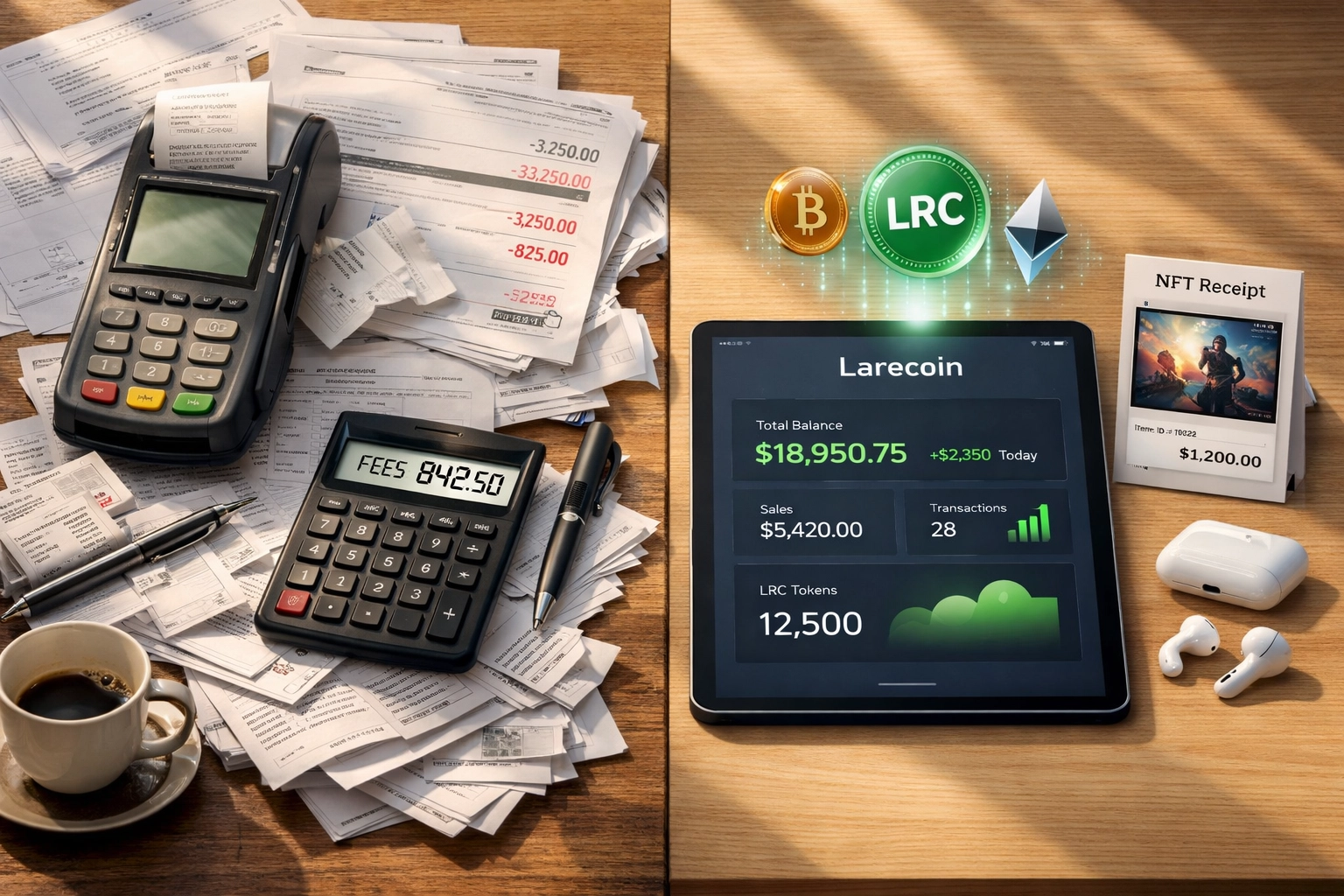
2-3% per transaction adds up fast. If you're doing $1 million in annual sales, you're paying $20,000-$30,000 just to access your own money. Then wait 30-90 days for settlement. Then deal with chargebacks. Then lose control of your funds to intermediaries.
Receivables tokens flip this model entirely.
Zero debt. Immediate liquidity. Self-custody. 50%+ lower fees.
Let's break down exactly why receivables tokens destroy traditional payment processing for merchant freedom.
What Receivables Tokens Actually Do
Think of receivables tokens as tokenized invoices on blockchain.
Customer owes you $10,000? Tokenize that receivable. Sell it to investors instantly. Get capital in hours, not months.
No bank approval. No credit checks. No loan applications.

Here's the process:
Issue invoice to customer
Tokenize the receivable on blockchain
Investors purchase the token at a discount
You receive immediate working capital
Customer pays invoice as normal
Token holders receive repayment
The difference? You just converted 30-90 days of waiting into instant liquidity.
Traditional factoring companies charge 3-5% for this service. Receivables tokens cut that in half through direct investor relationships and blockchain efficiency.
The Traditional Payment Processing Trap
Traditional processors control your money flow completely.
The reality:
2-3% interchange fees per transaction
48-72 hour settlement delays minimum
Account freezes without warning
Chargeback penalties and reserves
Geographic restrictions
Banking relationship requirements
KYC/AML compliance complexity
Platforms like NOWPayments and CoinPayments claim to solve this with crypto. They don't.
NOWPayments still charges 0.5% per transaction plus withdrawal fees. They hold your funds in custodial wallets. You're trading one intermediary for another.
CoinPayments takes 0.5% on every transaction. Plus withdrawal fees. Plus conversion spreads. Your "low fees" quickly match traditional processors.
Neither offers true self-custody. Neither provides receivables tokenization. Neither delivers actual merchant freedom.
Head-to-Head: Receivables Tokens vs Traditional Processing
Factor | Receivables Tokens (Larecoin) | Traditional Processors | NOWPayments | CoinPayments |
Processing Fees | 50%+ reduction | 2-3% | 0.5% + withdrawal | 0.5% + spreads |
Capital Access | Hours | 30-90 days | 2-3 days | 2-3 days |
Self-Custody | Full control | Zero | Custodial only | Custodial only |
Balance Sheet Impact | No debt added | Loans = liabilities | N/A | N/A |
NFT Receipts | Immutable audit trail | Manual reconciliation | Basic records | Basic records |
LUSD Stablecoin | Gas-only transfers | High conversion fees | Multiple coins | Multiple coins |
The numbers speak clearly.

Why Larecoin's Receivables Token Model Wins
Larecoin built the receivables token specifically for merchant freedom.
Three core advantages:
1. True Self-Custody Architecture
Your keys. Your coins. Your control.
Larecoin's receivables token operates on a non-custodial framework. You hold the private keys to your wallet. No intermediary can freeze your funds. No bank can close your account.
Compare this to NOWPayments and CoinPayments. Both require you to trust their custodial wallets. They hold your crypto. They control withdrawals. You're still dependent on centralized gatekeepers.
Financial sovereignty requires eliminating intermediaries completely.
2. LUSD Stablecoin Integration
Volatility kills merchant adoption.
Larecoin's LUSD stablecoin solves this with algorithmic stability mechanisms. Accept payments in LUSD. Tokenize receivables in LUSD. Settle with investors in LUSD.
Gas-only transfers mean you pay network fees: nothing more. No conversion spreads. No hidden charges. No percentage-based extraction.
Traditional processors charge 2-3% on every transaction. That's $20,000-$30,000 on $1 million in sales.
LUSD reduces this to gas fees. On Solana, that's pennies per transaction.
Do the math. 50%+ fee reduction is conservative.
3. NFT Receipt Utility
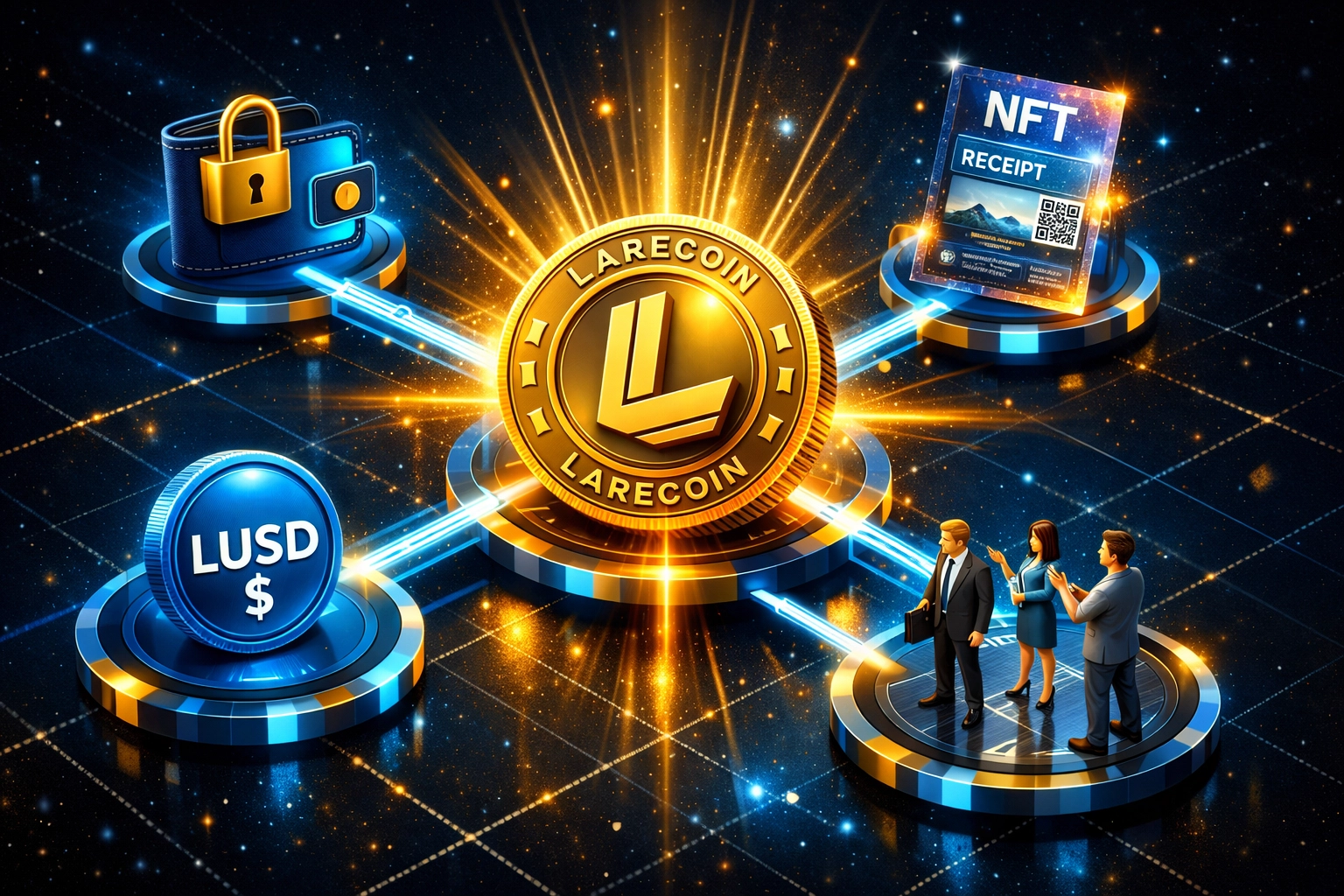
Every transaction generates an immutable NFT receipt on blockchain.
Why this matters:
Permanent audit trail for accounting
Zero dispute resolution costs
Automated tax documentation
Cross-border compliance simplification
Customer purchase history tokenization
NOWPayments and CoinPayments offer basic transaction records. They're not blockchain-native. They're not immutable. They're not composable with DeFi infrastructure.
Larecoin's NFT receipts integrate directly with accounting software, tax platforms, and financial reporting systems.
One transaction. One NFT. Permanent proof of commerce.
Real Financial Sovereignty Metrics
Let's quantify merchant freedom with actual numbers.
Scenario: $1 million annual revenue merchant
Traditional Processing:
Interchange fees: $25,000 annually
Settlement delays: 45 days average
Chargeback losses: 1.5% ($15,000)
Total cost: $40,000+ annually
Capital access: Zero without loans
Larecoin Receivables Token:
Transaction fees: $10,000 annually (50%+ reduction)
Settlement: Same-day via tokenization
Chargeback protection: Smart contract escrow
Total cost: $12,000 annually
Capital access: Immediate on all receivables
Net benefit: $28,000 saved + instant liquidity
That's $28,000 you reinvest in growth instead of paying banks.
Plus immediate working capital without debt. Tokenize $100,000 in receivables today. Deploy capital tomorrow. No loan application. No personal guarantee. No balance sheet liability.
Traditional factoring charges 3-5% for similar service. Receivables tokens cut this in half through blockchain efficiency.
The Global Reach Advantage
Geographic restrictions don't exist on blockchain.
Traditional processors require banking relationships in every country you operate. Different regulations. Different compliance requirements. Different settlement timelines.
Receivables tokens operate identically everywhere. Same process in Tokyo and Toronto. Same fees in Berlin and Buenos Aires.
NOWPayments and CoinPayments support multiple countries. But they're still subject to local regulations and banking partnerships. Your account can be restricted based on jurisdiction.
Larecoin's receivables token is permissionless. No geographic gatekeeping. No country-specific restrictions. Pure peer-to-peer capital markets.
How to Transition from Traditional Processing
Moving to receivables tokens is simpler than switching banks.
Five-step process:
Step 1: Set Up Self-Custody Wallet Install Larecoin-compatible wallet. Secure your private keys. You're now your own bank.
Step 2: Integrate Payment Gateway Add Larecoin payment button to checkout. Accept LUSD stablecoin payments. Generate NFT receipts automatically.
Step 3: Tokenize Existing Receivables Convert outstanding invoices to receivables tokens. List on Larecoin marketplace. Access immediate liquidity.
Step 4: Configure Investor Relationships Set discount rates for receivables tokens. Connect with capital providers directly. Eliminate factoring middlemen.
Step 5: Monitor Cash Flow Improvement Track days to capital access. Measure fee reduction. Calculate balance sheet impact.
Most merchants see improved cash flow within 30 days.
The Competitive Landscape Reality
NOWPayments and CoinPayments aren't bad. They're just incomplete.
They solve crypto payment acceptance. They don't solve merchant freedom.
You still pay fees to intermediaries. You still wait for settlements. You still lack true self-custody. You still can't tokenize receivables.
Larecoin built the full stack for financial sovereignty:
Self-custody wallet architecture
LUSD stablecoin with gas-only transfers
Receivables tokenization infrastructure
NFT receipt generation
Direct investor marketplace
50%+ fee reduction
This is the difference between crypto payments and Web3 financial freedom.

Merchant Freedom Is Financial Sovereignty
Receivables tokens don't replace traditional payment processing entirely.
They eliminate dependence on it.
You still need payment processing for customer transactions. But you no longer wait months for settlement. You no longer pay 2-3% to access your own money. You no longer accumulate debt for working capital.
Tokenize receivables. Access instant liquidity. Keep full custody. Cut fees in half.
That's merchant freedom.
Traditional processors had their century. Receivables tokens own the next decade.
Ready to slash your interchange fees by 50%+?
Start tokenizing receivables with Larecoin today. Full self-custody. NFT receipts. LUSD stablecoin. Zero debt financing.
Your business. Your capital. Your control.
Explore Larecoin's receivables token ecosystem and join the merchant freedom movement.
Comments