

.png)
Self-Custody Merchant Accounts Explained in Under 3 Minutes (Why You Need One Now)
- [[[Free!!]<<<<]] Watch: 스포르팅 - 토트넘 Live Stream 13 September 2022
- 2 hours ago
- 4 min read
![Writer: [[[Free!!]<<<<]] Watch: 스포르팅 - 토트넘 Live Stream 13 September 2022](https://lh3.googleusercontent.com/a/AItbvmktwQc0wCdd3ZEETSYItRQubwwBzOyjD_dcigRf=s96-c)
Your payment processor controls your money.
Not anymore.
Self-custody merchant accounts flip the script. You accept crypto payments directly into YOUR wallet. No middleman. No delays. No permission needed.
Let's break down what this actually means for your business.
What Is Self-Custody (And Why Should You Care)?
Self-custody = you hold the private keys to your crypto wallet.
When a customer pays you, the funds transfer directly from their wallet to yours on-chain. You receive payment instantly. You control access. Nobody can freeze your account or hold your funds hostage.
Traditional processors like NOWPayments and CoinPayments? They hold your crypto in THEIR wallets. You're trusting them with your money. They batch settlements. They enforce withdrawal delays. They charge conversion fees.
With self-custody, the transaction happens peer-to-peer. Customer pays → blockchain confirms → money's in your wallet. Done.

The Three-Minute Breakdown
Minute One: How It Works
Customer scans your payment QR code or clicks your payment link. Their wallet sends crypto to your wallet address. The blockchain processes the transaction (usually under 30 seconds). Funds appear in your wallet with full ownership.
No intermediary clearing house. No settlement period. No conversion to fiat unless YOU choose to convert.
Minute Two: What You Actually Get
Instant settlement. Lower fees (gas only, typically $0.10-$2.00 per transaction). Complete financial sovereignty. Transaction privacy. Multi-chain flexibility. Immunity from account freezes.
Plus with Larecoin's ecosystem: NFT receipts for every transaction. LUSD stablecoin option for price stability. Smart contract automation. Decentralized merchant portal.
Minute Three: The Setup Reality
Traditional processors: 3-7 day approval process. Credit checks. Business verification. Revenue projections. Risk assessments. Account reviews.
Self-custody setup: 15 minutes max. Create wallet. Generate payment addresses. Start accepting crypto. That's it.

Self-Custody vs NOWPayments vs CoinPayments: The Real Numbers
Let's compare $50,000 in monthly crypto revenue:
NOWPayments (Custodial Model)
Transaction fee: 0.5% = $250/month
Withdrawal fee: Network fees + processing
Settlement time: 1-3 business days
Your control: Zero until they release funds
Account risk: They can freeze anytime
CoinPayments (Semi-Custodial)
Transaction fee: 0.5% = $250/month
Auto-conversion fees: Additional 0.5% if used
Settlement: Immediate to CoinPayments wallet, then withdraw
Your control: Limited to withdrawal schedules
Account risk: Terms of service violations = frozen funds
Larecoin Self-Custody
Transaction fee: Gas only = ~$50-100/month (depending on chain)
Withdrawal fee: None (already in your wallet)
Settlement time: 30 seconds to 5 minutes
Your control: 100% immediate ownership
Account risk: Zero (you're the only account holder)
Annual savings switching from NOWPayments to self-custody: $3,000+
And that's just fees. Calculate settlement delays, conversion costs, and opportunity costs from frozen capital? The gap widens fast.
Why Merchants Are Making The Switch Right Now
Freedom from arbitrary account reviews.
CoinPayments and NOWPayments reserve the right to freeze accounts for "suspicious activity." What's suspicious? Whatever they decide. High volume? Frozen. International customers? Frozen. Industry they don't like? Frozen.
Self-custody eliminates this risk entirely.
No more settlement anxiety.
Traditional processors batch settlements. Your Tuesday sales might not hit your account until Friday. With self-custody, Tuesday sales are in your wallet Tuesday.
That's working capital you control immediately.

Protection from platform policy changes.
Payment processors change terms constantly. Fee increases. New restrictions. Geographic limitations. When you're custodial, you comply or lose access.
When you're self-custody, platform policy changes are irrelevant. Your wallet. Your rules.
The Larecoin Self-Custody Advantage
Standard self-custody is powerful. Larecoin's implementation is revolutionary.
NFT Receipt System
Every transaction generates an NFT receipt. Immutable proof of purchase. Built-in transaction history. Customer loyalty tracking. Resale value for customers.
No processor offers this. Period.
LUSD Stablecoin Integration
Accept payments in volatile crypto but settle in LUSD stablecoin automatically. Price stability without converting to fiat. Stay in the crypto ecosystem while eliminating volatility risk.
Multi-Location Management
Running multiple stores? Create sub-wallets for each location. Maintain master-level oversight. Consolidated reporting across all addresses. All self-custodied. All under your control.
CoinPayments charges extra for multi-location. NOWPayments requires separate accounts. Larecoin? Built-in feature.
Gas-Only Economics
With Larecoin's optimized smart contracts, transaction costs drop to blockchain gas fees only. No percentage cuts. No hidden charges. No monthly minimums.
For high-volume merchants, this difference is business-changing.
The Security Question Everyone Asks
"If I control the keys, what happens if I lose them?"
Valid concern. Here's the reality:
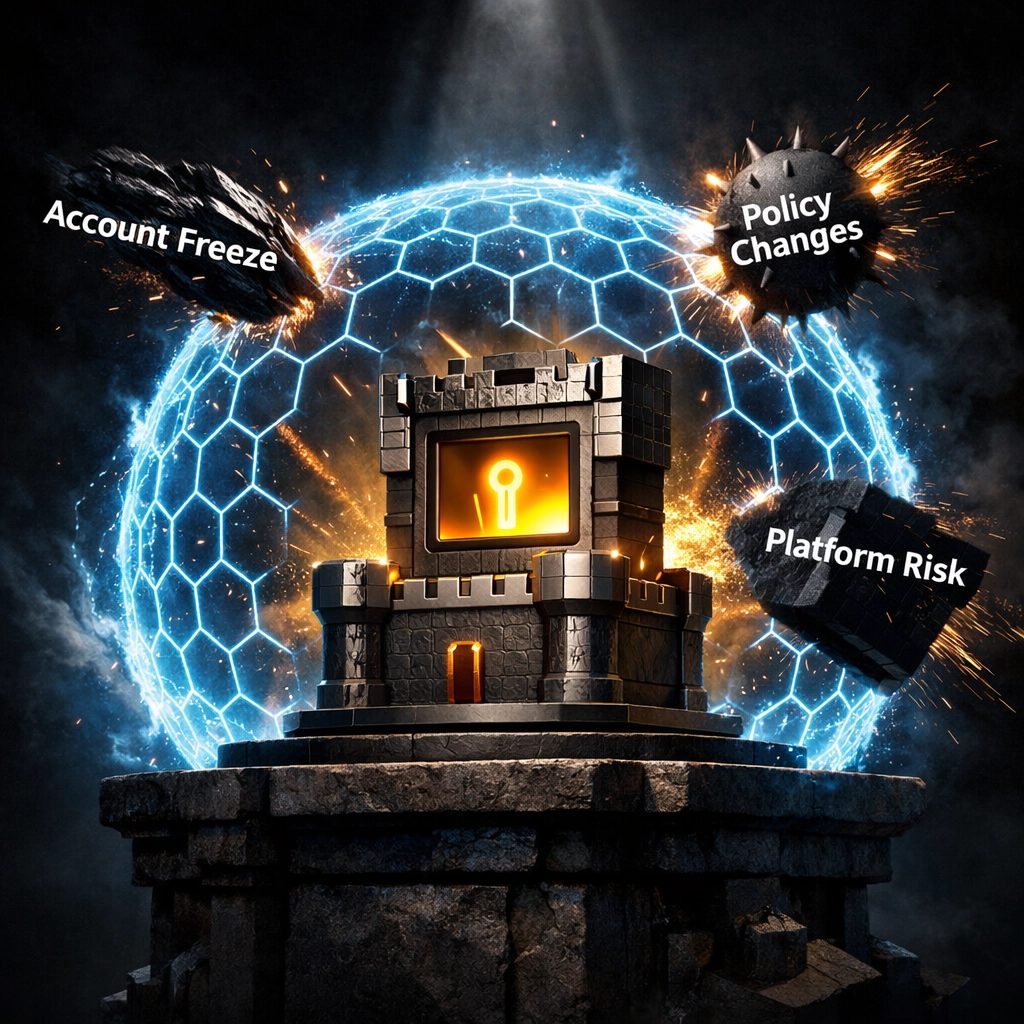
With custodial processors, you're trusting THEIR security. They get hacked, you lose funds. They go bankrupt, you're an unsecured creditor. They freeze your account, you have zero recourse.
With self-custody, you implement YOUR security protocols:
Hardware wallets for hot wallet operations. Multi-signature requirements for large transfers. Secure backup procedures. Succession planning for key management.
Yes, you're responsible. But you're also protected from platform risk, regulatory seizure, and arbitrary account actions.
Trade platform risk for personal security responsibility? Most merchants choose personal control every time.
Who Benefits Most From Self-Custody
High-volume merchants losing 3-5 figures annually to processor fees.
International businesses facing cross-border fees and currency conversion costs.
High-risk industries denied access to traditional payment processing.
Privacy-focused operations avoiding surveillance and data collection.
Web3-native businesses building entirely decentralized commerce stacks.
Merchants tired of permission-based finance who want true financial autonomy.
If you're accepting crypto through NOWPayments or CoinPayments, you're paying for custody you don't need. The blockchain already handles settlement. Why insert a middleman?
Getting Started: The 15-Minute Setup
Create a Larecoin-compatible wallet. Generate your merchant payment addresses. Configure your preferred settlement tokens (LARE, LUSD, or other supported assets). Add payment buttons to your checkout.
Start accepting payments.
No approval needed. No waiting period. No paperwork.
That's the power of self-custody.
The Bottom Line
Traditional crypto processors recreate the problems of traditional finance: intermediaries, delays, fees, and control.
Self-custody delivers what crypto promised: direct peer-to-peer value transfer, instant settlement, minimal fees, and complete autonomy.
With Larecoin's ecosystem, you get self-custody PLUS NFT receipts, stablecoin options, multi-location management, and gas-only economics.
Stop asking permission to access your own money.
Your customers pay. Your wallet receives. You control everything.
That's how merchant accounts should work.
Ready to switch to true financial independence? Explore Larecoin's self-custody merchant solutions at larecoin.com and take back control of your crypto revenue today.
Comments