

.png)
Self-Custody Merchant Accounts Secrets Revealed: What Traditional Payment Processors Don't Want You to Know
- [[[Free!!]<<<<]] Watch: 스포르팅 - 토트넘 Live Stream 13 September 2022
- 2 hours ago
- 4 min read
![Writer: [[[Free!!]<<<<]] Watch: 스포르팅 - 토트넘 Live Stream 13 September 2022](https://lh3.googleusercontent.com/a/AItbvmktwQc0wCdd3ZEETSYItRQubwwBzOyjD_dcigRf=s96-c)
Traditional payment processors have a secret. Actually, they have several.
They've built an entire industry on keeping merchants in the dark about alternatives. Better alternatives. Cheaper alternatives. Alternatives that put you in control.
Self-custody merchant accounts are flipping the script. And the legacy payment industry is not happy about it.
Let's expose what they don't want you to know.
The 3% Tax Nobody Talks About
Every swipe. Every tap. Every transaction.
Traditional processors take their cut. Usually between 2.5% and 3.5% per transaction. Sometimes higher.
Do the math on a $100,000 monthly revenue. That's $3,000+ vanishing into processor pockets. Every single month.
$36,000+ per year. Gone.
They call it "interchange fees." Merchants call it highway robbery.
Here's the kicker: most of that fee isn't actually necessary. It's margin. It's profit. It's the cost of using someone else's rails.
Self-custody merchant accounts? Network gas fees only. We're talking fractions of a cent per transaction on efficient blockchain networks.
The secret: You can reduce merchant interchange fees by 50% or more. Traditional processors just won't tell you how.
Your Money Isn't Really Yours
This one stings.
Process a sale on Monday. See that revenue in your account... maybe Thursday. Or next week. Or whenever your processor decides to release it.
Traditional settlement times: 2-7 business days. Sometimes longer.
Why? Because they're holding your funds. Using your cash. Making interest on your revenue.
Meanwhile, you're scrambling to cover payroll. Managing cash flow gaps. Maybe even taking out short-term loans to bridge the delay.
The self-custody difference: Instant settlement. On-chain transactions clear in seconds to minutes. Your revenue hits your wallet immediately.
No waiting. No wondering. No cash flow gymnastics.
The Account Freeze Nobody Expects
Here's a scenario traditional processors never advertise:
You wake up one morning. Your merchant account is frozen. Your funds are locked. No warning.
Maybe you're in an industry they suddenly decide is "high risk." Maybe an algorithm flagged something as "suspicious." Maybe they just changed their terms.
Doesn't matter. Your money is hostage. Your business is paralyzed.
This happens more than you'd think. E-commerce sellers. Subscription businesses. International merchants. High-volume operations.
One bad day with a traditional processor can sink a business.
Self-custody solution: Complete financial sovereignty. You hold the private keys. You maintain full control. No intermediary can freeze your account or hold your funds hostage during disputes.
The provider literally cannot move your funds without your authorization.
That's not a feature. That's freedom.
The Global Payment Wall
Traditional processors love borders.
Want to accept payments from customers in Southeast Asia? Extra fees. South America? Additional verification. Africa? Good luck.
Currency conversion charges. International processing restrictions. Geographic limitations.
The global economy is digital. Traditional processors are still operating like it's 1995.
Self-custody reality: Borderless payments. Accept transactions from anywhere on the planet. No currency conversion hassles. No geographic restrictions.
A customer in Tokyo pays the same way as a customer in Toronto. Seamless.

Why NOWPayments and CoinPayments Fall Short
"But wait," you're thinking. "There are already crypto payment processors."
True. NOWPayments exists. CoinPayments is out there. Triple-A offers services.
But here's what they're not telling you: most crypto processors still operate on custodial models. They hold your funds. They control the keys. They can freeze accounts.
Sound familiar?
You've just traded one middleman for another. Different technology. Same fundamental problem.
The real NOWPayments alternative: True self-custody. Not custodial crypto processing dressed up in Web3 clothing.
The actual CoinPayments alternative: Direct wallet-to-wallet transactions. No intermediary touching your revenue.
This is the distinction that matters.
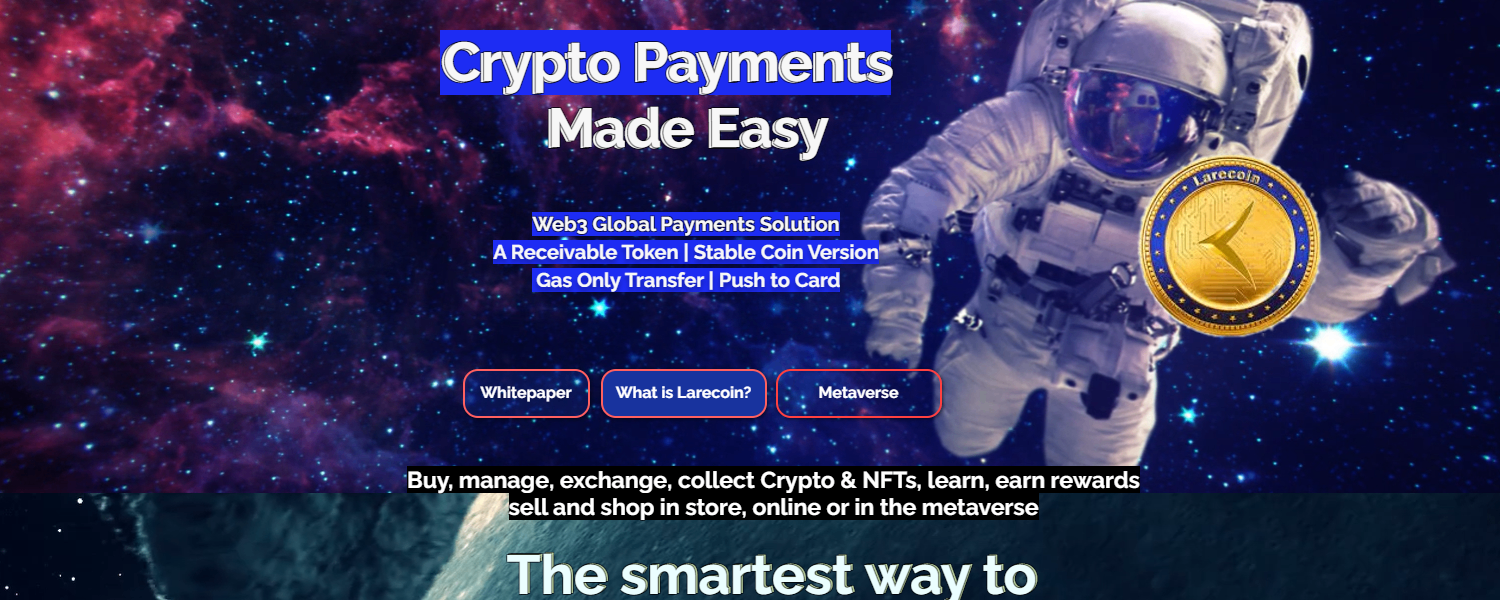
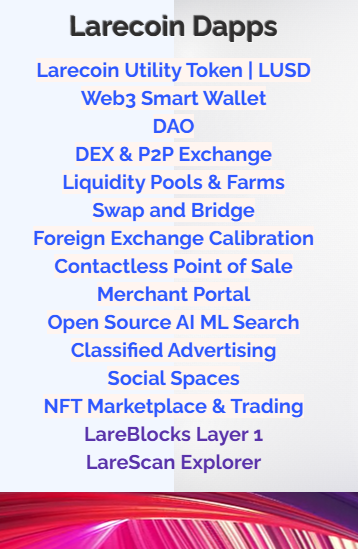
The Larecoin Approach
Larecoin built something different.
A Web3 global payments solution designed for merchants who want actual control. Not the illusion of control. Real, private-key-holding, funds-in-your-wallet control.
Key differentiators:
Self-custody merchant accounts: Your wallet. Your keys. Your funds. Period.
LUSD stablecoin benefits: Price stability without the volatility headache. Pegged value. Merchant-friendly.
NFT receipts for accounting: Every transaction generates verifiable, immutable proof. Auditors love this. Accountants love this. Your bookkeeping just got bulletproof.
Receivables token: Tokenized invoices. Tradeable, transferable, transparent.
Crypto POS system for small business: In-store, online, or metaverse. One solution. Every channel.
The traditional payment industry built walls. Larecoin built bridges.

Who Benefits Most From Self-Custody
Not every merchant needs self-custody. But many do.
High-volume operations: When you're processing significant transaction volume, fee savings compound fast. That 2.5% difference adds up to serious money.
International sellers: Customers worldwide. No conversion fees. No geographic restrictions.
Privacy-conscious businesses: Your transaction data stays yours. Not sitting in a processor's database.
Crypto-native brands: Your customers already hold crypto. Meet them where they are.
Margin-tight operations: Small businesses where every percentage point impacts survival. Lower fees mean competitive pricing or better margins.
High-risk industries: Categories that traditional processors love to freeze. Self-custody eliminates that vulnerability.
The Trade-Off Nobody Hides
Transparency matters. Here's what self-custody requires:
You manage security. No customer service line if you lose access to your keys. This is your responsibility.
You understand wallet fundamentals. Basic crypto literacy is non-negotiable.
Your customers need comfort with crypto. Or you need on-ramps to make it seamless.
These aren't dealbreakers. They're requirements. Larecoin provides tools and infrastructure. But the accountability is yours.
That's the trade-off for sovereignty. Most merchants find it worth it.
The Numbers Don't Lie
Traditional processor fees: 2.5% - 3.5% per transaction Self-custody network fees: Fractions of a cent
Traditional settlement: 2-7 business days Self-custody settlement: Seconds to minutes
Traditional account control: Processor holds funds Self-custody control: You hold everything
Traditional geographic reach: Limited, fee-heavy international Self-custody reach: Borderless, global, instant
The math is simple. The decision should be too.
Getting Started
Self-custody merchant accounts aren't complicated. They're different.
Different from what traditional processors trained you to expect. Different from the custodial crypto solutions that copied the old model.
The merchant payment landscape is shifting. Early adopters are already slashing fees by 50%+. Already accessing instant settlement. Already operating with true financial sovereignty.
Traditional payment processors are betting you won't notice. Betting you won't explore alternatives. Betting you'll keep paying their fees forever.
Now you know their secrets.
The question isn't whether self-custody merchant accounts work. They do. The question is whether you're ready to take control.
Ready to explore? Visit Larecoin and discover what bank-free business operations actually look like.
The traditional payment industry had a good run. Time for something better.
Comments