

.png)
Social Shopping in the Metaverse: 7 Ways VR/AR Commerce Will Transform Your B2B2C Sales Strategy
- [[[Free!!]<<<<]] Watch: 스포르팅 - 토트넘 Live Stream 13 September 2022
- 1 day ago
- 4 min read
![Writer: [[[Free!!]<<<<]] Watch: 스포르팅 - 토트넘 Live Stream 13 September 2022](https://lh3.googleusercontent.com/a/AItbvmktwQc0wCdd3ZEETSYItRQubwwBzOyjD_dcigRf=s96-c)
The future of commerce isn't flat. It's immersive. It's social. And it's already here.
Metaverse shopping is reshaping how brands connect with customers. We're talking 3D storefronts. Virtual try-ons. Social interactions that make online shopping feel like Saturday at the mall.
For B2B2C merchants? This is the biggest opportunity since mobile payments. But only if you've got the right infrastructure.
Let's break down 7 ways VR/AR commerce will transform your sales strategy: and why your payment stack matters more than ever.
1. Immersive Product Experiences Replace Static Listings
Flat product images are dead.
In the metaverse, customers navigate 3D virtual stores. They rotate products 360 degrees. Try on jewelry. Test drive vehicles. Walk through furniture showrooms without leaving their couch.
This changes everything for B2B2C models. Your retail partners can now showcase products with unprecedented depth. Conversion rates climb when customers experience products before buying.
But here's the catch: immersive experiences demand seamless payments. Nobody wants to exit VR to fumble with credit card numbers.
That's where crypto POS systems shine. QR-generated payments. One-click checkout. Gas-only transfers that keep transactions fast and cheap.
2. Social Shopping Creates Community-Driven Sales
Shopping alone is boring. Shopping with friends? That's an experience.
Metaverse platforms enable social VR environments where customers browse together. They see reactions in real-time. Get instant feedback on purchases. Share discoveries across their networks.
For B2B2C brands, this means:
User-generated momentum that drives organic sales
Influencer integration directly within virtual storefronts
Peer recommendations at the point of purchase
Social shopping transforms passive browsing into active engagement. Your retail partners become community hubs: not just transaction endpoints.
The payment layer needs to match this speed. Traditional processors can't keep up. But self-custody wallets with instant settlement? That's built for social commerce velocity.
3. AI-Driven Personalization at Scale
Generic recommendations are over.
Metaverse platforms leverage AI to track customer activity, purchase history, and behavioral patterns. Every interaction refines the algorithm. Every visit delivers more relevant products.
For B2B2C merchants, personalization means:
Higher average order values
Reduced cart abandonment
Stronger brand loyalty across retail channels
But personalization requires data. And data requires trust.
This is where MTL compliance becomes critical. Customers share more data when they trust the platform. State-level Money Transmitter License coverage across the U.S. signals legitimacy. Federal MSB registration backs it up.
Larecoin's compliance framework isn't just regulatory box-checking. It's a competitive advantage in building customer trust for AI-powered experiences.
4. NFT Receipts Create Verifiable Purchase Records
Paper receipts? Digital PDFs? Obsolete.
NFT receipts transform every transaction into a verifiable, immutable record on-chain. Customers own proof of purchase. Brands gain authentic customer data. Warranty claims become instant.

Here's why this matters for B2B2C:
Counterfeit prevention: Every authentic purchase is blockchain-verified
Loyalty programs: NFT receipts double as membership credentials
Secondary markets: Resale verification becomes automatic
Customer insights: On-chain data reveals genuine buying patterns
Compare this to legacy processors. NOWPayments? No NFT receipt functionality. CoinPayments? Same story. Triple-A? Still focused on traditional transaction records.
Larecoin's NFT receipt infrastructure is purpose-built for metaverse commerce. Read the comparison.
5. Fee Savings Exceed 50% vs. Traditional Processors
Interchange fees are eating your margins alive.
Traditional payment processors charge 2.5–3.5% per transaction. For high-volume B2B2C operations, that's millions in lost revenue annually.
Gas-only transfers change the math entirely.
With Larecoin's infrastructure:
Feature | Traditional | Larecoin |
Transaction fees | 2.5–3.5% | Gas only |
Settlement time | 2–3 days | Instant |
Chargeback risk | High | Zero |
Custody | Third-party | Self-custody |
The numbers speak for themselves. Fee savings exceed 50% compared to Visa, Mastercard, and legacy processors.
For B2B2C models with multiple retail touchpoints, these savings compound. Master/sub-wallet architecture lets you manage funds across partners while maintaining full custody.
6. Self-Custody Eliminates Third-Party Risk
Who controls your money matters.
Traditional payment processors hold your funds. They dictate when you access them. They freeze accounts without warning.
Self-custody flips this model.
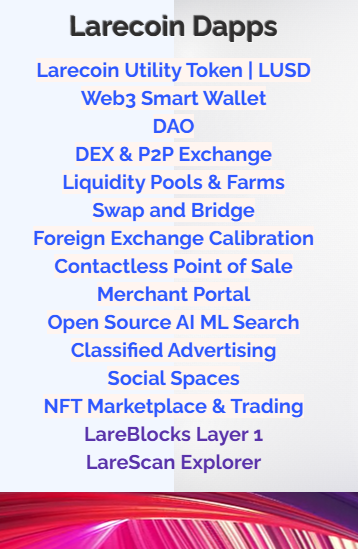
With Larecoin's architecture:
You hold the keys: No third-party can freeze your assets
Instant access: Withdraw anytime without approval delays
Full transparency: On-chain records verify every transaction
LUSD stability: Stablecoin option eliminates crypto volatility
Compare this to CoinPayments or NOWPayments. Both require custodial arrangements. Both introduce counterparty risk. Neither offers the financial sovereignty that serious merchants demand.
For metaverse shopping, self-custody isn't just nice-to-have. It's essential. Virtual economies move fast. Your payment infrastructure needs to keep pace.
Learn more about reducing merchant interchange fees while keeping full custody.
7. Compliance-Ready Global Expansion
The metaverse is borderless. Your payment compliance can't be.
VR/AR commerce opens global markets overnight. A customer in Tokyo shops your virtual store at 3 AM. A buyer in São Paulo checks out while you sleep.
But global reach requires global compliance.
Larecoin's regulatory framework includes:
Federal MSB registration for nationwide legitimacy
State-level MTL coverage across U.S. jurisdictions
KYC/AML protocols that meet international standards
Transparent reporting for auditable operations
This isn't just about avoiding fines. It's about building infrastructure that scales.
Triple-A focuses primarily on APAC markets. NOWPayments lacks comprehensive U.S. licensing. CoinPayments operates with limited regulatory transparency.
For B2B2C brands expanding into metaverse shopping, MTL compliance is the foundation for sustainable growth.
The Larecoin B2B2C Metaverse Advantage
Let's recap what matters:
✅ NFT receipts for verifiable purchase records ✅ LUSD stablecoin for volatility-free transactions ✅ Gas-only transfers for 50%+ fee savings ✅ Self-custody for financial sovereignty ✅ QR-generated crypto POS for seamless checkout ✅ Master/sub-wallets for multi-partner management ✅ MTL compliance for regulatory confidence

Metaverse shopping isn't a distant future. It's happening now. The brands that build the right payment infrastructure today will dominate virtual commerce tomorrow.
Ready to transform your B2B2C sales strategy?
This post is part of Larecoin's 10-year blog marathon: 100 posts exploring the future of Web3 payments, metaverse commerce, and financial sovereignty.
Comments