

.png)
Stablecoin Payments Vs Traditional Card Networks: Which Is Better For Your Business in 2026?
- [[[Free!!]<<<<]] Watch: 스포르팅 - 토트넘 Live Stream 13 September 2022
- Jan 15
- 4 min read
![Writer: [[[Free!!]<<<<]] Watch: 스포르팅 - 토트넘 Live Stream 13 September 2022](https://lh3.googleusercontent.com/a/AItbvmktwQc0wCdd3ZEETSYItRQubwwBzOyjD_dcigRf=s96-c)
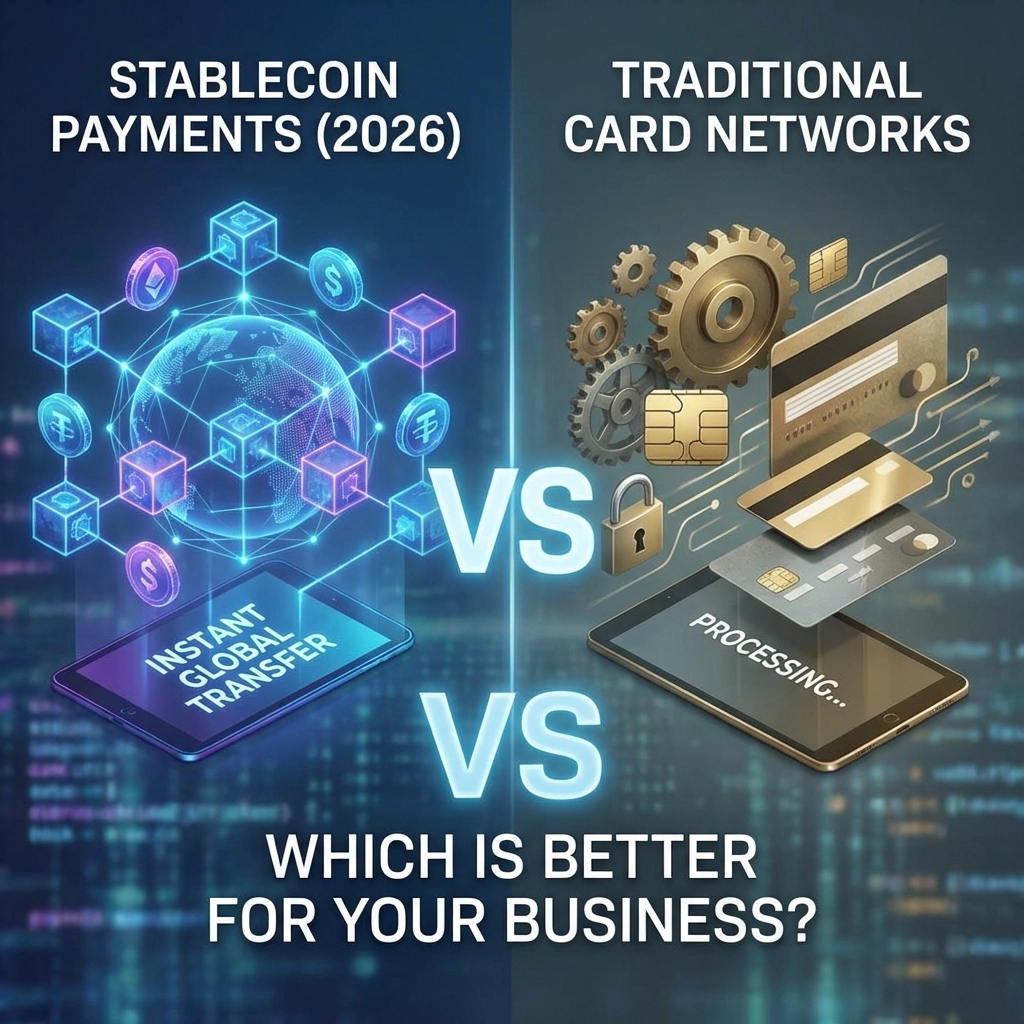
The payment landscape is shifting. Fast.
Traditional card networks have dominated for decades. Visa. Mastercard. American Express. They built empires on 2-3.5% transaction fees. Merchants accepted it because there was no alternative.
That era is ending.
Stablecoins are here. They're faster. Cheaper. And in 2026, they're finally ready for mainstream business adoption.
So which one wins for your business? Let's break it down.
The Problem with Traditional Card Networks
You know the drill.
Customer swipes. Transaction processes. You wait 2-3 business days for settlement. Weekend? Forget it. Holiday? Even longer.
Then the fees hit.
Interchange fees: 1.5-3.5% per transaction
Processing fees: Another 0.1-0.3%
Monthly gateway fees: $10-50+
Chargeback fees: $15-100 per dispute
For a business processing $100,000 monthly? That's $2,000-3,500 vanishing into the payment processing void. Every. Single. Month.
And cross-border payments? Don't get us started.
International transactions add currency conversion fees. Additional processing delays. Sometimes 5-7 business days for settlement. The system was built for a pre-internet world.

Enter Stablecoins: The 2026 Payment Revolution
Stablecoins flip the script.
They're digital currencies pegged to stable assets, usually the US dollar. No wild crypto volatility. No waiting for banks to open. No arbitrary cut-off times.
Just instant, programmable money.
Here's what stablecoin payments deliver:
Settlement in minutes. Not days. Minutes.
24/7/365 availability. Weekends and holidays don't exist on-chain.
Transparent fees. See exactly what you're paying, when you're paying it.
Global by default. Send from anywhere to anywhere. No borders.
Programmable logic. Escrow, split payments, conditional releases, all automated.
The technology has matured. The infrastructure exists. Major players like PayPal, Stripe, and Meta are already integrating stablecoin rails.
This isn't experimental anymore. It's operational.
LUSD and Larecoin: Stablecoins Done Right
Not all stablecoin solutions are equal.
Larecoin built LUSD specifically for business payments. It's designed from the ground up for merchants, not speculators.
The result? 50% lower fees compared to traditional card networks.
Read that again.
Half the cost. Same transaction. More profit in your pocket.
LUSD delivers:
Instant settlement to your business wallet
Minimal transaction costs without the interchange fee bloat
Full auditability for compliance and accounting
Seamless integration with existing business systems
For merchants tired of feeding the Visa/Mastercard machine, LUSD represents a genuine alternative.
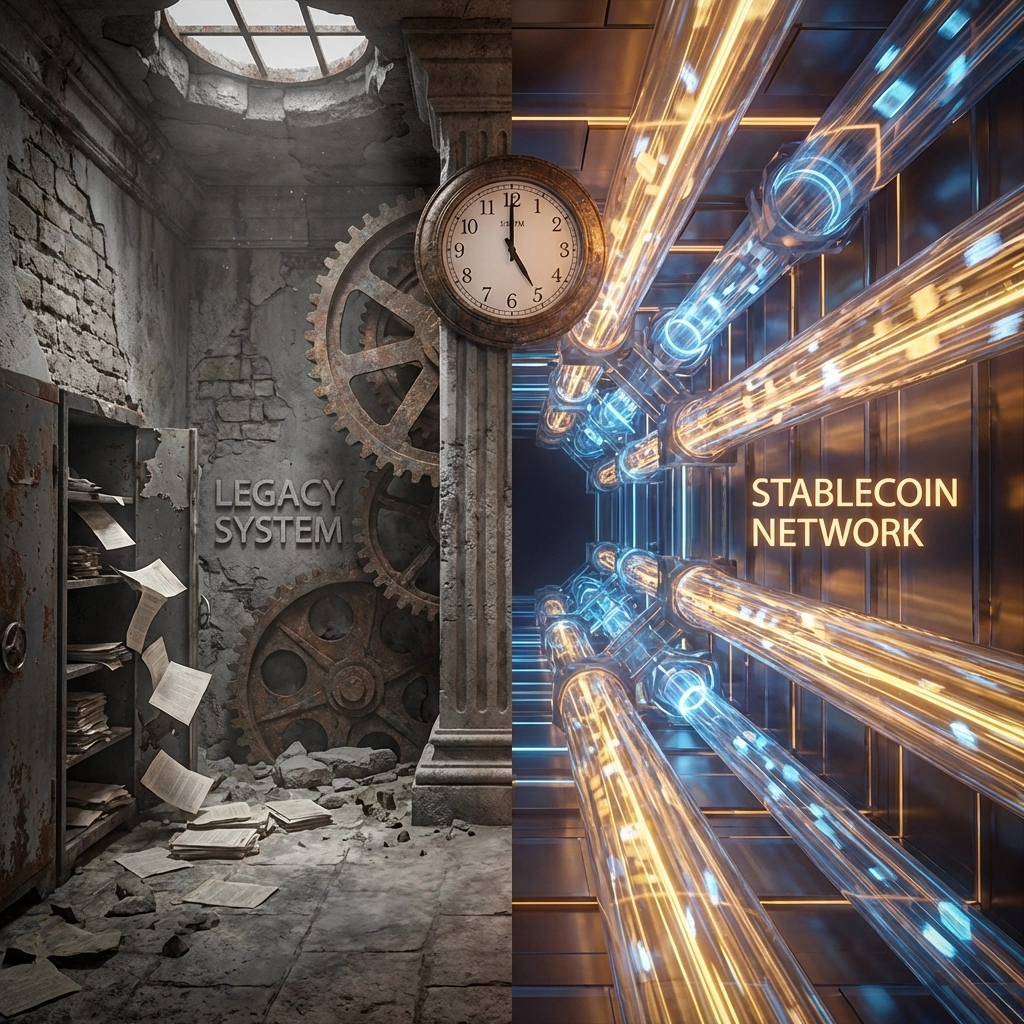
Head-to-Head: Stablecoins vs. Card Networks
Let's compare directly.
Feature | Traditional Cards | Stablecoin (LUSD) |
Transaction Fees | 2-3.5% | ~50% less |
Settlement Time | 2-5 business days | Minutes |
Weekend Availability | No | Yes |
Cross-Border Costs | High | Minimal |
Chargeback Risk | High | Minimal |
Programmability | None | Full |
The numbers don't lie.
For every $100,000 processed through traditional networks at 3% fees, you're losing $3,000. Through LUSD? Roughly $1,500. That's $18,000 saved annually.
Scale that to $1 million in annual transactions. You're looking at $180,000 back in your business.
Where Stablecoins Dominate in 2026
Stablecoins aren't better at everything. But where they win, they win big.
Cross-Border Payments
Traditional banking closes on weekends. Charges outrageous conversion fees. Takes days to settle.
Stablecoins? Anywhere to anywhere in 30 seconds. Minimal cost. No banking hours to worry about.
For businesses with international suppliers, remote teams, or global customers: this is transformative.
Emerging Markets
High inflation countries need dollar stability. Stablecoins deliver USD-pegged value without requiring US bank accounts.
Your business can accept payments from Argentina, Nigeria, Turkey: markets where local currency volatility makes traditional payments risky.
B2B Transactions
Large invoices mean large fees on traditional networks. Processing a $50,000 payment through card rails costs $1,000-1,750 in fees alone.
Stablecoins scale without the percentage-based punishment. Your fee stays minimal regardless of transaction size.
Low-Value International Transfers
Previously impractical. A $10 international transaction might cost $5+ in traditional banking fees.
Stablecoins make micropayments viable globally. Open up entirely new business models.
Where Traditional Cards Still Win
Let's be honest.
Traditional card networks aren't disappearing overnight. They have advantages that matter.
Consumer Trust and Familiarity
Decades of brand building. Customers know and trust card payments. They expect fraud protection, chargebacks, and rewards programs.
For domestic retail where consumer confidence drives purchasing decisions, cards retain an edge.
Dispute Resolution
Chargebacks protect consumers. When a product doesn't arrive or doesn't match the description, customers can dispute charges.
Stablecoin transactions are final. That's a feature for merchants: but requires different approaches to customer service and trust-building.
Rewards Programs
Cash back. Air miles. Points. Traditional cards offer incentives that stablecoins currently don't match.
For consumer-facing retail competing on loyalty programs, this matters.
The Smart Move: Hybrid Adoption
Here's the strategic play for 2026.
Don't choose. Use both.
The emerging model combines stablecoin efficiency with card network familiarity. Use stablecoins for:
Cross-border supplier payments
B2B invoicing
International payroll
High-value transactions
Keep traditional cards for:
Domestic retail consumers
Customers expecting rewards programs
Transactions requiring chargeback protection
This "stablecoin sandwich" approach lets you route payments through the most efficient channel. Customers fund in their preferred method. Settlement happens on-chain. Everyone wins.
Major payment processors are already building this infrastructure. The question isn't whether it'll happen. It's whether you'll be early or late.
The Verdict for Your Business
Simple framework.
Choose stablecoins (LUSD) if you:
Process significant cross-border transactions
Operate in or serve emerging markets
Handle high-value B2B payments
Want to cut processing costs by 50%
Need instant settlement
Maintain traditional cards if you:
Serve primarily domestic retail consumers
Compete on loyalty and rewards programs
Require chargeback protection for your model
Go hybrid if you:
Want the best of both worlds
Plan to scale internationally
Think strategically about the next 5-10 years
Get Started with Larecoin
The payment revolution is here. LUSD and Larecoin make stablecoin adoption simple for businesses of any size.
50% lower fees. Instant settlement. Global reach.
Stop feeding the legacy payment machine. Start keeping more of what you earn.
The future of payments isn't coming. It's live. Ready when you are.
Comments