

.png)
Stop Wasting Money on Interchange Fees: 7 Quick Hacks to Reduce Merchant Costs with Receivables Tokens
![Writer: [[[Free!!]<<<<]] Watch: 스포르팅 - 토트넘 Live Stream 13 September 2022](https://lh3.googleusercontent.com/a/AItbvmktwQc0wCdd3ZEETSYItRQubwwBzOyjD_dcigRf=s96-c)
The Interchange Fee Trap Is Crushing Your Margins
You're losing 2-3% on every credit card transaction.
For high-volume merchants, that's thousands monthly. Tens of thousands annually.
Traditional payment processors lock you into interchange fee structures you can't control. Card networks adjust rates twice yearly. You just accept it.
But there's a way out.
Receivables tokens flip the entire model. No interchange fees. No middleman markup. Just direct, peer-to-peer value transfer.
Let's break down exactly how to slash your merchant costs in 2026.
What Are Receivables Tokens?
Think of receivables tokens as programmable payment requests on the blockchain.
Instead of waiting for card network approval and paying interchange fees, you create a digital token representing what you're owed. Your customer pays directly to your wallet. Settlement happens in seconds, not days.
No intermediaries. No percentage-based fees. No chargebacks eating your profits.
This is how Larecoin built its entire ecosystem: merchant freedom through decentralized payments.
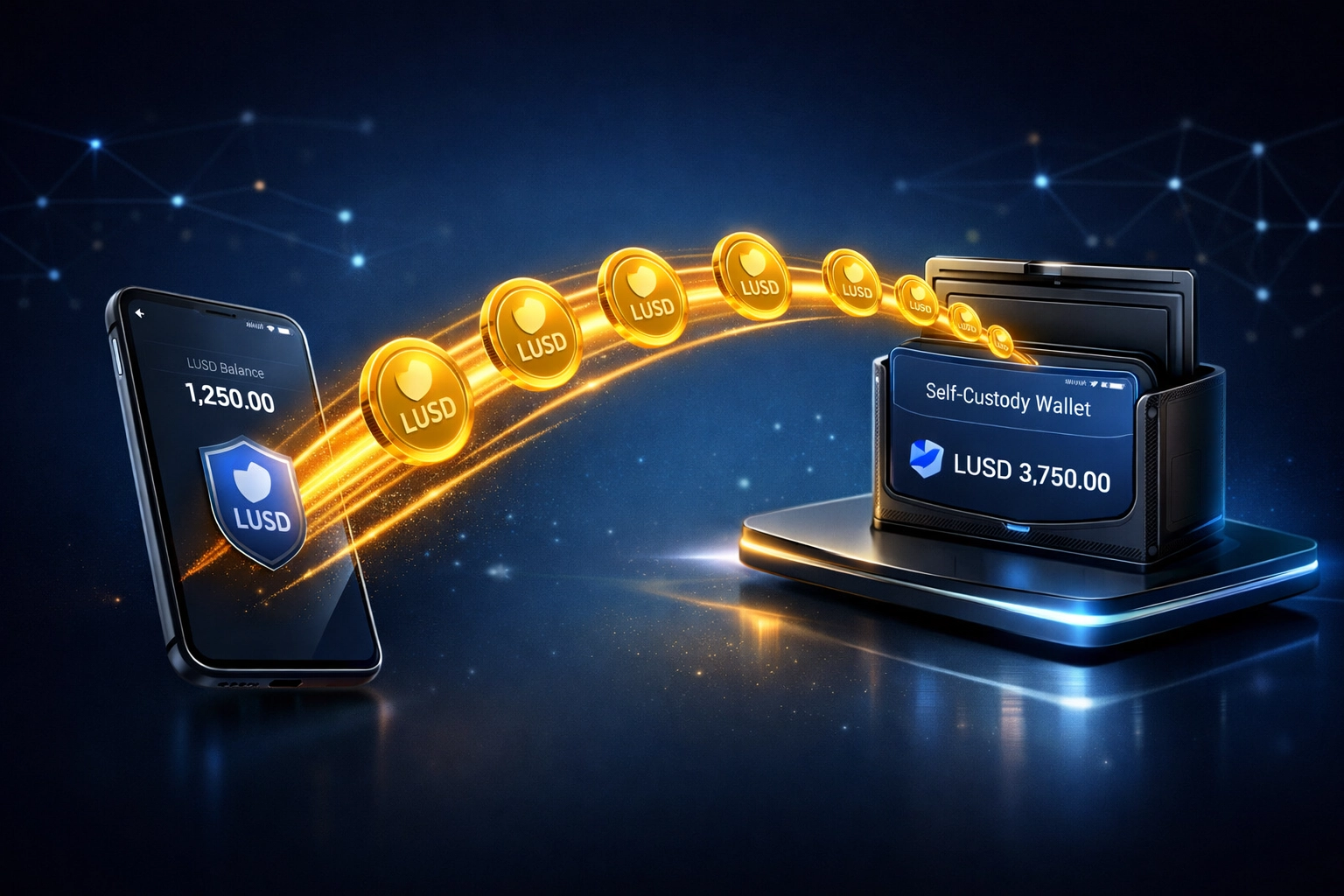
Hack #1: Switch to LUSD Stablecoin Payments
Here's your first move: Accept LUSD instead of credit cards.
LUSD is a decentralized stablecoin. No corporate control. No freezing accounts. Fully backed and transparent.
The math is brutal for traditional payments:
Credit card interchange: 2.5% average
Processing markup: 0.3-0.5%
Monthly gateway fees: $25-50
Chargeback fees: $15-25 per incident
LUSD payments cost:
Network gas fees: $0.10-2.00 per transaction
Zero percentage fees
Zero monthly fees
Zero chargeback risk
On a $1,000 transaction, you save $23+ instantly.
Scale that across hundreds of transactions monthly.
Unlike centralized stablecoins that can freeze your funds, LUSD gives you complete control. Self-custody means your money stays yours.
Hack #2: Implement Self-Custody Wallets
Stop letting payment processors hold your money.
Traditional merchant accounts mean 2-7 day holds. You earned it, but you can't touch it. They control when you get paid.
Self-custody changes everything.
When customers pay with receivables tokens, funds hit your wallet immediately. You control the private keys. No approval needed to access your money.
NOWPayments still uses custodial wallets for most merchants. They hold your crypto. You request withdrawals. They approve them.
CoinPayments offers "semi-custody" but still controls settlement timing and withdrawal limits.
Larecoin's approach: Full self-custody from day one. Your keys. Your coins. Your timeline.

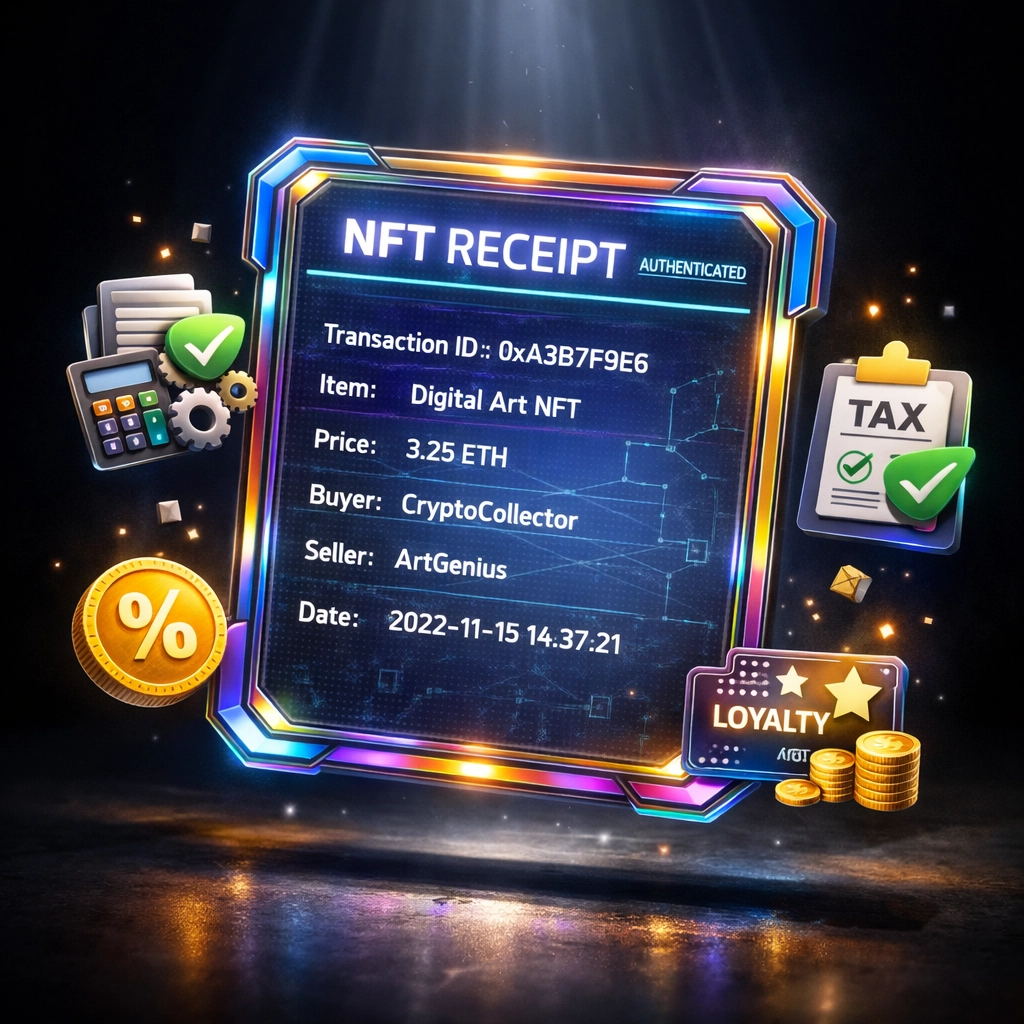
Hack #3: Use NFT Receipts for Automated Accounting
Here's where it gets innovative.
Every transaction generates an NFT receipt on the blockchain. Immutable. Timestamped. Tax-ready.
Traditional receipt systems:
Paper receipts fade
Email receipts get lost
Manual data entry for accounting
Receipt fraud happens
NFT receipts solve all of this.
Each receipt contains:
Transaction amount
Timestamp
Product details
Tax information
Customer wallet address
Merchant wallet address
Your accounting software integrates directly. No manual entry. Zero human error.
When tax season hits, you have cryptographic proof of every sale. Auditors love blockchain records: they can't be altered retroactively.
Plus, NFT receipts unlock customer loyalty programs. Collect 10 receipt NFTs, get a discount. Automatic. Programmable. No punch cards needed.
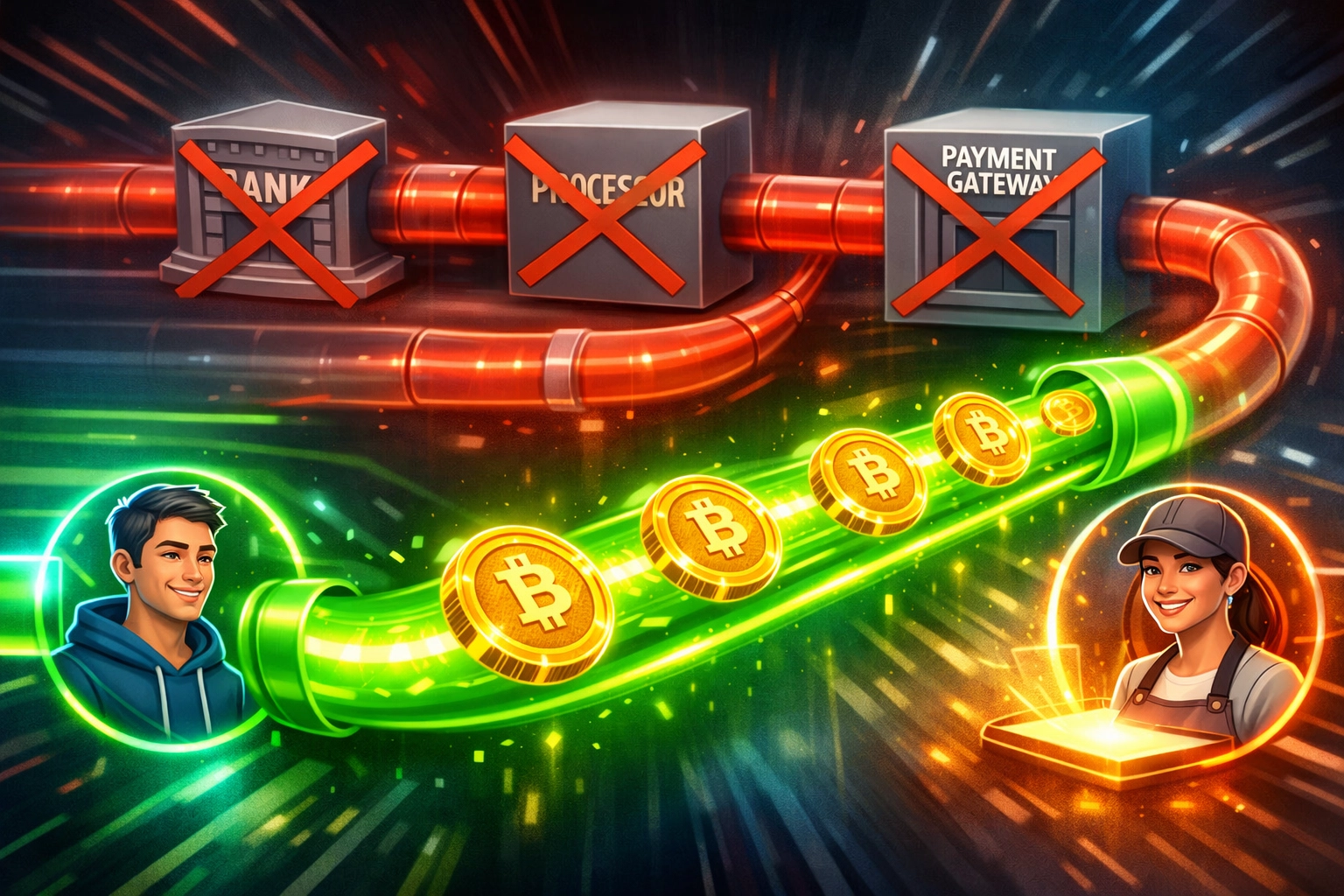
Hack #4: Enable Direct Wallet-to-Wallet Transactions
Cut out every middleman.
Traditional flow: Customer → Card Network → Acquiring Bank → Payment Processor → Your Account
Each step adds fees and delays.
Crypto flow: Customer Wallet → Your Wallet
That's it.
No intermediaries extracting percentage fees. No settlement delays. Instant finality.
When someone pays with Larecoin or LUSD, they scan your QR code. Funds transfer peer-to-peer. Done.
You save the 2-3% interchange fee immediately. They avoid credit card interest charges. Win-win.
This works in-store, online, and in the metaverse. One unified payment system across all channels.
Hack #5: Leverage Gas-Only Transfer Models
Here's the secret sauce.
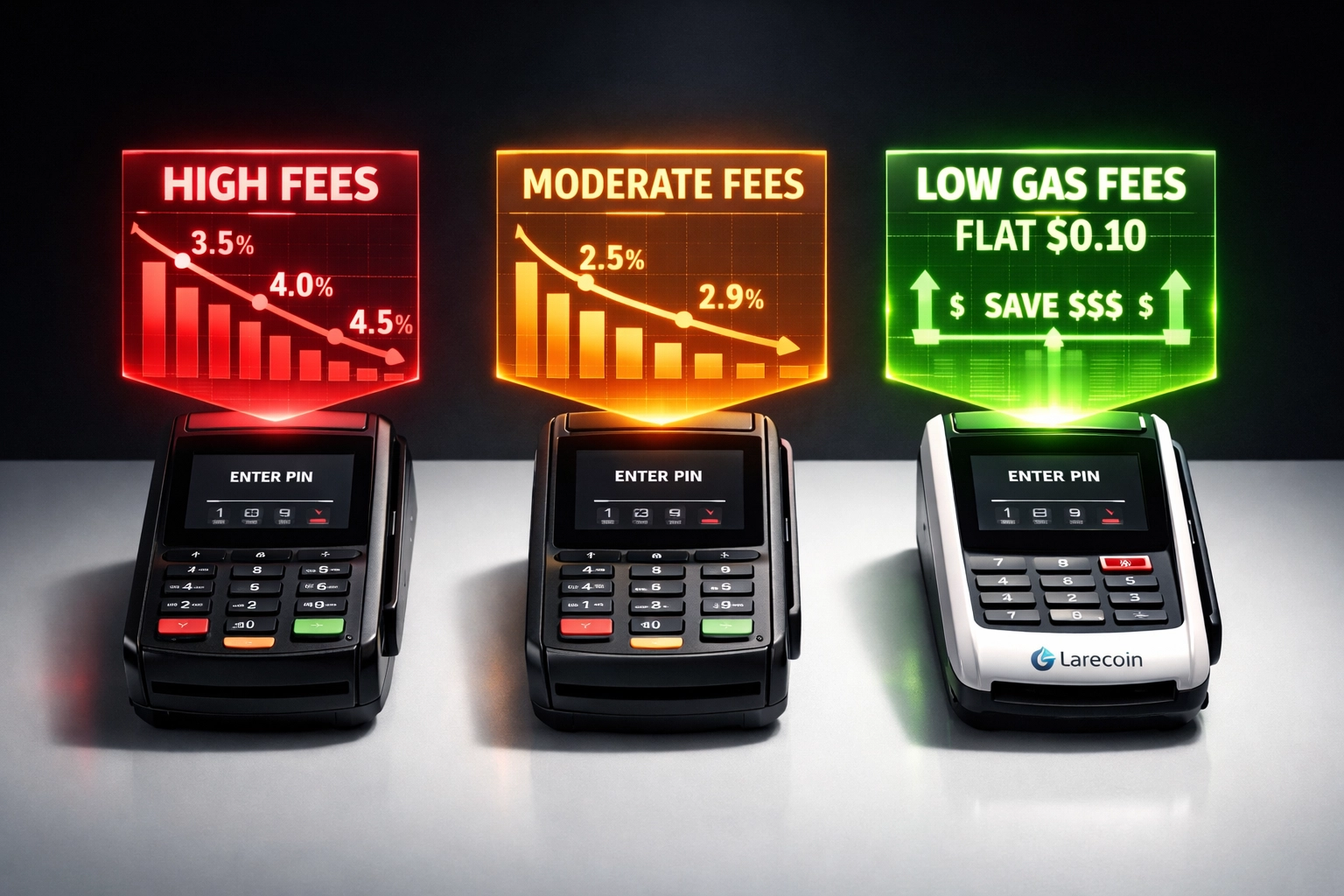
Larecoin built gas-only transfers specifically for merchants. You only pay network fees. Nothing else.
Compare the costs:
Processing $10,000 monthly revenue:
Credit cards: $250-300 in fees
NOWPayments: $100-150 (1-1.5% + fees)
CoinPayments: $50-100 (0.5-1% depending on volume)
Larecoin gas-only: $10-30 total
You keep 97-99% of revenue instead of 97%.
That extra 1-2% compounds fast. In a year, you're looking at thousands in saved fees.
Gas fees fluctuate based on network congestion. But even during peak times, you're paying dollars, not percentages.
Hack #6: Implement Push-to-Card Settlement Options
Not ready to go full crypto?
No problem.
Larecoin's push-to-card feature lets you accept crypto payments and settle to traditional cards instantly.
Customer pays in LUSD or LARE. System automatically converts to USD. Funds push to your debit card in under 60 seconds.
You get crypto payment benefits (lower fees, faster settlement) without changing your existing bank relationships.
The fee structure beats traditional processing:
Flat $1-2 per push-to-card transaction
No percentage fees on the transaction amount
Instant availability (vs 2-7 day holds)
For high-ticket items, this saves massive amounts. $5,000 sale? You pay $2 instead of $125.
Hack #7: Utilize Cross-Chain Flexibility
Don't limit yourself to one blockchain.
Larecoin operates across Solana, Binance Smart Chain, and other networks. Your customers pay with whatever crypto they prefer.
Why this matters for fees:
Different chains have different gas costs. Solana transactions cost fractions of a penny. Ethereum costs more during congestion.
Smart merchants route transactions through the lowest-cost chain available. Automatic optimization. Maximum savings.
NOWPayments and CoinPayments charge uniform fees regardless of which blockchain you use. You pay their percentage no matter what.
Larecoin passes actual network costs to you. When Solana gas is $0.00025, you pay $0.00025. Not some marked-up flat fee.
How This Stacks Up Against Competitors
Let's be direct about the competition.
NOWPayments:
Charges 0.5-1.5% per transaction
Custodial wallet model
Basic crypto acceptance
Limited self-custody options
Standard receipt systems
CoinPayments:
Charges 0.5-1% per transaction
Semi-custodial approach
Good coin variety
Slower settlement times
Traditional accounting integration
Larecoin:
Gas-only fee model (pennies, not percentages)
Full self-custody from day one
NFT receipt innovation
Instant settlement
Cross-chain optimization
Push-to-card for fiat transition
The numbers speak for themselves.
On $50,000 monthly revenue:
NOWPayments: $250-750 in fees
CoinPayments: $250-500 in fees
Larecoin: $50-150 in gas fees
You save $2,400-7,200 annually. Just by switching payment infrastructure.
The Merchant Independence Factor
This goes beyond just saving money.
When you use traditional processors, they control your account. They can freeze funds. Change terms. Increase fees without notice.
Decentralized crypto payments restore merchant sovereignty.
Your wallet. Your keys. Your business rules.
No one can shut you down for accepting legal payments. No arbitrary holds. No surprise fee increases.
This is the future of commerce: merchants controlling their own payment infrastructure without gatekeepers extracting tolls.
Your Next Steps
Start small. Test the system.
Set up a Larecoin merchant wallet. Accept your first LUSD payment. See the difference.
Join the Larecoin community to learn from other merchants making the switch.
Check out how metaverse integration can future-proof your business beyond just fee savings.
The interchange fee model is broken. You don't have to keep paying into it.
Receivables tokens give you the alternative you've been waiting for.
Cut fees. Speed up settlement. Take back control.
That's what 2026 looks like for smart merchants.
Comments