

.png)
Stop Wasting Money on Traditional Payment Processors: Try These 7 Web3 Global Payments Hacks
- [[[Free!!]<<<<]] Watch: 스포르팅 - 토트넘 Live Stream 13 September 2022
- Feb 16
- 4 min read
![Writer: [[[Free!!]<<<<]] Watch: 스포르팅 - 토트넘 Live Stream 13 September 2022](https://lh3.googleusercontent.com/a/AItbvmktwQc0wCdd3ZEETSYItRQubwwBzOyjD_dcigRf=s96-c)
Your traditional payment processor is quietly bleeding your business dry.
Every swipe, tap, and transaction chips away 2-3% of your revenue. For a business processing $500,000 monthly, that's $14,500 vanishing into interchange fees. Every single month.
Web3 payments slash that to under $100 in gas fees. That's a 99.3% cost reduction.
Here's how smart merchants are making the switch: and why competitors like NOWPayments, CoinPayments, and Triple-A still can't match what's possible in 2026.
Hack #1: Ditch Custodial Services for True Self-Custody
NOWPayments and CoinPayments operate on custodial models. They hold your crypto. You wait for withdrawals. They control your funds.
Bad idea.
Self-custody architecture flips this completely. Generate receiving addresses directly from your own wallet. Customers pay straight to addresses you control: no middleman, no custody risk, instant access.
!

Implementation takes minutes:
Set up your master wallet
Generate unique receiving addresses per transaction
Maintain full cryptographic control
Access funds immediately: zero withdrawal delays
Your keys. Your crypto. Your control.
Compare this to waiting 24-48 hours for NOWPayments to process a withdrawal. In volatile markets, that delay costs real money.
Hack #2: Lock in LUSD Stablecoin for Zero Volatility Risk
Accepting Bitcoin or Ethereum directly? You're gambling with every transaction.
LUSD stablecoin eliminates this completely.
Invoice generation freezes exchange rates instantly. Markets move 10% during processing? Doesn't matter. Your locked rate holds.
Traditional stablecoins like USDC work, but LUSD offers decentralized stability backed by ETH collateral: not centralized reserves that banks can freeze.
The merchant advantage:
Generate invoices with rate-lock technology
Accept payment in LUSD, ETH, or 65+ tokens
Settle with price certainty
Skip the volatility protection fees other processors charge
Triple-A charges extra for volatility hedging. LUSD makes it unnecessary.
Hack #3: Deploy Gas-Only Transfer Models
Here's the math that changes everything.
Traditional processor on a $5,000 sale: Credit card fees: $125-175 Hidden assessment fees: $15-25 Total merchant cost: $140-200
Web3 gas-only transfer: Network fee: Under $1 Larecoin fee: Gas only Total merchant cost: $1
That's not a typo.
Gas-only transfers mean you pay network costs exclusively: no percentage-based fees eating your margins. Process $1 million monthly? Save approximately $28,000 in fees.
Every. Single. Month.
Hack #4: Issue NFT Receipts for Compliance & Innovation
NFT receipts aren't gimmicks. They're immutable transaction records living on-chain permanently.
!
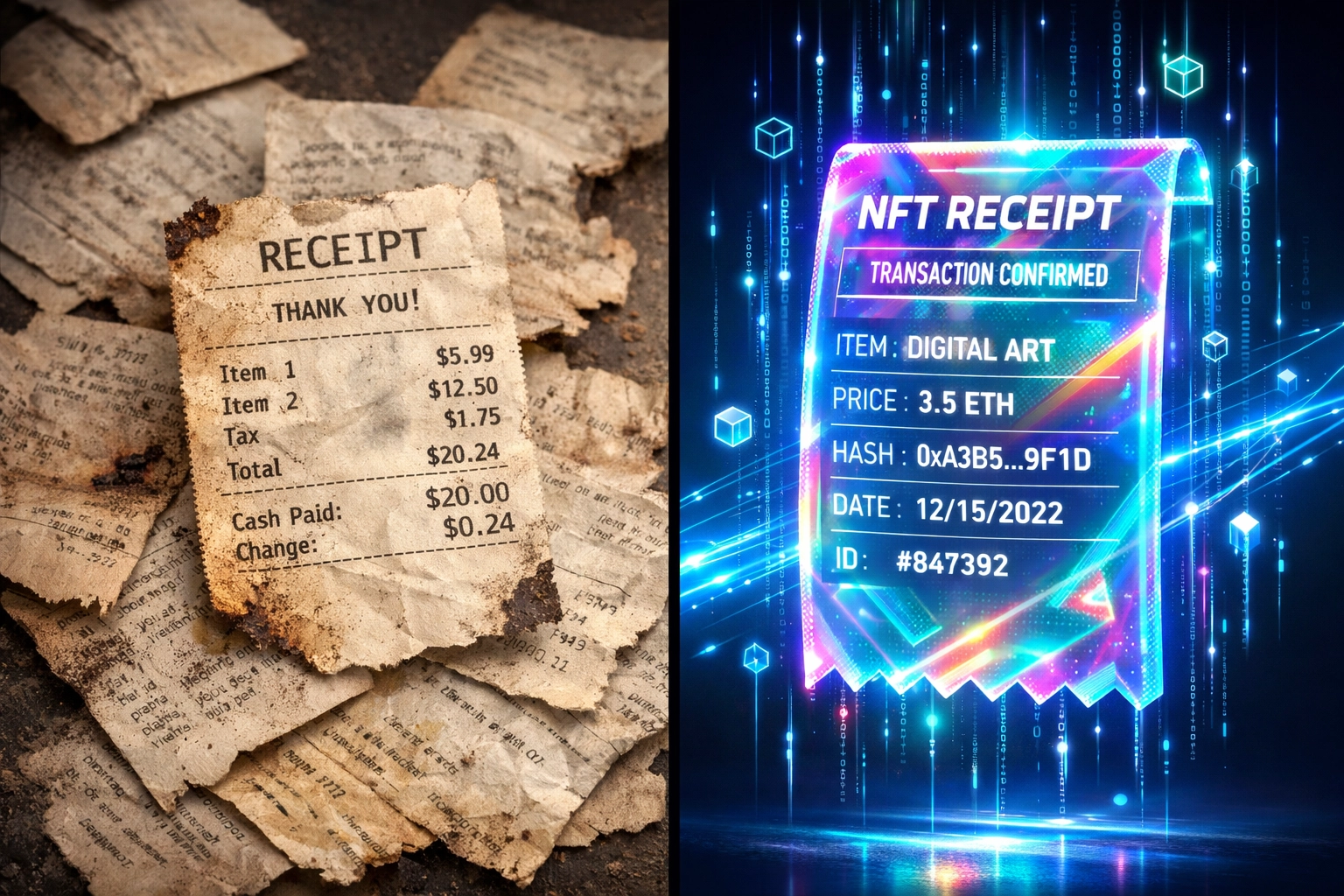
Every transaction generates a unique NFT receipt containing:
Transaction timestamp
Payment amount and token
Merchant identifier
Customer wallet address
Product/service details
Why this matters:
Instant audit trails for accounting
Impossible to forge or alter
Automatic compliance documentation
Customer proof-of-purchase that never disappears
Marketing opportunity for collectors
CoinPayments gives you transaction IDs. Larecoin gives you blockchain-verified NFT receipts that double as compliance tools and customer engagement assets.
Accounting loves them. Regulators accept them. Customers keep them.
Hack #5: Build Master/Sub-Wallet Architecture with QR POS
Most crypto processors force you into rigid account structures. One wallet, one business, limited flexibility.
Wrong approach for growing merchants.
Master/sub-wallet architecture delivers:
Central treasury wallet for primary holdings
Department-specific sub-wallets for operations
Location-based wallets for multi-store businesses
Employee wallets with spending limits
Automatic aggregation to master wallet
Generate QR codes instantly for any payment scenario. Physical POS? Print static QR codes. Online checkout? Dynamic QR generation per transaction. Pop-up shop? Mobile QR on tablets.
!
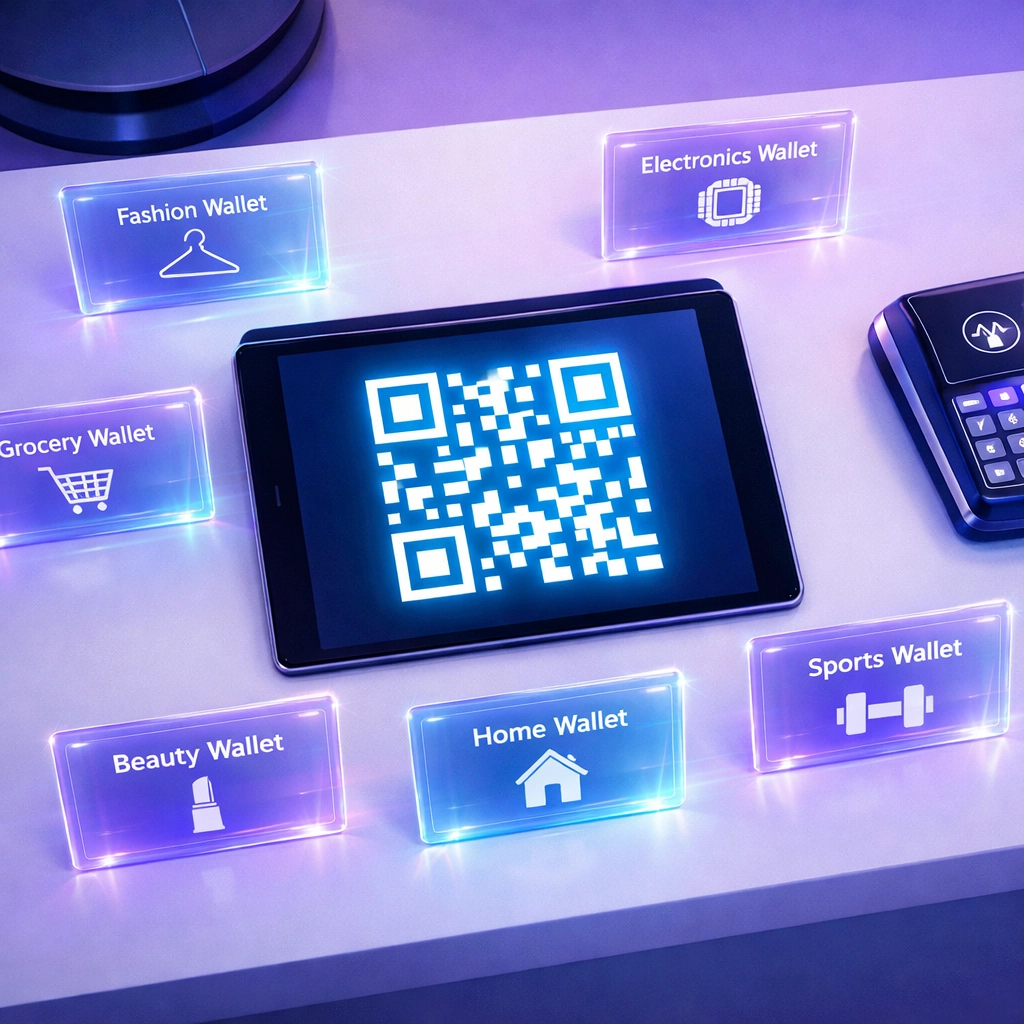
Your entire business operates from one unified Web3 payment infrastructure: with granular control at every level.
NOWPayments offers basic multi-currency wallets. Larecoin delivers complete organizational wallet hierarchies.
Hack #6: Leverage MTL Compliance for Institutional Trust
Here's what separates legitimate Web3 payment infrastructure from basement operations.
Larecoin holds:
Federal MSB registration
State-level Money Transmitter Licenses across the U.S.
Full regulatory compliance framework
Check NOWPayments' compliance documentation. Check CoinPayments' regulatory status. Now check Larecoin's trust page.
The difference is stark.
MTL compliance isn't sexy. It's expensive, time-consuming, and complex. Most Web3 payment processors skip it entirely: hoping regulators look the other way.
That gamble ends badly for merchants when enforcement comes.
Compliance delivers:
Banking relationship stability
Enterprise customer confidence
Legal protection for your business
Fiat on/off-ramp reliability
Long-term operational security
You're not just choosing a payment processor. You're choosing a regulated financial partner that won't disappear when regulatory pressure increases.
Hack #7: Position for Metaverse & VR/AR Shopping Integration
2026 isn't about adopting yesterday's technology. It's about building infrastructure for tomorrow's commerce.
Larecoin's B2B2C metaverse isn't science fiction: it's operational architecture for social shopping in virtual environments.
The future arriving now:
VR storefronts with crypto-native payments
AR product visualization with instant checkout
Social shopping spaces where communities transact together
Digital goods, physical products, and services: one unified payment rail
!

Traditional processors can't follow you into virtual worlds. Their infrastructure ends at browser checkouts and physical POS terminals.
Web3 payments native to Larecoin work everywhere:
Your Shopify store
Your physical location
Your metaverse showroom
Your AR product catalog
Your NFT marketplace
One payment system. Infinite shopping environments.
Triple-A processes crypto payments for traditional e-commerce. Larecoin builds the infrastructure for commerce that doesn't exist yet.
The Implementation Reality
Switching sounds complex. It's not.
Most merchants complete full Web3 payment integration in under 24 hours:
Generate master wallet: 15 minutes
Configure sub-wallets: 30 minutes
Set up QR POS codes: 20 minutes
Enable LUSD and multi-token support: 10 minutes
Test transactions: 30 minutes
Go live: Immediate
Compare that to traditional merchant account applications requiring weeks of underwriting, credit checks, and approval processes.
The Math That Matters
Run your numbers against current processing costs.
Monthly processing volume × 2.5% traditional fees = Money you're currently wasting
Same volume × $100 average gas fees = Web3 processing cost
The difference funds expansion, marketing, inventory, or profit distribution.
For a $500,000 monthly business, that's $174,000 annually redirected from Visa/Mastercard to your bottom line.
Stop Paying the Convenience Tax
Traditional payment processors built monopolies when no alternatives existed. You paid their fees because you had no choice.
Web3 destroyed that monopoly.
Larecoin delivers self-custody, NFT receipts, LUSD stability, gas-only transfers, master/sub-wallet architecture, MTL compliance, and metaverse-ready infrastructure: all operational today.
Your competitors are already making the switch. Their margins are expanding while yours shrink.
The question isn't whether Web3 payments make sense. The math already proved that.
The question is how much longer you'll keep paying processors to reduce your profitability.
Implementation starts now. Not next quarter. Not after "more research." Now.
Your payment processor isn't coming to save you. They profit from your fees.
Web3 payments eliminate them entirely.
Comments