

.png)
The Proven Self-Custody Merchant Account Framework for Slashing Fees and Staying Bank-Free
- [[[Free!!]<<<<]] Watch: 스포르팅 - 토트넘 Live Stream 13 September 2022
- 2 days ago
- 4 min read
![Writer: [[[Free!!]<<<<]] Watch: 스포르팅 - 토트넘 Live Stream 13 September 2022](https://lh3.googleusercontent.com/a/AItbvmktwQc0wCdd3ZEETSYItRQubwwBzOyjD_dcigRf=s96-c)
Traditional payment processors are eating your profits. Every swipe. Every transaction. Every single day.
Banks want 2.5-3.5% of your revenue. Payment gateways add their cut. Chargebacks destroy your margins. And you're stuck waiting days: sometimes weeks: for YOUR money.
There's a better way.
Self-custody merchant accounts flip the script entirely. Your funds. Your control. Zero intermediaries skimming off the top.
Let's break down exactly how this framework works: and why merchants worldwide are ditching traditional rails for decentralized crypto payments.
The Self-Custody Revolution: What It Actually Means
Self-custody is simple. You hold your own keys. You control your own funds. No bank. No third-party custodian. No permission required.
For merchants, this translates to:
Instant settlement : Funds hit your wallet immediately
Drastically lower fees : Often under 1%
No chargebacks : Crypto transactions are final
Global accessibility : Accept payments from anywhere
Complete financial sovereignty : Your business, your rules
The old model? You hand your money to a processor. They hold it. They decide when you get it. They charge you for the privilege.
Self-custody eliminates every middleman in that chain.
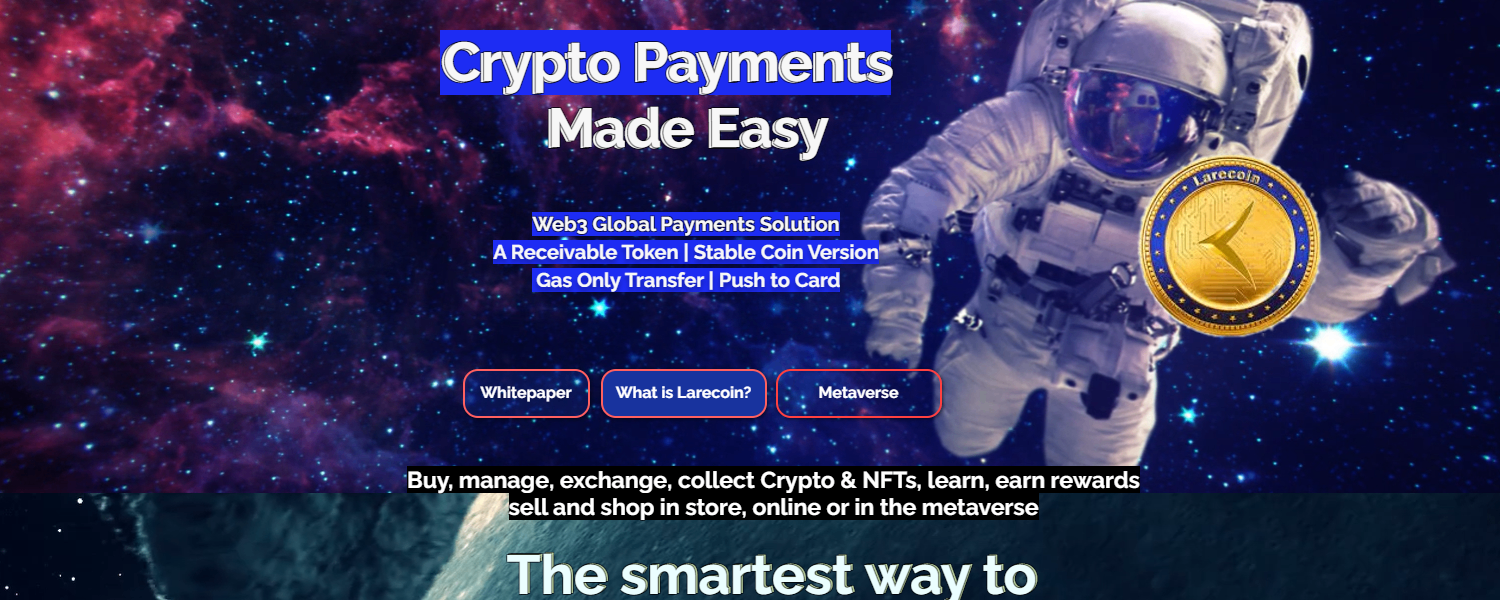
Why NOWPayments and CoinPayments Fall Short
Let's talk alternatives. NOWPayments and CoinPayments dominate the crypto payment processor space. They're decent entry points. But they come with baggage.
NOWPayments:
0.5-1% transaction fees
Custodial by default
KYC requirements for higher volumes
Limited stablecoin options
Settlement delays on some networks
CoinPayments:
0.5% base fee (plus network fees)
Centralized custody model
Account freezes reported by merchants
Complex fee structures for conversions
Third-party risk exposure
Both platforms require you to trust someone else with your funds. Both add friction between you and your money.
Larecoin's self-custody framework changes everything.
The Larecoin Self-Custody Framework: Step by Step
Here's the proven system merchants are using to slash fees and maintain complete independence.
Step 1: Set Up Your Self-Custody Wallet
Your wallet = your bank. No account applications. No approval processes. No waiting periods.
Generate your wallet. Secure your seed phrase. Done.
You're now ready to receive payments directly. No intermediary touches your funds: ever.
Step 2: Integrate Larecoin Payment Gateway
Head to Larecoin Merchants and connect your self-custody wallet.
The integration is straightforward:
API access for custom implementations
Payment buttons for simple setups
QR code generation for in-person transactions
Invoice creation for B2B payments
Your customers pay. Your wallet receives. That's the entire flow.
Step 3: Leverage LUSD for Stability
Volatility concerns? LUSD solves that.
Larecoin's stablecoin maintains dollar parity while preserving all the benefits of self-custody. Accept crypto without the price swings.
Key LUSD advantages:
1:1 USD peg : Predictable accounting
Gas-only transfers : Minimal transaction costs
Self-custodial : Still your keys, still your coins
Instant settlement : No waiting for conversions
Price BTC or ETH? Settle in LUSD. Your books stay clean. Your funds stay accessible.

Step 4: Issue NFT Receipts
This is where Larecoin gets innovative.
Every transaction can generate an NFT receipt. Immutable. Verifiable. Permanent.
Benefits for merchants:
Automated record-keeping : Blockchain-verified transactions
Customer engagement : Collectible receipts build loyalty
Dispute resolution : Irrefutable proof of purchase
Tax compliance : Transparent, auditable records
Benefits for customers:
Proof of purchase : Can't lose a digital receipt
Warranty tracking : NFT-linked service records
Collectibility : Some customers actually want these
NFT receipts aren't a gimmick. They're a genuine upgrade to traditional invoicing.
The Fee Math: Real Numbers
Let's get specific.
Traditional Credit Card Processing:
2.9% + $0.30 per transaction (average)
Monthly fees: $10-50
Chargeback fees: $15-100 per incident
PCI compliance costs: $100-500/year
NOWPayments:
0.5-1% per transaction
Network fees vary
Conversion fees for fiat offramps
No chargebacks (good)
CoinPayments:
0.5% per transaction
Network fees additional
Withdrawal fees apply
Account maintenance considerations
Larecoin Self-Custody:
Network gas fees only
No percentage cuts
No monthly fees
No conversion fees within ecosystem
LUSD transfers at gas cost only
On a $10,000 monthly volume:
Provider | Monthly Cost |
Traditional CC | $290-350 |
NOWPayments | $50-100 |
CoinPayments | $50-75 |
Larecoin | Under $20 |
The savings compound. $200+ monthly. $2,400+ annually. That's real money back in your business.

Bank-Free Operations: Why It Matters
"Bank-free" isn't anti-establishment rhetoric. It's operational efficiency.
Banks add:
Processing delays : 2-5 business days for ACH
Account requirements : Business licenses, documentation, approvals
Geographic restrictions : Cross-border complexity
Arbitrary holds : Funds frozen without warning
Hours of operation : No weekends, no holidays
Self-custody eliminates all of it.
Your Larecoin wallet works 24/7/365. Payments from Tokyo settle the same as payments from Toronto. No banker decides whether your transaction is "suspicious."
For international merchants, this is game-changing. Accept LUSD from a customer in Germany. Pay a supplier in Vietnam. Same wallet. Same speed. Same low fees.
Security Without Sacrifice
Self-custody means self-responsibility. That's the tradeoff.
But modern security practices make this manageable:
Hardware wallets : Cold storage for reserves Multi-signature setups : Require multiple approvals Hot wallet limits : Only keep operating funds accessible Backup protocols : Encrypted seed phrase storage
Larecoin's ecosystem supports all standard security configurations. Enterprise merchants can implement role-based access controls and approval workflows.
The risk profile shifts. You're no longer worried about exchange hacks or processor insolvency. You're managing your own security: which you can actually control.

Implementation Timeline
Getting started takes hours, not weeks.
Day 1:
Create self-custody wallet
Fund with initial LUSD or crypto
Register at Larecoin Pay
Day 2:
Integrate payment buttons or API
Test transactions
Configure NFT receipt settings
Day 3:
Go live
Monitor first real transactions
Adjust gas settings if needed
Compare that to traditional merchant account applications. Weeks of paperwork. Credit checks. Underwriting reviews. Reserve requirements.
Self-custody means sovereignty. Sovereignty means speed.
The Merchant Freedom Equation
Independence isn't just about fees. It's about options.
With self-custody through Larecoin:
No deplatforming risk : Your wallet can't be "closed"
No revenue caps : Process unlimited volume
No product restrictions : Sell what you sell
No geographic limits : Global by default
No permission required : Ever
Traditional processors have terms of service. Violations get you banned. Sometimes without warning. Sometimes without recourse.
Your self-custody wallet has no terms of service. It's software. It does what you tell it.
That's freedom. That's the future.
Ready to Cut the Cord?
The framework is proven. The math works. The technology exists today.
Merchants making the switch report 70-90% reductions in payment processing costs. They report instant settlements. They report zero chargebacks.
They report freedom.
Start here: Larecoin Merchants
Explore the ecosystem: Larecoin Whitepaper
Join the community: Larecoin Groups
Your funds. Your keys. Your business.
No bank required.
Comments