

.png)
Triple-A vs Larecoin: Which Crypto POS System Actually Gives You MTL-Compliant, Bank-Free Operations?
- [[[Free!!]<<<<]] Watch: 스포르팅 - 토트넘 Live Stream 13 September 2022
- 6 days ago
- 4 min read
![Writer: [[[Free!!]<<<<]] Watch: 스포르팅 - 토트넘 Live Stream 13 September 2022](https://lh3.googleusercontent.com/a/AItbvmktwQc0wCdd3ZEETSYItRQubwwBzOyjD_dcigRf=s96-c)
Let's cut through the noise.
You're looking for a crypto POS solution. You want out of traditional banking. You need compliance that doesn't compromise your operational freedom.
Two names keep popping up: Triple-A and Larecoin.
But here's what nobody's telling you. One of these platforms still chains you to T+1 bank settlements. The other? True self-custody. Zero bank dependencies.
Time to break it down.
The Bank-Free Myth: What Triple-A Actually Offers
Triple-A markets itself as a crypto payment gateway. Sounds progressive.
Reality check.
Triple-A operates as a licensed Payment Institution under the Monetary Authority of Singapore (MAS), the French ACPR, and FinCEN registration in the US. They convert your crypto to fiat. They settle funds directly into your business bank account.
That's not bank-free. That's bank-integrated.
Here's what you're actually getting:
T+1 bank settlements in 50+ local currencies
Instant crypto-to-fiat conversion
Exchange rate locks to protect against volatility
Direct deposits into traditional bank accounts
For merchants wanting to escape the banking system entirely? Triple-A isn't it.
Larecoin: Self-Custody That Actually Means Something
Different philosophy. Different architecture. Different results.
Larecoin operates on a gas-only transfer model. Your funds stay in your control. No middleman holding your crypto. No forced fiat conversion.
True self-custody means:
You hold your keys
You control your liquidity
You decide when (or if) to convert
Zero bank account requirements
The master/sub-wallet structure gives merchants unprecedented control. Run multiple locations? Each gets its own sub-wallet. All feeding into your master wallet. Real-time visibility. Zero delays.
This is what bank-free actually looks like.
MTL Compliance: The Critical Differentiator
Here's where things get serious.
Operating a crypto payment system in the United States requires proper licensing. Money Transmitter Licenses (MTLs) aren't optional, they're mandatory for legitimate operations.
Triple-A's approach:
FinCEN registration (federal level)
MAS licensing (Singapore)
ACPR authorization (France)
Solid for international operations. But state-by-state MTL coverage in the US? That's a different story entirely.
Larecoin's approach:
Federal MSB (Money Services Business) registration
State-level MTL coverage across the US
Built for American merchants from day one
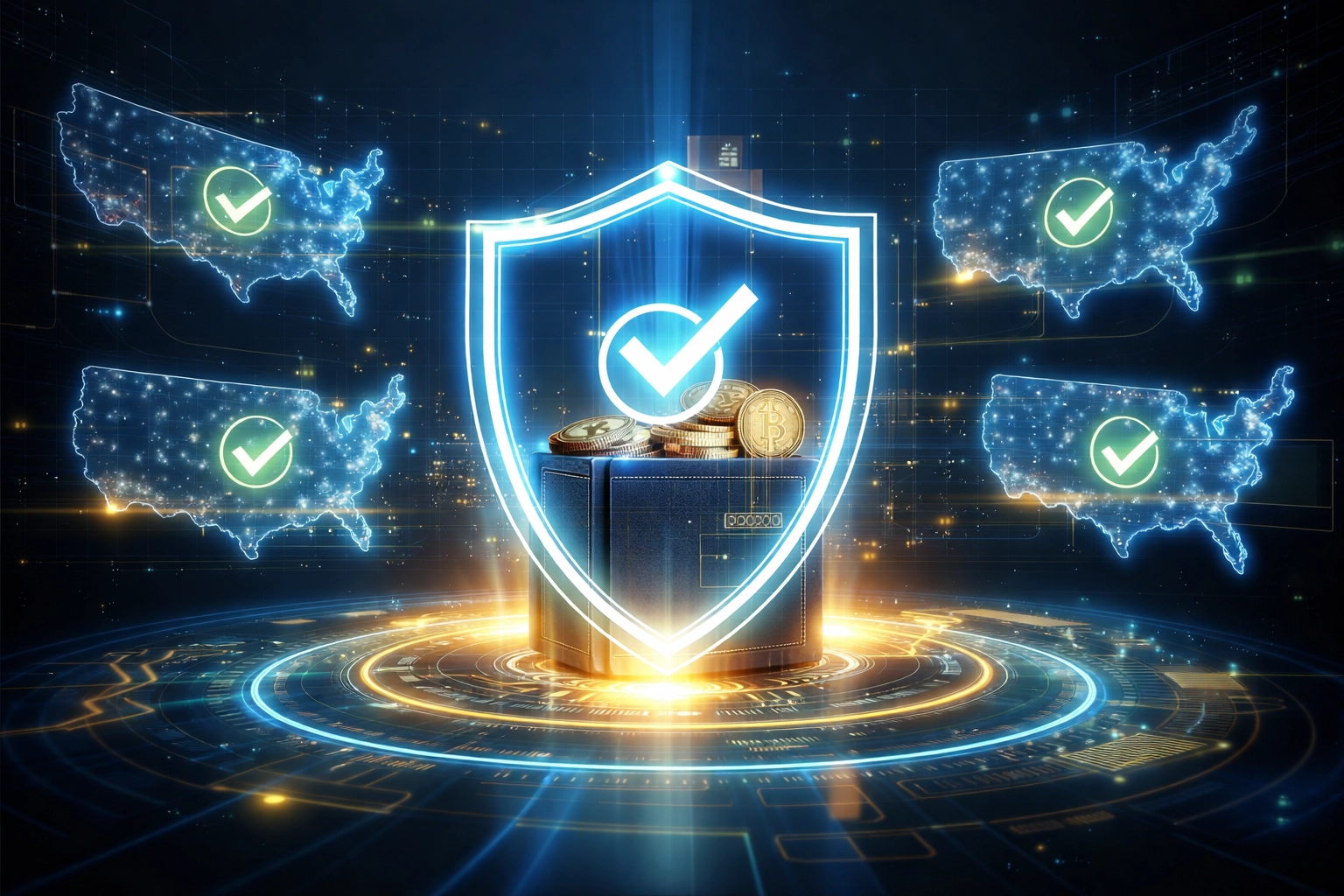
Why does this matter? Each US state has its own money transmission laws. Operating without proper MTL compliance exposes merchants to serious legal risk. Larecoin's state-level coverage means you're protected, not just technically compliant, but genuinely operational across jurisdictions.
Fee Savings: The Numbers Don't Lie
Traditional payment processors hit you with 2.5-3.5% interchange fees. Every transaction. Every day.
That adds up fast.
Larecoin's crypto POS system slashes those fees by more than 50%. Here's the math on a business processing $100,000 monthly:
Payment Method | Fee Rate | Monthly Cost |
Traditional Card Processing | 3% | $3,000 |
Larecoin Crypto POS | ~1.2% | ~$1,200 |
Annual Savings | , | $21,600 |
Triple-A still involves fiat conversion. Bank settlements. Traditional rails. That means traditional-adjacent costs.
Larecoin's gas-only transfers keep costs minimal. You're paying network fees. Not bank fees. Not processing fees. Not conversion fees.
NFT Receipts: Beyond Paper Trails
Here's where innovation gets tangible.
Every Larecoin transaction generates an NFT receipt. Not a gimmick. A fundamental upgrade to transaction verification.
Benefits for merchants:
Immutable proof of sale
Blockchain-verified timestamps
Automatic record-keeping
Simplified tax documentation
Customer loyalty integration potential
Benefits for customers:
Permanent purchase records
Easy returns/exchanges verification
Collection and display options
Resale provenance for applicable goods
Triple-A? Traditional receipts. Traditional limitations.
LUSD: Stability Without Surrender
Volatility concerns are valid. Accepting BTC today, watching it drop 10% tomorrow, that's a real risk.
Larecoin's answer: LUSD stablecoin.
Accept payments in volatile assets. Instant conversion to LUSD. Dollar-pegged stability. Still within the Larecoin ecosystem. Still self-custody.
You get:
Price stability
No bank involvement
Continued ecosystem benefits
Flexibility to hold or convert
Triple-A's solution? Convert to fiat. Send to your bank. Back in the traditional system.
See the difference?
QR-Generated POS: Simplicity at Scale
Forget expensive hardware. Forget complex integrations.
Larecoin's QR-generated POS system works like this:
Generate unique QR code
Customer scans
Payment confirmed
Funds in your wallet
That's it. Any smartphone becomes a point of sale. Any tablet becomes a register. Scale from one location to fifty without hardware investments.
For pop-up shops, mobile vendors, or multi-location retailers, this flexibility is game-changing.
The Metaverse Shopping Frontier
Where Triple-A stops at traditional commerce, Larecoin sees further.
The B2B2C metaverse isn't science fiction. It's the next retail frontier. Social shopping experiences. VR storefronts. AR product visualization.
Larecoin's infrastructure is built for this:
Native metaverse integration
Social shopping capabilities
VR/AR payment rails
Cross-platform compatibility
Imagine your customers browsing virtual stores. Trying products in augmented reality. Purchasing with a gesture. All settled through your Larecoin crypto POS.
Triple-A? Built for today's rails. Larecoin? Built for tomorrow's reality.
Technical Architecture Comparison
Let's get specific.
Feature | Triple-A | Larecoin |
Settlement | T+1 Bank | Instant Self-Custody |
Currency Options | Crypto → Fiat | Crypto + LUSD |
Receipt Type | Traditional | NFT |
Transfer Model | Conversion-Based | Gas-Only |
US MTL Coverage | Limited | State-Level |
Metaverse Ready | No | Yes |
Wallet Structure | Standard | Master/Sub-Wallet |
Hardware Required | Varies | QR-Only Option |
The architecture tells the story. One system extends traditional finance into crypto. The other builds native crypto infrastructure for real-world commerce.
Who Should Choose What?
Choose Triple-A if:
You need immediate fiat conversion
You're comfortable with bank settlements
International Singapore/France operations are priority
Traditional compliance frameworks suit your model
Choose Larecoin if:
Self-custody is non-negotiable
US MTL compliance matters
Fee savings over 50% impacts your bottom line
NFT receipts align with your brand
Metaverse commerce is on your roadmap
Bank-free operations are the actual goal
The Verdict
The question wasn't which platform is better overall. It was specific: Which gives you MTL-compliant, bank-free operations?
Triple-A offers compliance. But bank-free? Not even close.
Larecoin delivers both. Federal MSB registration. State-level MTL coverage. True self-custody. Gas-only transfers. Zero bank involvement required.
For merchants serious about operating outside traditional banking while maintaining bulletproof compliance: the answer is clear.
Ready to see it in action? Explore Larecoin Pay and experience what bank-free crypto POS actually looks like.
The future of payments isn't about bridging crypto to banks. It's about building something entirely new.
Larecoin is building it. The question is whether you'll be part of it.
Comments