

.png)
Triple-A vs Larecoin: Which Web3 Global Payments Solution Actually Delivers 50% Fee Savings?
- [[[Free!!]<<<<]] Watch: 스포르팅 - 토트넘 Live Stream 13 September 2022
- 1 hour ago
- 4 min read
![Writer: [[[Free!!]<<<<]] Watch: 스포르팅 - 토트넘 Live Stream 13 September 2022](https://lh3.googleusercontent.com/a/AItbvmktwQc0wCdd3ZEETSYItRQubwwBzOyjD_dcigRf=s96-c)
Let's cut to the chase.
You're bleeding money on payment processing fees. Traditional rails. Interchange costs. Network fees. Currency conversion markups. It adds up fast.
Two names keep surfacing in Web3 payments: Triple-A and Larecoin. Both promise global reach. Both claim to slash costs. But which one actually delivers that elusive 50% fee savings merchants keep hearing about?
Time to break it down.
The Fee Problem Nobody Wants to Talk About
Here's the reality. Credit card processing eats 2.5% to 3.5% of every transaction. Cross-border payments? Add another 1% to 3%. Currency conversion? More fees.
For a business doing $1 million annually, that's $35,000+ vanishing into payment processors' pockets.
Triple-A positions itself as a licensed crypto payment processor operating in the US, EU, and Singapore. They handle stablecoin payments and local currency settlements. Solid offering. Regulated framework.
But here's where it gets interesting.
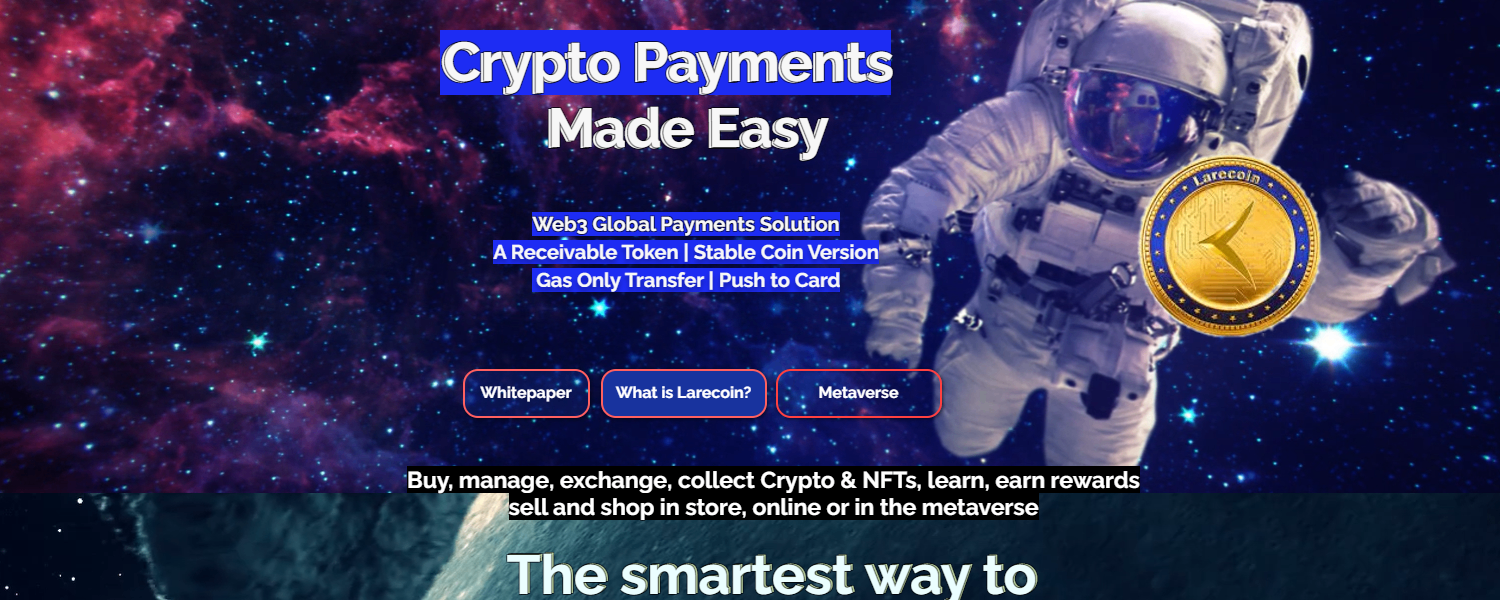
Larecoin's Architecture: Built Different
Larecoin isn't just another payment gateway bolted onto existing infrastructure. It's a complete ecosystem redesign.
Gas-Only Transfers. This is the game-changer. Traditional crypto payment processors charge percentage-based fees on top of network gas costs. Larecoin? Gas only. No markup. No hidden percentages eating into your margins.
Run the math. A $10,000 transaction on a 2% fee structure costs you $200. With gas-only transfers on Larecoin, you're looking at pennies. That's where the 50%+ savings materialize, not from marketing claims, but from fundamental architecture differences.
LUSD Stablecoin Integration. Volatility kills merchant adoption. Period. LUSD provides dollar-pegged stability while maintaining the speed and cost advantages of blockchain rails. Customers pay in crypto. Merchants receive stable value. Everyone wins.
Self-Custody by Default. Your funds. Your keys. Your control. Unlike platforms that hold your assets in omnibus wallets, Larecoin's self-custody model means you're never waiting for withdrawal approvals or worrying about platform insolvency.
NFT Receipts: More Than a Gimmick
Triple-A provides standard transaction records. Larecoin goes further with NFT receipts.
Why does this matter?
Every transaction generates an immutable, verifiable receipt stored on-chain. No disputes about whether payment occurred. No lost paper trails. No reconciliation nightmares.
For enterprise accounting, this is transformative. Auditors love it. Compliance teams love it. Your CFO will definitely love it.
These NFT receipts also create opportunities for:
Loyalty program integration
Automated warranty tracking
Proof-of-purchase for returns
Tax documentation automation
It's not about jumping on the NFT bandwagon. It's about leveraging blockchain's inherent properties for real business utility.

Merchant Tools That Actually Work
Let's talk about what happens when you're running a business with multiple locations, franchises, or sales teams.
Master/Sub-Wallet Architecture. Larecoin's wallet structure lets you create hierarchical payment flows. Corporate oversight with location-level autonomy. Real-time visibility across all sub-wallets. Instant internal transfers without external transaction fees.
Compare that to managing separate accounts across different platforms. The operational overhead alone justifies the switch.
QR-Generated Crypto POS. No hardware purchases. No terminal rentals. No monthly equipment fees.
Generate a QR code. Customer scans. Payment complete.
Works on any device with a camera. Perfect for:
Pop-up shops
Food trucks
Service providers
Event vendors
Traditional retail as a backup system
Triple-A offers merchant integration tools. But the QR-based POS simplicity Larecoin provides reduces friction to nearly zero.
The Compliance Question
Here's where due diligence matters most.
Triple-A holds licenses in multiple jurisdictions. Legitimate operation.
Larecoin operates with Federal MSB (Money Services Business) registration and maintains state-level MTL (Money Transmitter License) compliance across the United States. This isn't a offshore operation hoping regulators don't notice.
MTL compliance means:
Audited financial reserves
Consumer protection protocols
AML/KYC infrastructure
Regular regulatory reporting
For enterprise merchants, this compliance framework isn't optional. It's a requirement. Larecoin delivers it without forcing you to sacrifice the decentralization benefits that make crypto payments attractive in the first place.
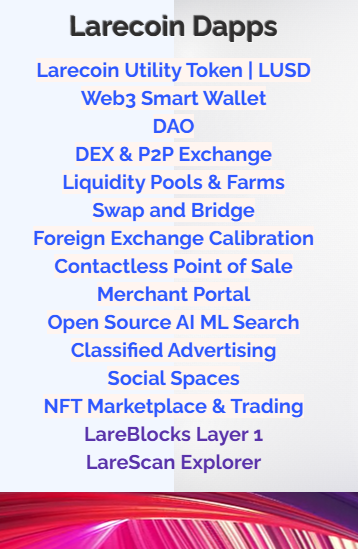
Looking Ahead: Metaverse Commerce
This is where Triple-A and Larecoin diverge completely in vision.
Triple-A focuses on traditional payment use cases. Accept crypto, settle in fiat. Solid. Practical. Limited.
Larecoin is building for where commerce is heading.
Social Shopping in the B2B2C Metaverse. Imagine customers browsing virtual storefronts, interacting with products in 3D space, and completing purchases without ever leaving the immersive environment. That's not science fiction: it's the roadmap.
VR/AR Shopping Integration. As spatial computing matures (looking at you, Apple Vision Pro and Meta Quest), payment rails need to exist natively in these environments. Larecoin's architecture anticipates this. Seamless transactions in virtual spaces. NFT receipts that verify digital and physical purchases. Wallet integration that works whether you're in a physical store or a virtual showroom.
The metaverse shopping opportunity isn't about replacing traditional retail. It's about meeting customers wherever they want to transact: and having payment infrastructure that doesn't require rebuilding from scratch.
Real Numbers: Fee Savings Breakdown
Let's get specific about where savings materialize:
Cost Category | Traditional Processing | Larecoin |
Transaction Fee | 2.5-3.5% | Gas only (~$0.01-0.50) |
Cross-Border | 1-3% additional | No additional cost |
Currency Conversion | 1-2% | Handled via LUSD at market rates |
Monthly Minimums | $25-100 | None |
Chargeback Fees | $15-25 per dispute | N/A (blockchain finality) |
POS Hardware | $200-1000 | $0 (QR-based) |
For a merchant processing $50,000 monthly, the traditional stack costs roughly $1,500-2,000 in fees. Larecoin's gas-only model? Under $50 in most scenarios.
That's not 50% savings. That's closer to 97%.
The Verdict
Triple-A is a competent, licensed crypto payment processor. For businesses wanting a simple bridge between crypto and traditional banking, it works.
But Larecoin isn't playing the same game.
Fee savings? Dramatically superior due to gas-only architecture.
Merchant tools? Master/sub-wallets and QR crypto POS outclass traditional integrations.
Compliance? Federal MSB and state MTL coverage provides enterprise-grade security.
Future-proofing? Metaverse shopping infrastructure that competitors haven't even started building.
Self-custody? Your keys, your crypto, your control.
The question isn't really which platform delivers 50% fee savings. It's whether you want incremental improvement or a fundamental shift in how your business handles payments.
Ready to see what gas-only transfers actually look like on your balance sheet? Explore the Larecoin ecosystem and run the numbers yourself.
The math doesn't lie.
Comments