

.png)
Why Self-Custody Merchant Accounts Will Change the Way You Accept Web3 Global Payments
- [[[Free!!]<<<<]] Watch: 스포르팅 - 토트넘 Live Stream 13 September 2022
- 2 hours ago
- 4 min read
![Writer: [[[Free!!]<<<<]] Watch: 스포르팅 - 토트넘 Live Stream 13 September 2022](https://lh3.googleusercontent.com/a/AItbvmktwQc0wCdd3ZEETSYItRQubwwBzOyjD_dcigRf=s96-c)
Traditional payment processors have held merchants hostage for decades.
High fees. Frozen accounts. Delayed settlements. Currency conversion nightmares.
Self-custody merchant accounts flip the script entirely. You own your money. You control your keys. No middleman decides when: or if: you get paid.
This isn't just an upgrade. It's a complete paradigm shift in how businesses accept Web3 global payments.
Let's break down why self-custody is the future of merchant payments.
The Problem With Traditional Payment Processing
Here's what most merchants deal with daily:
3%+ interchange fees eating into every transaction
2-7 day settlement delays killing cash flow
Account freezes with zero warning or explanation
International surcharges making global sales expensive
Chargeback headaches that favor fraudsters
You're essentially renting your own revenue stream. The processor decides the rules. Change your business model? They might drop you. Sell to the "wrong" country? Funds held indefinitely.
This system was built for the processor's benefit. Not yours.
What Self-Custody Actually Means
Self-custody means one thing: you control your private keys.
No intermediary holds your funds. No third party can freeze your account overnight. Payments flow directly from customer wallet to your wallet.
Think of it like owning a safe versus renting a bank deposit box. With traditional processors, the bank can lock you out anytime. With self-custody, only you have the key.
For merchants, this translates to:
Instant settlement in seconds, not days
Drastically lower fees (blockchain gas fees vs. 3% processing)
Zero account freezes or arbitrary policy changes
True global reach without geographic restrictions
Complete financial sovereignty
Why Self-Custody Merchant Accounts Reduce Merchant Interchange Fees
Let's talk numbers.
Traditional processors charge 2.5-3.5% per transaction. High-risk merchants? Even more. International transactions? Add currency conversion fees on top.
Self-custody changes the math completely.
Blockchain transactions cost gas fees. On networks like Solana, we're talking fractions of a cent. Even on busier networks, fees rarely exceed a few dollars for high-value transactions.
Example:
$10,000 monthly volume with traditional processing = $250-350 in fees
$10,000 monthly volume with self-custody = Under $10 in gas fees
That's a 95%+ reduction in payment processing costs.
For small businesses running on thin margins, this isn't incremental. It's transformational.
How Larecoin Delivers True Self-Custody
Larecoin was built from the ground up for self-custody merchant accounts.
No custodial wallets. No holding funds. No playing bank.
Here's what makes the Larecoin ecosystem different:
LUSD Stablecoin Benefits
Volatility kills merchant adoption. Nobody wants to accept $100 in crypto that becomes $85 by morning.
LUSD solves this. It's a stablecoin pegged to fiat value, giving merchants price stability without sacrificing the benefits of blockchain settlement.
Accept payments in any supported crypto. Receive LUSD. Eliminate volatility risk entirely.
Receivables Token Innovation
Traditional accounting treats crypto payments as a headache. Larecoin's receivables token changes that.
Each transaction generates a tokenized receivable. Clear audit trail. Instant verification. Seamless integration with existing accounting workflows.
Your bookkeeper will thank you.
NFT Receipts for Accounting
Here's where it gets interesting.
Every Larecoin transaction can generate an NFT receipt. Immutable. Timestamped. Permanently recorded on-chain.
Benefits for merchants:
Bulletproof audit trails that can't be altered
Automatic categorization for tax purposes
Instant verification for disputes or chargebacks
Zero paper records to manage or lose
NFT receipts for accounting aren't a gimmick. They're the future of financial record-keeping.
Self-Custody vs. The Competition
Looking for a NOWPayments alternative or CoinPayments alternative? Here's how self-custody stacks up.
NOWPayments
NOWPayments offers crypto payment processing, but they're still custodial. Your funds flow through their infrastructure. They set the rules. They control settlement timing.
Better than traditional processors? Sure. True self-custody? No.
CoinPayments
Similar story. CoinPayments has been around since 2013, but the model is fundamentally custodial. Account freezes happen. Withdrawal limits exist. You're still trusting a third party with your money.
Triple-A
Triple-A targets enterprise clients with fiat conversion. Useful for some. But again: custodial infrastructure means you're renting, not owning.
Larecoin's approach is different.
Direct wallet-to-wallet payments. Zero custody. Complete control. This is what Web3 global payments should look like.
Crypto POS System for Small Business
Self-custody isn't just for e-commerce.
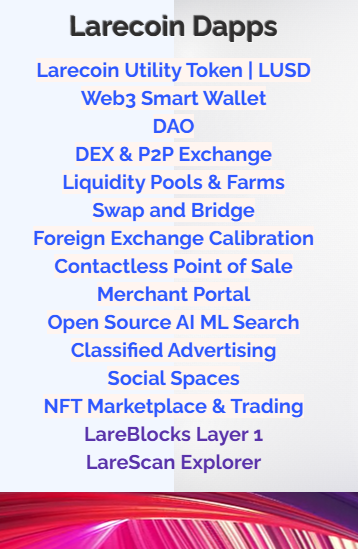
Larecoin's contactless POS system brings self-custody to physical retail. Accept crypto payments in-store with the same benefits:
Instant settlement to your wallet
Gas-only fees (no percentage-based processing)
NFT receipt generation for every transaction
No hardware rental fees or monthly subscriptions
Small businesses get enterprise-grade payment infrastructure without enterprise-grade costs.
Set up takes minutes. No merchant account applications. No credit checks. No waiting periods.

Who Benefits Most From Self-Custody?
Self-custody merchant accounts work for almost any business. But some see outsized benefits:
High-Volume E-Commerce
Processing $50,000+ monthly? Traditional fees add up fast. Self-custody compounds savings with every transaction.
International Sellers
Cross-border payments are expensive and slow with traditional processors. Self-custody eliminates both problems. A customer in Tokyo pays you as easily as one in Toronto.
Crypto-Native Businesses
Your customers already have wallets. They expect Web3-native payment options. Self-custody meets them where they are.
High-Risk Industries
Traditional processors love to freeze accounts in certain verticals. Self-custody removes that risk entirely. No arbitrary account closures.
Freelancers and Creators
Why lose 3% to payment processors on every client payment? Self-custody means keeping more of what you earn.
Getting Started With Self-Custody Payments
Ready to take control of your payment infrastructure?
Here's the path forward:
Set up a self-custody wallet compatible with Larecoin
Connect to the merchant portal for transaction management
Generate payment links or integrate the POS system
Accept payments directly to your wallet
Use NFT receipts for seamless accounting
No lengthy applications. No approval processes. No middleman deciding if your business is acceptable.

The Future Is Self-Custody
Traditional payment processing had its time. The infrastructure was necessary when digital payments required trusted intermediaries.
Blockchain changed everything.
Smart contracts execute trustlessly. Transactions settle in seconds. Immutable records eliminate disputes.
Self-custody merchant accounts aren't just a better option. They're the inevitable evolution of commerce.
The merchants who adopt early gain competitive advantages in fees, settlement speed, and financial sovereignty. The ones who wait will eventually follow: or get left behind.
Web3 global payments are here. Self-custody makes them accessible to every business, regardless of size or location.
Own your payments. Own your business.
Explore Larecoin's merchant solutions and see what true self-custody looks like.
Comments