

.png)
Your Quick-Start Guide to VR/AR Metaverse Shopping: Do This First Before Your Competitors Do
- [[[Free!!]<<<<]] Watch: 스포르팅 - 토트넘 Live Stream 13 September 2022
- 2 hours ago
- 4 min read
![Writer: [[[Free!!]<<<<]] Watch: 스포르팅 - 토트넘 Live Stream 13 September 2022](https://lh3.googleusercontent.com/a/AItbvmktwQc0wCdd3ZEETSYItRQubwwBzOyjD_dcigRf=s96-c)
The metaverse shopping revolution isn't coming. It's here.
25% of people globally will spend at least an hour daily in the metaverse by 2026. That's not speculation. That's the trajectory.
IKEA. Walmart. McDonald's. They're already building virtual stores. Testing immersive commerce. Capturing early adopter data.
Here's what they're getting wrong: legacy payment infrastructure.
You can do better. Right now.
Why VR/AR Shopping Changes Everything
Traditional ecommerce is flat. Literally.
You scroll. You click. You checkout. Done.
Metaverse shopping? Different game entirely.
Customers walk through virtual storefronts. Try on products using avatars. Interact with items in real-time. Purchase without leaving the immersive environment.
The experience isn't the challenge anymore. Platforms like Roblox, The Sandbox, and Decentraland have solved that.
The real challenge? Payments.
How do you process transactions in a decentralized, immersive environment without killing the experience? How do you maintain self-custody while enabling instant checkout? How do you prove purchases happened on-chain?
This is where most merchants stumble. And where you gain ground.
The Payment Problem Your Competitors Haven't Solved
Most metaverse payment solutions are retrofits.
NOWPayments offers crypto acceptance. Fine. But you're still waiting on confirmations. Still paying processor fees. Still lacking on-chain proof of purchase.
CoinPayments gives you multi-currency support. Great. But where's the stablecoin native to the ecosystem? Where's the gas-only transfer architecture? Where's the immersive POS integration?
Triple-A handles compliance decently. But their fee structure? Still built for traditional ecommerce. Not metaverse-native commerce.
None of them were designed for VR/AR environments.
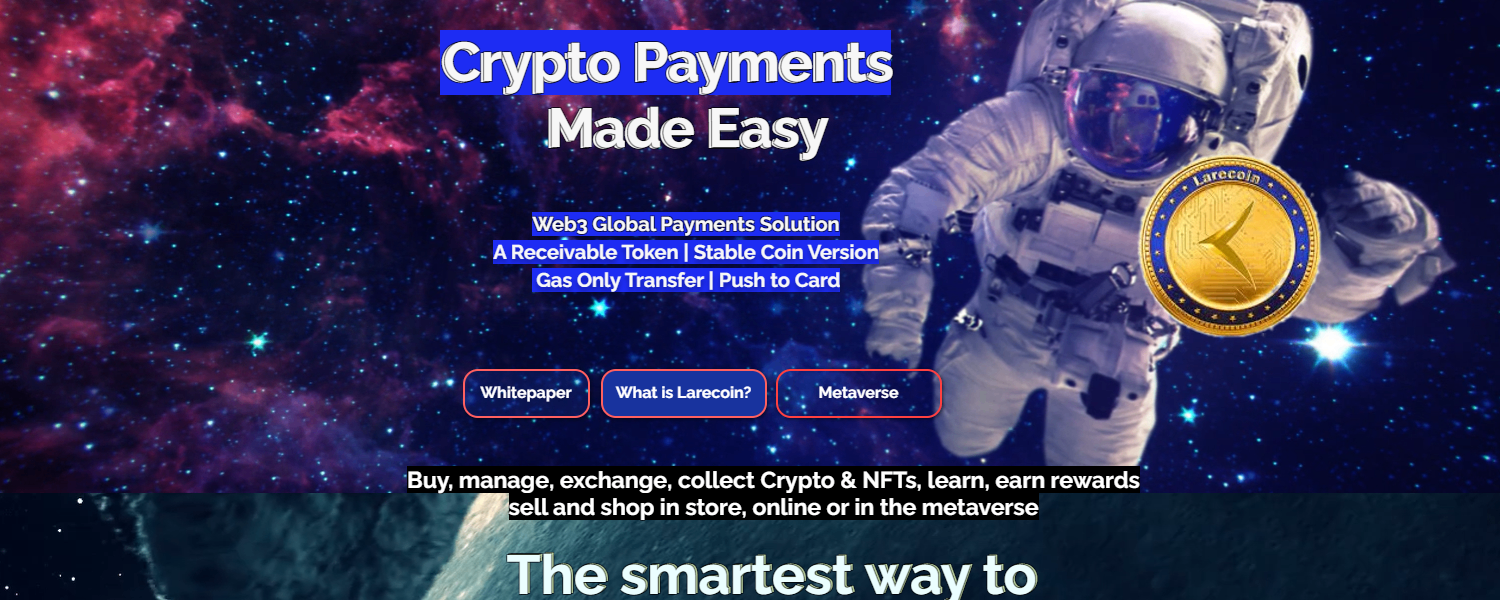
Larecoin was.
What Makes Larecoin Different for Metaverse Shopping
Let's break down the technical advantages that actually matter for immersive commerce.
NFT Receipts
Every transaction generates a verifiable NFT receipt.
Not a PDF. Not an email confirmation. An on-chain, immutable proof of purchase.
Why does this matter for metaverse shopping?
Verify ownership of virtual and physical goods instantly
Enable secondary marketplace resale with provenance tracking
Create loyalty programs tied to purchase history on-chain
Eliminate chargeback disputes with immutable transaction records
Your competitors using traditional payment processors? They can't offer this. Their receipts live on centralized servers. Yours live forever on-chain.
LUSD Stablecoin
Volatility kills commerce.
Nobody wants to buy a $50 item that costs $47 by the time checkout completes. Or $53.
LUSD eliminates this. Native stablecoin. Pegged. Predictable.
For metaverse shopping, this means:
Price what you display
Instant settlement without volatility risk
Cross-border transactions without FX headaches
Seamless integration with virtual storefronts
NOWPayments and CoinPayments support USDT and USDC. Third-party stablecoins with third-party fees. LUSD is ecosystem-native. Built for this.
Gas-Only Transfers
Traditional crypto payments eat into margins.
Network fees. Processor fees. Conversion fees.
Larecoin's gas-only transfer architecture changes the math.
You pay gas. That's it.
For high-volume metaverse merchants processing thousands of micro-transactions? This is the difference between profitable and underwater.

Self-Custody by Default
Here's what NOWPayments and CoinPayments won't tell you: they hold your funds.
Temporary? Sure. But custody is custody. Risk is risk.
Larecoin operates on self-custody principles. Funds move directly to your wallet. Master and sub-wallet architecture lets you organize by store, region, or product line.
In the metaverse, where digital assets blur the line between virtual and physical goods, self-custody isn't optional. It's essential.
The Fee Savings Math
Let's talk numbers.
Traditional interchange fees run 2-3% per transaction. Sometimes higher for international cards.
Larecoin merchants reduce those fees by more than 50%.
On a $100,000 monthly volume:
Traditional processing: $2,500-$3,000 in fees
Larecoin processing: Under $1,200
That's $18,000+ annual savings. Minimum.
Scale that to metaverse commerce volumes, where micro-transactions stack up fast, and the savings compound dramatically.
Your crypto POS generates QR codes instantly. Customers scan. Pay. Done.
No terminal hardware. No monthly lease fees. No integration headaches.
Compliance That Actually Works
Crypto payments scare traditional merchants for one reason: regulatory uncertainty.
Fair concern. Bad actors in this space have made compliance a legitimate worry.
Here's where Larecoin stands apart.
Federal MSB registration. Money Services Business. Federally recognized.
State-level MTL coverage. Money Transmitter Licenses across the U.S.
This isn't future roadmap. This is current status.
When your legal team asks "is this compliant?", the answer is yes. Documented. Verifiable. MTL compliance isn't a promise. It's a reality.
NOWPayments? Limited U.S. coverage. CoinPayments? Canadian-based with patchwork state access. Triple-A? Still building out their compliance infrastructure.
You need a payment partner that's already passed the regulatory tests. Not one that's studying for them.

The B2B2C Metaverse Vision
Larecoin isn't just building payment rails. We're building the destination.
The Larecoin B2B2C metaverse enables social shopping at scale.
Picture this: Your customers enter a virtual storefront. They browse with friends. Try products on their avatars. Split payments instantly. Purchase physical goods that ship to their door. Purchase digital goods that transfer to their wallet.
All within one immersive experience.
Traditional ecommerce platforms can't deliver this. They're built for isolated, individual transactions.
The future of retail is social. Shared. Immersive.
And the payment infrastructure needs to match.
Your Quick-Start Action Plan
Stop waiting. Start building.
Step 1: Choose Your Platform
Roblox has the most mature ecommerce infrastructure. Shopify integration is live. Start here for proven results.
The Sandbox works for fashion and luxury brands. Over 200 brand partnerships already.
Decentraland suits long-term digital asset plays. NFT land ownership. Permanent presence.
Step 2: Set Up Larecoin Merchant Account
Visit larecoin.com/merchants to begin onboarding.
Configure your master wallet. Create sub-wallets for different product lines or virtual storefronts. Generate QR-based crypto POS codes for each checkout point.
Step 3: Integrate NFT Receipts
Enable on-chain receipt generation for every transaction. This becomes your verifiable purchase history. Your loyalty program foundation. Your chargeback shield.
Step 4: Price in LUSD
Eliminate volatility from your metaverse storefront. Display prices in LUSD. Accept payments in LUSD. Settle instantly without conversion delays.
Step 5: Launch Before Competitors Catch Up
Early movers in metaverse retail capture brand recognition. Customer data. Market positioning.
The window is open. It won't stay open forever.
The Bottom Line
Metaverse shopping isn't a gimmick. It's the next evolution of commerce.
Your competitors are experimenting with platforms. Building virtual storefronts. Testing immersive experiences.
But most are ignoring the payment layer. Still retrofitting legacy processors into futuristic environments.
That's your advantage.
Larecoin delivers what metaverse commerce actually requires:
NFT receipts for verifiable, on-chain proof of purchase
LUSD stablecoin for volatility-free transactions
Gas-only transfers for maximum fee savings
Self-custody architecture for true ownership
MTL compliance for regulatory peace of mind
B2B2C metaverse integration for social shopping at scale
The question isn't whether metaverse shopping will dominate retail.
The question is whether you'll be ready when it does.
Comments