

.png)
Are Centralized Crypto Payment Gateways Dead? Why Merchants Are Switching to Self-Custody Receivables Tokens in 2026
- [[[Free!!]<<<<]] Watch: 스포르팅 - 토트넘 Live Stream 13 September 2022
- 2 hours ago
- 4 min read
![Writer: [[[Free!!]<<<<]] Watch: 스포르팅 - 토트넘 Live Stream 13 September 2022](https://lh3.googleusercontent.com/a/AItbvmktwQc0wCdd3ZEETSYItRQubwwBzOyjD_dcigRf=s96-c)
The crypto payment landscape is shifting fast in 2026.
Merchants are waking up to a harsh reality: centralized gateways like NOWPayments and CoinPayments are extracting massive fees while controlling your funds. They're intermediaries. Middlemen. And they're taking a cut every single time you process a transaction.
Self-custody receivables tokens are changing the game. No custodian. No permission needed. Just direct peer-to-peer crypto payments with full merchant control.
The Hidden Costs of Centralized Crypto Gateways
Let's talk numbers.
NOWPayments charges 0.5% per transaction. Sounds reasonable until you process $100K monthly. That's $500 gone. Every month. Forever.
CoinPayments? 0.5% base fee plus network fees. And their withdrawal fees? Another slice of your revenue disappearing into their pockets.
But fees aren't the only problem.
Control Issues:
Your funds sit in their wallets
Withdrawal delays during high volatility
Account freezes without warning
KYC requirements that invade privacy
Settlement periods that kill cash flow
You're trusting a third party with your business revenue. In an industry built on trustless transactions. That's ironic.

What Are Self-Custody Receivables Tokens?
Self-custody receivables tokens flip the entire model.
Instead of routing payments through centralized processors, merchants receive blockchain-native tokens directly. No intermediary. No custody handoff. No waiting.
How It Works:
Customer initiates payment
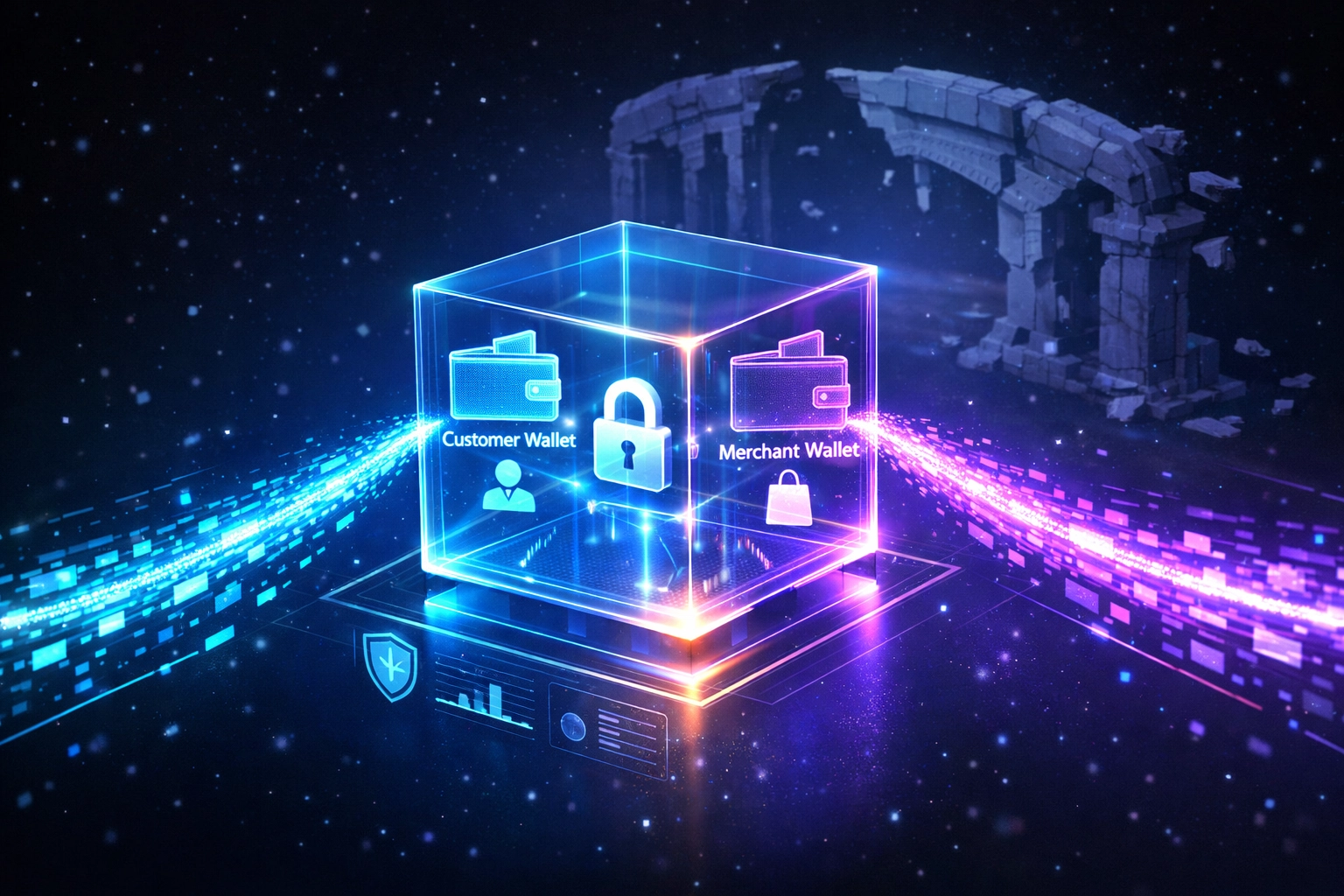
Tokens transfer wallet-to-wallet
Merchant receives funds instantly
Full control from second one
Larecoin's LARE and LUSD tokens operate exactly this way. Merchants accept payments directly into their wallets. Gas-only transfers mean minimal fees. Self-custody means complete control.
The receivables token model eliminates processor fees entirely. You pay network gas. That's it. On Solana blockchain? We're talking fractions of a penny per transaction.
Why Merchants Are Making the Switch in 2026
Three major drivers are pushing merchants toward self-custody solutions.
Fee Savings
Math is simple. Process $50K monthly through NOWPayments at 0.5%? You lose $250 monthly. $3,000 annually.
With Larecoin's self-custody model? Gas fees might total $5 monthly. That's $2,995 saved every year. For a single mid-sized merchant.
Scale that across thousands of transactions. The savings become life-changing.
Independence and Control
Centralized gateways can freeze your account. Change terms without notice. Delay withdrawals during crucial cash flow periods.
Self-custody eliminates every single one of these risks.
Your wallet. Your keys. Your funds. No phone calls to support. No waiting on approvals. No arbitrary policy changes that tank your business overnight.
Compliance Without Compromise
Traditional processors force extensive KYC. They collect customer data. They create privacy vulnerabilities.
Self-custody receivables tokens operate on-chain. Transactions are transparent without exposing unnecessary personal information. Merchants stay compliant while respecting customer privacy.
Direct Comparison: Larecoin vs NOWPayments vs CoinPayments
Let's break down the real differences.
Fee Structure:
NOWPayments: 0.5% per transaction + network fees + withdrawal fees
CoinPayments: 0.5% base + network fees + withdrawal fees + currency conversion charges
Larecoin: Gas-only (< $0.01 per transaction on Solana)
Settlement Speed:
NOWPayments: Batch settlements, potential delays
CoinPayments: T+1 to T+3 settlement periods
Larecoin: Instant, real-time blockchain settlement
Custody Model:
NOWPayments: Full custody, you don't control funds until withdrawal
CoinPayments: Hosted wallet, they hold private keys
Larecoin: Complete self-custody, you always control assets
Additional Features:
NOWPayments and CoinPayments offer fiat conversion. But that conversion comes with spreads, fees, and more middlemen taking cuts.
Larecoin's LUSD stablecoin provides price stability without fiat conversion fees. Accept volatile crypto, hold stable value, maintain self-custody throughout.
Plus NFT receipts. Every transaction generates an on-chain receipt stored as an NFT. Immutable proof of payment. No disputes. No chargebacks. Just verifiable blockchain records.
The Freedom Factor: Why Merchant Independence Matters
Centralized processors act as gatekeepers.
They decide which merchants can process payments. They enforce arbitrary restrictions. They monitor every transaction. They control when and how you access your own money.
This isn't freedom. It's dependency dressed as convenience.
Self-custody receivables tokens restore merchant sovereignty. You're not asking permission. You're not waiting for approval. You're not hoping they don't flag your account.
You're running a business on your terms.
Real Independence Looks Like:
No account approval process
No withdrawal limits
No surprise policy changes
No platform risk
No censorship vulnerability

Decentralized crypto payments align with the original vision of cryptocurrency. Peer-to-peer. Trustless. Permissionless. Direct value transfer without intermediaries.
LUSD: Stability Without Centralization
Volatility scares merchants. Bitcoin swings 5% daily. Ethereum isn't much better.
Traditional solution? Force conversion to fiat through centralized processors. Pay fees for the privilege.
Larecoin's LUSD stablecoin solves this differently.
Stablecoin benefits without custodial risk. Price stability without centralized control. Merchants accept crypto, hold stable value, maintain full custody throughout.
LUSD integrates directly with Larecoin's payment ecosystem. Merchants choose which assets to accept. Customers pay with whatever crypto they hold. Smart routing handles conversion on-chain.
No processor fees. No custody handoff. No fiat settlement delays.
NFT Receipts: The Compliance Advantage
Every Larecoin payment generates an NFT receipt.
This isn't a gimmick. It's revolutionary accounting infrastructure.
Traditional payment processors provide transaction records. But those records live in their databases. They can be modified, deleted, or lost if the platform shuts down.
NFT receipts are immutable. Stored on-chain. Provably accurate. Auditable by anyone. Forever.
Benefits for Merchants:
Zero-dispute resolution
Automated accounting integration
Regulatory compliance documentation
Customer proof-of-purchase
Tax reporting simplified
CoinPayments and NOWPayments can't offer this. They're stuck in Web2 paradigms. Databases and APIs. Centralized record-keeping.
Larecoin operates natively in Web3. Every transaction is a blockchain event. Every receipt is an NFT. Every payment is verifiable without trusting a third party.
The 2026 Merchant Revolution
Centralized crypto payment gateways aren't dead yet. But they're dying.
Merchants are discovering self-custody alternatives. They're calculating real costs. They're recognizing the risks of custodial dependency.
The numbers don't lie. Traditional processors extract thousands in fees annually. Self-custody solutions like Larecoin cost pennies.
The control difference is stark. Centralized platforms hold your funds hostage. Self-custody tokens put you in complete control from day one.
The trend is clear. Smart merchants are switching. Early adopters are saving massive amounts on fees. Forward-thinking businesses are claiming independence from payment gatekeepers.
Your Move:
Calculate what you're paying in processor fees right now. Multiply by 12 months. Multiply by 5 years.
That's money staying in your business with self-custody receivables tokens.
Explore Larecoin's merchant solutions today. Set up self-custody payments in minutes. Start keeping 99.99% of every transaction instead of 99.5%.
The crypto payment revolution is here. Centralized gateways had their moment. Self-custody is the future.
And the future is already live on Larecoin.
Comments