

.png)
Are Traditional Payment Processors Dead? LareBlocks Layer 1 and the Web3 Global Payments Revolution
- [[[Free!!]<<<<]] Watch: 스포르팅 - 토트넘 Live Stream 13 September 2022
- 2 hours ago
- 5 min read
![Writer: [[[Free!!]<<<<]] Watch: 스포르팅 - 토트넘 Live Stream 13 September 2022](https://lh3.googleusercontent.com/a/AItbvmktwQc0wCdd3ZEETSYItRQubwwBzOyjD_dcigRf=s96-c)
The Short Answer? No. But They're Bleeding Out.
Traditional payment processors aren't dead. They're just scrambling to stay relevant in a world that's moving faster than their T+3 settlement schedules.
Stripe now offers crypto rails. PayPal's testing stablecoins. Visa's experimenting with blockchain settlements. The old guard isn't dying: it's desperately trying to integrate what it can't kill.
But here's the problem: integration isn't innovation.
Web3 Doesn't Play Nice With Legacy Systems
The blockchain payments market exploded from $3.2 billion in 2023 to a projected $81.5 billion by 2030. Financial institutions using blockchain settlement report 40-60% cost reductions compared to correspondent banking.
Those aren't small numbers. They're extinction-level events for traditional processors refusing to evolve.
Legacy systems operate on outdated infrastructure. North American card transactions settle on T+1 to T+3 timelines. That's days, not minutes. Add international transfers? You're looking at weeks and ridiculous fees.
LareBlocks Layer 1 settles in minutes. 24/7. No weekends off. No "business hours" limitations.
CLARITY Act: Game-Changer for Digital Commodities
H.R. 3633: the CLARITY Act: classifies certain cryptocurrencies as digital commodities rather than securities. This matters massively for Larecoin.
Here's why:
Regulatory certainty. Larecoin operates as a digital commodity under clearer federal guidelines. Merchants don't need to worry about securities compliance when accepting LARE tokens.
Lower compliance costs. No SEC registration requirements for commodity-based tokens. Businesses save thousands in legal fees.
Enhanced legitimacy. Government recognition positions Larecoin as a credible payment option. Not just another speculative crypto.
Traditional processors face mounting regulatory pressure. Banking partnerships require extensive compliance. AML/KYC regulations add layers of bureaucracy.
Larecoin's commodity classification streamlines adoption. Merchants get Web3 benefits without securities headaches.
50% Fee Savings: The Math That Matters
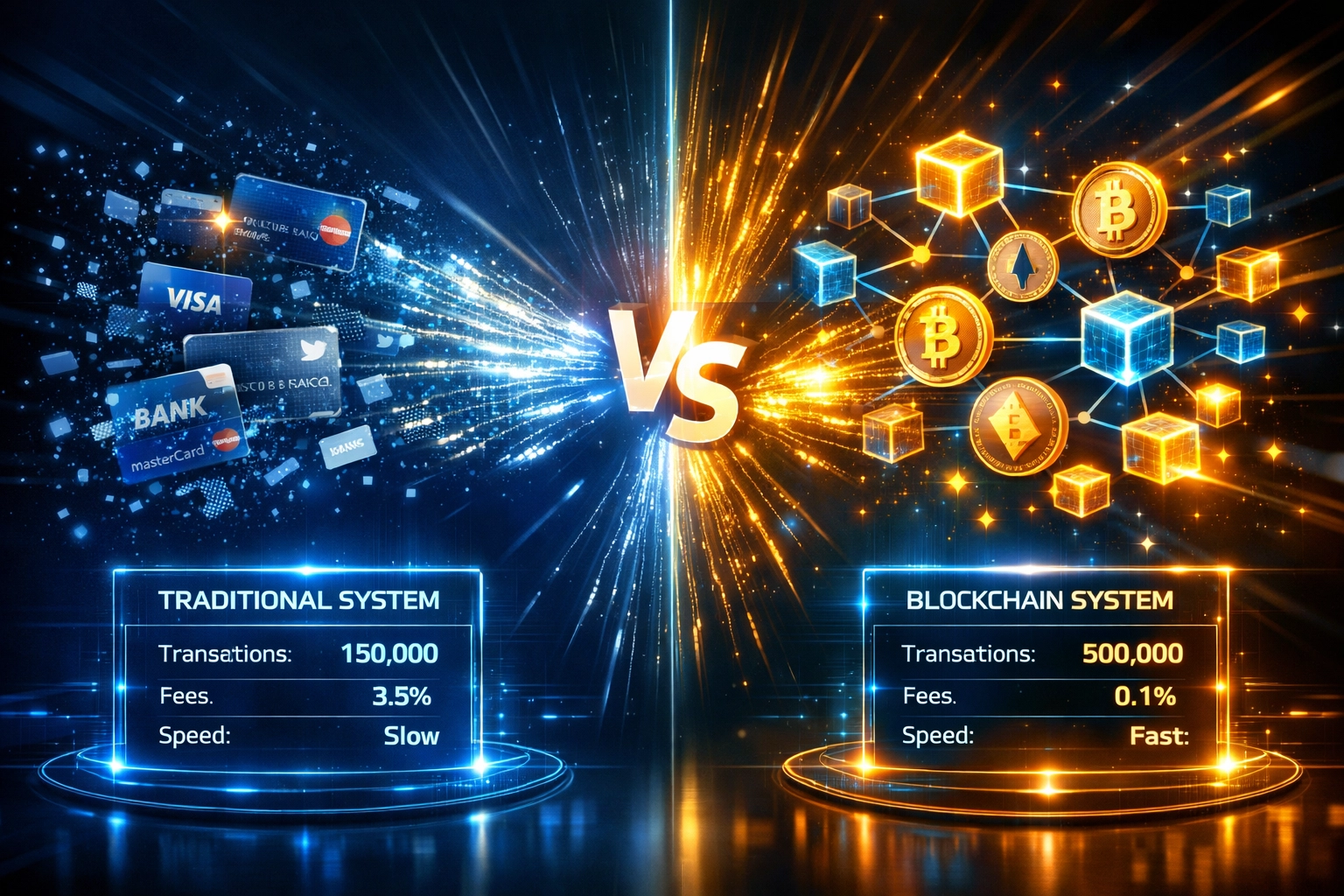
Traditional payment processors charge 2-3% per transaction. Sometimes higher for international payments. Those fees destroy profit margins.
LareBlocks Layer 1 changes the equation:
Gas fees measured in cents, not percentages
No interchange fees
No cross-border markups
No currency conversion spreads
A $100 transaction costs merchants $2-3 with legacy processors. With Larecoin? A few cents in gas fees.
Scale that across thousands of transactions. The savings compound rapidly.
Compare this to NOWPayments and CoinPayments: both offer crypto payment processing but still charge 0.5-1% fees. Better than traditional, but LareBlocks Layer 1 eliminates percentage-based fees entirely.
The breakdown:
Processor Type | Fee Structure | $10K Monthly Volume Cost |
Traditional (Visa/MC) | 2.5% + $0.30 | $280 |
NOWPayments | 0.5% | $50 |
CoinPayments | 0.5% | $50 |
LareBlocks Layer 1 | Gas only (~$0.02/tx) | ~$2 |
Those numbers speak for themselves.
Self-Custody Security: You Control Your Money
Traditional processors hold your funds. They control when you get paid. They can freeze accounts without warning.
LareBlocks Layer 1 flips this model.
Self-custody means:
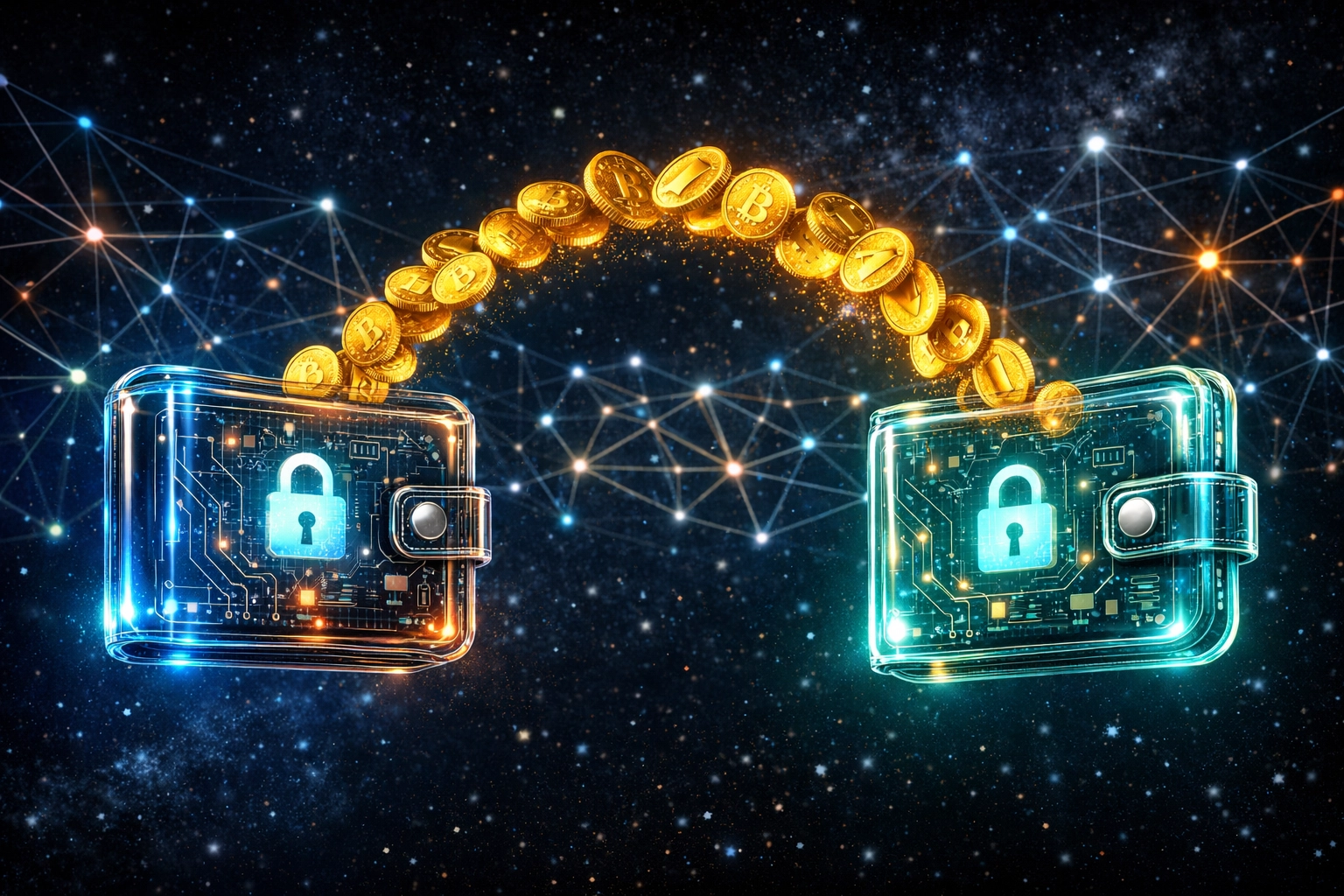
Direct wallet-to-wallet transactions
No intermediary holding periods
Instant access to your funds
Zero counterparty risk
Merchants receive payments directly into their wallets. No 2-week hold periods. No arbitrary account freezes. No "risk assessments" that block legitimate transactions.
The blockchain doesn't care about your business model or industry. Transactions execute based on cryptographic verification, not subjective policy decisions.
This matters enormously for merchants in high-risk categories traditionally blacklisted by payment processors: CBD, digital goods, international services. LareBlocks Layer 1 treats all legitimate transactions equally.
NFT Receipts: Proof of Purchase Reimagined
Every transaction on LareBlocks Layer 1 can generate an NFT receipt. This isn't a gimmick: it's revolutionary proof-of-purchase technology.
NFT receipts provide:
Immutable transaction records
Tamper-proof warranty verification
Resale authenticity confirmation
Loyalty program integration
Lost your paper receipt? Doesn't matter. The blockchain remembers. Need to prove you bought something for a warranty claim? Your NFT receipt lives forever on-chain.
Luxury goods can embed authenticity certificates as NFT receipts. Resale markets verify provenance instantly. No more counterfeit concerns.
Traditional payment processors offer digital receipts as PDFs. Easily forged. Zero blockchain verification. NFT receipts eliminate fraud at the receipt level.
LUSD Stablecoin: Crypto Without the Volatility
The biggest merchant objection to crypto payments? Price volatility. Nobody wants Bitcoin's value swinging 10% between sale and settlement.
LUSD stablecoin solves this.
Pegged 1:1 to USD. Merchants receive stable value. Customers pay with crypto. The stablecoin bridges both worlds.
LUSD operates natively on LareBlocks Layer 1. Transactions settle with the same speed and low fees as LARE tokens but without price risk.
Compare this to CoinPayments' approach: they offer instant conversion to fiat, but charge premium fees for that service. LUSD eliminates conversion fees entirely by maintaining stable value on-chain.
Merchants can:
Accept LUSD directly
Auto-convert LARE to LUSD at point of sale
Hold LUSD in their wallets indefinitely
Cash out to traditional banking when needed
The stablecoin utility extends beyond merchant payments. LUSD works for payroll, supplier payments, and treasury management: all with blockchain efficiency and traditional stability.
AI-Powered Metaverse Shopping: Future Commerce Now
LareBlocks Layer 1 doesn't just process payments. It powers immersive shopping experiences in AI-driven metaverse environments.
The integration works seamlessly:
Smart contracts execute purchases automatically. AI assistants guide shoppers through virtual stores. NFTs verify digital asset ownership. LARE and LUSD facilitate instant transactions.
Traditional payment processors can't operate in metaverse environments. They're built for web forms and physical POS terminals. Virtual reality commerce requires native blockchain integration.
Larecoin's metaverse shopping enables:
Virtual product trials before purchase
AI-powered personalized recommendations
Instant cross-border transactions
Digital and physical good integration
Imagine browsing a virtual store, trying on digital clothing for your avatar, and purchasing with one click: all settled on-chain in seconds. That's not science fiction. That's LareBlocks Layer 1 in 2026.
The Hybrid Model Trap
Industry analysts tout "hybrid models" combining legacy infrastructure with blockchain settlement. Sounds reasonable. In practice? It's a Band-Aid on a broken system.
Hybrid approaches keep traditional processors relevant. They maintain centralized control while claiming blockchain benefits. Settlement might happen on-chain, but authorization, fraud controls, and fund custody remain centralized.
True Web3 payments demand end-to-end decentralization. LareBlocks Layer 1 delivers this without compromise.
NOWPayments and CoinPayments offer crypto payment processing, but they're glorified intermediaries. They still sit between merchant and customer. Fees still apply. Control remains centralized.
LareBlocks Layer 1 eliminates the middleman entirely.
Traditional Processors Aren't Dead: Yet
So are traditional payment processors dead? Not today. But they're living on borrowed time.
The economic incentives favor blockchain payments overwhelmingly. 50% fee savings. Instant settlement. Self-custody security. NFT receipts. LUSD stability. AI metaverse integration.
Legacy processors can integrate blockchain on the backend. They can offer crypto options. But they can't compete with native Layer 1 solutions built for Web3 from the ground up.
LareBlocks Layer 1 represents the future of global payments. Traditional processors represent the past trying to stay relevant.
The revolution isn't coming. It's already here.
Ready to cut your payment processing fees in half?Join the Larecoin community and discover how LareBlocks Layer 1 is transforming merchant payments worldwide.
Comments