

.png)
Are VR/AR Shopping Experiences the Future? Inside Larecoin's B2B2C Metaverse Where Crypto Meets Commerce
- [[[Free!!]<<<<]] Watch: 스포르팅 - 토트넘 Live Stream 13 September 2022
- 20 hours ago
- 5 min read
![Writer: [[[Free!!]<<<<]] Watch: 스포르팅 - 토트넘 Live Stream 13 September 2022](https://lh3.googleusercontent.com/a/AItbvmktwQc0wCdd3ZEETSYItRQubwwBzOyjD_dcigRf=s96-c)
The Shopping Revolution Is Already Here
VR and AR shopping aren't science fiction anymore. They're 2026 reality.
Apple Vision Pro. Meta Quest 3. WebAR on every mobile browser. Spatial computing is shifting from experimental to expected. And here's the thing nobody's talking about: traditional payment rails aren't built for virtual worlds.
You can't swipe a credit card in the metaverse. You shouldn't pay 3.5% interchange fees for a digital transaction. And customers deserve better than waiting 3-5 business days for a refund on a virtual item they returned.
That's where Larecoin comes in.

Why Spatial Commerce Needs Native Crypto Payments
The research is clear. AR and VR are transforming retail from transactional to experiential. Virtual try-ons reduce return rates. 3D product exploration drives engagement. Social shopping in immersive environments creates new revenue streams.
But there's a bottleneck: payments.
When someone buys a virtual outfit in a metaverse store, they need:
Instant settlement (not 3-day ACH delays)
Global accessibility (no credit card required)
Proof of ownership that travels with them
Low fees that make micro-transactions viable
Traditional processors can't deliver this. They were built for physical cards and brick-and-mortar POS systems. They charge merchants 2.9% + $0.30 per transaction minimum. They require bank accounts, credit checks, and legacy infrastructure.
Larecoin's B2B2C metaverse flips the script.
Inside the Larecoin Metaverse Payment Architecture
Here's how it works.
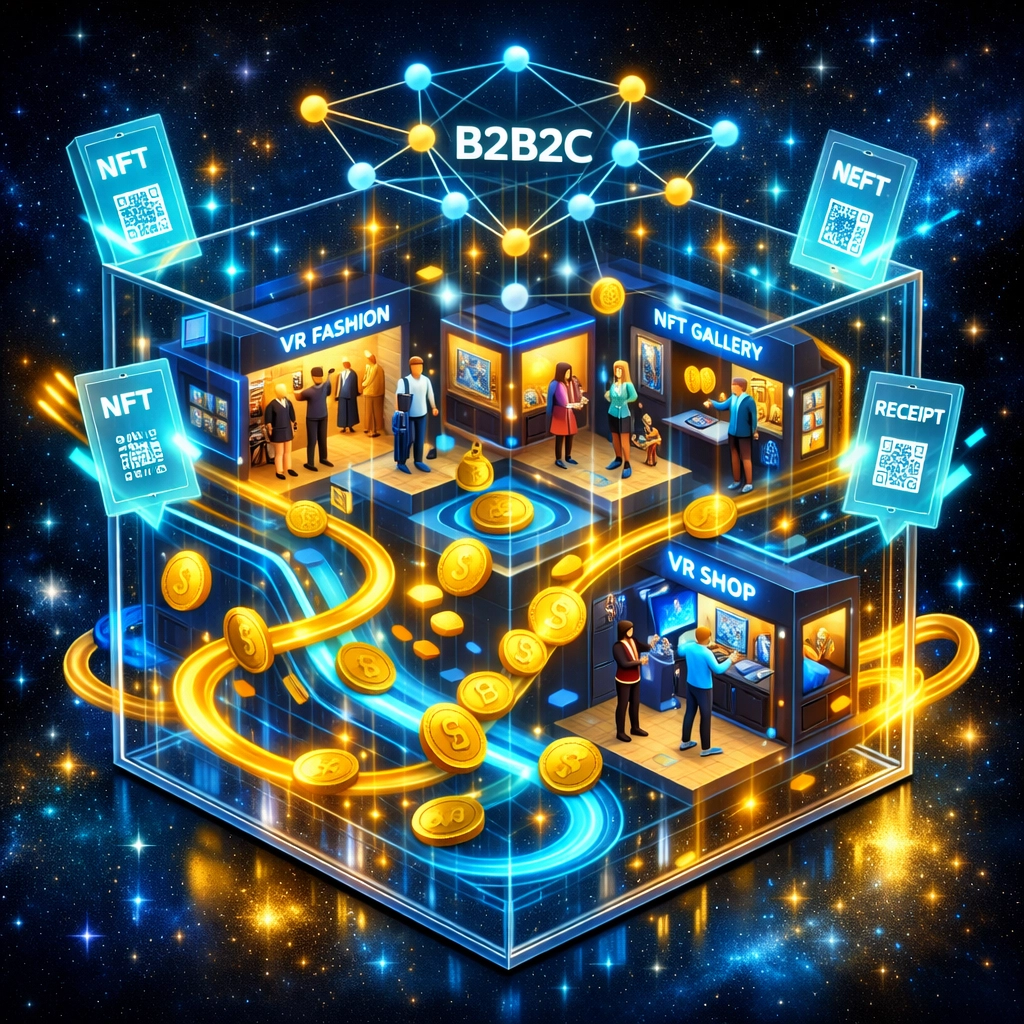
B2B Layer: Merchants integrate Larecoin's payment SDK into their VR/AR storefronts. Setup takes minutes. No merchant account applications. No payment gateway contracts. Just deploy and go live.
B2C Layer: Customers shop with LARE tokens, LUSD stablecoins, or 40+ supported cryptocurrencies. Payments settle on-chain in seconds. Every transaction generates an NFT receipt for proof of purchase and ownership.
The Metaverse Bridge: Virtual items purchased in Larecoin's ecosystem live as blockchain assets. Buy a virtual sneaker in VR? It's yours. Portable across platforms. Tradeable. Verifiable.
This isn't a payment processor bolted onto a metaverse. It's native crypto commerce designed for spatial computing from the ground up.

The Math That Makes Merchants Switch
Let's talk numbers.
Traditional Payment Rails:
Visa/Mastercard interchange: 2.9% + $0.30
Monthly gateway fees: $25-$50
Chargeback fees: $15-$25 per dispute
International transaction fees: Additional 1-3%
On a $10,000/month metaverse store:
Processing fees: ~$320
Gateway fees: $40
5 chargebacks: $100
Total monthly cost: $460
Larecoin Web3 Payments:
Transaction fee: Gas-only (typically $0.10-$2.00 per transaction)
No monthly fees
No gateway contracts
No chargeback fraud (blockchain verification)
On the same $10,000/month volume:
Processing fees: ~$50-$100
Gateway fees: $0
Chargebacks: $0
Total monthly cost: $50-$100
That's 75-89% cost reduction. For AR/VR merchants operating on thin margins, this is game-changing.
More profit stays in the business. More value flows to customers. Learn more about merchant fee savings.
The Tech Stack Behind Seamless Metaverse Payments
What makes Larecoin different from competitors like NOWPayments or CoinPayments?
1. LUSD Stablecoin Integration LUSD provides price stability for merchants who want crypto benefits without volatility. Customers pay in LUSD. Merchants receive LUSD. No conversion slippage. No surprise value drops.
2. NFT Receipt System Every transaction generates an on-chain receipt. This isn't just for recordkeeping. It's proof of ownership, warranty verification, and return authorization: all in one cryptographic token.
3. Master/Sub-Wallet Architecture Merchants create unlimited sub-wallets for different virtual storefronts, product lines, or revenue streams. Track everything separately. Consolidate when needed. Full self-custody.
4. Gas-Only Transfer Option For LARE token transfers, users pay only network gas fees. No platform markup. No hidden charges. Pure blockchain economics.
5. QR-Generated POS Even in virtual environments, merchants can display QR codes for instant payment. Customers scan with mobile wallets. Payment completes in-world. No app switching required.
This tech stack isn't theoretical. It's live. It's processing real transactions. Visit larecoin.com to explore the ecosystem.
Compliance That Builds Trust in Virtual Commerce
Here's something most metaverse payment projects ignore: regulatory compliance.
Larecoin isn't skirting the rules. We're following them proactively.
Federal MSB Registration: Larecoin operates as a registered Money Services Business with FinCEN. This means AML/KYC protocols, transaction monitoring, and suspicious activity reporting.
State-Level MTL Coverage: We've secured Money Transmitter Licenses across key U.S. states. This isn't easy. It's expensive and time-consuming. But it's necessary for building legitimate, long-term infrastructure.
Why This Matters in VR/AR Commerce: As spatial commerce grows, regulators will pay attention. Platforms without proper licensing will face enforcement. Merchants using compliant payment rails avoid liability.
When you integrate Larecoin into your metaverse storefront, you're not just adopting innovative tech. You're partnering with a platform that respects regulatory frameworks. See our trust and compliance page.
What Social Shopping Looks Like in 2026
Imagine this scenario.
You're wearing a VR headset. You enter a virtual mall with friends. You walk into a clothing store that exists only in the metaverse. Your avatar tries on a jacket. It looks great.
You click "Buy." Larecoin processes the payment instantly. An NFT receipt appears in your wallet. The jacket now belongs to you: usable across any metaverse platform that recognizes the token.
Your friend sees the jacket. Loves it. Buys one too. The merchant tracks both sales in their master wallet dashboard. No payment delays. No credit card fees. No fraud risk.
Later, you decide the jacket doesn't fit your style. You list it for resale on a secondary marketplace. Another user buys it. The NFT transfers ownership. The merchant sees continued engagement with their product.
This is B2B2C metaverse commerce powered by native crypto payments.
It's not coming "someday." The infrastructure exists now.
Why Legacy Processors Can't Compete in Virtual Worlds
Competitors like Triple-A or CoinPayments focus on e-commerce payment gateways. They're building crypto checkout buttons for traditional online stores.
That's valuable. But it's not metaverse-native.
The limitations:
No NFT receipt generation
No master/sub-wallet architecture for virtual storefronts
No integration with VR/AR spatial interfaces
Higher platform fees (often 1-2% markup over gas fees)
Centralized custody models
Larecoin's B2B2C metaverse is purpose-built for immersive commerce. Every feature: from self-custody to NFT receipts to QR POS: exists because spatial shopping demands it.

The Path Forward for Merchants
If you're building in VR or AR, your payment strategy matters more than you think.
What to prioritize:
Low transaction costs (metaverse items often have lower price points)
Instant settlement (customers expect real-time ownership)
Proof of purchase (NFT receipts enable resale markets)
Global accessibility (no geographic payment restrictions)
Self-custody (you control your revenue, not a processor)
Larecoin delivers all five.
We're not asking merchants to choose between innovation and compliance. Between crypto benefits and regulatory safety. Between cost savings and customer trust.
You can have all of it.
Join the Metaverse Commerce Revolution
The future of shopping is spatial. Virtual try-ons. 3D product exploration. Social commerce in immersive environments.
And the payment layer that powers it needs to be just as innovative as the experience itself.
Larecoin's B2B2C metaverse combines Web3 payment infrastructure with regulatory compliance, merchant-friendly economics, and cutting-edge technology.
Ready to integrate crypto payments into your VR/AR storefront?
Visit larecoin.com to explore the platform. Read our whitepaper. Test the SDK. See how merchants are already building the future of commerce.
The metaverse is growing. The tools are ready. The question is: will you lead or follow?
Comments